How to Cow Call Colorado Elk
There’s nothing quite like the silence of the Colorado high country, except maybe the silence of a bull elk who just isn't interested in your bugles. It’s a frustrating scenario many hunters face: you know the elk are there, you’ve put in the miles, but they just aren't talking back or committing to your calls. That's where mastering the art of the cow call comes in, a subtle yet incredibly powerful tool that can turn a quiet morning into an unforgettable encounter. This comprehensive guide will break down everything you need to know about effectively using cow calls to bring those elusive Colorado elk into range.
Understanding the Language of Elk
When you're out in the vastness of the Colorado wilderness, every sound matters. Elk are incredibly vocal animals, and their calls are much more than just noise – they're a complex language. Understanding the nuances of these sounds, especially cow calls, is crucial for any hunter hoping to connect with a bull or even locate a herd. It’s about speaking their language, not just making sounds.
Why Cow Calls Work or Don't
Cow calls are arguably the most versatile and universally understood elk vocalization. They represent social interaction, contentment, and availability, which are powerful motivators for a bull elk. Picture a lone bull, maybe one that’s been pushed around by a dominant herd bull, hearing a soft cow call. It’s an invitation, a chance, a glimmer of hope that could be just enough to draw him in. A cow call can often be more effective than a bugle in certain situations, especially when elk are feeling pressured, during the midday lull, or when you're trying to draw a bull away from his harem without directly challenging him.
However, it's not a magic bullet. There are times when even the most perfectly executed cow call won't get a response. Highly pressured elk, particularly on public lands often targeted by hunters, become extremely wary of any unnatural sounds. If a bull has been called to repeatedly, or if he’s heard aggressive bugles followed by a cow call that feels out of place, he might clam up or simply move away. Similarly, a cow call in the middle of a screaming rut can sometimes be drowned out or ignored if the bull is already locked onto a hot cow. Knowing the context – the time of year, hunting pressure, and the specific behavior of the elk you're targeting – is just as important as the call itself.
The Different Types of Cow Sounds
Just like human language, elk have a range of vocalizations, and each cow sound carries a specific meaning. Learning to differentiate and replicate these is key to sounding convincing.
- Estrus Mews: These are perhaps the most famous and effective cow calls. An estrus mew is a soft, drawn-out sound, often with a slightly rising inflection at the end, signaling that a cow is in heat and ready to breed. Bulls are highly attuned to these calls, especially during the peak of the rut. You'd typically use these when you suspect a bull is nearby and you want to actively draw him in for a closer look, or to entice him to break from his cows.
- Contact Mews: A shorter, softer, more inquisitive "mew." These are used by cows to keep in touch with the herd or their calves. They're excellent for locating elk when you're moving through dense timber and can't see far, or for calming an agitated herd. If you hear elk moving but can't pinpoint them, a soft contact mew can sometimes get a response, revealing their location without spooking them.
- Lost/Distress Calls: These are more urgent, slightly louder, and typically longer mews or a series of mews, often with a whiny tone. A lost calf call can sometimes draw in protective cows or even curious bulls. A distress call, while less common for general calling, might be used in a highly aggressive, last-ditch effort to stop a departing animal. Be careful with these; they can sometimes sound unnatural if not done just right.
- Feeding/Contentment Chirps: Very soft, brief "chirps" or "whines" that elk make while grazing or bedding down. These are incredibly subtle and are fantastic for when elk are extremely close, perhaps within bow range, and you need to reinforce the illusion that everything is normal, or to get them to take one more step into a shooting lane. These are not calls for reaching out and locating, but for closing the deal.
Varying the pitch and duration of your calls can add to the realism. A younger cow might have a higher-pitched mew, while an older cow's call might be deeper. Don't be afraid to experiment to find what sounds most natural and what the elk are responding to on any given day. Remember, it's about simulating a real elk, not just making a noise.
Essential Cow Calling Techniques
Having the right call is one thing; knowing how to use it effectively is another. There are various types of cow calls, each with its own learning curve and advantages. Mastering a few key techniques will significantly boost your confidence and success rate when you're out trying to get an elk's attention.
Mastering the Mouth Reed
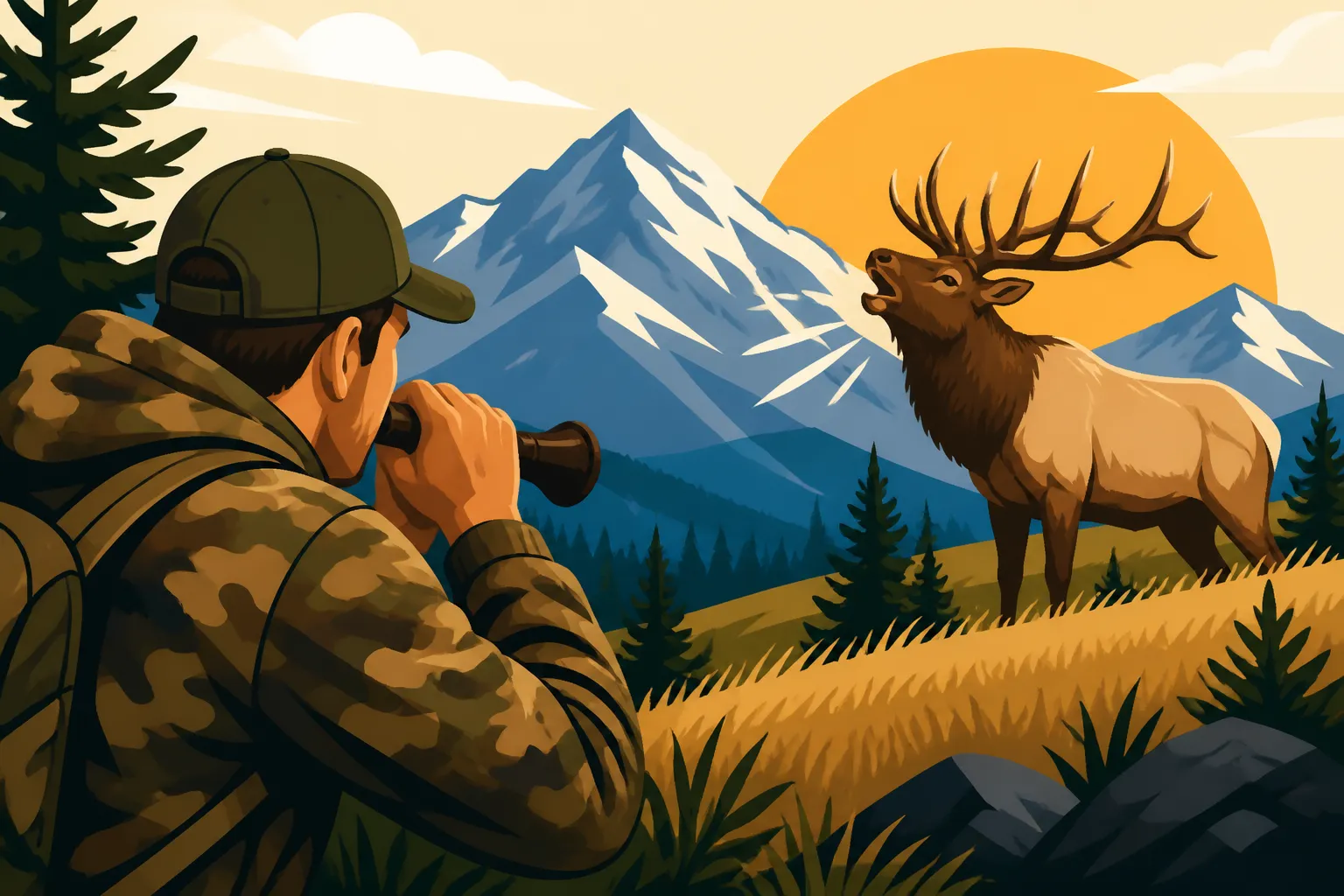
The mouth reed, or diaphragm call, is a staple for many seasoned elk hunters. Its biggest advantage is that it allows for hands-free operation, which is critical when you need to draw your bow or shoulder your rifle as an elk approaches. However, it takes practice – a lot of it – to get it right.
First, proper placement is key. The call should sit comfortably and snugly on the roof of your mouth, with the open end facing forward. If it's too far back, it can make it hard to breathe or produce clear sounds. If it's too far forward, it won't seal properly. Your tongue will do most of the work, pressing against the reed to control airflow and tension. To produce a mew, use soft air pressure from your diaphragm, almost like sighing, while slowly increasing and then decreasing tongue pressure on the reed. The sound comes from the reed vibrating, and your tongue acts like a brake to modulate that vibration.
Common struggles include squeaks, which often happen from too much pressure or incorrect tongue placement. A nasally sound might mean the call isn't sealed properly against the roof of your mouth, or your air pressure isn't consistent. Getting a consistent pitch and duration takes repetition. Practice in front of a mirror, watching how your mouth and jaw move, and record yourself to compare against real elk sounds. Don't get discouraged if it takes a while; even veteran hunters spend hours perfecting their diaphragm calls. Many start by practicing the basic "ee-ooo" sound, gradually refining it until it sounds like a genuine cow mew.
External Calls and When to Use Them
For those who find mouth reeds challenging, or for specific situations, external calls offer a fantastic alternative. These can often be easier for beginners to pick up quickly and produce consistent sounds.
- Bugle Tubes with Reeds: While primarily for bugling, many bugle tubes come with a diaphragm or external reed that can be used to make powerful cow calls. The tube adds resonance and volume, making these calls carry further, which is great for locating distant elk or calling across large canyons. Brands like Phelps Game Calls and Rocky Mountain Elk Foundation (RMEF) produce excellent bugle tubes that double as cow calls.
- Bite-and-Blow Calls: These are very popular and user-friendly. You simply bite down on a small internal reed and blow, controlling the pitch and duration with your bite and breath. They are incredibly realistic and easy to operate with one hand. They're a great choice for hunters who want high-quality sound without the extensive practice required for a mouth reed.
- Squeeze Bulb Calls: These calls, like those offered by Primos, are very simple to use. You just squeeze a rubber bulb, which pushes air over a reed to produce a cow mew. They are extremely consistent and realistic, requiring virtually no practice. The main drawback is that they require one hand to operate, which can be an issue if you need to quickly draw your weapon.
Each external call has its place. If you're new to elk hunting in Colorado, a bite-and-blow call or a squeeze bulb call can give you immediate confidence. They're also excellent for situations where you might be sitting still in a blind or stand, where hands-free isn't as critical. For covering large expanses of terrain, a bugle tube with a good cow call reed will help your calls cut through the wind and reach further into the mountains. Consider adding one to your Colorado Backcountry Hunting Gear List for versatility.
When and Where to Use Cow Calls in Colorado
The Colorado elk hunting landscape is incredibly diverse, from vast open parks to dense timber and steep, rocky slopes. Knowing when and where to deploy your cow calls is just as important as knowing how to make the sounds. Misjudging the situation can lead to spooked elk or simply wasted effort.
Situational Awareness and Timing
Timing is everything in elk hunting. The effectiveness of your cow calls can vary dramatically depending on the season, time of day, and how much pressure the elk have experienced.
- The Rut (Mid-September to Early October): This is prime time for cow calling. During the peak rut, bulls are actively seeking cows and are more receptive to estrus mews. However, if a bull already has a harem, he might be more interested in herding his cows than investigating a new one. A softer, enticing estrus mew might draw him in for a look, especially if he thinks he can steal a cow. If a bull is bugling aggressively, a series of excited cow mews can sometimes bring him in, as he assumes another cow is joining his herd or that a lone cow is looking for companionship. Understanding the dynamics of How to Hunt the Colorado Rut is crucial for effective calling.
- Pre-Rut (Late August to Early September): Bulls are starting to get antsy, but not yet fully committed to breeding. Contact mews can be good for locating bachelor groups or curious bulls. A soft estrus mew might pique their interest, but they're less likely to come charging in.
- Post-Rut (Late October into November): As the rut winds down, bulls are often exhausted and less responsive to aggressive calls. However, they may still be looking for the last receptive cows. Soft, infrequent contact mews or subtle estrus mews can sometimes appeal to a bull who’s still trying to find a breeding opportunity. This is often a time for patience and less aggressive calling.
- High-Pressure Public Lands: Colorado is renowned for its public land hunting, but this also means more hunters. Elk on these lands, like those found in areas of the White River National Forest or Flat Tops Wilderness, become incredibly wary. Over-calling or making unnatural sounds will quickly send them packing. In these scenarios, soft contact mews or feeding chirps are often your best bet, used sparingly to locate or calm elk, rather than to aggressively draw them in. When dealing with heavily hunted areas, reading their behavior is key to How to Hunt Elk on Public Land Pressure.
- Midday Lull: Often, mornings and evenings are the most active periods. But don't discount midday. Elk might be bedded down, but a soft, subtle cow mew can sometimes rouse a bull who’s just trying to rest. This is not the time for loud, aggressive calls, but rather for quiet, inquisitive sounds.
Use scouting tools like GoHunt to analyze historical elk movements, habitat, and even hunter pressure for specific GMUs (Game Management Units) in Colorado. This data can give you an edge in determining when and where your cow calls will be most effective.
Calling in Different Habitats
The terrain itself dictates how your calls will carry and how elk will respond.
- Dark Timber: This is where cow calls truly shine. In thick lodgepole pine or spruce-fir forests, visibility is limited, and sound doesn't travel far. Soft contact mews or estrus mews, used sparingly, can draw a bull in without him seeing you first. The intimate nature of the timber often makes bulls more willing to investigate close-range cow calls. If you hear a distant bugle, a series of excited cow mews followed by silence can often make that bull think a cow is heading his way, or waiting for him. These are excellent tactics for How to Hunt Elk in the Dark Timber.
- Open Parks and Basins: In wide-open areas, sound carries much further, but elk also have a greater advantage in spotting you. Here, you might use louder, more urgent mews to reach distant elk, but immediately be ready to drop to a knee and prepare for a shot. Once an elk shows interest, switch to softer, more subtle calls to guide him closer without spooking him by over-calling. If you're glassing a large basin, a few loud cow calls can sometimes get a distant bull to respond or stand up, revealing his location, before you initiate a Spot-and-Stalk Hunting in Colorado approach.
- Saddles and Ridges: Elk frequently use saddles and ridges as travel corridors. Setting up near these features and using cow calls can intercept passing animals. The wind and thermals play a huge role here; always call with the wind in your favor, or at least cross-wind, so your scent doesn't give you away. A series of mews from a hidden position can make an elk curious enough to investigate before crossing.
- Steep Canyons: Canyons present unique acoustic challenges. Your calls can echo, distort, or be muffled by the terrain. Experiment with the direction you're calling. Sometimes, a call directed into the canyon wall will bounce back more realistically. Be aware that sound can travel up and down canyons for great distances, so even a soft call can reach further than you might expect.
Always consider the wind and thermals. Elk rely heavily on their sense of smell. A perfect cow call is useless if your scent is blowing directly to the elk. Position yourself upwind or crosswind from where you expect the elk to approach.
Common Mistakes and How to Avoid Them
Even with the best calls and techniques, hunters often fall into common traps when cow calling for Colorado elk. Avoiding these pitfalls can dramatically improve your success rate and prevent you from unknowingly educating elk.
Overcalling and Undercalling
This is a delicate balance that takes experience to master. Many new hunters, full of excitement, tend to overcall. They blow their call every few minutes, sometimes continuously, hoping to grab every elk's attention. The problem is, wild elk don't communicate non-stop like that, especially not a lone cow. Overcalling sounds unnatural, repetitive, and screams "hunter!" to wary elk. It can make them nervous, cause them to shut down, or simply walk away from the perceived threat. Imagine walking through the woods and hearing the same, perfect cow mew every 30 seconds for 10 minutes – you'd start to get suspicious, too.
On the other hand, undercalling can also be a missed opportunity. If you only make a few soft mews and then sit in silence for a long time, a curious bull might lose interest and move on. He might not even hear your initial calls if he's a bit further out or if the wind is swirling. The key is to listen, observe, and react. Start with a few soft, realistic calls, then wait. How long? That depends. If you're in open country, wait longer to see if anything shows itself. In thick timber, you might call every 5-10 minutes. If you get a response, pay attention to the elk's tone and direction, and adjust your calling accordingly. Sometimes a simple, lone mew is all it takes to get an answer or draw a bull in. Think of it like a conversation – you wouldn't just repeat the same phrase over and over, would you?
Sounding Unnatural or Repetitive
Elk are wild animals, and their vocalizations are organic, full of subtle variations. A common mistake for hunters is to produce calls that sound robotic, too perfect, or always the same. This repetition or lack of authenticity is a huge red flag for a sharp-eared bull. An elk will immediately know something is off if your cow mews always have the exact same pitch, duration, and cadence.
To avoid this, focus on varying your cadence, tone, and volume.
- Cadence: Instead of a steady "meeeew… meeeew… meeeew," try mixing it up. Maybe a short, sharp "mew!" followed by a longer, drawn-out "meeeewwww" a minute later. Sometimes a series of excited, rapid-fire mews is appropriate, especially if you're trying to simulate a cow excited about a bull's bugle.
- Tone: Experiment with slightly higher or lower pitches within your cow calls. Different cows have different voices, and by varying your tone, you add to the realism. Some mews might have a slightly raspy finish, others might be clean and smooth.
- Volume: Don't always call at maximum volume. Start soft, especially in thick cover. If you don't get a response after a few minutes, you can incrementally increase the volume. If an elk is approaching, drop your volume to soft, subtle contact mews or feeding chirps.
Practice is paramount. Listen intently to recordings of real elk. Many call manufacturers, like Phelps and Native by Carlton's, offer online sound libraries. Pay attention to the subtle breaks in their voices, the slight wavers, and the way their calls rise and fall. Record yourself and compare. The goal isn't just to make an elk sound, but to sound like a real elk, with all its natural imperfections and variations. This is a skill that takes time, but it pays off exponentially in the field.
Integrating Cow Calls with Other Tactics
Cow calling is rarely a standalone tactic. It’s most powerful when woven into a larger hunting strategy, complementing other techniques to create a compelling scenario for elk. Think of it as part of a symphony, not a solo act.
Combining Cow Calls with Bugling
Often, the most effective elk calling sequences involve a dynamic interplay between cow calls and bull bugles. A bugle, especially a challenge bugle, is a direct, aggressive invitation or warning to another bull. While this can draw in a rival, it can also intimidate smaller bulls or make dominant bulls hesitant to leave their cows. This is where cow calls become the perfect accompaniment.
Imagine this scenario: you let out a locate bugle, and a bull responds aggressively from a ridge in a Colorado GMU known for its active rut. Instead of immediately bugling back with another challenge, try a series of excited cow mews directly after his bugle. This makes the bull think a receptive cow is reacting to his call, creating an immediate sense of urgency and reward for him. He might come charging in, thinking he's found an easy conquest. If he hangs up, a soft, alluring estrus mew can sometimes be the final nudge he needs to close the distance. This strategy, often employed when learning How to Bugle for Colorado Elk, can be incredibly effective during the rut.
Conversely, if you've been working a bull with a series of challenge bugles, and he's responding but not moving, you might have him "hung up." He's likely trying to get you to come to him. At this point, introducing cow calls can change the game. A few soft, contented cow mews, perhaps with some herd chirps, might make him think he's losing a potential cow to another bull, or that the "other bull" (you) has already gathered a harem. This can be enough to break his stalemate and convince him to come closer to investigate or assert his dominance. It's about painting a picture with sound, making the bull believe a natural elk interaction is unfolding right in front of him.
Cow Calling for Spot-and-Stalk or Still Hunting
Cow calls aren't just for attracting bugling bulls; they are incredibly valuable tools for more stealthy hunting methods as well. When you're slowly moving through timber or trying to sneak up on a bedded herd, discretion is key.
For How to Still-Hunt Colorado Timber, soft contact mews can be invaluable. As you move, pausing frequently to listen, a very soft mew can help you locate elk that might be just out of sight. An elk might respond with a soft mew or a faint sound of movement, giving away its position. If you accidentally bump an elk or a small group, a calming contact mew can sometimes cause them to pause, giving you a chance for a shot, or at least preventing them from blowing out of the area completely. It simulates a natural sound they’d expect to hear from another elk in the area, rather than an alarming human presence.
In a spot-and-stalk situation, especially if you're approaching an area where you've seen elk bedded or feeding, cow calls can be used to gauge proximity and wind direction. A very faint mew, sent towards where you think the elk are, can sometimes elicit a soft response that helps you pinpoint their exact location without revealing yours. It can also act as a distraction. If you need to cross a noisy patch of ground or adjust your position, a quiet series of mews can cover the sound of your movement, giving the elk something else to focus on for a moment. Furthermore, using cow calls near elk wallows or water holes, where elk are likely to gather, can often be a highly effective ambush strategy. A soft series of mews can entice a bull to commit to the water source, believing he might find a cow already there.
Here's a quick comparison of popular cow call types:
| Call Type | Pros | Cons | Ideal Use |
|---|---|---|---|
| Mouth Reed | Hands-free, highly versatile, realistic after practice | Steep learning curve, can be uncomfortable | All-around, especially for closing distances and drawing bow/rifle |
| Bite-and-Blow | Easy to use, realistic, good volume, one-handed | Requires one hand, can sound repetitive if not varied | Beginner-friendly, versatile, good for mid-range calling |
| Squeeze Bulb | Extremely easy to use, consistent, very realistic | Requires one hand, less versatile volume control | Close-range, calming, for new hunters, when hands-free isn't critical |
| Bugle Tube Reed | Loud, excellent resonance, long-distance calling | Bulkier, not ideal for subtle close-range calls | Locating distant elk, calling across canyons, combining with bugles |
Effective cow calling is a skill that evolves with every hunt. It demands patience, keen observation, and a willingness to adapt. The more you practice and listen to real elk, the more natural and convincing your calls will become. Remember, you're not just making noise; you're having a conversation.
Disclaimer
Hunting is an inherently dangerous activity that carries risks including, but not limited to, serious injury or death. Always prioritize safety, follow all local, state, and federal hunting regulations, and obtain proper licenses and permits. The information provided in this guide is for informational purposes only and should not replace professional instruction or personal experience. Always be aware of your surroundings, understand your equipment, and never hunt alone.