Colorado Moose Hunting Odds
For many hunters, the dream of chasing a Shiras moose through Colorado's rugged mountains feels like an impossible fantasy, often overshadowed by the brutal reality of the state's draw system. You've heard the whispers, seen the jaw-dropping photos, and perhaps even put in for a tag year after year, only to be met with that familiar "unsuccessful" notification. It's a truly frustrating experience, knowing these magnificent animals roam parts of our stunning landscape, but gaining access to hunt them is akin to winning the lottery. This guide is here to unravel the complexities behind Colorado moose hunting odds, explain why it's such a long shot, and help you understand what, if anything, you can do to turn that dream into a reality.
The Elusive Shiras Moose: Why Tags Are So Hard to Come By
Moose hunting in Colorado is undeniably a premier big game pursuit, coveted by residents and non-residents alike. Unlike elk or deer, which have robust populations across vast swaths of the state, Shiras moose numbers are much smaller and more concentrated in specific habitats. This limited population is the primary driver behind the extreme difficulty in drawing a tag. It's not just about fewer animals; it's about a careful balance between conservation, healthy herd management, and providing quality hunting opportunities.
Limited Populations and Geographic Range
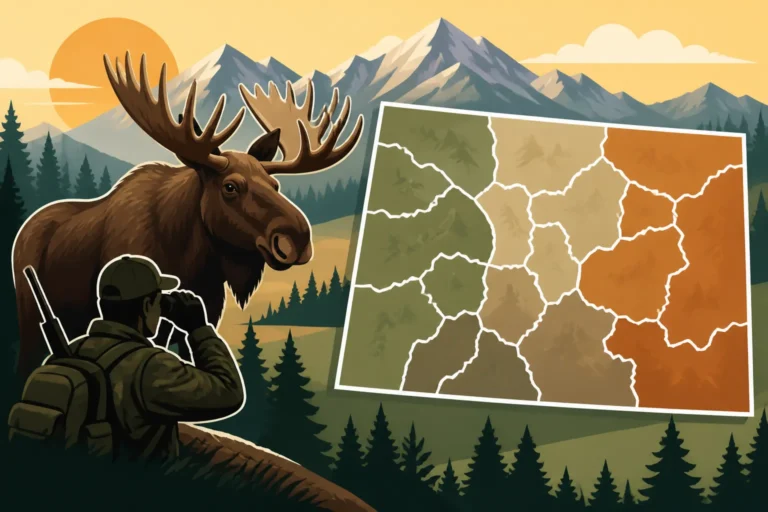
Colorado's moose population, primarily Shiras moose, is a success story in itself, having rebounded from near extirpation in the early 20th century. However, despite these conservation efforts, their numbers simply don't compare to those of other big game species. Moose are creatures of specific habitats, preferring willow-filled riparian areas, high-elevation spruce-fir forests, and marshy lowlands, often in areas like North Park, the Gore Range, and parts of the Flat Tops. These specialized habitat requirements naturally limit how many moose can thrive in the state.
Because their population is finite and concentrated, Colorado Parks and Wildlife (CPW) issues a very limited number of tags each year. This isn't just to ensure sustainable hunting; it's also crucial for maintaining the long-term health and genetic diversity of the herds. The goal is to provide a challenging, high-quality hunt for a select few, rather than over-pressuring an already sensitive population. This means fewer opportunities for everyone, which inevitably drives down draw odds significantly.
High Demand from Hunters
Couple those limited tags with the immense desire of hunters to pursue such a unique and impressive animal, and you've got a recipe for incredibly tough draw odds. Many hunters spend their entire lives applying for a moose tag, viewing it as the ultimate western big game hunt. The sheer size of a Shiras moose, its majestic antlers, and the challenging terrain it inhabits all contribute to its legendary status.
The high demand also comes from the fact that Colorado is one of only a few states where you can hunt Shiras moose, making it a bucket-list hunt for many. This confluence of low supply (few tags) and high demand (thousands of applicants) creates a competitive landscape that makes drawing a tag a multi-decade endeavor for most. Hunters are willing to accumulate preference points for many, many years, knowing full well that their chances are slim, but the dream is powerful.
Demystifying the Colorado Moose Draw System
Navigating the Colorado big game draw system can feel like trying to solve a Rubik's Cube blindfolded, and for moose, it's even more intricate. Understanding how preference points work, how tags are allocated, and the specific mechanics for moose is absolutely critical if you're serious about even having a chance. It’s not just about putting your name in the hat; it’s about strategic planning.
Preference Points and Point Creep
Colorado uses a preference point system for moose tags, which essentially means the more years you apply unsuccessfully and purchase a point, the higher your priority in future draws. This system is designed to reward loyalty and persistence, theoretically giving long-term applicants a better chance. However, the catch-22, especially for moose, is "point creep." This is when the number of preference points required to draw a specific tag increases each year.
For moose, point creep is a severe reality. What might have required 15 points five years ago could now demand 20 or even 25 points. This means that even if you're diligently building points, the goalpost keeps moving further away. It's incredibly frustrating to invest year after year, only to see the number of points needed for a particular unit continue to climb, often faster than you can accumulate them. This can make the dream of drawing feel like a never-ending chase, where you're always just a few steps behind. You can learn more about how the system works in our guide on Colorado Preference Points Explained.
Moose Tag Allocation Mechanics
Moose tags are divided into bull and cow tags, and sometimes either-sex tags, within specific Game Management Units (GMUs). CPW analyzes herd data, including population estimates, bull-to-cow ratios, and harvest objectives, to determine how many tags to issue for each unit. This data-driven approach ensures that hunting pressure is managed appropriately for local populations.
For non-residents, the challenge is even greater. Colorado statute mandates that a maximum of 35% of limited licenses in any unit can be issued to non-residents, with specific limitations on some species and units. For highly sought-after tags like moose, non-residents typically only receive a small fraction of the available licenses, often making their draw odds significantly lower than those for residents, even with a high number of preference points. This allocation further intensifies the competition for those coveted tags.
Colorado Moose Populations and Management
Understanding the state of Colorado's moose herds and how they are managed by CPW helps shed light on why the draw is so competitive. These majestic animals are a conservation success story, but their unique biology and specific habitat needs mean they will likely never be as abundant as elk.
History of Moose in Colorado
Believe it or not, Shiras moose were largely absent from Colorado for many decades. They were reintroduced starting in the late 1970s and early 1980s, primarily in North Park, with subsequent transplants into areas like the Gore Range and other suitable habitats. These reintroduction efforts have been remarkably successful, leading to the establishment of thriving, huntable populations. This history is important because it underscores the relatively young age of Colorado's moose herds and the careful management required to ensure their continued growth and health.
The success of these reintroductions is a testament to CPW's dedication and sound wildlife management principles. However, it also means that the population, while robust in certain areas, is still growing and expanding, and managers are keen to avoid any setbacks. This conservative approach to tag allocation is directly linked to the species' history in the state. For those curious about where to find them, our Colorado Moose: Where to Find Them guide dives deeper into their preferred habitats.
CPW Management Strategies and Herd Health
Colorado Parks and Wildlife employs a comprehensive strategy to manage moose populations, which directly impacts hunting opportunities. This includes regular aerial surveys to estimate populations, track herd growth, and assess bull-to-cow ratios. Habitat quality is also continuously monitored, as moose are highly dependent on specific food sources, primarily willow and other riparian vegetation.
Management also involves addressing potential threats such as habitat loss, disease, and vehicle collisions. The goal is always to maintain healthy, resilient moose herds that can sustain themselves for future generations. Because moose have lower reproductive rates compared to elk or deer, and a higher calf mortality rate in some areas, CPW takes a more conservative approach to harvest. This means that even if a unit has a healthy moose population, the number of tags issued will always be carefully controlled to prevent overharvesting and ensure the long-term stability of the herd. This meticulous approach is one of the main reasons why Colorado Moose Season Dates and Tags are so limited each year.
Analyzing Draw Odds: What the Numbers Really Mean
When you look at the official draw statistics, the numbers can be daunting. It’s easy to get discouraged, but truly understanding what those percentages and point totals signify can help you make more informed decisions, even if it’s just managing expectations for the long haul.
Breaking Down the Official Statistics
Colorado Parks and Wildlife publishes draw statistics each year, showing the number of applicants, the number of tags issued, and the minimum and average preference points required to draw a tag in each unit for both residents and non-residents. This data is your best friend in understanding the landscape. When you see a unit where residents required 22 points and non-residents required 27 points, it’s not just a number; it’s a reflection of decades of unsuccessful applications for many people.
Let's say a unit offered 3 bull tags, and there were 500 applicants with more than 15 points. Only three of those 500 would have drawn. The odds are incredibly slim. Tools like those offered by GoHunt can be invaluable here, as they often aggregate and filter this complex data, making it easier to visualize trends and pinpoint units where the points required might be slightly lower, or where a "lucky" draw occasionally happens for those with fewer points. However, for moose, "lucky" draws are exceedingly rare at lower point levels.
Factors Influencing Your Personal Odds
While the overall statistics paint a grim picture, several factors can subtly influence your personal odds, though not dramatically for moose.
- Point Accumulation: This is the most significant factor. The more preference points you have, the higher your chances become relative to other applicants. However, as discussed, point creep can quickly erode that advantage.
- Unit Choice: Some GMUs are consistently harder to draw than others due to higher moose densities, easier access, or better trophy potential. Researching units where the required points are historically lower, even if only by a point or two, might shave a year or two off your wait. However, these units often have fewer moose or tougher terrain.
- Tag Type (Bull vs. Cow): Cow moose tags are generally easier to draw than bull tags, requiring fewer preference points. If your goal is simply to hunt a moose for meat and experience, applying for cow tags can significantly reduce your wait time.
- Resident vs. Non-Resident Status: As a non-resident, your odds are inherently lower due to allocation caps. It's a harsh reality, but important to acknowledge when planning your strategy.
- Group Applications: Applying as a group uses the lowest number of preference points among the applicants. While this can be beneficial for other species, for moose, it often means everyone in the group needs a very high number of points to even be competitive.
Here’s a simplified look at potential draw odds based on point levels for a hypothetical popular bull moose unit:
| Preference Points | Resident Bull Tag Odds (Hypothetical) | Non-Resident Bull Tag Odds (Hypothetical) |
|---|---|---|
| 0-10 Points | < 0.1% | < 0.01% |
| 11-15 Points | 0.1% – 0.5% | < 0.1% |
| 16-20 Points | 0.5% – 2% | < 0.5% |
| 21-25 Points | 2% – 10% | 0.5% – 2% |
| 26+ Points | 10% – 30% | 2% – 10% |
Note: These are highly generalized and hypothetical odds. Actual draw odds vary significantly by unit, year, and specific tag type. Always consult official CPW draw statistics for the most accurate and up-to-date information.
Strategies for Increasing Your Moose Draw Odds
Given the brutal competition, simply putting in for a preference point year after year might not feel like an active strategy. However, there are deliberate choices you can make to optimize your chances, even if they still require a good deal of patience and perhaps a shift in perspective.
Consistent Preference Point Accumulation
This is the most fundamental and unavoidable strategy: keep buying those preference points! It’s easy to get discouraged when you see the point requirements climbing, but consistency is key. Every year you don't buy a point is a year you fall further behind the ever-increasing average. Think of it as a long-term investment in a highly volatile stock market; you need to keep buying shares even when the market is tough.
Colorado's preference point system ensures that eventually, with enough points, you will draw a tag. The question is simply when that "eventually" arrives, and how many points you're willing to accumulate. This means committing to the process, even when it feels like a never-ending cycle of applying and failing. For more details on this, our How to Build Preference Points in Colorado guide offers a deeper dive.
Strategic Unit Selection and Tag Types
While everyone dreams of a trophy bull in a prime unit, being flexible with your unit and tag type can significantly shorten your wait.
- Consider Cow Tags: If your primary goal is to hunt a moose, regardless of antler size, cow tags almost always require fewer preference points. These hunts offer a fantastic experience and excellent table fare. While still challenging to draw, they provide a much more attainable goal than a top-tier bull tag.
- Research "Lower Point" Units: Some GMUs, often those with tougher access, lower moose densities, or less public land, may consistently require fewer preference points to draw. It’s worth digging into the draw statistics from the last 5-10 years. While these units might offer a more physically demanding hunt or a lower chance at a truly giant bull, they represent a faster path to a tag. Using advanced mapping and data tools like those offered by GoHunt can help identify these units and analyze their historical draw success rates. Don't be afraid to consider units that are further off the beaten path; a little extra effort could mean a few less years waiting.
- Look for Either-Sex Tags: Occasionally, specific units may offer either-sex tags which, while still highly competitive, might have slightly different draw dynamics than strictly bull tags. Always review the current year's hunting regulations carefully.
Group Applications and Non-Resident Considerations
Applying as a group for moose can be a double-edged sword. All applicants in a group must have accumulated the same number of preference points; the group’s application will be submitted with the lowest point total among its members. For moose, this usually means that if one member has fewer points than the others, they could drag down the entire group's chances. It's often most effective for groups where all members are closely aligned in their preference point totals and are all committed to accumulating points for the long haul.
For non-residents, the reality is even starker. With the statutory cap on non-resident licenses, your preference point total needs to be significantly higher than a resident's for the same tag. This can mean waiting even longer or focusing exclusively on cow tags in less popular units. It's crucial for non-residents to thoroughly research Colorado Non-Resident Tag Allocation Explained and manage expectations accordingly. While it’s tough, persistence is your only path forward.
Alternative Avenues: Landowner Vouchers and Other Options
For those who simply can't wait decades for a draw, or who prefer a guaranteed tag, Colorado offers a few alternative avenues. These options typically come with a significantly higher price tag, but they remove the uncertainty of the draw.
Colorado Landowner Vouchers
Colorado has a landowner preference program that allows landowners with qualifying property to receive vouchers for specific big game species. These vouchers can then be used by a hunter (who still needs to buy a hunting license and habitat stamp) to obtain a unit-specific tag without going through the public draw system. This is a popular option for moose, given the extreme difficulty of drawing a public tag.
- How They Work: Landowners, or the outfitters they work with, typically sell these vouchers. The price for a moose voucher can range from several thousand dollars to well over $15,000, depending on the unit, the quality of the hunting, and the demand. This cost is in addition to the standard license fees.
- Pros and Cons: The obvious pro is a guaranteed moose tag. You skip the draw frustration entirely. The cons are primarily the prohibitive cost and the fact that you might be limited to hunting on specific private land, or a combination of private and adjacent public lands if allowed by the voucher terms. However, many landowners manage their properties for wildlife, often offering excellent hunting opportunities. Our guide on Colorado Landowner Vouchers Explained has more details.
Guided Hunts with Private Land Access
Many Colorado hunting outfitters secure landowner vouchers or have access to private ranches where moose hunting is permitted. Booking a fully guided hunt with an outfitter who provides the tag (via a landowner voucher) is another excellent option for those looking to bypass the draw.
- What to Expect: These hunts are typically all-inclusive, covering guiding services, lodging, meals, and often field dressing and caping. The cost can be substantial, often upwards of $15,000 to $25,000 or more, but it provides a high-success, high-quality experience without the decades-long wait.
- Choosing an Outfitter: If you choose this route, thoroughly vet potential outfitters. Ask for references, inquire about their success rates, and understand exactly what's included in the price. Ensure they have legitimate access to private land or have secured valid landowner vouchers. This is an investment, so you want to be sure you're working with a reputable and experienced professional. Our guide on How to Choose a Colorado Hunting Outfitter can help you with this important decision.
Leveraging the Secondary Market: Reissued Tags
While rare for moose, Colorado does have a system for reissued and turnback tags. If a drawn hunter turns back their tag, or if tags are left over after the primary and secondary draws (highly unlikely for moose, but possible for cow tags in very specific circumstances), they may become available on a first-come, first-served basis.
- The Catch: For moose, this is almost exclusively limited to cow tags, and even then, they are snapped up almost instantly. You'd need to be incredibly vigilant, perhaps even hovering over the CPW website the moment these tags are released, which is usually in late summer. This strategy is less about planning and more about extreme luck and quick reflexes. While it's technically an option, it's not a reliable path to a bull moose tag.
No matter which path you choose for Colorado moose hunting, whether it's the long game of preference points or the expedited (and costly) route of landowner vouchers, the pursuit of these incredible animals is a true testament to dedication and passion. The odds are tough, no doubt, but the reward of a successful Shiras moose hunt in the majestic Rockies is truly a once-in-a-lifetime experience.
Disclaimer
Please remember that hunting regulations, season dates, and draw systems are subject to change by Colorado Parks and Wildlife (CPW). Always consult the most current official CPW hunting regulations and proclamations before planning any hunt. This guide is for informational purposes only and should not be considered legal advice.