Colorado Elk Summer vs Fall Range
One of the biggest head-scratchers for any elk hunter in Colorado is figuring out where these magnificent animals are at any given time. It's frustrating to scout an area in July, only to find it completely barren when hunting season rolls around in September or October. Elk are creatures of habit, but their habits shift dramatically with the seasons, making the distinction between their summer and fall ranges absolutely critical for anyone hoping to punch a tag. This guide will walk you through the nuances of Colorado elk movement from the warm summer months into the crisp hunting seasons of fall, helping you understand their patterns and adapt your strategies.
Understanding Colorado Elk Seasonal Movement
Elk aren't just wandering aimlessly across the mountains; their movements are driven by a complex interplay of survival instincts, available resources, and environmental pressures. Understanding these underlying factors is like unlocking a secret code to their behavior. If you can anticipate why they move, you're much better equipped to predict where they'll be.
The Driving Factors Behind Migration
The primary drivers of elk migration from summer to fall ranges are pretty straightforward when you break them down, but their exact timing and impact can vary wildly from year to year. First and foremost is food. During the summer, elk seek out lush, high-elevation forage – tender grasses, forbs, and browse that explode with growth after the snowmelt. As fall approaches, these high-country buffets dry up, forcing elk to seek nourishment lower down where vegetation might still be green or where they can find woody browse to sustain them.
Another huge factor is pressure, both from humans and from nature. Once hunting seasons open, the woods fill with people, and elk, being intelligent and wary animals, quickly learn to avoid areas of high human activity. This often pushes them into thicker timber, north-facing slopes, or designated refuge areas. Weather also plays a massive role. Early snowfalls can trigger significant downward movements, forcing elk out of exposed high country. Conversely, a mild fall can keep them high longer, defying conventional wisdom. Predation from mountain lions and bears, though less a direct migratory driver, also keeps elk on the move and seeking safe havens.
General Elevation Changes Throughout the Year
Generally speaking, elk in Colorado follow a pretty predictable vertical migration pattern. In the late spring and early summer, as the snow melts and new growth emerges, elk begin their ascent from lower wintering grounds to higher elevations. This "green-up" phenomenon provides them with a continuous supply of nutritious forage.
By mid-summer, many elk herds are residing in the alpine and subalpine zones, often above 10,000 feet, sometimes even pushing past treeline into open basins. This is their summer paradise: abundant food, cooler temperatures to escape the heat, and often fewer people. When the calendar flips to September and October, this trend reverses. As temperatures drop and snow begins to dust the peaks, elk start their descent. This doesn't mean they all rush to the valley floor immediately. Their movement is often gradual, following the snowline and the availability of palatable food. They might stop at a mid-elevation bench for a few weeks before continuing lower. This transition period is exactly when most hunting seasons occur, making it a critical time to understand their location. For a deep dive into hunting at these elevations, you might find our guide on How to Hunt Elk at High Elevation particularly useful.
Characteristics of Summer Elk Range
Imagining an elk's summer vacation helps paint a picture of their ideal habitat. It's all about comfort, safety, and a seemingly endless supply of good grub. Understanding these characteristics helps you see why they're not there in the fall, or at least why their presence might be fleeting.
High-Altitude Havens and Food Sources
During the peak of summer, from late June through August, Colorado elk are often found in the stunning, high-altitude country. Think vast alpine meadows, lush subalpine parks, and timbered slopes just below treeline. These areas, typically ranging from 9,000 to over 11,500 feet, offer an incredible bounty of nutritious forage. Grasses like timothy and fescue thrive, alongside a rich variety of forbs such as clover, dandelion, and lupine. Browse species like willow and aspen provide essential nutrients.
The benefit here isn't just the quantity but the quality. These high-elevation plants are packed with protein and energy, allowing elk to recover from the winter and grow impressive antlers. For example, a bull elk might spend its entire summer in a remote basin within the Flat Tops Wilderness, gorging on verdant growth, undisturbed by the heat and flies that plague lower elevations. Their digestive systems are perfectly adapted to process this high-fiber, nutrient-dense diet, allowing them to put on significant weight and prepare for the rigors of the upcoming rut and winter.
Safety and Seclusion in Summer Beds
Beyond food, safety and seclusion are paramount for elk in their summer ranges. High-elevation basins and dense timber offer excellent cover from predators, both four-legged and two-legged (though hunter pressure is usually minimal in the deep backcountry during summer). North-facing slopes with thick conifer stands provide cool bedding areas, crucial for thermal regulation during warm days. These areas also often feature blowdowns and rugged terrain, creating natural sanctuaries where elk can feel secure.
Imagine a large herd of cows and calves, or a bachelor group of bulls, nestled in a mosaic of dense spruce and fir, adjacent to an open, grassy park. They'll feed in the open during the cooler parts of the day, then retreat into the impenetrable timber to chew their cud and rest, safe from prying eyes and the summer sun. The vastness of these landscapes also means they can spread out, reducing competition for food and minimizing their overall footprint. This solitude allows them to conserve energy and grow without constant disturbance.
Water Sources and Thermoregulation
Abundant, clean water is another hallmark of summer elk range. The high country is often riddled with snowmelt streams, seeps, and small ponds. Elk need consistent access to water for hydration, especially when consuming large amounts of dry forage, and also for thermoregulation. Wallowing in muddy seeps and ponds helps them cool down, sheds loose hair, and can deter insects.
A typical summer day for an elk might involve grazing in a high meadow, moving to a secluded water source for a drink, and then retreating to a cool, shaded bedding area on a north-facing slope. They are highly efficient at staying cool in the intense sun, but easy access to water makes life much easier. You'll often find signs of their presence – tracks and wallows – around these crucial water points, even if the elk themselves are absent during your mid-day scouting forays. Understanding these fundamental needs will give you a leg up, even if you're planning a challenging Colorado Backcountry Hunting Guide.
Transition to Fall Range and Hunting Implications
As the vibrant greens of summer begin to yield to the fiery reds and golds of autumn, the elk's world undergoes a profound transformation. This shift directly impacts where you'll find them and how you'll need to hunt.
Early Archery Season: Still in Summer Mode?
For many archery hunters, the early season (typically late August into mid-September) presents a unique challenge. Elk can still be surprisingly high, acting much like they did in summer. The weather is often mild, and significant snow hasn't pushed them down. Bulls might just be starting to vocalize, and while the rut is approaching, it's not in full swing. This means you might still find them in those subalpine parks and high timber, focusing on feeding and building strength.
However, even in early archery season, subtle changes are afoot. Bachelor groups of bulls might start to break up, and some animals might make initial, small movements to slightly lower elevations or more sheltered areas if cooler nights become consistent. The key here is flexibility. Don't assume they've completely abandoned their summer haunts, but also don't assume they'll be there forever. Scout high, but keep an eye on south-facing slopes lower down where residual green-up might still be occurring. Being prepared for varying conditions is essential for any Colorado Archery Elk Hunting Guide.
The Rut's Impact on Movement
The peak of the elk rut, usually from mid-September to early October, throws all "normal" seasonal patterns out the window. During this intense period, bull elk become singularly focused on breeding, often throwing caution to the wind. They will chase cows, bugle incessantly, and move widely across varied terrain, sometimes covering significant distances in search of receptive cows. While they still need food, water, and cover, their primary drive overshadows these needs temporarily.
You might find rutting elk at higher elevations if cows are still present, or they could descend to mid-elevations where the cow herds have started to gather. Hunter pressure during the rut also becomes a huge factor. Animals driven by the rut might initially ignore hunters, but repeated encounters will push them into thicker cover or more secluded drainages. It's a chaotic but exciting time, and often the best time to employ calling tactics. Understanding How to Hunt the Colorado Rut is pivotal for success during this timeframe.
Pressure and Weather: The Great Movers
Once rifle seasons kick off, typically in late October and November, the true fall migration gets into full swing, heavily influenced by hunter pressure and changing weather. The sheer number of hunters in the woods during rifle seasons, especially the 2nd and 3rd rifle seasons, will inevitably push elk off open slopes and out of easily accessible areas. They quickly learn to associate human presence with danger and will seek refuge in dense timber, dark canyons, or designated wilderness areas. You can read more about dealing with hunter pressure in our article on How to Hunt Colorado Public Land Pressure.
Beyond human influence, weather becomes the dominant force. The first significant snowstorm in the high country can send elk pouring out of their summer range and down to lower elevations within days, sometimes even hours. A deep snowpack means less accessible forage, forcing them to find areas where snow depth is manageable and food is still exposed. This can concentrate elk in predictable travel corridors or specific wintering grounds. Conversely, a warm, dry fall might keep elk higher for longer, holding out in pockets of feed until harsher conditions finally push them.
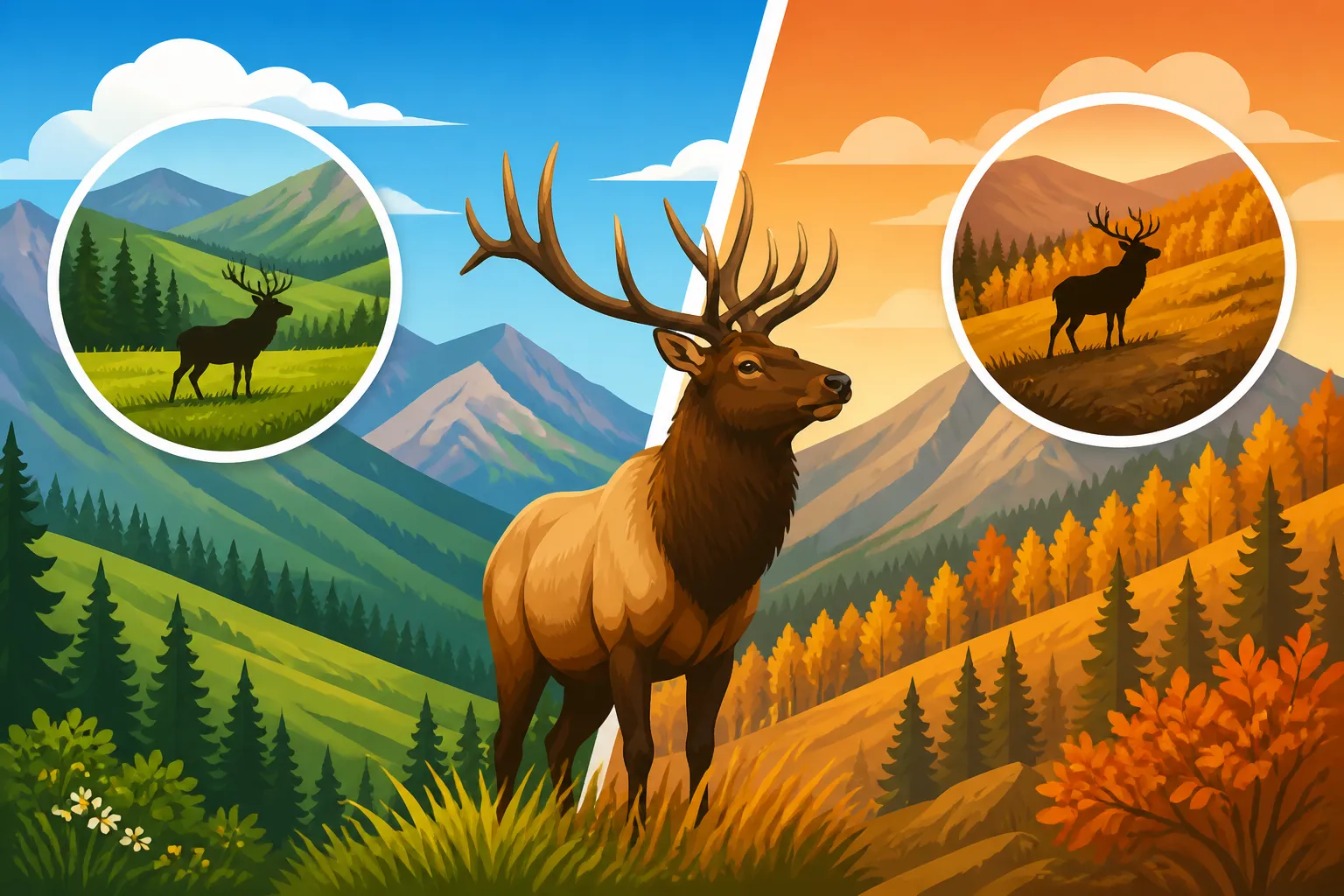
Here's a quick comparison of summer and fall elk range characteristics:
| Feature | Summer Range (Typically Late June – Early Sept) | Fall Range (Typically Mid-Sept – Nov) |
|---|---|---|
| Elevation | High (9,000 – 12,000+ ft) | Mid-to-Lower (6,000 – 10,000 ft, depending on snow) |
| Food | Lush, high-protein forbs and grasses | Woody browse, dried grasses, sometimes agricultural crops |
| Cover | Dense conifer stands, alpine pockets | Thick timber, north-facing slopes, deep canyons |
| Water | Abundant snowmelt, streams, seeps | Springs, main creek bottoms, still standing water |
| Hunter Pressure | Minimal | High, especially during rifle seasons |
| Primary Driver | Forage, cool temps, seclusion | Food, breeding (rut), escape pressure, weather |
| Hunting Strategy | Spot and stalk, often long-range glassing | Calling (rut), still-hunting, ambushing travel corridors |
Key Strategies for Locating Elk in Transition
Now that we understand why elk move, let's talk about how you can find them during these critical transition periods. It's a blend of technology, boots-on-the-ground effort, and good old-fashioned woodsman knowledge.
E-Scouting and Boots-on-the-Ground Reconnaissance
Modern technology has revolutionized pre-season scouting. Tools like GoHunt's mapping platform or OnX Hunt are absolutely invaluable for identifying potential summer and fall ranges before you even set foot in the mountains. Start by looking for areas that fit the descriptions of both ranges: high-elevation basins with north-facing timber for summer, and then lower, thicker timbered ridges, dark timber, and drainages for fall. Focus on areas with diverse habitat, where open feeding grounds meet dense cover and reliable water sources. Mark potential bedding areas, travel corridors, and water sources on your map. You can learn more about this in our guide on How to E-Scout Before a Colorado Hunt.
However, e-scouting is only part of the puzzle. Nothing replaces boots-on-the-ground reconnaissance. If possible, visit your chosen unit in the summer. Observe where elk are feeding and bedding at that time. Look for trails, rubs, and droppings. Then, closer to your hunt date, try to get into the unit again, or at least drive accessible roads, looking for fresh sign at varying elevations. Even if you don't see elk, fresh tracks in a mud puddle or new droppings can tell you a lot about recent movement. You're looking for evidence of the shift. Are elk still high, or have they started trickling down?
Understanding Feed, Cover, and Water in the Fall
As fall progresses, the quality of forage changes dramatically. Those lush alpine grasses dry out and lose much of their nutritional value. Elk will shift their focus to woody browse like aspen, serviceberry, mountain mahogany, and even conifer needles. Lower-elevation meadows or old clearcuts might still offer some palatable dried grasses or residual green-up, especially on south-facing slopes that get more sun. If agriculture is present nearby, they might venture into fields at night.
Cover becomes even more critical in the fall due to increased hunting pressure. Elk seek out the densest timber, deep canyons, and north-facing slopes that are often difficult for hunters to access. These areas provide visual security and thermal protection from the cold winds and snow. Don't overlook patches of thick dog-hair regeneration or areas with significant blowdowns; these can be impenetrable sanctuaries. Water sources, while still necessary, might be more limited as smaller seeps dry up, making larger creeks and springs even more attractive. Identifying these key elements on your map and then verifying them on the ground is paramount. When you're trying to How to Find Elk in Deep Timber, focusing on these elements will be key.
Adapting to Hunter Pressure and Weather Fronts
Perhaps the most challenging aspect of hunting elk in the fall transition is dealing with variables like hunter pressure and unpredictable weather. Elk are incredibly sensitive to disturbance. When rifle seasons open, areas that held elk during archery season can become ghost towns overnight. Elk will move to areas with less human activity, often deeper into wilderness, onto private lands if available, or into areas of dense, overlooked timber.
This means you need to be flexible and willing to adapt. Don't be afraid to change your hunting strategy or even your hunting area if you're not finding fresh sign. Pay close attention to weather forecasts. A significant cold front or early snow can be a hunter's best friend, pushing elk down from higher elevations and concentrating them. After a big snow, focus on south-facing slopes where the snow melts first, exposing forage. If it's warm, elk might stay high or linger in dark timber. Understanding how these factors influence their movement is key to successful Colorado Elk Hunting Methods Explained. For instance, if you're hunting during the late season, adapting to migration patterns and snow is crucial for How to Hunt Colorado Late-Season Migration. Don't forget to pack appropriately for the ever-changing weather conditions; a reliable backpack is essential, as highlighted in our guide on the Best Backpack for a Colorado Elk Hunt.
Knowing the difference between Colorado elk summer vs. fall range isn't just academic; it's a fundamental aspect of successful elk hunting. By understanding the motivations behind their movements and adapting your scouting and hunting strategies accordingly, you'll significantly increase your chances of being in the right place at the right time when that trophy bull or freezer-filling cow finally presents itself.
Disclaimer
Hunting is an inherently dangerous activity. This guide is for informational purposes only and does not substitute for proper training, experience, or adherence to all local, state, and federal hunting regulations. Always prioritize safety, respect wildlife, and obtain the necessary licenses and tags before heading into the field. Conditions in the Colorado wilderness can change rapidly, and hunters should be prepared for all contingencies.