Colorado Moose Safety and Behavior
Encountering a Colorado moose in its natural habitat is often a breathtaking experience, but it can also quickly become a stressful, even dangerous, situation if you don't understand their behavior. Many outdoor enthusiasts, from hikers to hunters, are caught off guard by the sheer size and unpredictable nature of these magnificent creatures, leading to unsettling close calls. This guide is here to unravel the mysteries of Colorado moose behavior, offering practical safety tips and crucial insights to ensure your next encounter is safe and respectful for both you and the moose.
Understanding Colorado Moose: A Gentle Giant's Nature
Colorado's moose population has seen a remarkable comeback, thriving in the willow-rich riparian areas and high-elevation forests across the state. While they generally prefer solitude and tend to be less aggressive than some of their counterparts in other parts of North America, these are still massive, wild animals. Their sheer size – bulls can stand over six feet tall at the shoulder and weigh over 1,000 pounds – means any misunderstanding of their intentions can have serious consequences. For anyone spending time in moose country, understanding their natural rhythms and habits is the first step toward safe coexistence.
Common Moose Habitats and Daily Routines
Moose in Colorado predominantly inhabit areas with abundant willow, aspen, and other woody browse. Think wetlands, river bottoms, and the edges of high-elevation forests, especially around places like North Park, the Never Summer Mountains, and the Grand Mesa. They are often found at elevations between 8,000 and 11,000 feet, particularly during the warmer months when they seek cooler temperatures and lush forage. Unlike deer or elk that might range widely, moose tend to be creatures of habit, often frequenting the same feeding and bedding areas day after day.
During the day, especially in summer, you'll often find them browsing or bedding down in thick cover, trying to escape the heat and flies. Early mornings and late evenings are typically their most active periods for feeding. It's during these times, particularly near water sources or dense willow thickets, that you're most likely to encounter them. Knowing this helps you predict where and when to be extra vigilant. Programs like GoHunt can provide detailed maps of typical moose ranges and vegetation types, which can be invaluable for pinpointing these high-probability encounter zones.
Recognizing Moose Body Language
Moose aren't always looking for a confrontation, but they will defend themselves, their calves, or their personal space with incredible force. Learning to read their body language is paramount to avoiding trouble. A moose that feels threatened won't necessarily give you a friendly warning. Often, the signs are subtle at first, escalating quickly.
If a moose lays its ears back, drops its head, raises the hair on its hump, or begins to lick its lips or clack its teeth, consider these red flags. These are clear indications of agitation and a warning that you are too close. A moose that starts to paw the ground, swing its head back and forth, or take a step or two towards you is actively considering a charge. Do not underestimate these signals. It's not bluffing; it's communicating its discomfort. Sometimes, they'll simply stop eating and stare intently in your direction, indicating you've been noticed and they're assessing the threat. Respect these cues, and start backing away slowly, giving them plenty of space.
The Mating Season (Rut) and Calving Season Impacts
Certain times of the year bring increased risk of aggressive moose behavior, particularly during the mating season (rut) in the fall and the calving season in late spring/early summer. During the rut, which typically runs from September through October, bull moose become highly focused on cows and can be incredibly unpredictable and aggressive, viewing anything as a potential rival or threat. This is especially true if a bull has been repeatedly bugled at by hunters or is simply feeling the intensity of competition. Hunters need to be particularly cautious when trying to learn How to Hunt Colorado Moose in the Rut.
Cow moose with calves are perhaps the most dangerous of all. Calves are born in May and June, and their mothers are fiercely protective. Even the slightest perceived threat can trigger a defensive charge. A cow moose will not hesitate to stomp or kick anything she sees as a danger to her young. It's crucial to always maintain a very wide berth if you see a cow with a calf, even if they appear calm. Remember, these babies are small and often well-hidden, so if you see a cow, assume a calf is nearby, even if you don't spot it immediately.
Safety Protocols for Moose Encounters
Even with the best intentions, encountering a moose happens. Knowing exactly what to do can be the difference between a memorable wildlife viewing and a scary, potentially injurious incident. The key is to react calmly, understand moose behavior, and prioritize their space.
Maintaining Safe Distances
The golden rule for any wildlife encounter is distance. For moose, this means a lot of distance. While there isn't an exact magic number, a minimum of 50-100 yards is generally recommended. If you're close enough for the moose to lift its head and stare at you, or if it changes its behavior in any way, you're too close. One common frustration is when a moose is right on the trail, blocking your path. It's tempting to try and skirt around it quickly, but this is exactly when many incidents occur.
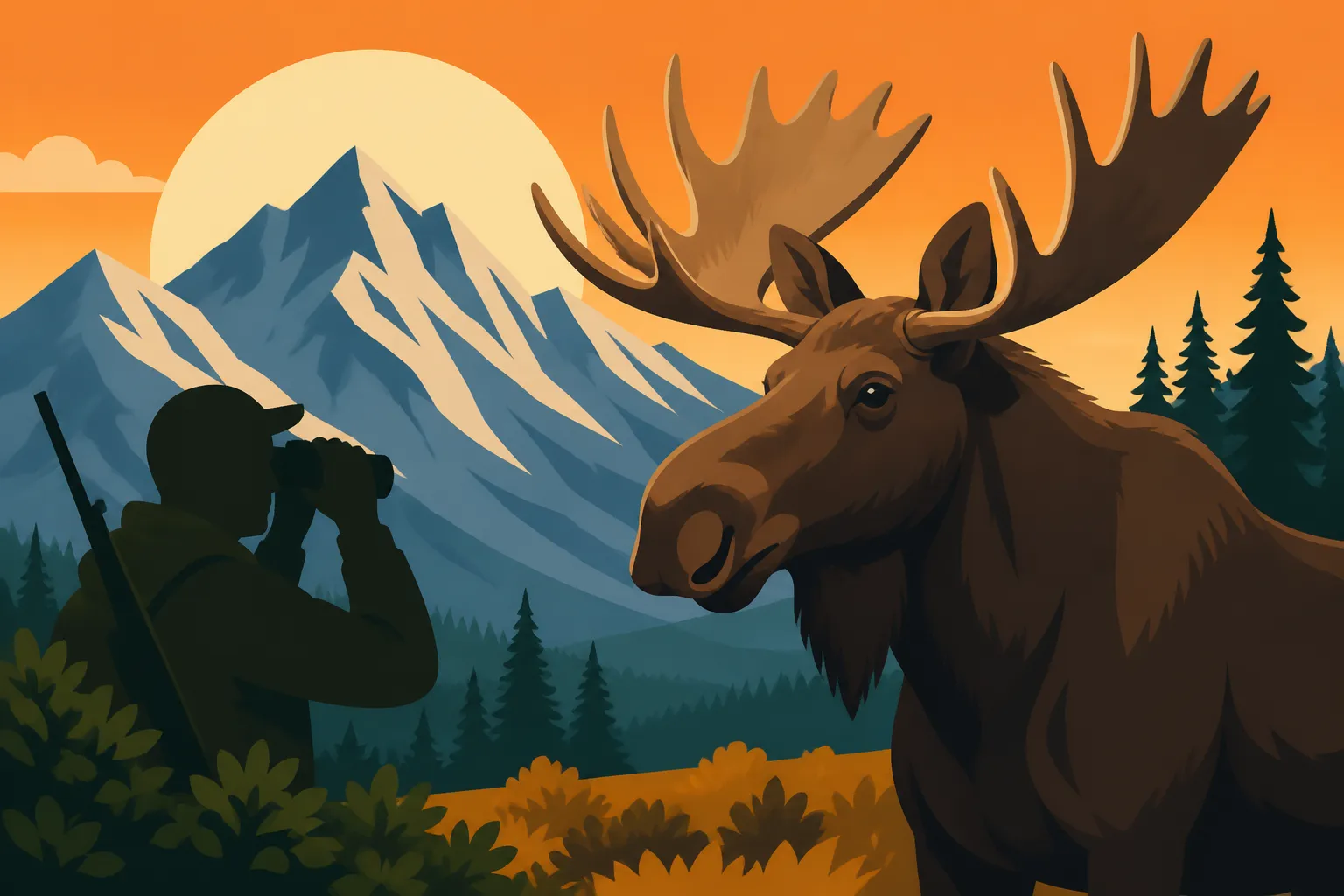
Your best bet is to calmly stop, assess the situation, and re-route if possible. If you must wait, do so patiently and quietly, keeping a safe distance. Never approach a moose for a photo, no matter how tempting. That stunning close-up isn't worth a trip to the emergency room. Carry binoculars or a camera with a telephoto lens to get your shots from a safe distance. Using tools like the GoHunt app to check property boundaries can also help you understand if you're in a common moose zone before you even step foot on a trail, allowing you to prepare mentally.
What to Do If a Moose Charges
Let's be realistic: a moose charge is terrifying. Unlike bears, moose rarely bluff charge. If a moose decides to come at you, it usually means business. Your instincts might tell you to run, but that's often a losing battle. Moose are surprisingly fast, capable of galloping up to 35 miles per hour, and can easily outrun a human over broken terrain.
Instead of running, your best strategy is to find immediate cover. Look for a large tree, a rock, or even a vehicle to put between yourself and the moose. Climb if you can – moose have surprisingly poor eyesight up close and struggle with steep inclines, but their long legs make climbing over obstacles relatively easy for them. If there's no cover, curl into a ball, protecting your head and vital organs, and play dead. While this sounds extreme, a moose typically stops stomping once it believes the threat is neutralized. Remain still until you are absolutely certain the moose has moved on. Carrying bear spray, while primarily designed for bears, can also be effective against a charging moose in a desperate situation.
Preventing Unwanted Encounters
The best encounter is the one you avoid entirely. When recreating or hunting in Colorado, especially in known moose habitat, always stay vigilant. Make noise as you hike to avoid surprising an animal around a blind corner. Sing, talk loudly, or wear a bear bell (though moose are less bothered by bells than bears). Pay attention to your surroundings: fresh tracks, droppings, and browsed vegetation are all signs that moose are in the area.
Keep dogs on a leash, or better yet, leave them at home if you're going deep into moose country. Dogs, especially those that bark or chase, are a major trigger for moose aggression. A moose will often chase a dog back to its owner, turning the owner into an unwitting target. If you see a moose, detour widely, even if it adds miles to your journey. Using mapping apps to study potential Colorado Moose Range and Units before your trip can help you identify areas where moose encounters are more likely, enabling you to plan routes that allow for better visibility and easier detours.
Here's a quick reference table for managing moose encounters:
| Moose Behavior | Your Action | Explanation |
|---|---|---|
| Calmly browsing, unaware of you | Observe from a distance (100+ yards), avoid startling | Respect their space; enjoy the view without interfering. |
| Stops browsing, looks at you, ears forward/back | Stop moving, assess, slowly increase distance, make yourself known softly | You've been noticed. Give them space to decide you're not a threat. |
| Head down, ears back, hair raised, lip licking | Immediate defensive posture, find cover, back away slowly and silently | This is a warning. They feel threatened. Do not run or make sudden movements. |
| Pawing ground, head swinging, takes a step | Prepare for charge, identify escape routes/cover, climb if possible | Serious warning signs. Seek cover behind a large object. |
| Charging | Seek immediate cover (large tree, vehicle), climb if possible, play dead | Do not run. Protect your head and vital organs. Wait until they are completely gone before moving. |
| Cow with calf (any behavior) | Maintain extreme distance (150+ yards), detour widely | Highly protective mothers. Assume a calf is nearby, even if not seen. |
Colorado Moose Hunting Considerations
For those who are fortunate enough to draw one of Colorado's highly coveted moose tags, understanding their behavior isn't just about safety, but also about ethical hunting and successful harvests. Colorado Moose hunting odds are notoriously low, so once you have a tag, every detail matters.
Ethical Hunting and Moose Behavior
Ethical hunting demands a deep respect for the animal, and that includes understanding their natural behavior to ensure a quick, humane harvest. Moose, especially during the rut, can be quite vocal, making them callable. However, aggressively calling or pursuing a bull can stress the animal and lead to unpredictable charges. When you're trying to call in a silent bull, be mindful of your surroundings and have an exit strategy in case the moose's response is more aggressive than anticipated.
After a shot, tracking a moose can also lead to close encounters with a wounded, agitated animal. Always approach a downed moose with extreme caution. Watch for eye movement, listen for breathing, and observe any twitching or leg movement. A moose that appears down can still get up and charge if it feels threatened. Carry a sidearm or have a follow-up shot ready for safety.
Tagging and Drawing for Colorado Moose
Obtaining a moose tag in Colorado is a testament to patience and persistence, often requiring many years to accumulate enough Colorado Moose Draw Point Requirements. Because these tags are so limited, every hunter has a responsibility to understand moose behavior and habitat thoroughly. A great resource for preparing for your hunt is reading the comprehensive Colorado Moose Hunting Guide.
When researching units for your hunt, use resources like the Colorado Parks and Wildlife (CPW) statistics and mapping tools, along with platforms like GoHunt, to understand historical success rates, moose concentrations, and access points. This will help you select the best unit for your limited opportunity. Knowing the Colorado Moose Season Dates and Tags is also crucial for planning your hunting window to align with optimal moose activity and behavior, ensuring a safer and more successful hunt.
Post-Harvest Safety and Logistics
Harvesting a moose is only half the battle; the logistical challenge of processing this enormous animal in the field is substantial and requires careful planning and safety considerations. A downed moose can present a variety of challenges, from its sheer weight to the often-remote locations it inhabits. Before you even head out, have a plan for How to Pack Out an Elk in Colorado which can be adapted for a moose – it will require even more muscle and time.
Ensure you have sufficient help, proper game bags, and sharp knives. The area around a downed moose can attract predators like bears and mountain lions, especially if the meat is left unattended. Work efficiently and be aware of your surroundings. If you're backpacking into remote wilderness areas, you'll also want to review a thorough Colorado Backcountry Hunting Gear List to ensure you have everything needed for both the hunt and the pack out, including tools for dealing with a potential overnight stay due to the size of the animal. Always prioritize getting the meat cooled and safely out of the field, but never at the expense of your personal safety.
General Tips for Coexisting with Colorado Moose
Living and recreating in Colorado means sharing the landscape with these magnificent animals. Respect, awareness, and education are the cornerstones of safe coexistence.
Education and Awareness
The more we understand about moose, the better equipped we are to interact with them safely. Beyond what's covered here, continue to educate yourself through CPW resources, wildlife documentaries, and local advisories. Share what you learn with friends, family, and fellow outdoor enthusiasts. A well-informed public is a safer public. Remember that while a moose might seem docile, it's a wild animal whose actions are governed by instinct, not familiarity. Even seemingly friendly moose in areas frequented by humans can become aggressive without warning. If you're just starting your journey into hunting, a good place to begin your education on various species is the Colorado Big Game Species Guide.
Reporting Aggressive Moose
If you encounter a moose exhibiting unusually aggressive behavior, especially if it's consistently approaching people, blocking trails, or showing no fear, it's important to report it to Colorado Parks and Wildlife. They monitor moose populations closely and can intervene if an animal becomes a public safety risk. Provide as much detail as possible: location, date, time, description of the moose (cow, calf, bull, antler size), and specific behaviors observed. This information helps wildlife officials manage these populations and keep both humans and moose safe. Remember, these magnificent animals are a treasured part of Colorado's wildlife heritage, and our safe interactions ensure they continue to thrive for generations to come.
Disclaimer
The information provided in this guide is for informational purposes only and is not a substitute for professional guidance or official regulations. Hunting regulations, wildlife behavior, and safety protocols can change. Always consult the latest Colorado Parks and Wildlife (CPW) regulations and local authorities before engaging in any hunting or outdoor activities. User assumes all risk.