Colorado Whitetail Deer Hunting for Beginners
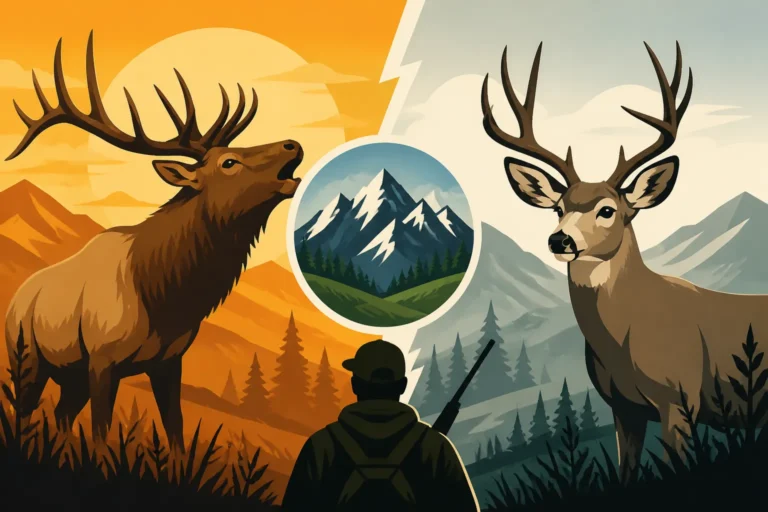
So, you're dreaming of hunting whitetail deer in Colorado, but all you ever hear about is elk and mule deer, right? It can feel like you're looking for a needle in a haystack, especially if you're used to the whitetail meccas of the Midwest or the South. Don't worry, you're not alone in that confusion. This guide is here to cut through the noise, validate those frustrations, and show beginners exactly how to approach hunting these elusive creatures in a state famous for its mountains, not its timber whitetails.
Understanding Colorado's Whitetail Landscape
Hunting whitetails in Colorado is a totally different ballgame than chasing them in, say, Kansas or Iowa. Forget those sprawling hardwood forests and endless oak stands; here, it's about finding those unique pockets where they thrive, often against a backdrop of vastly different terrain.
Where Whitetails Roam in Colorado
When you picture Colorado, your mind probably jumps to towering peaks, vast alpine basins, and dense pine forests – classic elk and mule deer country. But whitetail deer, while not as numerous or widespread as their mule deer cousins, do indeed call parts of Colorado home. Their habitat is highly specific and often linear. You'll primarily find them concentrated along major river drainages and their associated riparian zones, particularly in the eastern plains and some western slope river systems.
Think of the South Platte, Arkansas, Republican, and Yampa Rivers, along with their tributaries. These river corridors provide the dense cover, water, and agricultural food sources that whitetails absolutely depend on. Imagine mile after mile of sagebrush, shortgrass prairie, or dry, rolling hills, and then suddenly, a lush green ribbon of cottonwoods, willows, and thick brush winding through it – that's often where you'll find these whitetails hunkering down. They cling to these areas for dear life, relying on the dense vegetation for bedding, hiding from predators, and foraging. You'll rarely, if ever, encounter a true whitetail high up in the mountains, so adjust your expectations and focus your scouting efforts accordingly.
The Difference Between Whitetails and Mule Deer in Colorado
For a beginner, especially one new to Western hunting, telling the difference between a whitetail and a mule deer in the field can be surprisingly tricky, especially if you only get a quick glimpse. However, knowing the distinctions is critical, not just for proper identification but also for understanding their behavior and, of course, for legal tagging purposes. Misidentification can lead to a costly mistake or a missed opportunity for your chosen species.
Key Differences to Look For:
- Antlers: This is often the easiest tell for bucks. Whitetail antlers typically grow forward from a single main beam, with individual tines (points) sprouting upwards from that beam. Mule deer antlers usually bifurcate, meaning they fork and then fork again, creating a more "candelabra" appearance.
- Tail: The namesake for whitetails is their tail – long, relatively narrow, and entirely white underneath. When alarmed, they'll often raise it like a flag (hence "flagging") and display the bright white. Mule deer have a shorter, rope-like tail that's typically cream-colored with a black tip, or sometimes entirely black. They don't "flag" in the same way; they tend to keep their tails down.
- Ears: Mule deer are named for their large, mule-like ears, which are noticeably bigger than a whitetail's ears.
- Coloration and Size: While both can vary, mule deer often have a more grayish-brown coat, especially in winter, and a distinct white rump patch. Whitetails tend to be a more reddish-brown, without the prominent white rump. Mule deer are also generally larger-bodied than whitetails.
- Movement: This is a huge behavioral difference. When spooked, whitetails usually run with a fluid, horizontal gate, often weaving through cover. Mule deer, conversely, tend to "stot" or "pronk" – a distinctive four-legged bounding gait where all four feet hit the ground at once. This movement helps them navigate uneven terrain and get a better view over sagebrush.
Understanding these differences isn't just academic; it directly impacts how you hunt them. Whitetails are generally more reclusive, relying on thick cover and their keen senses to avoid detection. Mule deer, comfortable in more open country, might tolerate more direct observation before moving off.
Navigating Colorado's Whitetail Hunting Seasons and Tags
Okay, so you know where they live and how to tell them apart. Now, how do you actually get a tag and when can you hunt them? This is where Colorado's system can feel a bit complex, especially compared to states with simpler, statewide whitetail seasons.
Whitetail-Specific Seasons
Colorado Parks and Wildlife (CPW) manages deer hunting by Game Management Units (GMUs) and species-specific regulations. Unlike states where you just buy an over-the-counter (OTC) whitetail tag, Colorado's whitetail hunting is primarily a draw-only affair, particularly for antlered deer. The seasons themselves will often coincide with general deer seasons but will specify "Plains Deer" or be restricted to specific GMUs known to hold whitetails.
- Archery Season: Typically runs from late August through September. This can be a fantastic time to pursue whitetails, as they are often patterned around water and food sources before the rut kicks in. You'll need to confirm the specific GMU regulations, as some Plains units might be draw-only for whitetail bucks even during archery. Learn more about general archery methods in our Colorado Archery Elk Hunting Guide, though the tactics will differ for deer.
- Muzzleloader Season: Usually a shorter window in mid-September, right before the rifle seasons. This offers a unique challenge and often provides good opportunities during the pre-rut.
- Rifle Seasons: These are where things get varied. Many of Colorado's rifle seasons are structured into "combined" seasons, meaning you can hunt both mule deer and whitetails if your tag allows and you're in the right unit. However, specific "Plains Rifle" seasons, often in October and November, are where whitetail hunters really focus. These seasons are specifically designed for the lower elevation, eastern plains areas where whitetails are found. It's crucial to check the CPW Big Game Brochure each year, as dates and specific GMU allocations can change. For a deeper dive into general rifle hunting, you might find useful information in our Colorado Rifle Elk Hunting Guide. You can also find specifics on Colorado Plains Rifle Season Explained.
It cannot be stressed enough: always double-check the current year's CPW Big Game Brochure for the precise season dates, hunt codes, and regulations for the GMU you intend to hunt. This is your bible!
Understanding the Draw System for Whitetails
Here's the cold, hard truth for most whitetail hunters in Colorado: you'll almost certainly be entering the draw. Over-the-counter (OTC) whitetail tags are extremely rare, if they exist at all, for antlered deer.
- Preference Points: Colorado uses a preference point system for its big game draw. For most coveted tags, including whitetail bucks in popular GMUs, you'll need to accumulate preference points to increase your odds of drawing. While whitetail tags generally require fewer points than trophy mule deer or limited entry elk units, prime whitetail buck tags in accessible river bottom units can still be competitive. It's not uncommon to need 1-3 preference points for a solid buck tag, and more for truly exceptional units. Our Colorado Draw System and Preference Points guide provides a comprehensive overview, and you can learn more about Colorado Preference Points Explained.
- Hunt Codes: Each specific tag has a unique hunt code, which designates the species, sex, weapon, season, and GMU. For example, a hunt code might specify "White-tailed Deer, Either Sex, Archery, GMU XXX." Pay very close attention to these codes when applying.
- Antlerless Tags: Sometimes, it's easier to draw antlerless (cow/doe) whitetail tags, often requiring 0 or 1 preference point. These can be a great way for beginners to get into the field, gain experience, and fill the freezer, even if a trophy buck isn't the immediate goal. Some antlerless whitetail tags may even be available as "List B" tags in a secondary draw, offering a second chance to pick up a license after the primary draw.
Example Colorado Whitetail Season & Draw Overview (Illustrative, always check current CPW regulations):
| Season Type | Weapon | Typical Dates | Draw Type (Likely) | Preference Points (Likely) | Primary Focus |
|---|---|---|---|---|---|
| Archery | Bow/Crossbow | Late Aug – Late Sep | Draw | 0-1 (Doe), 1-3 (Buck) | Patterning, pre-rut, water/food sources |
| Muzzleloader | Muzzleloader | Mid-Sep | Draw | 1-2 (Doe), 2-4 (Buck) | Pre-rut, cooler weather, specific GMUs |
| Early Rifle | Rifle | Early Oct | Draw | 2-4 (Buck) | Specific Plains Units, can be competitive |
| Late Rifle | Rifle | Late Oct – Mid-Nov | Draw | 1-3 (Doe), 2-5+ (Buck) | Peak rut opportunities, colder weather, post-harvest |
Remember, this table is a generalization. The actual points needed and tag availability are highly dependent on the specific GMU, the quota, and applicant numbers for that year. Services like GoHunt are invaluable for researching draw odds, unit statistics, and predicting point requirements, helping you strategize your application.
Key Strategies for Beginner Whitetail Hunters in Colorado
Hunting whitetails in Colorado demands a shift in mindset and strategy compared to the expansive, spot-and-stalk tactics often employed for mule deer or elk in the mountains. Here, it’s about micro-terrain, patience, and intimately knowing the small, linear habitats these deer call home.
E-Scouting and Ground Scouting for Whitetail Hotspots
For Colorado whitetails, effective scouting, both from your computer and on the ground, is absolutely non-negotiable. Their habitat is so specific that you need to pinpoint those prime areas before you even set foot in the field.
- Embrace E-Scouting: Start with online mapping tools. Applications like GoHunt and onX Hunt are game-changers. Use them to identify river and creek systems – look for those distinctive green ribbons of vegetation running through otherwise arid landscapes. Pinpoint agricultural fields nearby, as these are critical food sources. Search for isolated pockets of timber, dense brush, or even small ravines that offer cover. These linear habitats create natural pinch points, funnels, and travel corridors where deer are likely to move. Pay close attention to public land boundaries within these corridors using your mapping tools; public river access points or State Wildlife Areas (SWAs) will be key. Our guide on How to E-Scout Before a Colorado Hunt offers detailed strategies applicable here.
- Ground Scouting is Paramount: Once you've identified potential areas on the map, it's time to hit the ground, ideally outside of hunting season to avoid disturbing deer. Walk those river bottoms slowly. Look for whitetail sign:
- Rubs: Saplings or small trees with bark rubbed off by bucks shedding velvet or marking territory. Whitetail rubs are often smaller and more concentrated than the larger rubs you might see from a big mule deer.
- Scrapes: Areas where bucks paw away leaves and debris, then urinate in the cleared spot. These are communication hubs, often under an overhanging branch (a "licking branch") which the buck will rub with his forehead glands.
- Trails: Look for well-worn paths, especially leading from dense bedding cover to feeding areas or water. These are your highways.
- Bedding Areas: Thickest cover available, often on benches above a river or in dense tangles of brush.
- Water Sources: While rivers are obvious, isolated ponds or seeps can be crucial, especially in drier areas.
- Focus on Micro-Terrain: Unlike hunting a vast mountain basin, whitetail hunting in Colorado often boils down to finding those small, overlooked pockets of prime habitat. A small draw, a bend in the river with exceptionally thick cover, or a brushy fencerow bordering a cornfield can hold a trophy buck. Think small scale, but critically important.
Effective Hunting Methods for Colorado Whitetails
Given the unique habitat, your hunting methods for Colorado whitetails will lean heavily into concealment and understanding deer movement within these limited spaces.
- Still-Hunting and Spot-and-Stalk: While classic spot-and-stalk is more commonly associated with mule deer in open country, it can be adapted for whitetails, especially along river bends or edges of agricultural fields. You'll need to move extremely slowly, utilizing every bit of cover, and constantly scanning with your binoculars. Still-hunting, moving a few steps and then pausing for several minutes, can be deadly in the thick riparian zones, allowing you to pick apart the cover and catch deer unawares. Always be mindful of the wind – whitetails will bust you in a heartbeat if they catch your scent. For more nuanced tactics, consider exploring resources on How to Still-Hunt Colorado Timber.
- Ground Blinds and Tree Stands: These are probably your bread and butter for Colorado whitetails, particularly for beginners.
- Ground Blinds: Portable pop-up blinds offer excellent concealment and scent control, which is vital in these dense, linear habitats. Set them up well in advance if possible to allow deer to get used to them. Place them along known travel corridors, near active scrapes or rubs, or overlooking food sources (like an alfalfa field) or water.
- Tree Stands: If you can find suitable trees – often large cottonwoods along river bottoms – a tree stand offers a fantastic vantage point. It gets your scent above the primary deer level and allows you to see over some of the dense underbrush. Secure your stand safely and practice shooting from it. For specific insights, our guides on Colorado Whitetail Deer Hunting: Tree Stand Tactics and Colorado Whitetail Deer Hunting: Ground Blind Tactics delve deeper.
- Ambush Hunting: This involves positioning yourself in a strategic location (your stand or blind) and waiting for deer to move between their bedding and feeding areas. The first and last hours of daylight are typically the most productive. Understanding prevailing wind patterns and thermal currents in these river bottoms is critical for setting up an effective ambush.
Remember, patience is paramount. You might not see dozens of deer like you would in other whitetail states. However, the deer you do encounter are often mature and challenging to hunt, making the reward even sweeter.
Public and Private Land Access for Colorado Whitetails
Finding good whitetail hunting spots in Colorado, particularly for a beginner, can feel like a labyrinth. A significant amount of the prime whitetail habitat exists on private property, which makes public land access even more valuable and, sometimes, more pressured.
Public Land Opportunities
While not as abundant as mountain mule deer or elk terrain, Colorado does offer public land opportunities for whitetails, primarily concentrated along those crucial river systems we discussed.
- State Wildlife Areas (SWAs): These are managed by Colorado Parks and Wildlife and often encompass sections of river bottom, providing critical wildlife habitat and public hunting access. Many SWAs along the South Platte, Arkansas, and Republican Rivers hold whitetails. The catch? They can be very popular and experience high hunter pressure, especially during opening weekends. It's essential to research each SWA's specific rules, as some may have restrictions on access, weapon types, or even hunter numbers. Always download or print maps for specific SWAs before you go.
- State Trust Lands (STLs): These are lands managed by the State Land Board and are open for public recreation (including hunting) with the purchase of a valid hunting license. STLs can be fantastic hidden gems, often less pressured than SWAs. However, they are typically leased for grazing or other uses, so respect the land and any infrastructure. Like SWAs, you need to identify them on your mapping apps, such as GoHunt or onX, and confirm access rules.
- Bureau of Land Management (BLM) Land: While less common in the primary whitetail zones compared to western Colorado, some BLM parcels can be found along the eastern plains, often bordering river systems. These can offer excellent hunting, but they tend to be fragmented, sometimes landlocked, and require careful e-scouting to ensure legal access. Our comprehensive Colorado Public Land Hunting Guide offers broader advice on navigating these various land designations.
- Overcoming Pressure: When hunting public land for whitetails, especially on the plains, expect to encounter other hunters. To increase your odds, be willing to walk further than others, scout harder to find overlooked pockets, or hunt during weekdays when pressure is typically lower. Many whitetails learn to become nocturnal or move into the thickest cover during daylight hours once hunting season begins.
Navigating Private Land and Permission
Here's the honest truth: a considerable amount of the best whitetail hunting in Colorado occurs on private land. These properties often encompass the most productive agricultural fields, the densest river bottom cover, and benefit from less hunter pressure. For a beginner, this can be a hurdle, but it's not insurmountable.
- Seeking Permission: Your best bet for accessing private land is to simply ask. Start early, well before the season. Knock on doors, introduce yourself, and respectfully ask for permission to hunt. Be polite, offer to help with chores around the farm or ranch, and leave your contact information. Be prepared for a lot of "no's," but a single "yes" can unlock incredible opportunities. Emphasize that you're a responsible hunter, will close gates, respect property, and share any game meat if that's an option. Our guide on How to Get Landowner Permission in Colorado provides valuable tips for this often-challenging process.
- Landowner Vouchers and Ranching for Wildlife: For those with a larger budget, some private landowners participate in programs like Ranching for Wildlife (RFW) or sell landowner vouchers. These programs allow access to private land and often provide an easier path to obtaining a draw-only tag. However, these opportunities can be expensive and often require booking through an outfitter. While this guide is focused on DIY for beginners, it's an option to be aware of for future hunts.
- Tools for Identification: Using a mapping app like GoHunt is invaluable here. It allows you to see property boundaries and identify landowners, giving you a starting point for contacting them. Look for properties that connect public land or create natural funnels, as these are often prime spots.
Remember, gaining private land access is about building relationships and trust. Respect the land, respect the landowner, and always follow through on your promises. A good relationship can lead to hunting opportunities for years to come.
Essential Gear and Preparation for Colorado Whitetail Hunting
Hunting whitetails in Colorado requires a specific gear setup tailored to the plains environment and the unique challenges you'll face. You won't necessarily need the heavy-duty mountain gear of an elk hunter, but comfort, concealment, and reliability are still paramount.
Optics and Clothing Considerations
The right optics and clothing can make or break your whitetail hunt, especially when patience is key and conditions can shift rapidly.
- Optics: Good quality binoculars are your most important tool, hands down. You’ll spend a lot of time glassing river bottoms, field edges, and brushy draws from a distance. A pair of 10×42 or 12×50 binoculars are ideal. Consider adding a spotting scope (15-45x or 20-60x) if you plan on extended glassing sessions across large agricultural fields or open plains. This will help you identify deer at extreme ranges, judge bucks, and confirm they are indeed whitetails before making a move.
- Layered Clothing: Colorado's plains weather can be notoriously fickle. You might start your morning in freezing temperatures with a stiff wind, only for it to warm up considerably by midday. Layering is crucial.
- Base Layers: Moisture-wicking synthetics or merino wool.
- Mid-Layers: Fleece or puffy insulation for warmth.
- Outer Layer: A windproof and water-resistant shell is essential. On the open plains, that wind cuts right through you.
- Camouflage: While you don't need to be head-to-toe in the latest high-tech camo for whitetails, breaking up your outline is important. For ground blind hunting, a dark, muted pattern or even dark solids can work well. For still-hunting or stand hunting, a camouflage pattern that matches the local vegetation (like brown, green, and gray tones) is beneficial.
- Warmth: Don't forget a warm hat, gloves, and thick socks. Cold feet or hands will quickly send you back to the truck.
Weapons and Other Essentials
Your choice of weapon should be one you're proficient with and ethically suited for deer hunting. Beyond that, a few key items will ensure you're prepared for any scenario.
- Rifle Calibers: For rifle hunters, most popular deer calibers are perfectly adequate for Colorado whitetails. Cartridges like the .243 Winchester, .270 Winchester, 6.5 Creedmoor, .308 Winchester, and .30-06 Springfield are all excellent choices. They provide sufficient knock-down power without excessive recoil, making follow-up shots easier if needed. Make sure your rifle is sighted in accurately for the distances you expect to shoot, as shots across open fields can sometimes stretch further than expected. For a more detailed guide on rifle choices, refer to Colorado Whitetail Deer Hunting: Rifle Tactics.
- Archery Setup: If bowhunting, a compound bow set up for deer hunting with a draw weight you can comfortably manage is key. Ensure your broadheads are sharp and correctly matched to your arrow setup for maximum penetration. Practice extensively, especially from awkward positions you might find yourself in from a ground blind or tree stand. Our guide on Colorado Whitetail Deer Hunting: Archery Tactics can help fine-tune your approach.
- Other Essentials:
- Backpack: A comfortable daypack to carry your layers, food, water, and emergency gear.
- First-Aid Kit: Always carry a basic first-aid kit for minor cuts, scrapes, or blisters.
- Water: Stay hydrated. Even in cooler weather, you'll be exerting yourself.
- Game Bags: Essential for protecting your meat once you've harvested a deer, especially if you have a long pack out or need to keep the meat clean while cooling.
- Sharp Knife: For field dressing.
- Flashlight/Headlamp: For early morning hikes in and late evening hikes out.
- Navigation: Your phone with a mapping app (like GoHunt) and a portable charger, plus a physical map and compass as a backup.
- Hunting License and Tags: Always, always carry these!
- Plastic Zip Ties/Pen: For attaching your tag to the deer immediately after harvest.
- Rangefinder: Critical for accurately judging distances in varied terrain, preventing misjudged shots.
Being prepared for that moment of truth means having your rifle sighted in, knowing its capabilities, and having all the necessary gear to cleanly harvest and process your deer. Don't skimp on preparation, and your Colorado whitetail hunt will be a more enjoyable and successful experience.
While Colorado may not be a traditional whitetail destination, it offers a unique and incredibly rewarding challenge for those willing to adapt their strategy. It's not about endless timber; it's about pinpointing those specific riparian corridors and agricultural zones, understanding the nuanced differences between whitetails and mule deer, and patiently waiting for your opportunity. Embrace the detailed scouting, the unique landscape, and the satisfaction of harvesting a whitetail in a truly unexpected setting.
Disclaimer
Hunting is an inherently dangerous activity. This guide provides general information and recommendations; however, individual hunters are solely responsible for understanding and adhering to all current Colorado Parks and Wildlife (CPW) regulations, local laws, and ethical hunting practices. Always prioritize safety, responsible firearm handling, and respect for wildlife and private property. Conditions and regulations can change, so always consult the most up-to-date official CPW Big Game Brochures before planning and executing any hunt.