Colorado Mule Deer Migration
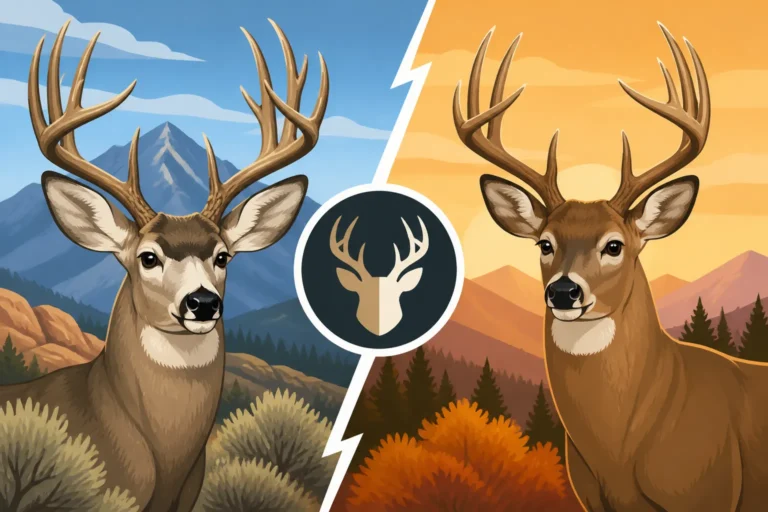
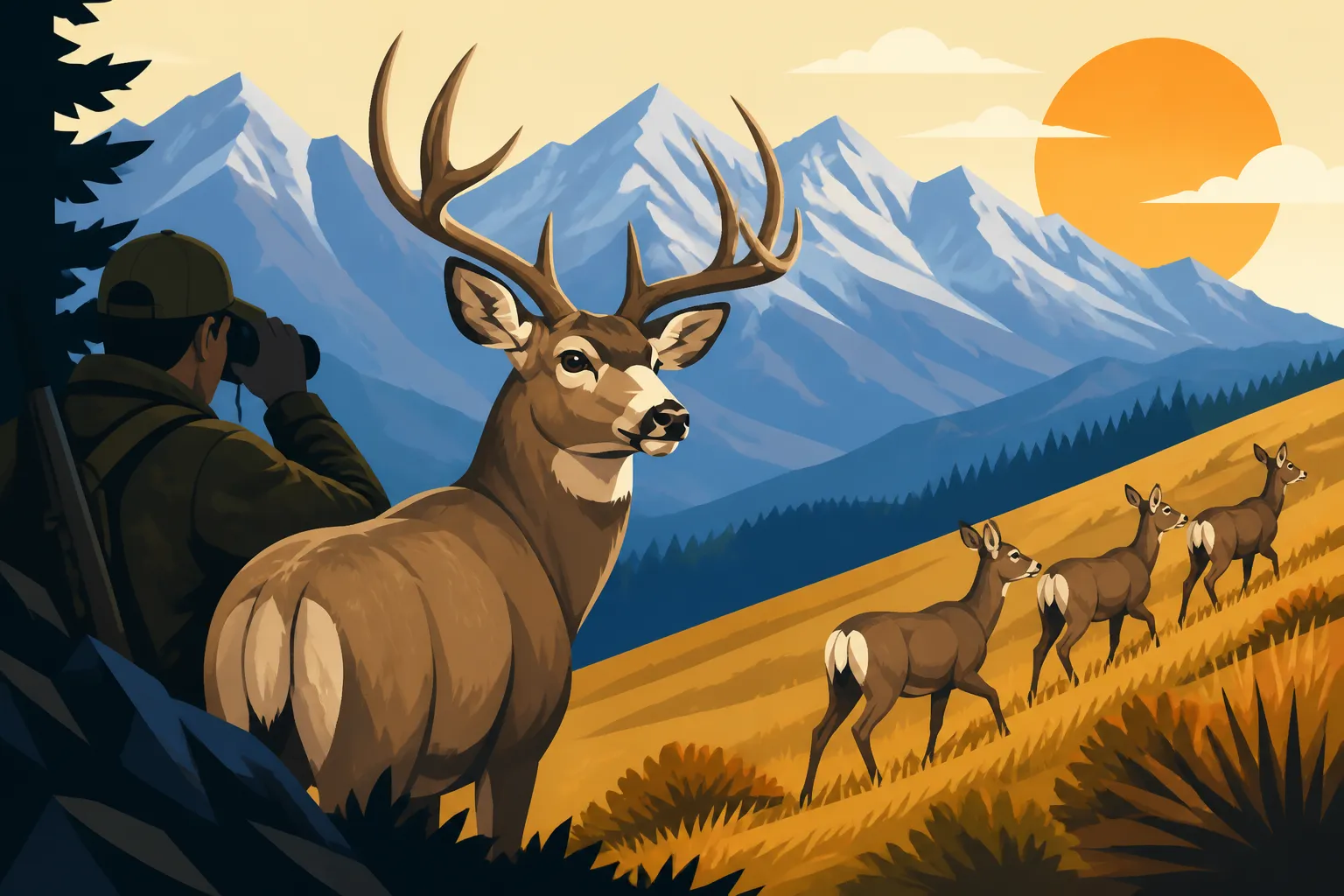
Many Colorado mule deer hunters face the frustrating challenge of finding deer that seem to vanish overnight. One day, a basin is crawling with bucks, and the next, it's empty. This disappearing act is often due to mule deer migration, a complex and essential movement driven by seasonal changes. Understanding these intricate journeys is key to consistent success in the field, and this guide will unpack everything you need to know about Colorado mule deer migration patterns and how to adapt your hunting strategy to them.
Understanding Colorado Mule Deer Migration
If you've ever spent countless hours scouting a promising area only to find it deserted come opening day, you've likely experienced the impact of mule deer migration firsthand. It’s not just a random stroll; it’s a deeply ingrained survival mechanism that dictates where deer are and when. Trying to hunt mule deer without understanding their migratory habits is like trying to navigate the mountains without a map – you might get lucky, but you're probably going to get lost.
Why Mule Deer Migrate
At its core, mule deer migration is all about survival. These magnificent animals aren't just moving for fun; they're moving to find food and escape harsh weather conditions that would otherwise claim their lives. In Colorado, with its dramatic elevation changes and intense winters, mule deer have evolved to shift their entire existence between high-country summer ranges and lower-elevation wintering grounds.
Imagine a mule deer herd living high in the San Juan Mountains during the lush summer months. The alpine meadows are bursting with nutrient-rich forbs and grasses, and the timber offers cool shade and security. But as autumn deepens and the first heavy snows start to fall, that high-country paradise quickly transforms into a death trap. Snow packs down, burying critical forage, and the energy required to simply move through deep drifts becomes unsustainable. Their instinct, honed over millennia, tells them it's time to move. This isn't just a choice; it's a genetic imperative. While individual deer can sometimes adjust their specific routes based on conditions, the general pattern of moving from high to low and back again is deeply programmed.
Seasonal Movement Patterns
Mule deer movements in Colorado follow a fairly predictable, yet always adaptable, annual cycle. Knowing these general patterns is the first step in understanding their migration.
During the warmer months, roughly from late spring through early fall, mule deer are typically found on their summer ranges. These are often the high-elevation basins, timbered slopes, and alpine meadows where forage is abundant and nutritious, perfect for fawns to grow and bucks to pack on mass and grow impressive antlers. If you're hunting early archery or even some of the earlier rifle seasons, your focus will be on these areas. This period is when they're at their most spread out and often in smaller groups, making spot-and-stalk tactics particularly effective. You might want to brush up on your skills with our Colorado Mule Deer Hunting Guide or delve into Colorado Mule Deer Hunting: Spot-and-Stalk Tactics.
As the days shorten and temperatures drop in late September and October, deer begin to stage and make their initial movements towards their winter ranges. This is often referred to as the "transition period," and it can be a golden opportunity for hunters. Deer will be moving through mid-elevation areas, utilizing specific drainages, ridges, and saddles as travel corridors. This period often coincides with the general rifle seasons. By late fall and early winter, once hunting seasons are largely over, the deer have settled into their dedicated winter ranges. These are typically lower-elevation areas, often south-facing slopes that shed snow faster, and areas with available browse like bitterbrush, serviceberry, or sagebrush that can sustain them through the lean months. It's a tough time for them, and these areas are critical for their survival until spring green-up.
Key Migration Corridors and Bottlenecks
While deer migrations cover vast landscapes, they don't just wander aimlessly. They often follow established routes, year after year, known as migration corridors. These are essentially wildlife highways, pathways that have been used by generations of mule deer to move between their seasonal ranges. These corridors can be wide-open expanses or narrow, constricted passages.
Identifying these corridors is absolutely vital for hunters. They often follow natural features like major drainages, long ridge systems, and forested slopes that offer cover and food during the journey. The deer know these routes intimately, often using the same water sources and bedding areas along the way. Even more critical are the "bottlenecks" within these corridors. These are specific points where a broad migration path narrows significantly, funneling thousands of deer through a small area. Think of a high mountain pass, a narrow canyon, or a small saddle between two large drainages. These bottlenecks can also be formed by human infrastructure like highways, fences, or private land boundaries.
For a hunter, finding these bottlenecks is like finding gold. A well-placed stand or an intelligently chosen glassing point overlooking a known bottleneck can put you in a prime position to intercept migrating deer. You might find several deer moving through a narrow choke point in a single day, especially if weather pushes them. These areas see a concentrated flow of deer traffic, offering a much higher probability of success than trying to find a needle in a haystack on expansive summer or winter ranges. Researching Colorado Mule Deer Habitat Explained can give you clues to identify these vital areas.
Factors Influencing Mule Deer Migration Patterns
While the general north-south or high-low migration pattern is consistent, the exact timing and specific routes of mule deer migration are highly dynamic. It's rarely a set-in-stone calendar event. Several factors play a significant role in when and how deer decide to move, making predicting their exact movements a challenging but rewarding endeavor for hunters.
Snowfall and Winter Severity
Perhaps the single most influential factor in mule deer migration is the weather, particularly snowfall and the onset of winter. Deep snow is the deer's enemy. It covers food, makes movement incredibly difficult and energy-intensive, and can expose them to predators.
An early, heavy snowfall in the high country can trigger a rapid, mass migration of deer from their summer ranges down to lower elevations. I've seen it happen personally—a sudden storm in mid-October that dumps two feet of snow in a high basin can clear it out within days. Deer that were leisurely feeding just hours before will be on the move, sometimes almost frantically, to escape the crushing snow. This "early snow push" is a well-known phenomenon among Colorado hunters, and it often means deer will be moving through transition zones en masse, offering fantastic hunting opportunities if you're in the right place at the right time. Being prepared for varying conditions is key when considering Colorado Mule Deer Season Dates and Tags.
Conversely, a mild autumn with little snow can delay migration significantly. Deer will linger in their summer ranges for as long as possible, enjoying the remaining forage. This can lead to a more drawn-out, staggered migration, with smaller groups of deer moving intermittently. This variability is why relying solely on historical dates for migration can be misleading. You absolutely need to pay attention to current and forecasted weather patterns, especially in the week or two leading up to your hunt.
Forage Availability and Quality
Beyond snow, the availability and quality of food are constant drivers for mule deer movement throughout the year. They are always seeking out the best buffet. In summer, high-country forage is prime, offering a rich diet for growth and fat accumulation. But as these plants dry out, lose their nutritional value, or become buried under snow, deer need to find new food sources.
Winter ranges are chosen not just for their lower elevation and reduced snow depth, but specifically for their reliable, if less nutritious, browse species. Areas rich in bitterbrush, mountain mahogany, juniper, and various shrubs become vital. If a particular winter range has been impacted by drought, fire, or overgrazing in previous years, deer may be forced to push further to find adequate sustenance, potentially altering their traditional routes or concentrating in unexpected areas. For example, a recent wildfire might temporarily deplete forage in one area, but in a few years, the new growth could become a hot spot. Understanding the long-term impact on Colorado Mule Deer Population Trends often ties back to these forage conditions.
Hunting Pressure and Predation
While natural factors like weather and food are primary drivers, human hunting pressure and the presence of predators also play a significant role in influencing mule deer migration and movement. Public land hunting in Colorado can be intense, especially during the general rifle seasons. This increased human activity can push deer off traditional trails, alter their bedding and feeding times, and sometimes even accelerate their migration.
Deer learn quickly to avoid areas with heavy hunter presence. They might shift their routes to utilize thicker timber, move more nocturnally, or simply push on to less disturbed areas. This is particularly true on many of Colorado's more accessible public lands. For hunters, this means you often need to be willing to go deeper or find less obvious routes if you want to find unpressured deer. Our Colorado Public Land Hunting Guide offers more tips on this.
Predation from mountain lions, coyotes, and increasingly, wolves in certain areas, also influences deer movement. A persistent lion in a drainage can cause deer to avoid that area entirely, or shift their migration through different, perhaps less ideal, corridors. While you can't control predator populations, understanding their presence and potential impact can help you anticipate how deer might react and adjust their movements.
Hunting Strategies Based on Migration
Knowing that mule deer migrate is one thing; knowing how to use that information to your advantage as a hunter is another. It requires flexibility, constant observation, and a willingness to adapt your game plan. There’s no single, magic bullet, but rather a combination of tactics tailored to the migratory phase.
Early Season vs. Late Season Approaches
The timing of your hunt in relation to the migration cycle dictates dramatically different strategies. If you're hunting early archery or the first rifle seasons (often in September and early October), you're typically targeting deer still on their high-elevation summer ranges. This means focusing on basins, saddle systems, and timber fringes where deer are feeding heavily and bucks might be staging before the rut.
For these early season hunts, your best bet is often to hike deep, glass extensively, and then execute a strategic stalk. Knowing How to Glass for Colorado Mule Deer effectively in expansive terrain is crucial here. Deer are generally more relaxed, as migration hasn't fully kicked in and hunter pressure might be less intense in remote areas.
However, if your tag is for a later rifle season (think mid-to-late October or November), you are almost certainly hunting a migration-influenced scenario. The deer will either be actively migrating through transition zones or already settling into lower-elevation winter ranges. Your approach shifts from finding resident summer deer to intercepting moving deer. This might involve setting up on traditional travel corridors, glassing wide swaths of mid-elevation terrain, or focusing on south-facing slopes in areas that hold winter browse. This is where understanding How to Hunt Colorado Late-Season Migration becomes absolutely critical.
Intercepting Deer in Transition Zones
The transition zone is where the magic often happens during migration season. This is the band of habitat between summer and winter ranges where deer spend time moving and staging. It's not their final destination, but a critical corridor they must pass through. These zones can be incredibly productive, but they're also ephemeral – deer are moving, so you have to be ready to move with them or anticipate their path.
Successful hunting in transition zones often involves identifying key ambush points. Look for natural funnels like saddles, narrow ridges, creek bottoms, or the edges of dense timber that force deer into predictable paths. Focus on areas where different habitat types meet, such as the edge of an aspen grove meeting a sagebrush flat, or where a north-facing timbered slope transitions to a more open, south-facing hillside. These are natural places for deer to pause, feed, or bed down before continuing their journey.
I've had great success setting up on high points overlooking likely travel corridors and simply glassing. Patience is your best friend here. Watch for movement, and pay attention to thermals – deer will often use uphill thermals in the morning to bed high and downhill thermals in the evening to feed lower. If you see a deer moving, don't rush. Watch its path, try to predict where it's going, and plan your intercept. Remember, deer in migration mode are often on a mission, so being subtle and strategic is key.
Adapting to Unpredictable Migration
Here's the hard truth: migration isn't always a neat, orderly affair. Colorado weather can be notoriously fickle, and deer, being wild animals, don't always read the script. One year, a heavy snow in October might push deer down early. The next, an unseasonably warm November could keep them high until the last week of the season. This unpredictability is precisely why adaptability is a hunter's greatest asset.
You absolutely must be flexible with your plans. Don't go into a hunt with a rigid expectation of where deer should be. Instead, monitor local conditions, weather forecasts, and reports from the field right up until you leave home. If a big storm is rolling in, be ready to shift your focus to lower elevations and likely migration routes. If it's unusually warm, you might need to stick to higher country longer than you initially planned.
Talking to locals, checking with outfitters, and even chatting with other hunters you meet in the field can provide invaluable real-time intelligence. What worked last year might not work this year, but understanding the underlying principles of why deer move will allow you to make educated guesses and adjust your strategy on the fly. Sometimes, a successful hunt isn't about finding the deer where they should be, but finding them where they are.
E-Scouting and Resources for Migration Information
In today's hunting world, effective e-scouting is no longer an option; it's a necessity, especially when trying to unravel the mysteries of mule deer migration. The amount of information available at your fingertips is incredible, and leveraging it correctly can give you a significant advantage.
Leveraging Satellite Imagery and Topo Maps
Before you ever set foot in the field, you can do an immense amount of scouting from your couch using satellite imagery and topographic maps. Tools like onX Hunt, BaseMap, or even Google Earth allow you to meticulously dissect potential hunting units. Start by identifying the obvious: high-elevation summer ranges, low-elevation winter ranges, and the large drainages and ridges that connect them. These are your potential migration corridors.
Look for subtle elevation changes, natural funnels, and vegetation transitions. North-facing slopes often hold timber and snow longer, providing cover but also acting as potential barriers. South-facing slopes, especially lower down, are prime winter range because they melt out faster and get more sun. Trace potential game trails, look for distinct bedding areas (thick timber, north-facing benches), and glassing points that offer expansive views of migratory paths. You're essentially playing detective, piecing together clues on a digital map. Combining different map layers, like satellite imagery with public/private land boundaries and topo lines, paints a complete picture of the landscape and helps you identify crucial pinch points where deer movements are concentrated. Remember, How to E-Scout Before a Colorado Hunt can save you days of walking.
Utilizing Migration Study Data and Online Tools
Colorado Parks and Wildlife (CPW) conducts extensive studies on mule deer, including tracking migration patterns using GPS collars. While they don't publish exact deer locations, they do often release aggregated data and maps showing general migration corridors and critical winter ranges. These resources are gold. They can confirm your e-scouting observations or point you towards corridors you might have missed. Looking up specific GMU profiles on the CPW website can provide general insights into local deer populations and their movements within that unit.
Beyond government agencies, platforms like GoHunt offer an incredible wealth of detailed information that streamlines the research process for Colorado mule deer. GoHunt's Insider platform provides comprehensive unit profiles, draw odds, and filtering tools that allow you to identify units known for strong mule deer populations and significant migratory movements. They often integrate or interpret CPW data, making complex information much more digestible for the average hunter. Their mapping features can highlight historical migration patterns and even show where deer typically winter or summer, which is immensely helpful in narrowing down focus areas for your hunt. You can leverage GoHunt's resources to understand specific Colorado GMU behavior related to migration, which can be a game-changer for planning.
Ground Truthing and Scouting Tips
No amount of e-scouting or data analysis can fully replace boots-on-the-ground reconnaissance. Think of e-scouting as creating a highly educated guess; ground truthing is verifying that guess and filling in the gaps. If possible, scout your chosen unit a few weeks or even months before your hunt. Look for deer sign: tracks in dusty trails, fresh droppings, rub lines on small trees, and even old shed antlers can tell you what kind of bucks are in the area and when they might have been there.
Setting up trail cameras on established game trails in identified corridors can also provide invaluable intel on deer movement patterns, timing, and even the quality of bucks in the area. Pay attention to how deer use different aspects of the terrain at various times of day. Are they feeding on the south slope in the morning and bedding on the north slope by midday? Are they crossing a specific saddle every evening?
Finally, don't be afraid to connect with local landowners, forest service personnel, or even other reputable hunters in the area. While they might not give up their secret honey hole, they can often offer general insights into local deer movements, recent weather impacts, or general trends that could significantly influence your hunt strategy. Always cross-reference multiple sources and trust your own observations above all else. Understanding the Colorado Hunting Atlas Explained can help you confirm public access during your ground scouting.
Colorado Mule Deer Migration Hunting Considerations
Successfully hunting Colorado mule deer during their migration requires a strategic approach. Here's a quick overview of how to adapt your focus depending on the migratory phase you expect to encounter.
| Migration Phase | General Timing | Typical Deer Location | Hunting Strategy Focus | Key Considerations |
|---|---|---|---|---|
| Summer Range | June – Early October | High-elevation basins, timberlines | Colorado Mule Deer Hunting: Spot-and-Stalk Tactics | Focus on feeding areas, bedding, water; low pressure |
| Early Migration | Mid-Oct – Early Nov (variable) | Transition zones, upper drainages | Ambush points, glassing migratory trails | Watch weather, snowfall; deer are moving |
| Winter Range | Late Nov – March (post-hunt) | Lower elevations, south-facing slopes | Post-rut survival, minimal hunting pressure | Access can be difficult; deer are vulnerable |
Disclaimer
Hunting involves inherent risks, and conditions in the backcountry can change rapidly. Always prioritize safety, adhere to all Colorado Parks and Wildlife regulations, and be prepared for various weather and terrain challenges. This guide is for informational purposes only and should not replace official regulations or professional guidance.