Colorado Whitetail Deer: Where to Find Them
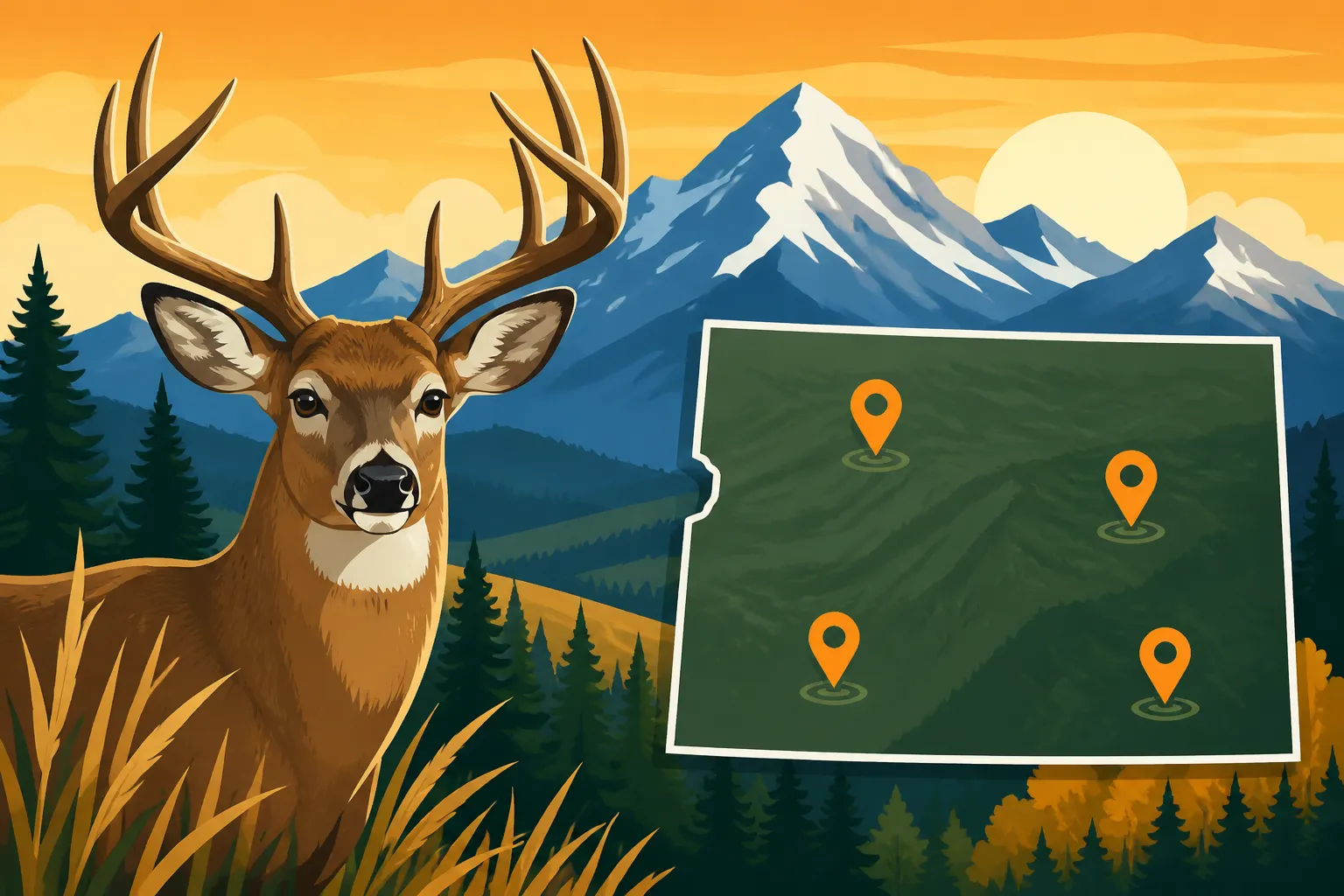
Ask any hunter about Colorado big game, and the conversation almost immediately drifts to elk and mule deer. It's easy to forget that the Centennial State also offers opportunities for whitetail deer, an often-overlooked species that presents its own unique challenges and rewards. This guide is here to pull back the curtain on Colorado's whitetail population, showing you exactly where to find them and what to expect when pursuing these elusive deer.
The Unexpected Whitetail: Dispelling Colorado Myths
For many, the image of a whitetail deer hunt conjures up visions of dense eastern woodlands or cornfields in the Midwest. Colorado, with its towering peaks and vast sagebrush flats, doesn't immediately spring to mind as prime whitetail country. This misconception leads many hunters to focus solely on mule deer or elk, missing out on a fantastic and often less pressured big game opportunity. But the reality is, healthy populations of whitetails thrive here, particularly in specific habitats that provide the dense cover and water sources they crave. They're not going to be in the high-alpine basins, but rather hugging the lifelines of the state's rivers and agricultural edges, often right under people's noses.
Why Whitetails Are Different in Colorado
Colorado's whitetails aren't just a western version of their eastern cousins; they've adapted to a slightly different environment than the typical whitetail range. While they still prefer thick cover, their specific habitat choices here are dictated by the arid landscape. They rely heavily on riparian corridors – the green belts along rivers and streams – and areas adjacent to irrigated croplands that offer both food and sanctuary. This means their distribution is far more concentrated and linear compared to the widespread presence of mule deer across varied terrain.
Hunting whitetails in Colorado also presents a different tactical challenge. Unlike the vast, open-country glassing often associated with mule deer in the Rockies, whitetail hunting here often reverts to more traditional methods: stealthy still-hunting, strategic stand placement, or careful stalking along river bends. You're not looking for a deer silhouetted on a distant ridge; you're looking for movement in a thicket or a flicker of an ear in the brush. It's a game of patience and intimate knowledge of a smaller, denser area, which can be a refreshing change for hunters accustomed to western-style wide-open pursuits.
Overcoming the "Mule Deer Mindset"
One of the biggest hurdles for hunters seeking Colorado whitetails is breaking free from the "mule deer mindset." When you scout for mule deer, you often look at expansive canyons, timbered slopes, and vast sagebrush country. You're glassing for hours, covering miles with your optics. For whitetails, this approach will likely leave you frustrated and empty-handed. You need to narrow your focus significantly. Think tight, thick, and close to water. Many hunters miss excellent whitetail opportunities because they drive right past the perfect habitat, their eyes scanning the distant mountains when the deer are tucked away in the river bottom just a stone's throw from the road. It requires a mental shift to understand their preferred escape routes, bedding areas, and feeding patterns, which are inherently tied to these specific, often linear, habitats.
Prime Whitetail Habitat and Geographical Strongholds
When you're looking to punch a whitetail tag in Colorado, forget the high peaks and start thinking low, flat, and wet. The vast majority of the state's whitetail population is concentrated along major river systems, especially on the Eastern Plains, but also trickling into some western slope river valleys. These riparian areas provide everything a whitetail needs: dense cover for bedding and security, consistent water, and a rich diversity of forage that complements nearby agricultural fields.
River Bottoms and Riparian Corridors
The lifeblood of Colorado's whitetail deer are its rivers. Think of the South Platte, Republican, Arkansas, and Purgatoire Rivers, along with their numerous tributaries. These aren't just strips of water; they are ribbons of green that cut through otherwise arid or agricultural landscapes. The habitat here is characterized by cottonwood galleries, willows, dense brush, and sometimes even pockets of tangled multiflora rose or other non-native invasive species that provide incredibly thick, nearly impenetrable cover. Whitetails will stick to these areas like glue, using them as travel corridors, bedding grounds, and primary feeding zones.
During the day, they might be bedded deep in a brush pile along the riverbank, only emerging at dusk to feed in adjacent alfalfa, corn, or wheat fields. This dependence on specific microhabitats means that understanding river systems and how they connect to agricultural areas is paramount. Using detailed satellite imagery and topographical maps, perhaps through a platform like GoHunt, allows you to identify these key features and predict deer movement between them. Look for pinch points, oxbows, and areas where the river creates a natural funnel or provides exceptional cover adjacent to food sources.
Agricultural Interfaces and Irrigated Lands
Beyond the immediate riverbanks, whitetails in Colorado frequently utilize agricultural fields. The state's Eastern Plains are a patchwork of dryland and irrigated farms, producing corn, alfalfa, winter wheat, and various other crops. These fields provide an abundant, high-energy food source that deer will travel to access, often under the cover of darkness. The transition zone between these cultivated lands and the dense river bottom cover is a classic whitetail hotspot.
Hunters often find success by focusing on the edges of these fields, especially where they meet a timbered creek bottom or a brushy draw. Deer will stage in the cover before entering the fields to feed, and retreat to it quickly if disturbed. Understanding crop rotations and harvest schedules can give you a significant advantage. A recently cut cornfield, for example, might offer residual grain, but it also strips away cover, potentially pushing deer into thicker areas or making them more nocturnal. Conversely, standing corn provides incredible sanctuary and food. This interplay between natural cover and agricultural bounty defines much of the whitetail hunting experience in these areas.
Specific Game Management Units (GMUs)
While pinpointing exact GMUs can be tricky due to fluctuating populations and access, generally, units in Eastern Colorado along the major rivers are your best bet.
- GMUs along the South Platte River: Think units like GMU 86, 92, 93, 94, 95, 96, 97, 98, 99, 100, and 101. These are heavily agricultural with significant stretches of riparian habitat. Access can be a challenge here as much of the land is private, but the deer numbers can be very good. Hunters should definitely research the Colorado Plains Rifle Season Explained as this is often where whitetails are found.
- GMUs along the Arkansas River: GMUs 110, 111, and 112 are worth investigating, particularly for their river bottom habitat.
- GMUs along the Republican River and tributaries: GMUs in the far eastern part of the state, like 103, 104, 105, 106, 107, 108, and 109, also hold whitetails, though they are often more isolated pockets.
Keep in mind that while some of these units might offer over-the-counter (OTC) tags for archery or certain rifle seasons, many prime whitetail tags, especially for buck hunting, are draw-only. It's crucial to check the current Colorado Parks and Wildlife (CPW) regulations and draw odds, which platforms like GoHunt compile for easier research. Looking into resources such as How to E-Scout Before a Colorado Hunt can also guide your search for public access points within these private-land-dominated regions.
Hunting Colorado Whitetails: Strategies and Challenges
Hunting whitetail deer in Colorado, especially on the Eastern Plains, often feels like a blend of traditional Midwestern tactics mixed with Western resourcefulness. You'll encounter different challenges and opportunities compared to chasing mule deer in the mountains, but the rewards can be equally fulfilling.
Public Land Access: A Persistent Challenge
One of the most significant challenges for whitetail hunters in Colorado is public land access. Unlike the vast national forests and BLM lands in the mountains, much of the prime whitetail habitat along river bottoms and agricultural interfaces on the Eastern Plains is privately owned. This reality can be a source of frustration for many, as finding viable hunting grounds often requires considerable effort.
You'll need to meticulously scout for small parcels of public land, such as State Trust Lands, State Wildlife Areas (SWAs), or Bureau of Land Management (BLM) tracts that border rivers or agricultural fields. These spots can be diamonds in the rough, but they often receive significant pressure. Utilizing mapping tools, including the Colorado Hunting Atlas Explained and third-party apps, is absolutely essential. These tools can help you identify public land boundaries, parcel ownership, and potential access points. It’s a game of finding those little slivers where you can legally put boots on the ground. Additionally, don't overlook programs like the Colorado Walk-In Access Program (WIA), which leases private land for public hunting, specifically for game birds and often for deer, though enrollment and availability vary by year and location. Always confirm rules and access before hunting any WIA property.
Private Land Opportunities and the Value of Permission
Given the prevalence of private land, securing permission from landowners is often the most effective, albeit challenging, way to hunt whitetails in Colorado. This requires knocking on doors, making phone calls, and building relationships, sometimes months in advance. Farmers and ranchers, especially those with whitetail deer causing crop damage, might be open to granting access. Showing respect for their property, offering to help with chores, and being clear about your hunting ethics can go a long way.
Some outfitters also offer guided hunts on private ranches for whitetails, often through landowner voucher programs that bypass the general draw system. While this comes with a cost, it can provide access to high-quality hunting and a higher chance of success, particularly for non-residents or those with limited time to scout. Understanding the nuances of Public vs Private Land Hunting in Colorado is key to formulating a successful strategy.
Effective Hunting Tactics
Once you've secured access, adapting your tactics to the specific whitetail habitat is crucial.
Stand and Blind Hunting
Tree stands and ground blinds are highly effective, especially when positioned along travel corridors between bedding areas (typically thick river bottom cover) and feeding areas (agricultural fields or food plots). Scouting for rub lines, scrape lines, and well-used trails will indicate prime locations. Given the dense cover, shot distances are often shorter than for mule deer, so practicing close-range archery or rifle shots is important. Setting up a stand near a major river system, where whitetails are known to travel, can be particularly fruitful.
Still-Hunting and Stalking
For those who prefer to be on the move, still-hunting through river bottoms and timbered creek banks can be incredibly productive. This involves moving slowly and deliberately, stopping frequently to scan ahead for deer sign or the deer themselves. The goal is to move as quietly as possible, utilizing the dense vegetation for cover, and paying close attention to wind direction. Whitetails are masters of concealment, so a sharp eye and keen awareness of subtle movements are essential. When pursuing whitetails, consider referencing guides on How to Still-Hunt Colorado Timber for valuable insights on silent movement.
Using Optics Effectively
While not for long-range glassing of distant hillsides, quality optics remain vital for whitetail hunting in Colorado. Binoculars are essential for dissecting dense cover, picking apart shadows for a hidden antler or a patch of hide, and identifying subtle movements. A good rangefinder is also important for confirming distances in often visually cluttered environments. Although the terrain may not demand the high-magnification spotting scopes used for How to Glass for Colorado Mule Deer, a solid pair of 10x or 12x binoculars will be your best friend when trying to penetrate the dense river bottom cover.
Comparing Whitetail vs. Mule Deer Hunting in Colorado
To put it all into perspective, let's look at how whitetail hunting stacks up against the more commonly pursued mule deer.
| Feature | Colorado Whitetail Deer Hunting | Colorado Mule Deer Hunting |
|---|---|---|
| Primary Habitat | River bottoms, riparian zones, agricultural interfaces | Open sagebrush, timbered slopes, high-country basins |
| Terrain | Generally flatter, dense cover, often private land | Mountainous, varied terrain, significant public land |
| Typical Tactics | Stand hunting, still-hunting, stalking along rivers/edges | Extensive glassing, spot-and-stalk in open country |
| Shot Distances | Often shorter (under 100 yards) due to dense cover | Can be much longer (100-400+ yards) in open terrain |
| Pressure | Can be localized on public access points, but overall lower | Can be high on accessible public lands |
| Access | Heavily reliant on private land permission or WIA programs | Abundant public land access, but often requires more effort |
| Primary Challenge | Finding accessible public land, dense cover | Covering vast terrain, high-altitude challenges, physical demand |
This table clearly illustrates the divergent approaches needed for these two species within the same state. While a Colorado Mule Deer Hunting Guide might focus on elevation and open landscapes, a whitetail pursuit demands intimate knowledge of confined, linear habitat features.
Season Dates and Tag Considerations
Understanding the regulatory landscape for Colorado whitetails is just as important as knowing their habitat. Colorado Parks and Wildlife (CPW) offers various seasons, but whitetail-specific tags are often limited and highly sought after in certain units.
Archery Season
Archery season for deer in Colorado is typically one of the longest, generally running from late August through late September, with a late season in some units into October or November. Many units offer "either-sex" deer tags over the counter (OTC) during this period, meaning you can harvest either a mule deer or a whitetail. However, if your goal is a whitetail specifically, you'll still need to ensure you're hunting in appropriate whitetail habitat within an eligible unit. This is often the most accessible way for non-residents and residents alike to pursue a Colorado whitetail without drawing a specific tag, but again, check the regulations carefully, especially the 2026 changes to OTC availability for non-residents. For a full breakdown of the general season dates, consult the Colorado Hunting Seasons Explained.
Muzzleloader and Rifle Seasons
Muzzleloader season for deer is usually a short, specific window in mid-September. Rifle seasons are structured in four distinct limited entry periods from late October through November, often overlapping with the elk rifle seasons. Most rifle tags for whitetail bucks are drawn tags, meaning you'll need to apply in the primary draw for a specific Game Management Unit (GMU) and a specific weapon type (e.g., "Deer, Whitetail Buck, Rifle, GMU 96").
Drawing a quality whitetail buck tag can require preference points, especially in units with good public access or higher success rates. The Colorado Draw System and Preference Points guide can help you navigate this complex process. While some units may offer a limited number of doe (antlerless) whitetail tags, often OTC or with fewer points, these are generally aimed at herd management and providing meat for hunters. Always check the current year's CPW regulations brochure for exact dates, hunt codes, and unit restrictions.
Conclusion: Embrace the Whitetail Challenge
Hunting whitetail deer in Colorado is a unique experience that deviates from the typical narrative of high-country elk and mountain mule deer. It demands a different approach, a sharp eye for specific habitats, and often, a diligent effort to secure access in private-land-dominated areas. But for those willing to put in the work, the reward is a truly fulfilling hunt and the opportunity to pursue an iconic species in an unexpected western setting. From the dense river bottoms of the South Platte to the agricultural fringes of the Eastern Plains, Colorado's whitetails are there, waiting for the hunter who understands their world.
Disclaimer
Please be aware that hunting regulations, season dates, and unit boundaries can change annually. Always consult the most current Colorado Parks and Wildlife (CPW) regulations brochure before planning any hunt. This guide is for informational purposes only and does not supersede official CPW guidelines.