Colorado Guided Hunt Packing List
You've booked that coveted guided hunt in Colorado, maybe for an elk bugling adventure in the high country or a mule deer stalk through rugged canyons. Excitement builds, but then a different kind of anxiety creeps in: what exactly do I pack? It’s a completely valid question. Colorado’s mountains are beautiful but unforgiving, and while your outfitter handles many logistics, showing up prepared is key to your comfort, safety, and overall success. This comprehensive guide will break down exactly what you should consider for your Colorado guided hunt packing list, ensuring you're ready for anything the wilderness throws your way.
Clothing: Layering for Colorado's Unpredictable Mountains
Colorado’s weather is famous for its sudden shifts. You can wake up to frost, be sweating by mid-morning, face a sudden hailstorm in the afternoon, and then have snow flurries by evening. The secret to staying comfortable, dry, and safe in these conditions isn’t one heavy jacket, but rather a system of adaptable layers. Forget your bulky cotton hoodies; we're talking performance materials designed to keep you regulated whether you're climbing a steep ridge or sitting motionless on a glassing point.
Base Layers: Your First Line of Defense
Your base layer is the foundation of your entire clothing system, and it’s arguably the most critical component for comfort in the mountains. Its primary job is to wick moisture (sweat) away from your skin, keeping you dry even when you’re exerting yourself. The moment you stop moving, that moisture can cool rapidly, leading to a dangerous chill. Cotton is an absolute no-go here; once wet, it stays wet and will steal your body heat.
Instead, invest in high-quality merino wool or synthetic base layers. Merino wool offers incredible warmth-to-weight, natural odor resistance (a huge plus on multi-day hunts!), and still insulates even when damp. Synthetic options are often more durable, dry faster, and can be more budget-friendly. I'd recommend bringing at least two sets – a lightweight pair for active days or warmer early-season hunts, and a midweight pair for colder conditions or when less exertion is expected. Having a fresh set every other day can do wonders for your mental state.
Mid-Layers: Insulation and Versatility
Mid-layers are your primary insulation pieces, designed to trap warm air close to your body. These are the layers you add or subtract throughout the day as temperatures and activity levels change. Flexibility is key here; you might wear a thin fleece, a heavier insulated jacket, or even a combination of both depending on the day's conditions and your activity. This is where you really dial in your warmth.
A good mid-layer lineup often includes a lightweight fleece jacket or vest for active movement, and a puffy jacket (either down or synthetic insulation) for static periods or colder temperatures. For instance, you might hike in just a base layer and light fleece, then throw on your puffy jacket over that when you stop to glass an open basin. Brands like Sitka Gear or KUIU offer excellent options specifically designed for hunting, balancing warmth, packability, and durability. Remember, it’s always easier to take off a layer than to wish you had brought more.
Outer Layers: Protection from the Elements
Your outer layer, or shell, is your last line of defense against the brutal wind, rain, and snow that Colorado can dish out. It absolutely must be waterproof, windproof, and durable enough to withstand brush and rugged terrain. Breathability is also crucial, as a non-breathable shell will trap sweat inside, defeating the purpose of your wicking base layers. You'll want both a jacket and pants.
Imagine an unexpected afternoon blizzard rolling in while you're miles from the trailhead. A quality rain suit is what stands between you and miserable hypothermia. Look for technical fabrics like Gore-Tex or similar proprietary membranes. Pack these layers where they are easily accessible in your backpack, as you'll often need to pull them on quickly when the weather changes. Having bombproof rain gear will allow you to stay in the field longer and remain effective, even when others are retreating.
Footwear and Accessories: Keeping Extremities Happy
Neglecting your feet and extremities is a surefire way to ruin a hunt. On a Colorado guided hunt, you’ll be covering serious ground over uneven terrain, often with significant elevation changes. Your footwear needs to be robust, supportive, and most importantly, comfortable. Do not, under any circumstances, bring brand new boots on your hunt; they need to be thoroughly broken in beforehand.
Choose high-quality, waterproof hunting boots that provide excellent ankle support. Pair these with several pairs of moisture-wicking merino wool socks in varying thicknesses. I usually bring at least four pairs to rotate, allowing them to dry out. Additionally, pack a warm hat (you lose a lot of heat through your head), a neck gaiter or balaclava for wind and cold protection, and at least two pairs of gloves: a thin, dexterous pair for shooting and fine motor tasks, and a warm, waterproof pair for colder conditions. For more detailed advice on selection, check out our guide on Best Boots for Colorado Elk Hunting.
Essential Gear and Tools for the Backcountry
Even with an outfitter, being prepared with your own essential gear is a mark of a responsible hunter. While your guide will provide much of the communal equipment, having your personal kit ensures you’re never caught off guard, can handle minor issues independently, and are ready for self-rescue if the unforeseen happens. Think of these as your personal safety net.
Backpack: Your Mobile Base
Your backpack isn't just a sack to carry things; it's your mobile base of operations in the field. For a guided hunt, you'll likely need a durable daypack (25-45 liters) for daily excursions, carrying layers, water, snacks, optics, and emergency gear. If your guided hunt involves spike camps, or if you plan to assist with packing out meat, you might also consider a larger frame pack (65+ liters) designed for heavy loads. Comfort is king here; a poorly fitting pack will cause misery and sap your energy quickly.
Look for a pack with a good hip belt and adjustable torso length to distribute weight effectively. Features like external pockets for water bottles, a padded optics pocket, and a robust suspension system are invaluable. Some hunters prefer external frame packs for packing out heavy loads, while others opt for internal frames for better maneuverability in thick timber. Researching options from brands like Mystery Ranch or Exo Mtn Gear can provide a starting point. To make the best choice, consult our article on the Best Backpack for a Colorado Elk Hunt.
Navigation and Communication: Staying Found and Connected
Even with an experienced guide leading the way, personal navigation tools are non-negotiable. Technology can fail, and getting separated from your group, even briefly, can happen. Always carry a reliable GPS device or a smartphone loaded with a reputable hunting app like onX Hunt or GoHunt. Crucially, download offline maps of your hunting area before you lose cell service. These apps can overlay public/private land boundaries, topo maps, and satellite imagery, providing invaluable situational awareness.
As a backup, always pack a physical compass and a paper map of your unit, and make sure you know how to use them. For communication, a satellite messenger (such as a Garmin inReach or Zoleo) is highly recommended. These devices allow you to send and receive text messages outside of cell service and, more importantly, have an SOS function for true emergencies. It's not just for worst-case scenarios; it also allows you to check in with family from deep in the backcountry. This redundancy ensures you always have a way to know where you are and get help if needed. You might also find our guide on How to E-Scout Before a Colorado Hunt helpful for pre-hunt planning.
First Aid and Emergency Supplies: Hope for the Best, Prepare for the Worst
No one wants to think about accidents, but the rugged nature of Colorado hunting means you need to be prepared for minor injuries or even more serious situations. While your outfitter will have a robust first-aid kit, a personal kit tailored to your needs is a smart addition. This should include essentials like bandages, antiseptic wipes, pain relievers, blister treatment (moleskin is a lifesaver!), and any personal prescription medications, stored in a waterproof bag.
Beyond medical supplies, think about basic survival items. A headlamp with extra batteries is critical for navigating in the dark or working on game after sundown. A robust hunting knife or multi-tool is indispensable. A fire starter (waterproof matches, lighter, ferro rod) can be a literal lifesaver if you unexpectedly spend a cold night out. An emergency shelter, such as a lightweight tarp or a robust emergency blanket, can provide crucial protection from the elements. Being prepared for these contingencies shows respect for the wilderness and provides peace of mind.
Personal Essentials and Hunting Specifics
Once you’ve got your clothing and core survival gear covered, it's time to think about the personal items that make the trip bearable and the specific hunting tools you'll need to successfully pursue game. These items are often overlooked but contribute significantly to your overall experience and success.
Personal Comfort and Hygiene: Small Luxuries, Big Impact
Even in the rugged wilderness, a few personal items can significantly improve your comfort and morale. Think about travel-sized biodegradable toiletries: a toothbrush, toothpaste, and maybe a small bar of soap or wet wipes. Sunscreen and lip balm are crucial at Colorado's high altitudes, where the sun's intensity is much greater. Small luxuries like hand warmers or toe warmers can be game-changers on frigid mornings.
Staying hydrated is also paramount, so a reliable water bottle or hydration reservoir is a must. Consider bringing a water filter or purification tablets, even if your guide provides water, as a backup. High-energy, easy-to-eat snacks like energy bars, jerky, and nuts will keep your fuel levels up throughout long days of hiking. Lastly, don't forget your personal ID, your Colorado hunting license, and your actual tags! Keep these in a waterproof, easily accessible pouch. For deeper insights into managing the physical demands, refer to How to Prepare for High-Altitude Hunting.
Weapon, Ammunition, and Optics: Your Hunting Tools
This section is where your direct hunting success lies. Your weapon – whether it's a rifle, bow, or muzzleloader – needs to be meticulously maintained, sighted in, and something you are proficient with. Bring ample ammunition or arrows, securely stored in a protective case. Never assume your outfitter will have extra ammo for your specific caliber or arrow fletching.
High-quality optics are absolutely essential for hunting Colorado’s vast landscapes. A good pair of binoculars (10×42 or 12×50 are common choices) is non-negotiable for glassing distant hillsides and finding game. Many experienced hunters also bring a spotting scope for detailed observation and judging animal quality from afar. A laser rangefinder is another critical tool for accurate shot placement in varied mountain terrain, where judging distance can be deceiving. Check out our guide on the Best Optics for Colorado Big Game for specific recommendations. Your guide will appreciate you being proficient with your gear and ready to make an ethical shot when the opportunity arises.
Field Dressing and Game Care: Respecting the Harvest
A successful hunt culminates in processing the animal, and being prepared for this step is a sign of a responsible hunter. While your outfitter will guide the process and provide much of the heavy lifting, having your own basic field dressing kit is smart. This includes a sharp, reliable hunting knife (and a small sharpener!), a gut hook if you prefer, and several pairs of disposable gloves to maintain hygiene and prevent contamination.
Good quality game bags are also a must. These breathable cloth bags protect the meat from dirt, insects, and scavengers, allowing it to cool properly. Even if your outfitter supplies some, having your own high-quality bags, such as those from Argali or TAG-Bags, ensures your hard-earned meat is protected from the moment it hits the ground. Rapid and clean field dressing is crucial for meat quality, especially during warmer early-season hunts. Our How to Pack Out an Elk in Colorado guide offers detailed steps on this crucial part of the hunt. Platforms like BookYourHunt often emphasize that hunters come prepared for all aspects, including game care.
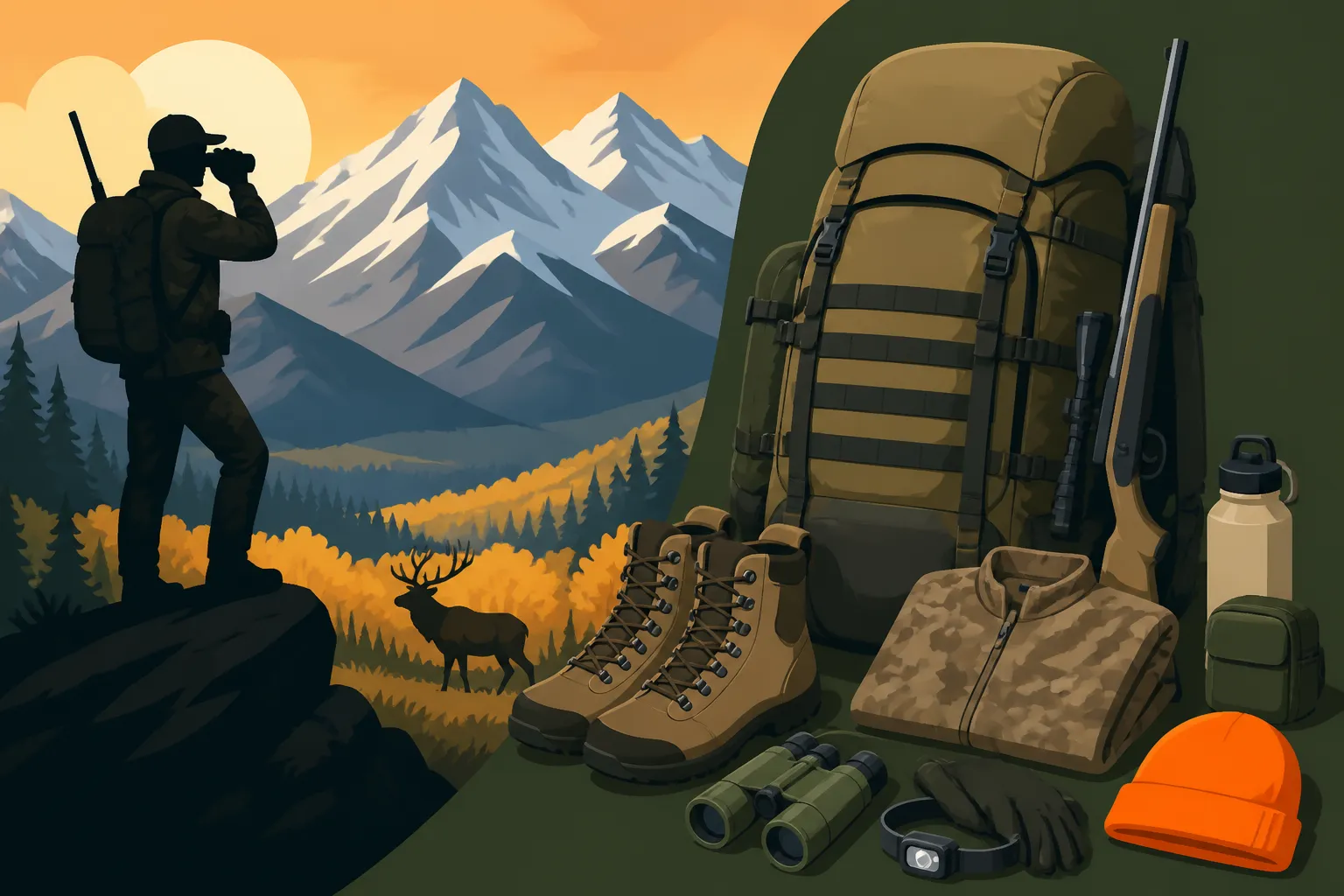
Table: Colorado Guided Hunt Essential Packing List
| Category | Item | Notes |
|---|---|---|
| Clothing (Layering) | Merino/Synthetic Base Layers | 2-3 sets (lightweight & midweight) |
| Fleece Jacket/Vest | Versatile mid-layer for active movement | |
| Insulated Puffy Jacket | Down or synthetic for static warmth | |
| Waterproof Rain Jacket & Pants | Breathable hard shell – essential! | |
| Broken-in Hunting Boots | Waterproof, ankle support, comfortable for miles | |
| Merino Wool Socks | 3-4 pairs (various thicknesses) | |
| Warm Hat & Neck Gaiter | For heat retention and wind protection | |
| Thin Liner Gloves | For dexterity and mild warmth | |
| Warm, Waterproof Outer Gloves/Mittens | Critical for cold, wet conditions | |
| Essential Gear | Daypack (25-45L) | For daily excursions, comfortable fit |
| Large Frame Pack (65+L) | Optional, if packing out meat or spike camps (confirm with outfitter) | |
| GPS Device / Smartphone with Offline Maps | onX Hunt or GoHunt apps with downloaded maps | |
| Compass & Paper Map | Physical backup navigation | |
| Satellite Messenger (e.g., Garmin inReach) | For emergency communication & check-ins outside cell service | |
| Personal First-Aid Kit | Blister care, pain relief, personal meds, emergency blanket | |
| Headlamp w/ extra batteries | Essential for low-light conditions and camp | |
| Hunting Knife / Multi-tool | General utility and field dressing | |
| Fire Starter | Waterproof matches, lighter, ferro rod | |
| Personal Items | Travel-sized Toiletries | Biodegradable options (toothbrush, toothpaste, soap) |
| Sunscreen & Lip Balm (high SPF) | Protect against high-altitude sun | |
| Prescription Medications | In waterproof bag, easily accessible | |
| Water Bottle / Hydration Reservoir | With purification method (filter, tablets) | |
| High-Energy Snacks | Energy bars, nuts, dried fruit, jerky | |
| ID, Hunting License, Valid Tags | In a waterproof holder, always on your person | |
| Hunting Specifics | Rifle/Bow/Muzzleloader | Sighted in, clean, in good working order |
| Ammunition/Arrows | Ample supply for practice and hunting, securely stored | |
| Binoculars (10×42 or 12×50) | High-quality for glassing | |
| Spotting Scope (optional, highly recommended) | For detailed glassing and judging game | |
| Laser Rangefinder | Essential for accurate shot placement | |
| Field Dressing Knife & Sharpener | For clean and efficient processing | |
| Game Bags & Disposable Gloves | Protect meat from elements and contamination | |
| Hunting Calls | If applicable (e.g., elk calls for bugling season) |
Disclaimer
Just a friendly reminder: The information provided in this article is for general guidance and informational purposes only. Hunting regulations, gear recommendations, and safety practices can change. Always consult the latest Colorado Parks and Wildlife regulations and speak directly with your chosen outfitter for their specific packing recommendations and any required gear. Your safety and a successful hunt are paramount!