Hunting Colorado’s Eastern Plains for Whitetail
Trying to wrap your head around hunting whitetail deer on Colorado's Eastern Plains can feel like a completely different ballgame than chasing elk in the high country. The vast, open agricultural landscapes and river bottoms present unique challenges and opportunities, often leaving hunters wondering where to even begin their scouting and planning. This guide is dedicated to breaking down the intricacies of whitetail hunting in this often-overlooked region, offering practical advice to help you navigate the terrain, understand deer behavior, and ultimately increase your chances of tagging a deer.
Understanding Colorado's Eastern Plains Whitetail
When most people think of hunting in Colorado, their minds immediately go to majestic elk or mule deer against a backdrop of snow-capped peaks. But out on the Eastern Plains, an entirely different hunting experience awaits, centered around the elusive whitetail deer. These deer thrive in the agricultural mosaic and river riparian zones, presenting a unique challenge to even seasoned hunters.
Whitetail Deer Habitat and Behavior on the Plains
Unlike their mule deer cousins who prefer wide-open spaces and mountain sage, Eastern Plains whitetails are intimately tied to cover and water sources. You'll primarily find them along the major river drainages like the South Platte, Republican, and Arkansas, as well as their numerous tributaries. These areas provide the dense cover of cottonwood galleries, willow thickets, and cattails they need for bedding and escape. Beyond the river bottoms, they also utilize smaller drainages, isolated pockets of brush, and even pivot corners of agricultural fields that offer dense vegetation.
Their behavior is heavily influenced by their environment. Due to limited natural cover, whitetails on the plains become masters of concealment. They often move under the cover of darkness or during the twilight hours, sticking close to heavy brush. During the day, they'll bed down in the thickest stuff they can find, sometimes in areas you wouldn't expect, like a small cluster of cedars or a brushy fencerow in the middle of a vast cornfield. Understanding this need for cover is paramount to finding them. They are also incredibly sensitive to pressure, and once spooked, they can quickly vacate an area, sometimes moving miles along a river corridor before settling back down.
Population Trends and Herd Health
Colorado's whitetail population, particularly on the Eastern Plains, remains robust, offering consistent hunting opportunities. While not as numerous as some Midwestern states, their numbers are stable, and hunters have a reasonable chance of success. Colorado Parks and Wildlife (CPW) actively monitors these herds, and their management strategies aim for a healthy balance that sustains both the deer and their habitat.
The quality of bucks on the plains can be surprisingly good. With abundant food sources from agricultural crops like corn, wheat, and alfalfa, whitetails often have excellent body and antler development. It's not uncommon to see mature bucks sporting impressive racks, especially in areas with limited hunting pressure and good genetics. However, it's also worth noting that the whitetail population on the plains often faces challenges like EHD (Epizootic Hemorrhagic Disease) outbreaks during drought years, which can temporarily impact local herd numbers. Keep an eye on CPW reports for specific unit conditions before your hunt.
Accessing Hunting Opportunities on the Eastern Plains
The biggest hurdle for many hunters venturing onto the Eastern Plains for whitetail is undoubtedly access. Unlike the vast swaths of public land in the mountains, the plains are predominantly privately owned. This reality means hunters need to be strategic and proactive in securing places to hunt.
Navigating Public and Private Land
The stark contrast between public and private land ownership on the plains cannot be overstated. While there are some scattered parcels of Bureau of Land Management (BLM) land or State Wildlife Areas (SWAs), the majority of prime whitetail habitat along river bottoms and agricultural fields is privately owned. This means you'll spend a significant amount of your preparation time understanding land ownership and securing permission.
- Public Land: While limited, public land can still offer good hunting, especially in less accessible or larger State Wildlife Areas. These areas often receive more hunting pressure, so early scouting and hunting during weekdays or in more remote corners can pay off. Make sure to consult the Colorado Hunting Atlas Explained to pinpoint these critical public access points. It's an indispensable tool.
- Private Land: This is where the majority of whitetails reside. Securing permission on private land requires patience, respect, and often, starting early. Landowners are generally more receptive to polite, well-prepared hunters who ask for permission months in advance. Many hunters find success by knocking on doors, offering to help with chores, or building long-term relationships. Understanding How to Get Landowner Permission in Colorado is a critical skill for plains hunting.
Utilizing Walk-In Access and State Trust Lands
Thankfully, Colorado does offer some programs designed to increase public hunting access on private lands. The Walk-In Access (WIA) program, administered by CPW, leases hunting rights from private landowners, opening up thousands of acres to public hunting for various species, including whitetail. These areas are typically marked with specific signage and have rules regarding access dates and allowed activities, so always read the signs carefully.
Colorado State Trust Lands (STL) also provide hunting opportunities. These lands are managed to generate revenue for public schools and institutions, and many are open to public recreation with the purchase of a State Trust Land Public Recreation Permit, in addition to your hunting license. Just like WIA properties, STLs often have specific access rules and designated uses, so it's vital to check the CPW website or the Colorado Hunting Atlas Explained for detailed information on each parcel. Don't assume anything; verify access before you go.
When using these programs, it's particularly important to remember that these are often working lands. Respect boundaries, close gates, pick up after yourself, and leave no trace. Your conduct directly impacts the continuation of these valuable access programs for all hunters.
| Access Type | Description | Pros | Cons |
|---|---|---|---|
| Private Land | Lands owned by individuals, often agricultural or ranching properties along river corridors. | Best habitat, lower pressure if you have exclusive access, potential for trophy bucks. | Difficult to obtain permission, requires landowner relationships, may involve fees. |
| Walk-In Access (WIA) | Private lands leased by CPW for public hunting access. Clearly marked. | Free public access, good habitat, often less pressure than traditional public land. | Specific access dates/rules, limited number of properties, can still experience pressure. |
| State Trust Lands (STL) | Lands managed by the State Land Board; accessible with a special permit (in addition to hunting license). | Can offer good habitat, often less crowded than SWAs. | Requires extra permit, specific rules vary by parcel, may be landlocked. |
| State Wildlife Areas (SWA) | Public lands managed by CPW, specifically for wildlife and public recreation. | Free public access, known wildlife areas. | High hunting pressure, especially on weekends and near cities. |
| BLM Land | Federal public land, less common in prime whitetail areas on the Eastern Plains but present in some areas. | Free public access, large tracts in some regions. | Can be fragmented, often in less productive whitetail habitat compared to riparian zones, higher pressure. |
Effective Whitetail Hunting Tactics on the Plains
Once you've secured your hunting spot, the next challenge is actually putting a plan into action. Whitetail on the Eastern Plains require a different approach than mountain hunting, emphasizing stealth, understanding wind, and capitalizing on their natural movement patterns.
Scouting and E-Scouting for Success
Effective scouting is the bedrock of successful whitetail hunting anywhere, but especially on the plains. With limited cover, whitetails become masters of utilizing small details in the landscape. Before you even set foot in your hunting area, leverage tools like onX Hunt or GoHunt to perform thorough e-scouting. These platforms allow you to analyze satellite imagery, identify potential bedding areas in dense river bottoms, pinpoint travel corridors along field edges or fencerows, and locate water sources. Look for pinch points, inside corners of fields, and transitions between different types of cover. This helps you narrow down areas to physically scout. For more detailed e-scouting tips, check out our guide on How to E-Scout Colorado Units.
When you hit the field, focus on finding fresh sign: tracks, rubs, scrapes, and droppings. Pay close attention to trails leading from bedding cover to feeding areas (agricultural fields) or water. In river bottoms, whitetail will often use dense channels within the thickets. Identify specific trees for potential stand setups, considering wind direction, sun position, and shooting lanes. Don't be afraid to walk a little further or explore denser areas that other hunters might avoid.
Stand Hunting and Still Hunting Strategies
The majority of successful whitetail hunting on the Eastern Plains will involve some form of stand hunting or very careful still hunting.
- Stand Hunting: This is often the most productive method, particularly if you have access to private land or less pressured public areas. Tree stands or ground blinds allow you to remain concealed, control your scent, and ambush deer moving between bedding and feeding areas. Key locations for stand setups include:
- Pinch Points: Narrow strips of cover that funnel deer movement, such as a wooded fencerow between two open fields.
- Field Edges: Where dense cover meets agricultural fields, especially during evening hours.
- River Bottom Trails: Main travel corridors within the dense riparian zones.
- Water Sources: Particularly important during dry periods or early season.
- When setting up a stand, always consider the prevailing wind. Whitetails have an incredible sense of smell, and a swirling wind will ruin your hunt faster than anything.
- Still Hunting: For more mobile hunters or when exploring new areas, still hunting can be effective, though it requires immense patience and skill. This involves moving slowly and deliberately through cover, stopping frequently to observe and listen. Focus on areas with good visibility from a slight rise or edge of a thicket. This method is particularly useful when scouting new ground or if deer activity near your stand has dwindled. Remember to use the terrain to your advantage, moving along creeks or through shallow depressions to stay out of sight. Our guide on How to Still-Hunt Colorado Timber offers principles that apply well to plains cover.
Calling and Decoying on the Plains
Whitetail are vocal animals, and calling can be a highly effective tactic, especially during the rut (typically late October through November on the Eastern Plains).
- Calling: Grunts, bleats, and rattles can all draw in curious bucks.
- Grunts: A simple tending grunt can imitate a buck trailing a doe. Use short, soft grunts initially, increasing intensity if there's no response.
- Bleats: Doe and fawn bleats can attract both bucks and does, especially early in the season or when looking for a doe tag.
- Rattling: Mimicking two bucks fighting can be highly effective during the peak rut. Set up a rattling sequence for 30-60 seconds, then wait quietly for 10-15 minutes before repeating. Always be ready for a buck to appear quickly.
- Decoying: Decoys can also work, particularly a standing buck or a doe decoy placed strategically to draw attention. If using a buck decoy, place it where an approaching buck will see it from a distance and feel compelled to investigate or challenge it. Always set up your decoy downwind of your position so that any deer approaching the decoy will pass your stand location first. Decoying works best when bucks are actively seeking does, as they are more aggressive and territorial.
Dealing with Pressure and Seasonal Movements
The Eastern Plains, especially areas with public access, can experience significant hunting pressure. Whitetails are highly sensitive to this and will quickly alter their patterns.
- Early Season (Archery): Whitetails are often in their summer patterns, hitting agricultural fields for food. Focus on evening hunts near food sources and morning hunts near bedding.
- Mid-Season (Rifle): As pressure increases, deer become more nocturnal and seek denser cover. You may need to hunt deeper into thickets or focus on mid-day movements during the rut. The Colorado Plains Rifle Season Explained offers more detail on this critical period.
- Late Season: Deer revert to survival mode, often focusing on consistent food sources. This can be a great time to target deer if you can find their winter feeding and bedding areas, especially during a cold front or snow event.
- To avoid pressure, consider hunting during weekdays, exploring less accessible parts of SWAs, or gaining private land access. Also, focusing on secondary travel corridors rather than obvious main trails can pay dividends.
Essential Gear and Preparation for Plains Whitetail Hunting
Hunting Colorado's Eastern Plains for whitetail requires specific gear and preparation, different from a high-country elk hunt. The terrain, climate, and vegetation all influence what you should carry and how you should prepare.
Clothing and Footwear
Layering is crucial, as plains weather can change dramatically from crisp mornings to warm afternoons, and vice-versa. Expect anything from calm, warm days to strong winds and sudden cold fronts.
- Base Layers: Moisture-wicking synthetics or merino wool are ideal to manage perspiration.
- Mid-Layers: Fleece or down jackets provide insulation without excessive bulk.
- Outer Layers: A durable, windproof, and waterproof shell is essential. Consider a quiet fabric for still hunting or moving to your stand. Camouflage patterns that blend with agricultural fields, dry grass, or leafless timber (like a typical whitetail woods pattern) will serve you well.
- Footwear: Comfortable, waterproof, and breathable boots are a must. You'll be doing a lot of walking, sometimes through wet fields or along muddy river bottoms. Rubber boots can be excellent for scent control and wading through shallow water, especially in marshy areas. Ensure they are well broken-in before your hunt to prevent blisters.
- Gloves and Headwear: A warm hat and gloves are critical for cold mornings, as much body heat escapes from the head and extremities. Face masks or balaclavas are also great for concealment and warmth.
Optics and Scouting Tools
Good optics are invaluable for scanning vast plains and dense cover.
- Binoculars: High-quality 10×42 or 12×50 binoculars are essential for spotting deer at a distance or picking them out of thick cover. Brands like Vortex, Leupold, and Maven offer excellent performance for the price.
- Rangefinder: Critical for accurate shot placement in open country where distances can be deceiving.
- Spotting Scope: While not strictly necessary for every whitetail hunt, a lightweight spotting scope can be very useful for long-range scouting of potential bedding areas or distant field edges, especially if you're trying to identify specific bucks without disturbing them.
- GPS/Mapping App: An indispensable tool. As mentioned, onX Hunt is a lifesaver for identifying property boundaries, public land access, marking stand locations, and navigating unfamiliar terrain. GoHunt also offers robust scouting tools that integrate well with hunt planning. Even if you have physical maps, always have a digital backup on your phone.
Hunting Weapon and Ammunition
The choice of weapon will depend on the season and your preference, but accuracy and reliability are paramount.
- Rifle: For rifle seasons, a flat-shooting caliber suitable for deer is ideal. Common choices include .270, .30-06, 6.5 Creedmoor, or .308. Practice shooting from various positions, including off a shooting stick or bipod, as shots in open country can be long. Use quality hunting ammunition designed for deer.
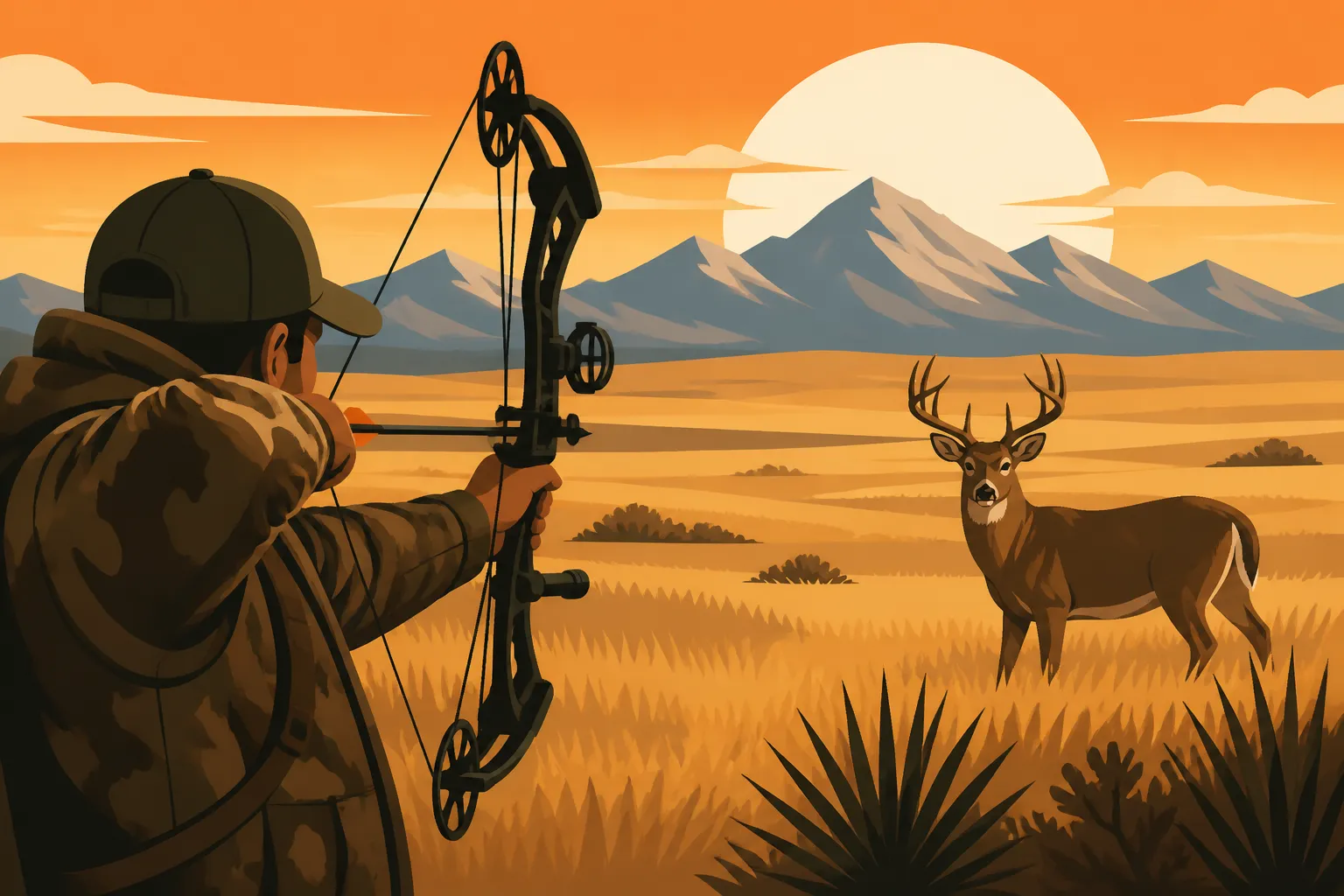
- Archery: For archery season, a compound bow set up for accuracy and quiet performance is key. Practice shooting from elevated positions if you plan to use a tree stand. Broadhead selection is critical for clean kills; mechanical or fixed blade broadheads both have their proponents, but ensure they are tuned to your bow. For tips on Colorado Archery Elk Hunting Guide, some principles like shot placement and practice carry over.
- Muzzleloader: Muzzleloader seasons offer a unique challenge. Ensure your muzzleloader is sighted in and you are comfortable with its loading and firing sequence. Modern inline muzzleloaders with scopes can be very effective. Our guide on Colorado Muzzleloader Hunting Guide provides in-depth advice.
Other Essential Gear
- Scent Control: Whitetails are notoriously wary of human scent. Use scent-free detergents for your clothes, take scent-reducing showers, and use scent sprays. Store your hunting clothes in airtight containers.
- Backpack: A comfortable daypack to carry water, snacks, extra layers, first-aid kit, game processing tools, and your essentials.
- Game Processing Kit: Knife, game bags, gloves, and paracord are vital for field dressing and packing out your deer.
- Headlamp: With extra batteries, for early morning walks in and late-night walks out.
- Wind Checker: A small bottle of powder to check wind direction before approaching your stand or still hunting.
- Treestand/Ground Blind: If stand hunting is your primary tactic, ensure your stand is safe, quiet, and comfortable. Practice setting it up and taking it down.
Wrapping Up Your Eastern Plains Whitetail Hunt
Hunting whitetail deer on Colorado's Eastern Plains is a rewarding experience that demands diligence, patience, and a deep understanding of whitetail behavior in this unique environment. It’s not just about the shot; it’s about the journey of scouting, earning access, and adapting your tactics to the landscape.
Field Care and Meat Processing
Once you've successfully harvested a whitetail, immediate field care is crucial, especially if temperatures are warm. Gut the animal promptly to cool the carcass. If you're deep in a river bottom, consider quartering the animal to make packing it out easier. Use good quality game bags to protect the meat from dirt and flies. Our guide on How to Quarter an Elk in the Field provides excellent principles that can be adapted for deer. Keep the meat cool and dry during transport to a processor or home. There are numerous reputable processors in towns like Fort Morgan, Sterling, and Limon that can handle your deer.
Respecting the Resource and Landowners
The future of hunting access on the Eastern Plains largely depends on how hunters conduct themselves. Always close gates, respect private property boundaries (verified with tools like onX Hunt), pack out all trash, and leave the land better than you found it. If you've been granted private land access, offer to share some of your wild game meat or help with a chore as a token of appreciation. Building positive relationships with landowners is invaluable and can lead to hunting opportunities for years to come. Remember, you are an ambassador for all hunters.
Hunting the Eastern Plains offers a genuine connection to Colorado's less-traveled landscapes and the incredible resilience of its whitetail deer. Embrace the challenges, learn from every outing, and savor the experience.
Disclaimer
Hunting is an inherently dangerous activity. Always prioritize safety, follow all Colorado Parks and Wildlife regulations, and obtain proper licenses and permits. The information provided in this guide is for informational purposes only and should not replace professional guidance, landowner permission, or a thorough understanding of current hunting laws and safety practices. Conditions on the ground can change rapidly; always scout your specific hunting area and be prepared for all contingencies.