Collegiate Peaks Hunting Guide
Hunting in Colorado's high country presents a unique set of challenges, from dizzying elevations to unpredictable weather, and trying to pinpoint the best spots for big game amidst such vast wilderness can feel overwhelming. This guide is dedicated to demystifying hunting in the majestic Collegiate Peaks, providing you with the detailed insights and practical strategies you need to plan a successful and rewarding adventure in this iconic Colorado landscape.
Understanding the Collegiate Peaks Wilderness Area
The Collegiate Peaks stand as a formidable and breathtaking chain within the Sawatch Range of central Colorado, home to some of the state's most iconic "14ers." This wilderness isn't just a postcard view; it's a rugged, high-altitude playground for hunters willing to put in the effort.
Geographic Overview and Ecosystem
Imagine a landscape dominated by towering peaks like Mount Princeton, Mount Yale, Mount Harvard, Mount Oxford, and Mount Columbia, all soaring well above 14,000 feet. These giants cradle immense basins, deeply carved drainages, and expansive alpine tundra. Below the treeline, you'll find a mosaic of dense dark timber – often spruce and fir – transitioning into vibrant aspen groves that blaze with color in the fall. Pristine alpine lakes and crystal-clear streams, fed by snowmelt, are scattered throughout, providing vital water sources for wildlife. The sheer verticality and remote nature of much of this terrain mean that many areas are only accessible by foot or horseback, demanding a significant commitment from any hunter. The air is thin, the climbs are steep, and the weather can shift from sunny and mild to a full-blown blizzard in a matter of hours, even in early fall. These conditions make for an incredibly demanding hunt but also offer an unparalleled sense of wilderness solitude and the chance to pursue elk and mule deer in truly wild settings.
Primary Game Species and Their Habitat
When you venture into the Collegiate Peaks, the primary species on most hunters' minds are elk and mule deer. These animals are perfectly adapted to this high-country environment, though their specific preferences vary.
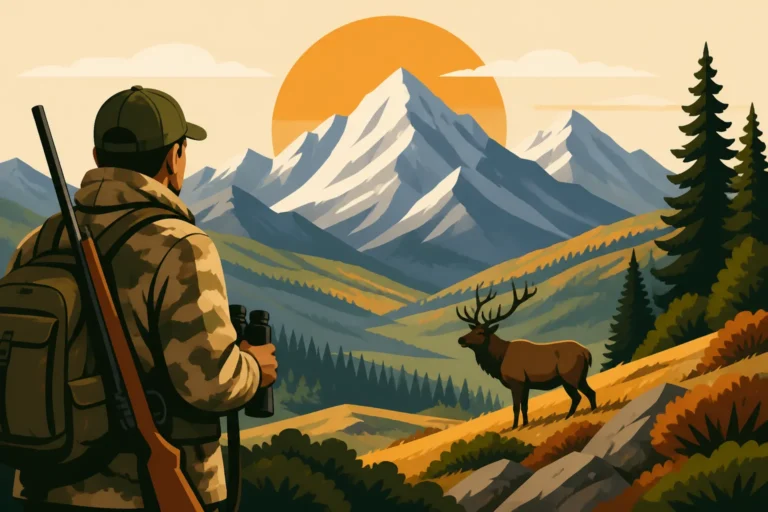
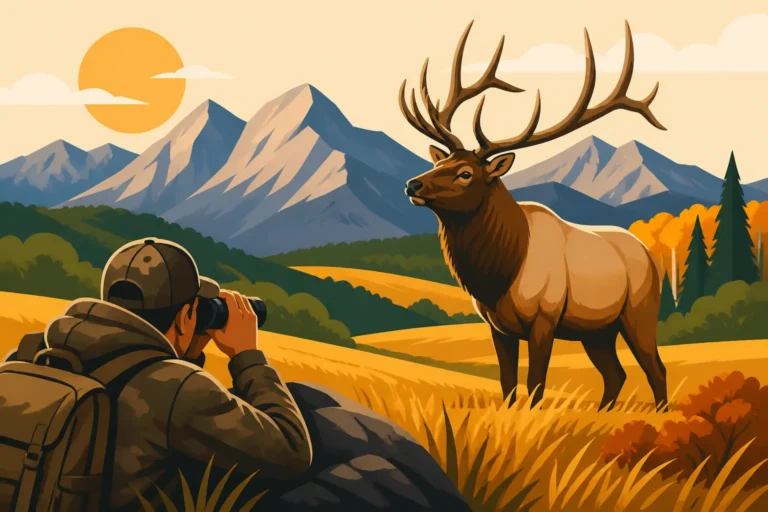
Elk often frequent the transition zones, moving between the open alpine meadows for grazing and the protective cover of dense timber during the day or when pressured. During the early archery seasons and the rifle rut, you might find bulls bugling in the aspen forests at lower elevations, but as pressure mounts and seasons progress, they tend to move higher or deeper into the dark timber, seeking sanctuary. Learning How to Find Elk in Deep Timber is a crucial skill here. South-facing slopes, catching more sun, are often preferred feeding grounds in cooler weather, while north-facing slopes with their thick cover provide crucial bedding areas. Wallows and natural springs are also hot spots, especially during the rut.
Mule deer, while also found at high elevations, tend to prefer more broken, rocky terrain with scattered timber and open sagebrush parks. Bucks are often found above treeline in the summer and early fall, blending perfectly into the rocky slopes and tundra. They will move into the aspen and conifer forests as the seasons progress and snow pushes them down, but they’re masters of using small pockets of cover and elevation changes to their advantage. Spotting these animals against the vastness of the mountains requires diligent glassing, and understanding Colorado Mule Deer Habitat Explained can significantly improve your odds. Black bears are also present in the Collegiate Peaks, often found foraging in berry patches or near water sources, especially in the fall as they fatten up for winter. While not as commonly targeted, a bear tag can be a great addition to your big game hunt.
Navigating Access and Regulations in Collegiate Peaks
The Collegiate Peaks Wilderness is a federally designated wilderness area, which means specific rules apply. Understanding these regulations and knowing how to access the land is paramount to a legal and enjoyable hunt.
Public Land Access Points and GMUs
The Collegiate Peaks Wilderness is primarily encompassed by Game Management Units (GMUs) 48 and 481. GMU 481 is often a limited-draw unit specifically for deer, sometimes with different season dates or tag allocations than the broader GMU 48. Adjacent units, like GMU 49 to the south and GMU 53 and 54 to the west, also share similar high-country characteristics and offer access to portions of the Sawatch Range, though outside the immediate Collegiate Peaks Wilderness boundary.
Accessing these GMUs typically involves utilizing established trailheads leading into the wilderness. Popular access points can be found off Highway 24 and County Road 162 (Cottonwood Pass Road) near Buena Vista and Salida. For instance, the Denny Creek Trailhead (leading towards Mount Yale) or the Harvard Lakes Trailhead are common entry points. Many of these trails gain significant elevation quickly, so be prepared for strenuous hiking from the get-go. Since it's a wilderness area, motorized vehicles and bicycles are strictly prohibited beyond the trailheads. This means all your gear, food, and eventually, your game, must be packed in and out on foot or with the aid of horses or pack llamas. Utilizing a mapping application like onX Hunt is absolutely essential here. It allows you to clearly see GMU boundaries, track your location relative to public and private land, identify trails, and scout potential bedding or feeding areas from home. Seriously, don't head into this country without a reliable mapping app downloaded to your phone or GPS device. This digital tool is invaluable for How to E-Scout Before a Colorado Hunt and staying compliant on the ground.
Essential Regulations and Draw Considerations
Hunting in the Collegiate Peaks, like all of Colorado, falls under the Colorado Parks and Wildlife (CPW) regulations. For both elk and mule deer, most tags in these high-demand units are obtained through the annual draw system. This means you'll need to apply for specific hunt codes during the primary draw period, typically in spring. The more desirable hunts, especially for bull elk or trophy mule deer, often require a significant number of preference points. It's not uncommon for non-residents to need 5, 10, or even more points to draw a prime bull tag in a unit like GMU 48.
Understanding Colorado Draw System and Preference Points is critical. If you're new to Colorado hunting, or looking for an easier-to-draw tag, cow elk tags or later season rifle hunts might require fewer points, or in some instances, may even be available over-the-counter (OTC) for archery or specific rifle seasons in broader units like portions of GMU 48 or 49. However, the specific units encompassing the Collegiate Peaks Wilderness usually demand a drawn tag for antlered animals.
Always consult the current year's CPW Big Game Brochure for specific season dates, hunt codes, and any antler point restrictions that may apply to the unit you plan to hunt. Wilderness area regulations also often restrict certain activities, so familiarize yourself with those before you go. A useful resource for tracking draw odds and planning your point strategy is GoHunt. Their Insider membership provides detailed unit data, draw odds, and filtering tools that can help you make informed decisions about where to apply your hard-earned preference points, especially when targeting high-demand areas like the Collegiate Peaks.
Strategies for a Successful Collegiate Peaks Hunt
Success in the Collegiate Peaks isn't just about drawing a tag; it's about meticulous preparation and smart on-the-ground tactics. This isn't a place for the faint of heart or the unprepared.
E-Scouting and Pre-Season Preparation
Your hunt for elk or mule deer in the Collegiate Peaks truly begins long before you set foot on the mountain. E-scouting is your first and most powerful tool. Using satellite imagery on platforms like onX Hunt, identify potential game hot spots. Look for:
- North-facing slopes: Often hold darker, denser timber, which provides critical bedding cover for elk, especially once hunting pressure starts.
- South-facing slopes: Tend to melt out faster and receive more sun, making them prime early and late-day feeding areas.
- Basins and cirques: These natural amphitheatres are excellent for glassing vast areas and often hold elk and deer.
- Water sources: Alpine lakes, streams, and springs are magnets for game, especially in drier periods.
- Saddles and ridges: Natural travel corridors between bedding and feeding areas.
- Burn areas: Recent burns can create new forage and open up dense timber, making them productive a few years post-fire.
Pair your e-scouting with topographic maps to understand the lay of the land, identifying steep climbs, potential camping spots, and escape routes for game.
Beyond digital scouting, physical preparation is non-negotiable. The Collegiate Peaks are brutal on the body. You'll be gaining thousands of feet of elevation daily, often with a heavy pack, in thin air. Start your Colorado Elk Hunt Fitness Plan months in advance, focusing on cardio, strength training, and especially hiking with weight on varied terrain. Acclimatizing to the altitude is also critical; if possible, arrive a few days early and spend time at elevation before your hunt truly begins. Read up on Altitude Training for Colorado Hunting to understand how to best prepare your body for the rigors of high-country hunting. Pack light, but pack smart, prioritizing essential gear that can withstand rapidly changing weather conditions. Your Colorado Backcountry Hunting Gear List should include layers, rain gear, sturdy boots, and emergency supplies.
On-the-Ground Hunting Tactics
Once you’re in the Collegiate Peaks, your tactics need to match the environment. This is a vast, open, and often steep country where spot-and-stalk is often the most effective method, particularly for mule deer and pressured elk.
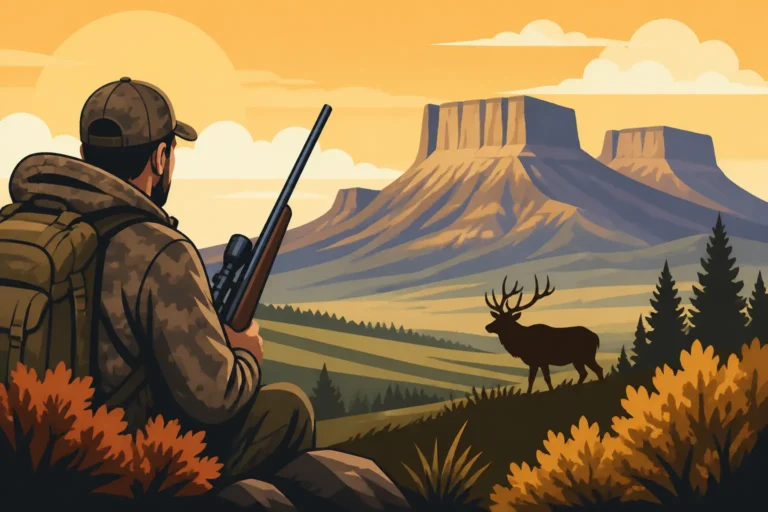
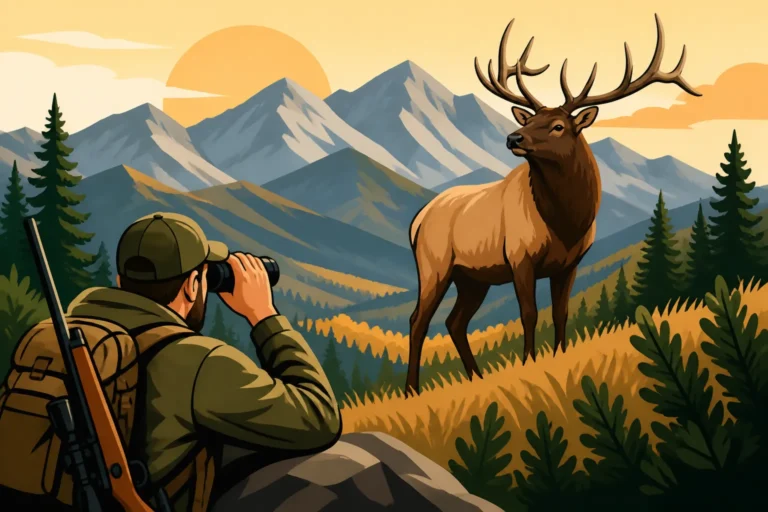
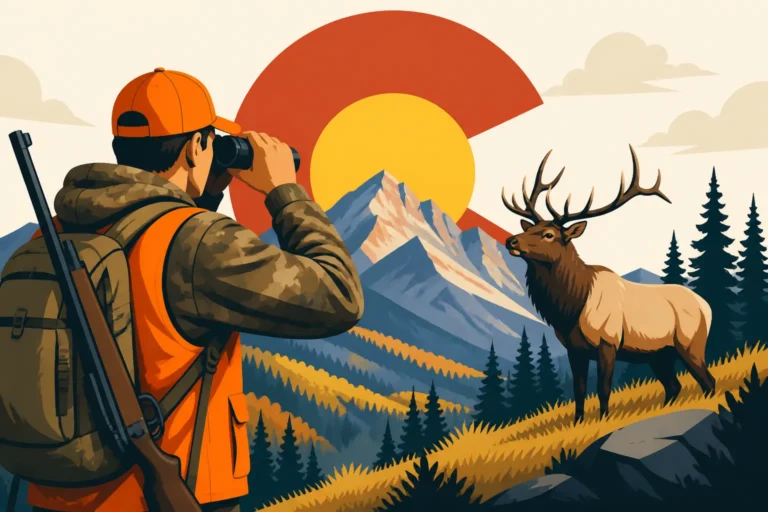
- Glassing is King: Find a high vantage point overlooking an expansive basin or a series of timbered ridges. Use high-quality binoculars (10×42 or 12×50) and a spotting scope on a tripod to systematically glass every square inch. Take your time, sometimes spending hours in one spot, looking for subtle movements, horizontal lines (like an elk's back), or flashes of antler. Early mornings and late evenings are prime glassing times when animals are most active. This is crucial for How to Glass Big Colorado Basins.
- Understanding Thermals and Wind: In mountain environments, wind and thermals are constantly shifting. In the mornings, air generally flows uphill as the sun warms the slopes (updrafts). In the evenings, it cools and flows downhill (downdrafts). Always hunt with the wind or thermals in your favor, positioning yourself to avoid your scent carrying to game. A slight breeze can often override thermals, so pay attention to your wind checker. Knowing How to Use Thermals in Colorado Elk Country is not a suggestion, it's a requirement.
- Still-Hunting and Calling: While glassing is paramount, don't neglect still-hunting, especially in dense timber where visibility is limited. Move slowly, deliberately, and quietly, pausing frequently to observe and listen. This is where you might ambush an elk bedded down or traveling between areas. During the rut (often coinciding with archery and early rifle seasons), calling can be highly effective. Soft cow calls can sometimes draw in a curious bull, or a challenge bugle might provoke a response. However, remember that pressured elk in high-traffic areas can become call-shy, so know when to be subtle and when to be aggressive. More detailed information can be found in a Colorado Elk Hunting: Calling Tactics guide.
- Packing Out: The moment of truth arrives when you successfully harvest an animal. Now the real work begins: packing out. In this rugged terrain, quartering the animal in the field is almost always necessary. Have a plan for keeping the meat cool and protected. If you’re solo, be prepared for multiple trips. If you have a partner or a team, coordinate your efforts. A guide like How to Pack Out an Elk in Colorado can provide vital instructions to ensure your hard-won meat makes it off the mountain safely and unspoiled.
Challenges and Considerations for High-Altitude Hunting
Hunting in the Collegiate Peaks isn't just physically demanding; it comes with inherent risks and requires a realistic understanding of the environment.
Weather and Environmental Hazards
The weather in the Colorado high country is notoriously fickle. A sunny, warm morning can quickly give way to afternoon thunderstorms with dangerous lightning, hail, or even snow, even in September. Hunters need to be prepared for all four seasons in a single day. Hypothermia is a real threat if you get wet and temperatures drop. Always carry quality rain gear, extra layers, and a way to start a fire.
Beyond weather, the terrain itself poses hazards. Steep, rocky slopes can lead to falls. Navigating dense timber can result in getting turned around, even with GPS. Rivers and streams, especially during periods of heavy runoff, can be treacherous to cross. Be mindful of wildlife, too; while attacks are rare, encounters with bears or even aggressive moose can happen. Always let someone know your itinerary, expected return time, and carry emergency communication devices like a satellite messenger (e.g., Garmin inReach) in case you need to call for help in areas without cell service.
Physical and Mental Demands
The thin air at elevations of 10,000 feet and above will test your body's limits. Acute Mountain Sickness (AMS), characterized by headaches, nausea, dizziness, and fatigue, can severely impact your hunt. Stay hydrated, eat well, and ascend gradually if possible. If symptoms worsen, descend to a lower elevation immediately. Pushing through severe AMS can lead to more serious conditions like High-Altitude Cerebral Edema (HACE) or High-Altitude Pulmonary Edema (HAPE), which are life-threatening.
Beyond the physical, the mental game is huge. These hunts can be grueling. Days of hard hiking without seeing animals can wear down your resolve. The sheer scale of the mountains can feel overwhelming. Maintaining a positive attitude, staying persistent, and being realistic with your expectations are key. Remember, a successful hunt isn't solely defined by punching a tag; it's about the experience, the challenge, and the connection with nature. Embrace the solitude and the journey. Having the right mindset and proper physical conditioning, as detailed in How to Prepare for High-Altitude Hunting, will significantly increase your enjoyment and chances of success in the Collegiate Peaks.
Disclaimer
Hunting is an inherently dangerous activity. This guide provides general information and should not replace professional instruction, landowner permissions, or official regulations. Always verify current Colorado Parks and Wildlife regulations and season dates. Hunt ethically, safely, and be prepared for all conditions.