Eastern Plains Hunting Guide
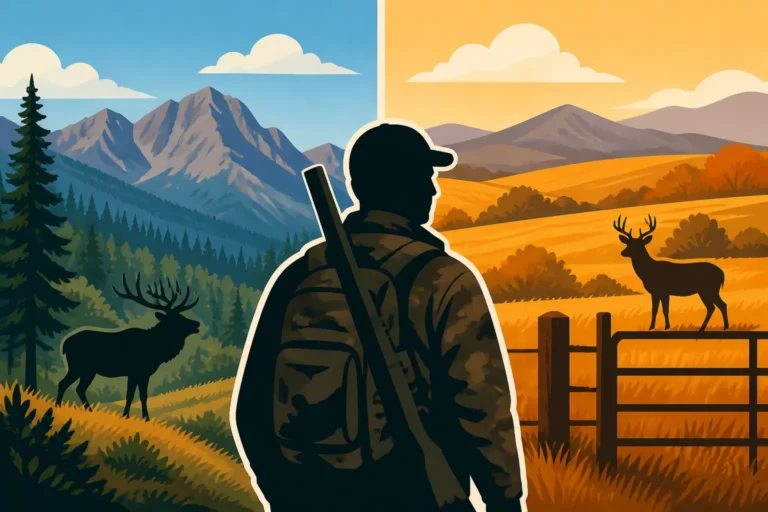
Many hunters, when they picture hunting in Colorado, immediately conjure up images of towering, snow-capped peaks, dense conifer forests, and the echoing bugle of a bull elk. And while that's certainly a huge part of the state's allure, it overshadows an equally vast and incredibly rewarding hunting landscape: the Eastern Plains. This often-overlooked region presents entirely different challenges and opportunities, and this guide is here to unravel the mysteries of hunting for deer, pronghorn, and a variety of small game across Colorado's sprawling plains, helping you navigate its unique terrain and access issues for a successful hunt.
The Unique Landscape and Challenges of Colorado's Eastern Plains
Forget everything you think you know about "Colorado hunting" when you head east of I-25. The Eastern Plains are a world unto themselves, a vast expanse of rolling grasslands, agricultural fields, river bottoms, and surprising breaks that hide incredible hunting opportunities. But it's not without its unique set of hurdles.
Understanding the Plains Topography and Habitat
The topography of the Eastern Plains is a stark contrast to the rugged mountains further west. You're looking at vast, open vistas, often punctuated by endless agricultural fields – corn, wheat, sunflowers – that stretch to the horizon. But don't let the apparent flatness fool you. There are subtle, yet critical, topographical features that concentrate game. We're talking about drainages, river and creek bottoms (especially along the South Platte River or Arkansas River), tree lines, shelterbelts planted around farmsteads, and the occasional sandhills or bluffs that provide vital cover and thermal protection. These areas, though seemingly minor, are absolute magnets for deer and many small game species. Pronghorn, of course, thrive in the wide-open shortgrass prairie and Conservation Reserve Program (CRP) fields that dominate the landscape. Understanding these nuances is paramount to locating animals, as they won't be hiding in dense timber stands.
Weather Extremes and Their Impact on Hunting
Hunting on the Eastern Plains means contending with weather that can change in an instant, and often to extremes. Unlike the mountains where elevation dictates a lot, here it's about wide-open exposure. Summers are scorching, winters bring brutal cold and blizzards, and spring and fall can be a mix of pleasant days, torrential downpours, or fierce, sustained winds. That infamous Colorado wind isn isn't just a nuisance; it's a major factor in how you hunt. It can make long-range shooting incredibly difficult, affect game movement, and cut right through inadequate clothing. A sudden cold front pushing through can completely alter deer and pronghorn behavior, often leading to increased feeding activity before a storm, or making them hunker down for days after. You need to be prepared for everything from 70-degree sun to blizzard conditions in the same week, especially during late fall seasons.
The Dominance of Private Land
This is arguably the single biggest challenge for hunters on the Eastern Plains. The vast majority of land is privately owned, primarily by farmers and ranchers. This isn't like the Western Slope with its expansive National Forests and BLM land. Successfully hunting big game like deer and pronghorn often hinges on securing landowner permission. Without it, your options become severely limited to small pockets of public land, which are often heavily pressured. This reality can be incredibly frustrating for hunters accustomed to vast stretches of public access. It requires a different mindset, focusing on relationship building, extensive scouting, and diligent research to find those precious accessible acres.
Key Species and Seasons: What to Hunt on the Plains
The Eastern Plains are a treasure trove for various game species, each offering a unique hunting experience. While elk might not roam these flatlands, the opportunities for other species are abundant and often less physically demanding than a high-country mountain hunt.
Pronghorn: The Speedsters of the Plains
Pronghorn are perhaps the most iconic big game species of the Eastern Plains. These incredible animals thrive in the open, expansive grasslands and agricultural interfaces. Colorado offers good pronghorn hunting, but tags are typically secured through the draw, and preference points are often necessary for desirable units, particularly for buck tags. You can learn more about the Colorado Pronghorn Draw Explained to maximize your chances. Archery season for pronghorn usually runs in August and September, providing a unique challenge with decoys or spot-and-stalk tactics in the warm weather. Rifle seasons are generally short, often just a few days in late September or early October, making effective scouting absolutely crucial. Understanding Colorado Pronghorn Behavior and Biology is key to predicting their movements and finding water sources or travel corridors.
Deer Hunting: Whitetail and Mule Deer Opportunities
Colorado's Eastern Plains offer fantastic deer hunting, with both whitetail and mule deer present.
Whitetail Deer: River Bottom Ghosts
Along the major river systems like the South Platte and Arkansas, and their numerous tributaries, you'll find healthy populations of whitetail deer. These deer stick to the dense cover provided by river bottoms, cottonwood galleries, and thickets along creeks, making for a challenging hunt that often feels more like a Midwestern whitetail experience. Tags are typically available through the draw, and some areas might offer over-the-counter (OTC) archery tags or late-season private land tags. Understanding Colorado Whitetail Deer Hunting methods, which often involve tree stands or ground blinds overlooking trails or pinch points, is vastly different from open-country mule deer hunting. The rut can be a magical time here, typically peaking in early to mid-November, with bucks becoming more active and vulnerable as they search for does.
Plains Mule Deer: Adaptable Wanderers
While most people associate mule deer with the mountains, significant populations thrive in the rougher breaks, transition zones, and larger agricultural tracts of the Eastern Plains, especially in the central and northern plains units. These mule deer are often larger-bodied than their mountain counterparts due to abundant forage. They're masters of using sparse cover and terrain features to disappear. Tags for plains mule deer are usually draw-only, requiring preference points, especially for mature buck tags. Their seasons often coincide with plains whitetail seasons, providing a potential for combination hunts if you're lucky enough to draw both tags in the same area. A good resource for understanding species populations and trends across the state is the Colorado Big Game Species Guide.
Small Game and Upland Birds: Consistent Action
Beyond big game, the Eastern Plains are a paradise for small game and upland bird hunters. This can be a fantastic way to introduce new hunters to the sport or fill time between big game hunts.
Pheasant and Quail: The Upland Stars
Colorado's Eastern Plains are renowned for their pheasant and quail hunting. Pheasant populations thrive in the expansive CRP fields, wheat stubble, and shelterbelts, while bobwhite and scaled quail can be found in brushy draws and river bottoms. These seasons typically open in November and run through January, offering a fantastic opportunity to hunt with dogs. Many Walk-In Access (WIA) properties are specifically managed for upland birds. If you're planning a trip for small game, be sure to check out the Colorado Small Game Hunting regulations, as they can differ from big game.
Cottontails and Jackrabbits: Year-Round Opportunity
Cottontail rabbits are abundant throughout the plains, found in almost any area with adequate brushy cover. Jackrabbits prefer more open terrain, often along field edges. Both offer excellent hunting opportunities, and seasons are long, sometimes year-round for jackrabbits, with generous bag limits. These can be great for honing your shooting skills or simply enjoying a day afield with minimal pressure.
Cracking the Code: Accessing Hunting Land on the Eastern Plains
The biggest hurdle for hunters on Colorado's Eastern Plains isn't necessarily finding game, but finding legal access to that game. With the vast majority of land being private, understanding the public access programs and securing permission are vital skills.
Public Access Programs: Your Best Bet
Colorado Parks and Wildlife (CPW) offers several programs that create public hunting opportunities on the plains. These are your absolute best friends for DIY hunts:
- Walk-In Access (WIA) Program: This is a crucial program that leases hunting rights from private landowners, opening up thousands of acres for public hunting without prior permission. These properties are often agricultural fields, CRP, or river bottomland. You must carry a valid WIA permit (usually inexpensive and available online or where licenses are sold) and adhere strictly to the rules posted at each site, including specific hunt dates and species allowed. You can find detailed maps of these properties on the Colorado Hunting Atlas Explained or using mapping apps like onX Hunt. Always respect the boundaries and rules, as these relationships with landowners are fragile and vital for future access.
- State Trust Lands (STL): These lands are managed by the State Land Board and often allow public access for hunting with the purchase of a valid hunting license. Access can sometimes be tricky, requiring careful navigation to ensure you're not trespassing on private land to get to them. Many STL parcels are intermingled with private property, so having a good mapping tool is critical.
- State Wildlife Areas (SWAs): CPW owns and manages numerous SWAs, many of which are located along river corridors or around reservoirs on the plains. These areas often provide excellent habitat for deer, waterfowl, and upland birds. Rules can vary by SWA, so always check the specific regulations for the area you plan to hunt.
- Bureau of Land Management (BLM) and National Grasslands: While less common than in the mountains, there are pockets of BLM land and larger tracts like the Pawnee National Grassland in northeastern Colorado that offer public hunting. These areas can hold good numbers of pronghorn and mule deer. Again, precise navigation with tools like onX Hunt is non-negotiable to identify public boundaries and avoid accidental trespass, as these public lands are often surrounded by private holdings.
Securing Private Land Permission
This is where the rubber meets the road for many plains hunts. Simply put, if you want consistent, low-pressure hunting for big game on the plains, you'll likely need to knock on doors or call landowners.
Building Relationships and Respect
Approaching landowners requires respect, politeness, and persistence. Start well in advance of the season, preferably in late spring or summer. Dress presentably, be clear about what you're asking for, and offer to help with chores or provide references. Many landowners are hesitant due to past bad experiences, so demonstrating that you're a responsible hunter is paramount. A good approach is to ask for permission to hunt small game first, or for access to specific, less desirable areas. Building that trust can sometimes open doors for future big game opportunities. Some hunters find success by offering to help with predator control, such as coyotes, which can sometimes lead to discussions about deer or pronghorn access.
Research and Persistence
Before you approach a landowner, do your homework. Use county assessor websites to identify property owners and contact information. Drive the roads, observe game patterns, and pinpoint areas that look promising. Remember, a "no" today isn't necessarily a "no" forever. Sometimes it's about timing, or finding the right person. For those without existing connections, platforms like GoHunt can offer insights into units with more public land or higher draw odds, helping you focus your efforts on areas where permission might be less critical. However, even with good unit information, personal outreach remains a powerful tool on the plains.
| Access Type | Primary Use Cases | Pros | Cons |
|---|---|---|---|
| Walk-In Access (WIA) | Upland birds, some deer/pronghorn, seasonal | Free with permit, clearly marked, avoids private land permission | Specific season/species limits, can be heavily pressured, non-permanent |
| State Trust Land (STL) | Pronghorn, mule deer, some upland birds | Extensive acreage, generally less pressure than SWAs | Access points can be limited, intermingled with private land, requires mapping |
| State Wildlife Areas (SWA) | Whitetail deer, waterfowl, upland birds | Excellent habitat, often managed specifically for hunting | Can be very crowded, specific local rules, smaller acreage |
| BLM/National Grasslands | Pronghorn, mule deer, coyotes, prairie dogs | Large, contiguous blocks of public land in some areas | Limited availability, often remote, requires extensive e-scouting |
| Private Land Permission | All species, often best for quality and low pressure | Exclusive access, often high success rates, flexible hunting conditions | Difficult to obtain, requires relationship building, no guarantee of access |
Tactics, Gear, and Mindset for Plains Hunting Success
Hunting the Eastern Plains demands a different approach than chasing game in the mountains. The open terrain and specific game behaviors require specialized tactics and gear.
Mastering Long-Range Glassing and Stalking
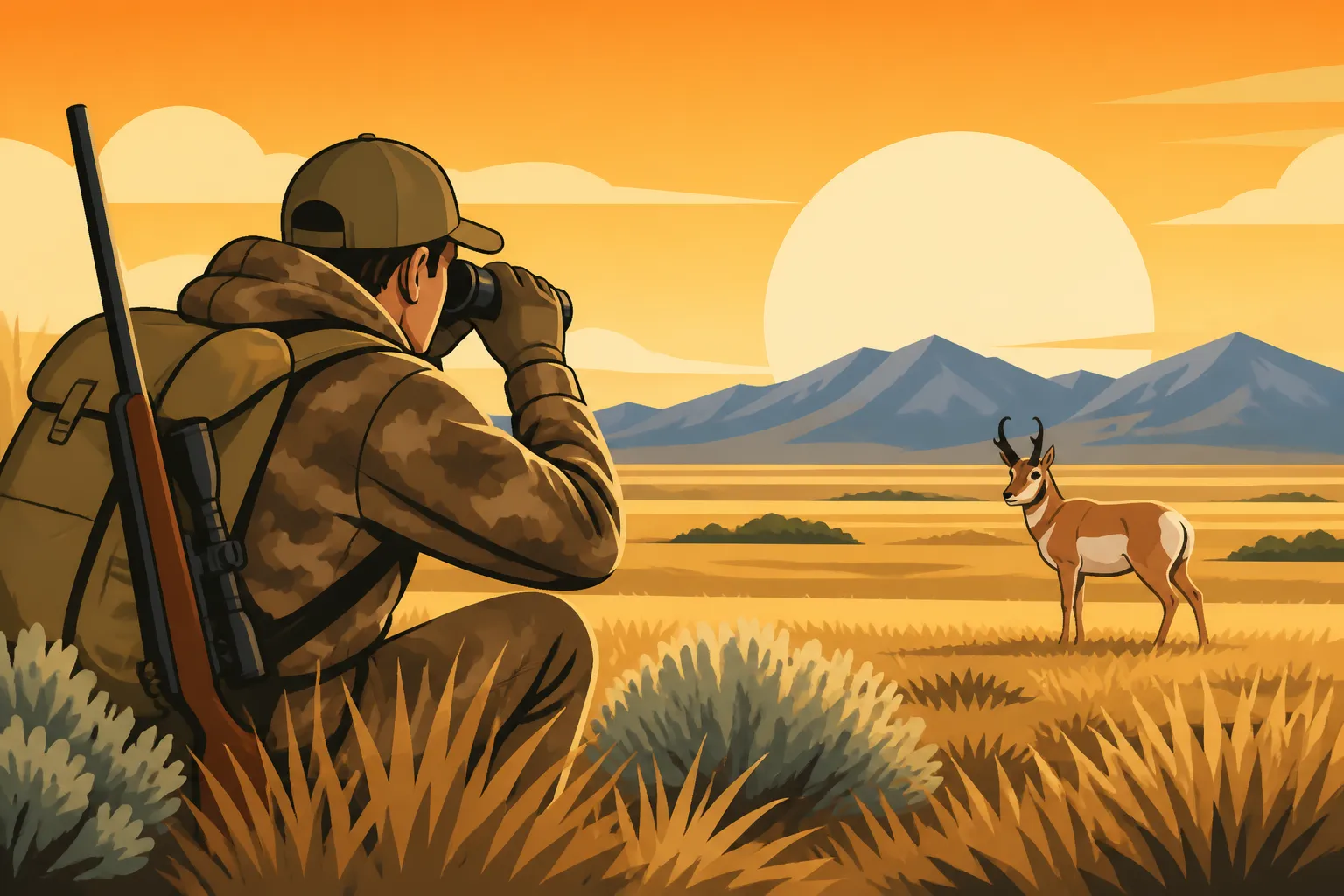
In the wide-open expanse of the plains, your optics are your most valuable tool. A high-quality spotting scope (20-60x or 15-45x) and a solid tripod, paired with excellent binoculars (10x or 12x), are indispensable. You'll spend hours, often days, glassing from vantage points, meticulously picking apart distant terrain for the tell-tale twitch of an ear or a patch of hide. This is a primary method for finding both pronghorn and plains mule deer. For detailed guidance, check out How to Glass Big Colorado Basins, which offers transferable skills.
Once you've spotted an animal, the real challenge begins: the stalk. There's often very little cover in the form of trees or thick brush. You'll be using subtle terrain features – ditches, small rises, fence lines, and even cattle – to get within shooting range. This requires immense patience, careful planning, and often crawling on your hands and knees for significant distances. Learning How to Spot-and-Stalk Colorado Pronghorn is a masterclass in this style of hunting, as their incredible eyesight makes them one of the toughest animals to approach.
Shooting Considerations: Wind and Distance
The open nature of the plains means long shots are often the norm, not the exception. Distances of 200-400 yards are common for rifle hunters, and archery shots can often be at the longer end of what's ethical for many bowhunters. The relentless wind is a constant factor that must be accounted for. What might be a simple 200-yard shot in a calm setting becomes a complex calculation of bullet drop and wind drift on the plains. Practice shooting at extended ranges in windy conditions is non-negotiable. Familiarize yourself with your rifle's ballistic performance and learn to read wind flags or the movement of grass. For those considering longer shots, understanding Colorado Long-Range Shooting Considerations is crucial for an ethical kill.
Essential Gear for Plains Hunters
Given the unique environment, some gear becomes absolutely critical:
- High-Quality Optics: As mentioned, a good spotting scope, tripod, and binoculars are paramount. You'll spend more time looking through glass than anything else. Consider something durable like the Vortex Razor HD line or a similar quality brand for your spotting scope and binos. Learning How to Use Optics for Colorado Mule Deer will enhance your efficiency.
- Mapping Software: onX Hunt is, without exaggeration, an indispensable tool for plains hunting. It allows you to instantly identify public land, WIA boundaries, landowner names, and navigate vast, unmarked territories. It's not just a convenience; it's a necessity for avoiding trespass and maximizing your legal hunting grounds.
- Good Boots & Quiet Clothing: While not as rugged as mountain terrain, you'll still be covering many miles, often through thorny brush or uneven ground. Comfortable, durable boots are a must. Quiet, layered clothing that can handle extreme temperature swings and block wind is also essential. Natural fibers or quiet synthetics are preferred over noisy nylon.
- Vehicle & Recovery Gear: A reliable 4×4 truck or SUV is often needed to navigate dirt roads, two-tracks, and potentially muddy conditions, especially after rain or snow. Always carry a spare tire, jack, shovel, tow strap, and basic recovery gear, as cell service can be spotty in many areas.
- Water & Food: Even in cooler weather, the open sun and wind can dehydrate you quickly. Carry more water than you think you'll need, along with sufficient food for long days afield.
The Right Mindset: Patience and Adaptability
Hunting the Eastern Plains requires a significant shift in mindset compared to mountain hunting. Patience is not just a virtue; it's a requirement. Animals can be incredibly skittish due to constant exposure, and opportunities may be few and far between. You might glass for hours without seeing anything, or spend a day getting busted on multiple stalks. Embracing this challenge, learning from each attempt, and remaining persistent are keys to success. Be adaptable: if one WIA property is too crowded, have a backup plan. If the wind is too strong for stalking, consider setting up a blind near a water source or funnel point. The plains will test your resolve, but the rewards of a hard-earned plains buck or pronghorn are incredibly satisfying.
Disclaimer
Please note that hunting regulations, season dates, and access programs can change frequently. Always consult the most current Colorado Parks and Wildlife (CPW) regulations and maps before planning any hunt. This guide is for informational purposes only and does not substitute for official CPW resources.