Best Colorado Units for Rifle Elk
The quest for the perfect Colorado rifle elk unit often feels like an impossible puzzle. You pore over maps, scrutinize harvest reports, and scroll through forums, only to find conflicting advice or units that seem to require a lifetime of preference points. It's frustrating to invest so much time and effort into planning, knowing that a misstep in unit selection could lead to a less-than-fulfilling hunt. This comprehensive guide is designed to cut through that noise, helping you understand the nuances of Colorado's GMUs and pinpoint areas with the highest potential for a successful rifle elk hunt, whether you're chasing a bull or filling your freezer with prime elk meat.
Understanding Colorado's Rifle Elk Seasons and Unit Structure
Before you can even begin to think about specific units, you need a solid grasp of how Colorado structures its rifle elk seasons. This isn't just about dates on a calendar; it dictates hunter pressure, elk behavior, and ultimately, your chances of success. Colorado Parks and Wildlife (CPW) manages big game through a complex system of Game Management Units (GMUs), draw systems, and over-the-counter (OTC) tag options, all of which play a crucial role in unit selection.
Colorado's Staggered Rifle Seasons
Colorado is renowned for its staggered rifle seasons, which typically include four distinct periods. Each season presents unique opportunities and challenges, influencing not only the units you might consider but also the tactics you'll employ.
The 1st Rifle Season is often a limited draw-only season, usually in mid-October. This season sees lower hunter numbers, and elk are often still in their early post-rut patterns, sometimes with residual bugling activity, especially if the weather holds warm. Because tags are limited by drawing, the pressure is generally lower, but access to these tags requires planning and often a substantial number of preference points. For many, this is considered a prime opportunity due to less competition.
The 2nd Rifle Season, usually beginning in late October, is a popular choice because many units offer over-the-counter (OTC) elk tags for bulls, in addition to limited draw tags. This is often when you'll find higher hunter densities, especially in accessible public lands. Elk are usually settling into their winter ranges or migration corridors, making them a bit more predictable if you can find their travel routes. However, the sheer volume of hunters can push elk into thicker cover, making them more challenging to locate and hunt. For detailed information on specific dates and regulations, check out the official Colorado Hunting Seasons Explained guide.
The 3rd Rifle Season, typically in early November, also offers a mix of draw and OTC options, similar to the second season, though sometimes with slightly different unit offerings. Weather can be a significant factor here; early snow can kick off migration, concentrating elk in lower elevations and south-facing slopes. This can be a fantastic time to hunt if you hit a weather window, but it can also mean extremely cold conditions and deeper snow, requiring more robust gear and physical preparation.
Finally, the 4th Rifle Season, often in mid-November, is typically a limited draw-only season again, similar to the first. By this point, elk are usually firmly in their winter range, often seeking south-facing slopes for warmth and food. Snow can be deep, and conditions can be harsh, but the limited hunter pressure combined with concentrated elk can lead to exceptional hunting opportunities for those who've drawn a tag. These later seasons can be excellent for those targeting cows as well, if the tag allows.
Draw Tags Versus Over-The-Counter Tags
The most significant decision after choosing a season is whether to pursue a draw tag or an over-the-counter (OTC) tag. This choice profoundly impacts your unit selection and hunt strategy.
Draw tags are allocated through a lottery system and typically require applying months in advance, often by early April. These tags are usually for units with higher success rates, better trophy potential, or specific harvest objectives that necessitate controlling hunter numbers. If you have the patience and, for some units, a good number of preference points, drawing a tag can grant you access to units with less pressure and potentially more elk. Learning about the application process and how preference points work is critical, which you can dive into with resources like Colorado Draw System and Preference Points. Units that require high preference points for draw tags often boast better trophy potential and lower hunter densities. For example, some units in the northwest or southwest parts of the state might require 10+ points for a bull tag but offer a truly unique hunting experience.
OTC tags, on the other hand, can be purchased directly without applying through the draw, though there are specific regulations regarding hunter education requirements and deadlines. These are primarily available for certain rifle seasons (usually 2nd and 3rd rifle) and often for specific game species and sex (e.g., bull elk). While convenient, OTC units tend to see significantly higher hunter pressure because of the easier access. This means you’ll be sharing the woods with many other hunters, and elk are often more wary and pushed into thicker, harder-to-reach terrain. Despite the pressure, successful OTC hunts are absolutely possible with diligent e-scouting, physical fitness, and a willingness to get away from roads and other hunters. A good starting point for understanding these opportunities is the Colorado OTC Elk Tags Explained guide. The key to success in OTC units is often identifying areas with difficult access or large tracts of public land that deter the casual hunter.
Key Factors for Choosing a Rifle Elk Unit
Selecting the right rifle elk unit in Colorado involves more than just glancing at a map or reading a few forum posts. You need to become a detective, analyzing various factors that will directly influence your hunting experience and success. Ignoring these elements can lead to disappointment and wasted time in the field.
Public Land Access and Hunter Density
For most elk hunters, public land is the primary target. Colorado boasts millions of acres of national forests, BLM land, and state wildlife areas. However, not all public land is created equal when it comes to elk hunting.
Start by looking at the percentage of public land within a GMU. A unit with 80-90% public land might seem ideal, but if that public land is easily accessible by vehicle, you can bet it will be crawling with hunters during rifle seasons. Conversely, a unit with a lower percentage of public land might have large, remote blocks of public access that see minimal pressure, requiring more effort to reach. Websites and mapping tools like onX Hunt are invaluable here, allowing you to visualize public versus private boundaries, access points, and roads. You can spend hours identifying fingers of public land that extend into private holdings, creating bottlenecks or natural travel corridors that might be overlooked by other hunters. Understanding Colorado Public Land Hunting Guide is crucial for effective planning.
Hunter density is another critical factor. Units with high OTC tag availability or easily accessible public land will naturally have more hunters. While elk are abundant in Colorado, they are also incredibly adept at avoiding human pressure. In high-density units, elk will often retreat to thick timber, steep slopes, or roadless wilderness areas that require significant physical exertion to access. If you're physically prepared and willing to go deep, these less-pressured pockets within high-density units can be incredibly productive. Conversely, some draw units, even with vast public land, may have significantly lower hunter numbers due to the limited tags, offering a more solitary hunting experience.
Elk Population and Success Rates
At the heart of any unit choice is the elk population itself and the historical success rates. CPW provides detailed harvest data for each GMU, offering invaluable insights into elk numbers and hunter success.
CPW's annual Big Game Harvest Summary reports provide data on hunter numbers, elk harvested, and success percentages for specific units and seasons. Don't just look at the overall success rate; dig deeper. Is the success rate for bulls high, or is it skewed by cow harvests? How many hunters hunted the unit, and how many elk were taken per hunter? A unit with a 10% success rate might sound low, but if it has a massive elk population, that still translates to many elk being harvested, indicating a healthy herd and good potential. For units that require preference points, you’ll want to research How Many Preference Points for Colorado Elk to gauge the historical difficulty of drawing a tag.
It's also important to consider herd objectives. CPW manages elk herds to specific population goals. Some units might be actively trying to reduce herd numbers (often indicated by abundant cow tags), while others are focused on maintaining or growing trophy potential (often fewer tags, higher point requirements). Understanding these objectives can help you align your personal hunting goals with a unit's management strategy. A healthy, stable or growing elk population within a unit, even if the success rate isn't sky-high, generally bodes well for a consistent hunting experience. Remember, a unit with 10% success but 10,000 elk means 1,000 elk harvested, while a unit with 50% success but only 100 elk means 50 elk harvested. Context is key!
Top Rifle Elk Units: Categories and Characteristics
Instead of pointing you to specific GMU numbers (which can change in performance year to year and might not align with your personal goals or draw capabilities), let's talk about categories of rifle elk units in Colorado. Each category offers a distinct hunting experience, with its own set of pros and cons, allowing you to match a unit type to your own expectations, fitness level, and tag availability.
High-Elevation Wilderness Units
These units often encompass vast tracts of designated wilderness or remote backcountry areas, typically found in national forests like the White River, San Juan, or Flat Tops Wilderness. Examples might include parts of GMUs 12, 23, 24, 66, 76, or 78, but this is a broad generalization. These are not "easy" hunts. Access is usually limited to foot or horseback, often requiring multi-day pack-ins. The terrain is steep, rugged, and elevations can regularly exceed 10,000-12,000 feet.
Pros: Low hunter pressure in the deep backcountry, potential for truly unpressured elk, higher chances of finding mature bulls, incredible solitude and scenery. You're getting away from the crowds and hunting elk that haven't been harassed daily. If you're physically prepared, learning How to Hunt Elk at High Elevation can be incredibly rewarding.
Cons: Extreme physical demand, challenging weather conditions, difficult elk extraction, often require draw tags with high preference points (especially for bull tags), extensive logistical planning. You need to be prepared for anything, including packing out an elk several miles from your camp. You can find more detail on this style of hunt in Colorado Backcountry Hunting Guide.
Accessible Public Land Units
These are often the most popular units, characterized by good road access to large blocks of national forest or BLM land. Many OTC units fall into this category, particularly in the 2nd and 3rd rifle seasons. You might find units that are relatively close to population centers or major highways, like some GMUs in the Grand Mesa or Uncompahgre National Forests.
Pros: Easier access for day trips or car camping, less physical demand than wilderness areas, diverse terrain from timber to open parks. Many hunters enjoy the camaraderie of these areas, and the ability to drive closer to hunting areas makes packing in gear much simpler.
Cons: High hunter pressure, especially on weekends and near roads, elk are often pushed into deep, thick timber or private land, requiring significant effort to find them. You'll need to work hard to get away from the road warriors. This is where mastering How to Hunt Elk on Public Land Pressure becomes absolutely essential. Success in these units often hinges on your ability to out-hike and out-smart other hunters, focusing on overlooked pockets or difficult-to-reach terrain features.
Draw-Only Units with High Success
These units are typically managed for quality over quantity, with limited tag allocations leading to lower hunter numbers and often higher success rates. Many require significant preference points to draw, making them coveted destinations for serious elk hunters. These can be found across the state, from the northern mountains to the southwestern plateaus.
Pros: Excellent success rates, lower hunter pressure, often higher trophy potential, more predictable elk behavior due to less disturbance. These units are often a hunter's dream, offering a higher probability of encountering elk and having a shot opportunity.
Cons: Very difficult to draw a tag, requiring years of point accumulation, often still challenging terrain that demands good physical conditioning, tags can be more expensive. Planning for these hunts can take years, but the payoff can be substantial.
Here's a quick comparison of these unit types:
| Unit Type | Access Difficulty | Hunter Pressure | Physical Demand | Draw Difficulty (Bull Tags) | Success Rate Potential | Primary Focus |
|---|---|---|---|---|---|---|
| High-Elevation Wilderness | High | Low | Very High | Medium to High | Medium to High | Trophy/Solitude |
| Accessible Public Land (OTC) | Low | Very High | Medium | N/A (OTC) | Medium | Meat/Opportunity |
| Draw-Only High Success | Medium | Low | Medium to High | Very High | High | Quality/Trophy/Solitude |
Strategic Unit Selection: Balancing Opportunity with Reality
Choosing the "best" unit isn't just about statistics; it's about finding the best unit for you. This involves a candid assessment of your own capabilities, resources, and goals. A unit that promises giant bulls but requires a 10-mile pack-in might be a terrible choice if you're not in peak physical condition or lack the gear for a true backcountry experience.
Matching Unit Characteristics to Your Capabilities
Every hunter is different, and what works for one might not work for another. Be realistic about your physical fitness, hunting experience, and equipment.
Physical Fitness: If you're accustomed to flat-land hunting, the vertical world of Colorado elk country can be a shock. High-elevation wilderness hunts demand exceptional cardiovascular fitness and strength. Can you hike 5-10 miles daily with a heavy pack at 10,000+ feet? If not, focus on units with more moderate terrain or those that allow for easier vehicle access to certain areas, even if it means dealing with more hunters. Training specifically for high-altitude hunting is key, and articles like How to Physically Prepare for Colorado Elk offer excellent guidance.
Hunting Experience: Are you new to elk hunting or seasoned veteran? First-time elk hunters might do better in units with more moderate terrain and slightly higher hunter densities, as there's often more visible sign and fewer truly "ghosting" elk. Units with robust elk populations, even if heavily hunted, can still provide learning opportunities. More experienced hunters, especially those comfortable with navigation and advanced tactics, might thrive in remote, less-pressured areas.
Gear and Resources: Do you have a quality backpacking setup, including a sturdy pack (like those reviewed in Best Backpack for a Colorado Elk Hunt), optics, and clothing for extreme weather? Can you afford a guided hunt or a drop camp service if necessary? Your gear cache and budget will influence your unit options. A week-long backcountry hunt requires specialized gear and a serious investment, whereas a hunt from a comfortable base camp requires a different set of priorities.
Leveraging E-Scouting and Research Tools
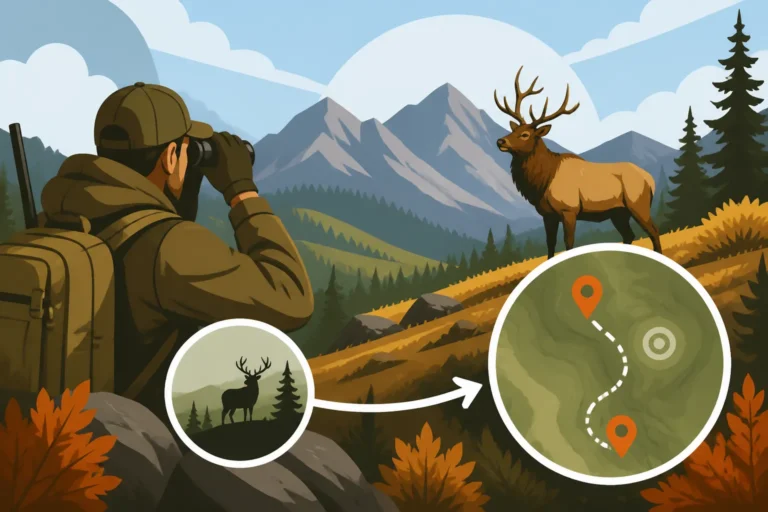
In today's hunting world, digital tools are not just a luxury; they are essential for effective unit selection and pre-hunt planning. Platforms like onX Hunt and GoHunt provide a wealth of information at your fingertips, allowing you to "hunt" from your couch long before you set foot in the field.
onX Hunt: This mapping application is an absolute game-changer. It allows you to visualize public and private land boundaries with incredible accuracy, overlay topo maps, satellite imagery, and even historical burn data. When researching units, use onX Hunt to:
- Identify roadless areas and potential wilderness access points that might hold less-pressured elk.
- Locate water sources, bedding areas (north-facing slopes with dark timber, for example), and feeding areas (open parks, south-facing slopes).
- Scrutinize trail systems and estimate hiking distances into potential hunting grounds.
- Identify overlooked public land pockets or difficult-to-access canyons that might act as sanctuaries.
- Mark potential glassing points and escape routes.
This detailed e-scouting can save you countless hours of boots-on-the-ground scouting and help you develop a robust hunting plan. For a deep dive, check out How to E-Scout Before a Colorado Hunt.
GoHunt: This platform is a treasure trove of data for hunters. It compiles draw odds, harvest statistics, population trends, and unit breakdowns, making it indispensable for initial research and point strategy. Use GoHunt to:
- Research draw odds for specific units and hunt codes based on your preference points.
- Analyze historical success rates for different seasons and weapon types within a GMU.
- Compare various units side-by-side based on criteria like public land percentage, elk density, and trophy potential.
- Stay up-to-date on regulation changes and season dates.
By combining the visual power of onX Hunt with the analytical data from GoHunt, you can create an incredibly informed and strategic unit selection. Remember, knowledge is power, and these tools put a vast amount of that power directly into your hands.
Preparing for Your Chosen Rifle Elk Unit
Once you've poured over the maps, crunched the numbers, and finally settled on your ideal Colorado rifle elk unit, the real work of preparation begins. This isn't just about packing your bags; it's about transforming your research into a tangible plan for success.
Pre-Season E-Scouting and Physical Conditioning
Even after selecting a unit, your e-scouting should continue. Dive deeper into the specific areas you've identified as potential elk habitat.
Refining Your E-Scouting: With your unit chosen, dedicate more time to specific drainages, ridges, and basins. On onX Hunt, mark potential kill zones, escape routes, and recovery points. Identify multiple ingress and egress routes, especially if you plan to get deep into the backcountry. Look for features like saddles, benches, and north-facing slopes where elk often bed, and south-facing slopes or open parks where they might feed. Consider thermal currents and wind direction, especially in relation to known bedding and feeding areas. If you plan to hunt the rut, identify areas where you expect elk to be vocal. For guidance on specific techniques, consult How to Glass and Grid a Colorado Basin or How to Use Thermals in Colorado Elk Country.
Physical Preparation: Colorado elk hunting, particularly rifle hunting in the rugged terrain, is physically demanding. Even if you're not planning a multi-day backcountry pack-in, traversing steep hillsides, navigating dense timber, and potentially packing out an elk quarter in elevation will test your limits. Develop a fitness plan that includes cardiovascular training (hiking with a weighted pack, stair climbing) and strength training focusing on core, legs, and back. Start months in advance. The better your physical condition, the more ground you can cover, the more comfortably you can hunt, and the safer you'll be. Imagine having a bull down three miles from the truck – your fitness will be the difference between a triumphant pack-out and a brutal struggle.
Understanding Local Regulations and Contingency Planning
Ignorance of the rules is never an excuse, and having a backup plan is just smart hunting. Colorado's hunting regulations are thorough and can have specific nuances for certain GMUs or seasons.
Regulations Deep Dive: Before you even leave home, download and thoroughly read the current year's Colorado Big Game Regulations. Pay close attention to:
- Specific Unit Restrictions: Some units might have antler point restrictions, antlerless tag limitations, or specific closures.
- Season Dates and Legal Shooting Hours: Double-check these to ensure you're hunting legally.
- Weapon Restrictions: Ensure your rifle, ammunition, and optics comply with Colorado law.
- Transport and Processing: Know the rules for validating your tag, quartering an elk, and transporting meat. For instance, knowing How to Quarter an Elk in the Field and How to Pack Out an Elk in Colorado will be invaluable.
- Camping and Fire Restrictions: Especially if hunting national forest or BLM land, be aware of current fire danger levels and camping regulations.
Contingency Planning: What happens if your primary hunting area is overrun with hunters? What if the weather turns unexpectedly?
- Backup Spots: Always have 2-3 backup hunting spots identified within your chosen GMU, or even in a neighboring unit if you have an OTC tag. These should be areas that might be harder to access or less obvious, but still hold elk potential.
- Weather Preparedness: Colorado mountain weather is famously unpredictable. Pack layers for all conditions – warm, cold, wet, windy. Have emergency shelter, food, and water. A sudden snowstorm can make travel impossible and turn a pleasant hunt into a survival situation.
- Safety Plan: Inform someone of your hunting plans, including your route and expected return time. Carry a first-aid kit, navigation tools (GPS, compass, paper map), and a satellite communication device if you're going deep into the backcountry.
By diligently preparing, from the detailed e-scouting with tools like onX Hunt to rigorous physical training and understanding every nuance of the regulations, you're not just hoping for success; you're actively building the foundation for a memorable and effective Colorado rifle elk hunt.
Disclaimer
Please note that hunting regulations, season dates, and unit boundaries are subject to change by Colorado Parks and Wildlife (CPW). Always consult the most current CPW Big Game Brochure and official CPW website for up-to-date and accurate information before planning your hunt. This guide is for informational purposes only and does not supersede official regulations.