Colorado Pronghorn During the Rut
Hunting pronghorn in Colorado is an incredible experience, but trying to understand their behavior, especially during the rut, can feel like trying to solve a high-speed puzzle in a vast, open landscape. It's frustrating when you see bucks chasing does one day and then the plains seem empty the next. This guide will meticulously break down the intricate behaviors of Colorado pronghorn during their rutting season, offering practical insights and strategies to help you navigate this exciting, yet often challenging, period for a successful hunt.
Understanding the Colorado Pronghorn Rut Cycle
The annual rut for pronghorn is a spectacle of speed, dominance, and survival, and understanding its ebb and flow is paramount for any hunter hoping to connect with a mature buck. It’s not a uniform event across the state, but generally follows a predictable pattern.
When Does the Rut Occur in Colorado?
In Colorado, the pronghorn rut typically kicks off in late August and can extend well into September, sometimes even a bit into early October, depending on the specific location and environmental conditions. The peak activity usually falls within the first two to three weeks of September. This is when the most intense chasing, sparring, and territorial defense occurs, making it a thrilling time to be out in the open country. Early archery seasons often coincide with the pre-rut or very beginning of the rut, while later rifle seasons might hit the tail end of the main activity, or even a second, less intense rut if conditions are right. For more insights on seasonal timing, check out our guide on Colorado Pronghorn Season Dates and Tags.
During the pre-rut, bucks start to establish their territories and spar casually, testing each other's strength. As the rut intensifies, dominant bucks become territorial, attempting to gather and hold harems of does. This is a very active period where bucks are constantly on the move, running off smaller bucks or challenging rivals. Towards the end of the peak rut, some does will have been bred, and the intensity might slightly wane, though bucks will still be searching for receptive does.
Factors Influencing Rut Timing and Intensity
Several factors can subtly shift the exact timing and overall intensity of the pronghorn rut in different parts of Colorado. Weather plays a significant role; a sudden cold snap in late August might trigger an earlier surge of activity, while prolonged heat could delay it. Precipitation, and the resulting forage quality, also influences the animals' condition and energy levels, which in turn affects their rutting vigor. Healthy, well-fed bucks tend to be more active and aggressive. Population density within a particular Game Management Unit (GMU) can also affect rut intensity; areas with a higher buck-to-doe ratio or a healthy population density often see more competition and thus more pronounced rutting behavior.
For instance, on the Eastern Plains of Colorado, where vast stretches of shortgrass prairie provide ideal pronghorn habitat, the rut might feel more spread out due to the sheer openness and the need for bucks to cover more ground to defend their harems. In contrast, areas with more broken terrain or smaller, more concentrated herds might see a more intense, localized rut activity. Tools like GoHunt can be invaluable for analyzing historical weather patterns and population data to help predict how these factors might play out in your chosen unit.
Key Behaviors and Adaptations During the Rut
Pronghorn are fascinating creatures, and their behavior during the rut is a masterclass in adaptation for survival and reproduction in their open, often harsh, environment. Observing these specific behaviors is crucial for successful hunting.
Dominant Buck Behavior and Herd Dynamics
During the rut, dominant bucks are easily identifiable by their constant vigilance and tireless efforts to protect their harems. A mature buck will typically round up a group of 5-15 does and fawns, constantly herding them to keep them together and away from rival bucks. This involves a lot of running, posturing, and aggressive displays. You'll often see a dominant buck running at full tilt across the prairie to intercept a smaller buck attempting to cut into his harem, or chasing off a single doe trying to leave the group. These territorial disputes can escalate into intense sparring matches, where bucks clash horns, trying to push each other off balance.
These dominant bucks are under immense stress during the rut, often neglecting feeding and resting in favor of breeding and defense. This constant activity can make them less cautious than usual, but also incredibly alert to movement from other pronghorn (and hunters). They will often establish a "territory" that, while not strictly defined, encompasses the range over which they manage their harem. Identifying these dominant bucks and understanding their patterns within a specific area is key to hunting them. You can learn more about how to identify specific animals in our guide on Colorado Pronghorn Field Judging Tips.
Doe and Fawn Behavior During the Rut
While the bucks are the stars of the show, the does and fawns also exhibit specific behaviors during the rut that can be exploited by hunters. Does are constantly being herded by the dominant buck, but they are also seeking out the most vigorous and dominant males to breed with. They might attempt to sneak away from a less desirable buck, which can lead to extended chases across the landscape. Fawns, largely ignored by the rutting bucks, stick close to their mothers. Their presence isn't directly relevant to the hunt, but observing them can indicate where the does are, and thus where the bucks are concentrated.
Understanding the movements of does is critical because they dictate where the dominant bucks will be. If you locate a large group of does, chances are a buck is nearby, either already with them or attempting to gather them. Sometimes, a doe might lead a buck directly into a hunter's setup if she's trying to escape a relentless suitor. This dynamic means that focusing your glassing efforts on doe groups, rather than just cruising for lone bucks, can be a more productive strategy.
Locating Rutting Pronghorn: Visual Cues and Sign
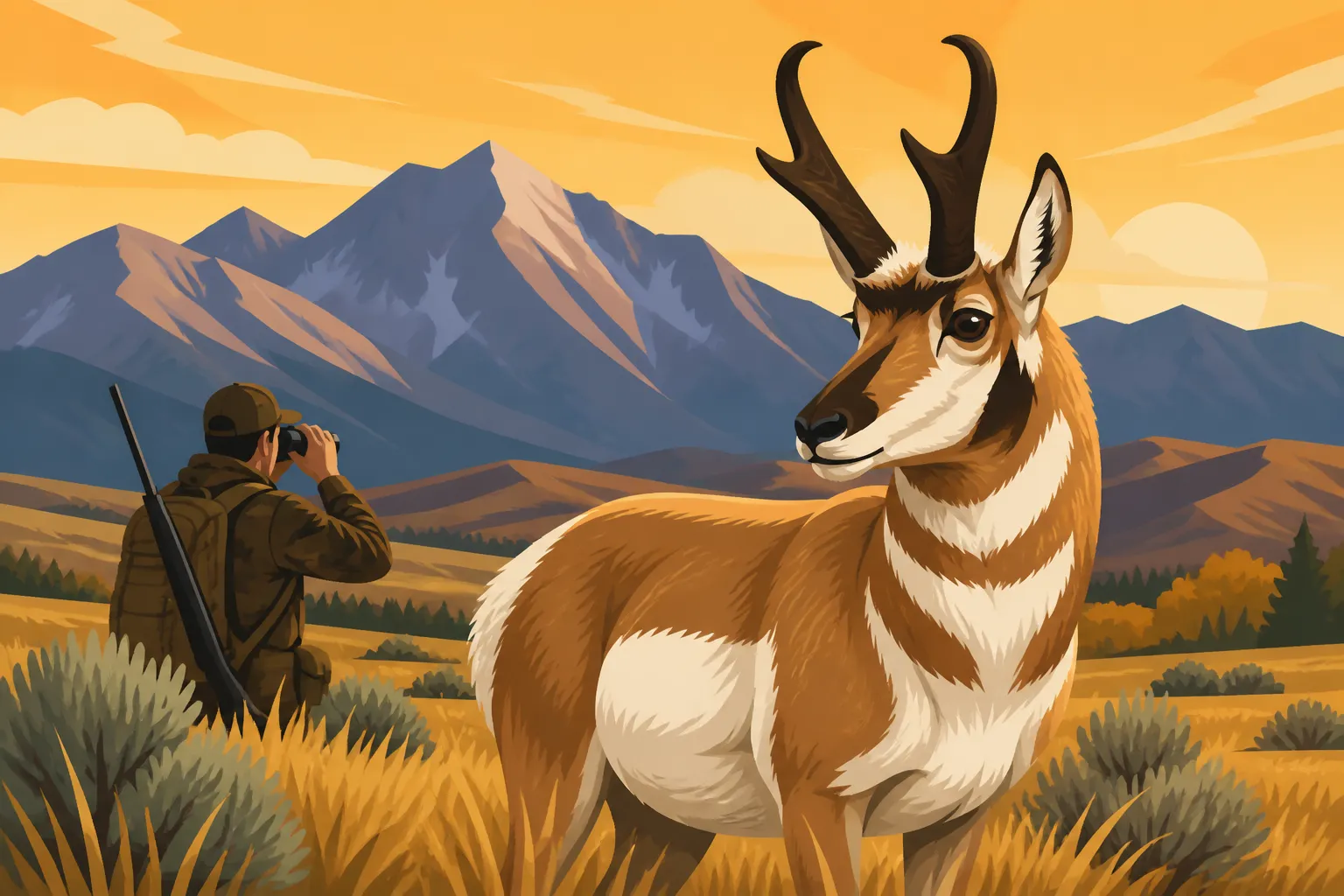
The vast, open landscapes of Colorado's pronghorn country mean that spotting and interpreting visual cues is paramount. During the rut, these cues become even more pronounced. Look for clouds of dust rising from intense chases, which can be seen from miles away. Binoculars and spotting scopes become your best friends here. You might observe multiple bucks in a relatively small area, all vying for dominance or access to does. The sheer amount of movement on the landscape will be noticeably higher than during the pre-rut or post-rut. Bucks will also sometimes rub their horns on small bushes or scrape the ground with their feet, leaving subtle signs of their presence and territorial claims, though these are much harder to spot than in timbered elk country.
Another visual cue is the sheer aggregation of animals. While pronghorn typically live in herds, during the rut, these herds become more tightly bound by the dominant buck, and you'll see more concentrated groups of animals. Look for bucks chasing individual does or an entire harem being pushed across a ridge. Learning How to Glass Big Colorado Basins (or plains, in this case) effectively is an essential skill to identify these behaviors from a distance, allowing you to plan your approach carefully.
Effective Hunting Strategies During the Rut
The rut offers unique opportunities for pronghorn hunters because the bucks are preoccupied and often less wary than at other times. However, their constant movement and alertness to rivals also present significant challenges.
Decoying Rutting Pronghorn
Decoying is arguably one of the most exciting and effective tactics for hunting pronghorn during the rut. A well-placed decoy can tap into a buck's primal instinct to defend his territory or steal a harem. The key is to use a buck decoy, or sometimes a doe decoy if you want to draw in a dominant buck looking for a receptive female. The best time to deploy a decoy is when you spot a buck with a harem, or a solitary buck actively searching, often displaying aggressive behavior towards other males.
The strategy typically involves one hunter staying concealed behind the decoy (often a silhouette or full-body decoy), while another hunter (or the same hunter) moves into a shooting position. The decoy should be visible to the pronghorn from a distance, usually 400-800 yards, to give the buck time to spot it and decide to investigate. When a dominant buck sees a "rival" (your decoy) encroaching on his turf or trying to steal a doe, his territorial instincts can often override his natural caution. He might charge in aggressively, trot cautiously, or try to circle downwind to get a scent. Understanding these reactions and being prepared for a quick shot is crucial. Remember to be mindful of the wind direction; pronghorn have an incredible sense of smell. You can find more specific advice on this in How to Hunt Colorado Pronghorn Decoying.
Spot-and-Stalk Tactics in Open Country
Even during the rut, spot-and-stalk remains a foundational tactic for hunting pronghorn in Colorado's wide-open spaces. The rut can make this tactic more challenging due to the constant movement, but also more rewarding as bucks can be distracted. The core principle involves locating a desirable buck from a distance, often miles away, and then meticulously planning an approach to get within shooting range, typically 200-400 yards for rifle hunters, or much closer for archers. This requires using terrain features – subtle rises, dry washes, sparse vegetation – to conceal your movement.
During the rut, bucks with harems are constantly scanning for rivals, but their focus is often horizontal, looking for other pronghorn. This can sometimes allow a hunter approaching from a low angle or using terrain effectively to get closer than they might otherwise. Patience is key; it might take hours to close the distance on a pronghorn, especially if he's actively herding does. If the buck is on the move, you might need to anticipate his direction and set up an ambush point. Always be mindful of the wind, and keep a rangefinder handy, as distances can be incredibly deceiving on the plains. For a deeper dive into this method, check out How to Spot-and-Stalk Colorado Pronghorn.
Ambushing Near Water Sources or Travel Routes
While rutting bucks are highly active, they still need water, and they follow predictable travel routes between feeding, bedding, and watering areas. Identifying these key locations can offer excellent ambush opportunities, especially if decoying or stalking proves difficult due to terrain or wary animals. Water holes, even small ones, can be magnets for pronghorn in arid regions. During the rut, a buck might lead his harem to water, offering a brief, concentrated window for a shot.
E-scouting tools like GoHunt are incredibly useful for identifying potential water sources, terrain features that create natural travel corridors, and even historical movement patterns. By analyzing satellite imagery and topographical maps, you can pinpoint bottlenecks, saddles between rolling hills, or specific water holes that pronghorn are likely to visit. Setting up a ground blind or finding natural cover downwind of such a location before first light or in the late afternoon can be an effective way to intercept rutting pronghorn as they move. This strategy requires patience and often a good understanding of pronghorn daily routines, which can be disrupted but not entirely abandoned during the rut.
Essential Gear and Scouting for Rutting Pronghorn
Hunting pronghorn, especially during the dynamic rut, demands specific gear and a diligent approach to scouting to maximize your chances of success. It's not just about having the right rifle or bow; it's about preparation and knowing your hunting grounds.
Optics and Rangefinders: Your Best Friends
In the expansive world of pronghorn hunting, high-quality optics are non-negotiable. A good pair of 10×42 or 10×50 binoculars will be glued to your eyes, constantly scanning for movement, dust clouds, and subtle changes in the landscape that indicate pronghorn activity. Don't skimp on these; clear, bright glass makes a world of difference when you're picking out a distant buck against a mirage-filled horizon. A spotting scope (20-60x or 15-45x) is equally crucial for evaluating bucks from afar, confirming antler size, and observing their behavior without disturbing them. You'll spend hours behind the glass, so comfort and clarity are paramount.
A reliable rangefinder is also essential. Distances on the open plains are notoriously deceptive, and what looks like 200 yards can easily be 400. Knowing the exact range to your target is critical for making an ethical shot. Many modern rangefinders also offer angle compensation, which isn't as critical on the mostly flat plains but can be helpful if you're hunting rolling hills or shooting from an elevated position. For more details on choosing the right glass, consider our advice in Best Optics for Colorado Big Game.
| Gear Item | Purpose | Key Features | Rut-Specific Importance |
|---|---|---|---|
| Binoculars | Locating and initial identification of pronghorn, scanning broad areas | 10×42 or 10×50, excellent low-light performance, rugged | Spotting distant chases, identifying buck vs. doe |
| Spotting Scope | Detailed evaluation of distant bucks, confirming legal animal | 15-45x or 20-60x, stable tripod, clear glass | Judging horn length, mass, and prong details from afar |
| Rangefinder | Accurate distance measurement for ethical shots | Fast acquisition, long range (1000+ yds), angle compensation | Essential for shots on quickly moving or distracted animals |
| Decoy | Luring bucks within range using territorial instincts | Realistic buck or doe silhouette, lightweight, easy to deploy | Primary tactic for aggressive rutting bucks |
| GPS/Mapping App | Navigation, marking waypoints, unit boundaries, private land alerts | Offline maps, public/private land layers, waypoint management | Navigating vast plains, staying legal, tracking movements |
Pre-Season and Real-Time Scouting with Technology
Gone are the days when scouting meant simply driving around in a pickup truck the week before the hunt. Modern technology has revolutionized pre-season and real-time scouting, making it more efficient and effective. Platforms like GoHunt offer invaluable tools for e-scouting, allowing you to pour over satellite imagery, topographical maps, and public/private land overlays from the comfort of your home. You can identify potential water sources, travel corridors, bedding areas, and ambush points long before you ever set foot in the field. This saves precious time and helps you narrow down potential hunting spots, especially if you're coming from out of state.
During the actual hunt, a robust GPS device or a mapping app on your phone (such as onX Hunt or Gaia GPS) is indispensable. These apps provide real-time location tracking, show you exactly where you are relative to property boundaries, and allow you to mark waypoints for sightings, potential stalks, or retrieved animals. Having maps downloaded for offline use is crucial, as cell service can be spotty in many of Colorado's remote pronghorn units. This combination of pre-season e-scouting and real-time navigation enhances your safety, efficiency, and overall hunting success. For comprehensive details, review our guide on How to E-Scout Before a Colorado Hunt.
Clothing and Camouflage Considerations
Choosing the right clothing and camouflage for pronghorn hunting during the rut is critical, not just for concealment but for comfort and functionality in the often extreme plains environment. Layering is key, as temperatures can swing dramatically from chilly mornings to hot afternoons. Moisture-wicking base layers, insulating mid-layers, and a windproof/water-resistant outer layer are essential. Look for durable fabrics that can withstand crawling through prickly pear cactus and sharp grasses.
Camouflage patterns that blend into the open, dry grasslands of Colorado are most effective. Think muted tans, browns, and sage greens. Many popular western patterns work well. More important than the specific pattern, however, is breaking up your silhouette and minimizing movement. Pronghorn have incredible eyesight, and any unnatural outline or sudden motion will instantly give you away. Wearing a face mask and gloves is also a good idea to conceal exposed skin. For archery hunters, a full ghillie suit can be a game-changer when trying to get within close range for a shot, allowing you to melt into the sparse cover. Regardless of the season, protecting yourself from the sun, wind, and potentially cold temperatures is just as important as blending in.
Disclaimer
Hunting is an inherently dangerous activity. This article provides general information and strategies, but local conditions, regulations, and personal skill levels vary. Always prioritize safety, adhere to all Colorado Parks and Wildlife regulations, and respect private property. It is your responsibility to be prepared, know your limits, and ensure a safe and ethical hunt.