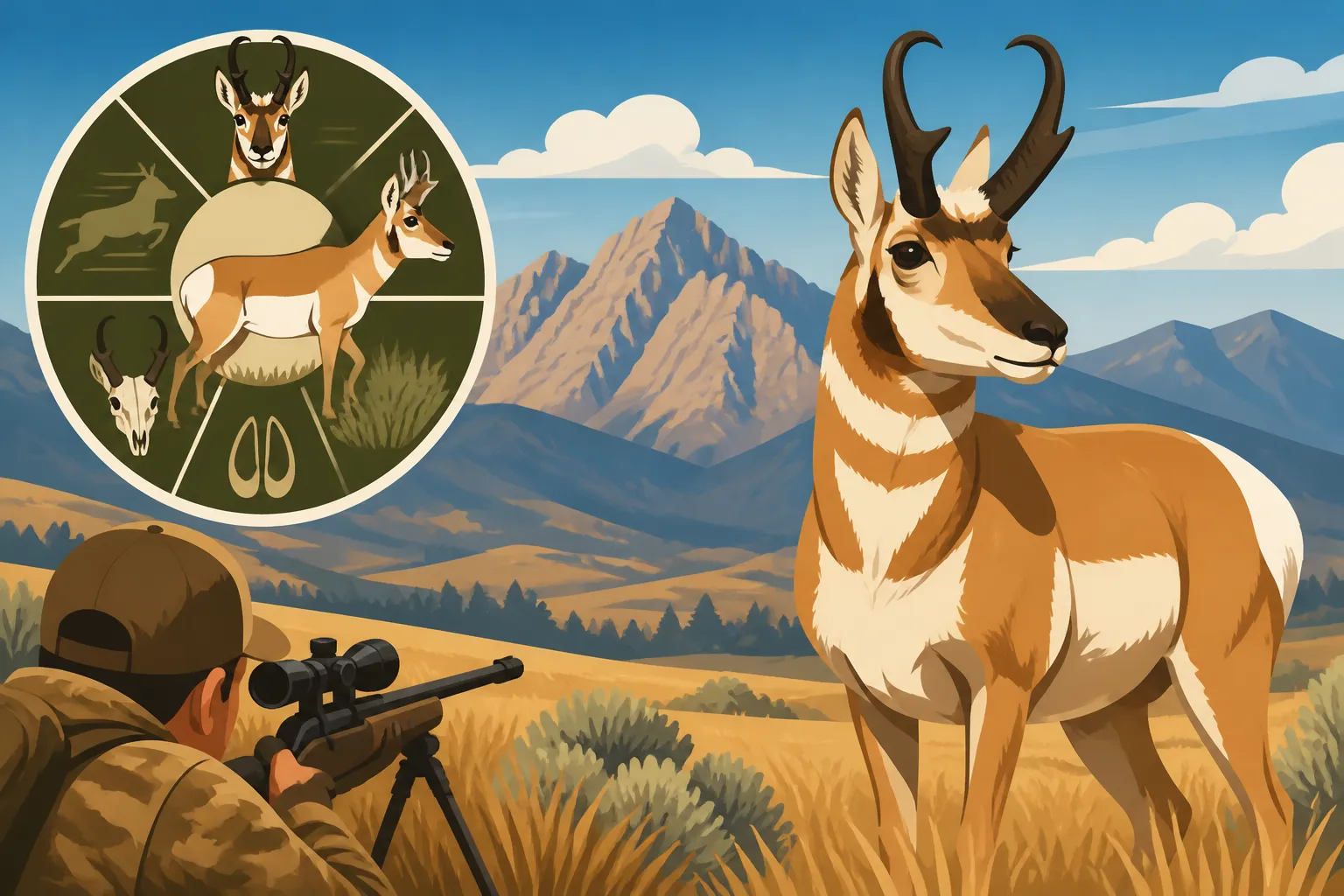
Colorado Pronghorn Behavior and Biology
Hunting pronghorn in Colorado can feel like trying to catch smoke. These incredible creatures, often mislabeled as "antelope," possess a suite of adaptations that make them incredibly elusive and frustratingly difficult to approach, especially for those new to hunting the wide-open plains. This comprehensive guide will peel back the layers of Colorado pronghorn behavior and biology, giving you the insights you need to understand their world, anticipate their moves, and hopefully, put yourself in a better position for a successful hunt.
Unpacking the Unique Senses of the Colorado Pronghorn
When you think of pronghorn, their incredible speed often comes to mind first. But it's their suite of hyper-developed senses, particularly their eyesight, that truly sets them apart and dictates so much of their behavior. Understanding these sensory capabilities is paramount to even consider hunting them.
Vision: The Pronghorn's Superpower
Let's be blunt: a pronghorn's eyes are practically telescopes on legs. They are disproportionately large for their head size, giving them an almost 300-degree field of vision without moving their head. This means they can spot a hunter or predator from an astounding distance, often miles away, long before you even realize they're there. They can distinguish movement and even colors from incredibly far off, making camo choices and movement critical.
Imagine trying to sneak up on an animal that can essentially see you approaching from a mile or two out across flat, open ground. It's an almost impossible task. This incredible vision is why classic stalking methods, which might work for elk in timber or mule deer in broken country, often fail spectacularly on the plains. Their panoramic view means there's almost never a blind spot big enough for a full-grown human to exploit without being detected. They're constantly scanning, constantly alert, making the phrase "four eyes in the back of their head" feel like an understatement when describing a herd of pronghorn.
Speed and Endurance: Built for Escape
While their vision gets them out of trouble, their speed ensures they stay out of it. Pronghorn are the fastest land animals in North America, capable of hitting speeds up to 60 miles per hour. But what's truly remarkable isn't just their top-end sprint; it's their endurance at high speeds. Unlike a cheetah, which can only maintain its burst for short distances, a pronghorn can run at 30-40 mph for miles. They are built for the chase across vast, open landscapes.
This combination of speed and endurance means that once a pronghorn decides to run, it's generally over. You're not going to catch them, and they're not going to slow down until they feel absolutely safe, which might be on the next county line. This physiological marvel means any hunting strategy needs to focus on getting into range before they bolt, rather than trying to chase them down once they've decided to flee. Their long legs, light bones, and large lung capacity are all perfectly adapted to outrun predators like coyotes and wolves, and unfortunately for hunters, us too.
Hearing and Smell: Secondary but Still Sharp
While not as hyper-specialized as their vision, pronghorn possess excellent hearing and a keen sense of smell. Their ears, though smaller than those of deer or elk, are highly mobile and can pivot independently to pinpoint sounds. A twig snap or a misplaced step in the sagebrush can easily send them into high alert, especially if they're already feeling wary.
Their sense of smell is also very good, helping them detect predators downwind and find forage. While it's not their primary defense mechanism like it is for many deer species, ignoring the wind direction when approaching pronghorn is a rookie mistake. Even if they don't see you, a gust of wind carrying your scent can spook them just as effectively. A combination of visual detection at range, a subtle sound, or a waft of human odor will almost invariably trigger their flight response, turning a promising stalk into a frustrating watch party as they disappear over the horizon.
Pronghorn Habitat and Range Across Colorado
Colorado offers some fantastic opportunities for pronghorn hunting, primarily concentrated in specific regions that cater to their unique habitat needs. Understanding these areas and what makes them suitable is key to locating these elusive animals.
The Eastern Plains: Pronghorn Stronghold
The vast, rolling grasslands and sagebrush flats of Colorado's Eastern Plains are the true stronghold of the pronghorn. Here, the landscape is generally flat to gently rolling, offering unobstructed views for miles in every direction. This open terrain, while challenging for hunters, is exactly what pronghorn thrive in. They rely on their incredible vision to detect danger early, and the lack of dense cover allows them to do so effectively.
Units like GMU 103, 104, 105, 106, 107, 108, 109, 110, 111, 112, 113, 114, 115, and 116 are prime examples of the vast open spaces where you'll find healthy populations. These areas are characterized by short-grass prairies, interspersed with sagebrush, cholla cactus, and various forbs. Water sources, whether natural ponds, ephemeral drainages, or agricultural tanks, become critical focal points, especially in drier years. When you're scouting these areas, look for subtle topographical changes like small draws or hills that might offer a brief moment of cover, but don't expect thick timber. If you want to know more about the specifics, checking out "Colorado Pronghorn on the Eastern Plains" can give you a deeper dive into these areas.
Mountain Basins and High Deserts: Western Colorado's Gems
While less abundant than on the plains, pronghorn can also be found in certain high-desert basins and open mountain valleys in Western Colorado. Areas like the North Park basin near Walden (GMU 17, 18, 181), parts of the San Luis Valley (GMU 84, 86, 861), and pockets around Grand Junction (GMU 30, 31, 40) offer unique opportunities. These environments often present a mix of sagebrush, bitterbrush, and some scattered juniper, providing a bit more broken terrain than the Eastern Plains.
The presence of irrigation pivots, hay meadows, and riparian corridors often draws pronghorn to these western basins. The terrain might offer a bit more undulation and a few more draws, which can be a blessing for hunters attempting a stalk, but pronghorn here are no less wary. Their reliance on open spaces remains, even if the "open" looks a little different than the endless prairie. For those interested in the details, "Colorado Pronghorn: Where to Find Them" explores various regions where these animals roam.
Seasonal Behavior and Movement Patterns
Pronghorn behavior isn't static; it shifts significantly throughout the year, driven by factors like breeding cycles, weather, and the availability of forage. Understanding these seasonal changes is crucial for predicting their movements and increasing your odds of success.
The Rut: A Frenzy of Activity
The pronghorn rut typically kicks off in mid to late September, peaking through early October. During this period, mature bucks become intensely territorial, establishing harems of does and fiercely defending them against rival bucks. This can lead to impressive displays of aggression, including sparring matches where bucks lock horns and push each other, sometimes resulting in serious injury. The bucks are highly focused on breeding, often neglecting feeding and becoming somewhat less cautious than usual, though still incredibly alert.
This is a prime time for hunters. The bucks are on the move, chasing does, fighting rivals, and can sometimes be distracted by a well-placed decoy or by the commotion of another buck. They are looking for competition, making calling and decoying tactics particularly effective. However, the does remain as vigilant as ever, acting as the herd's primary alarm system. Getting close to a rutting buck usually means navigating around his watchful harem. For more detailed insights into this period, you might want to look at "Colorado Pronghorn During the Rut."
Pre-Rut and Post-Rut Behaviors
Before the full-blown rut, in late August and early September, bucks are often found in bachelor groups, focused on building up their body condition. They're still active, but not yet driven by the intense territoriality of the rut. This can be a good time to pattern groups, as they might be more predictable in their feeding and watering routines. As the rut approaches, these groups will break up, and bucks will start to establish individual territories.
Once the rut winds down in late October, bucks are often exhausted and have lost significant body weight. Their focus shifts back to feeding and recovering, often joining larger mixed-sex herds. They become much more wary again, less inclined to respond to calls or decoys. During this post-rut phase, pronghorn often form larger herds, making them even harder to approach due to the sheer number of eyes. They might also begin to move to wintering grounds if early snows or cold weather arrive.
Diet and Feeding Habits of Pronghorn
Pronghorn are incredibly adaptable eaters, which allows them to thrive in diverse and often arid environments where other large ungulates might struggle. Their diet is primarily driven by what's available and nutritious, fluctuating with the seasons and local conditions.
Forbs and Shrubs: The Preferred Menu
Unlike deer or elk, which are primarily browsers (eating leaves, twigs) or grazers (eating grasses), pronghorn are true "forb specialists." This means they prefer forbs – broad-leafed plants like wildflowers, clover, and various weeds – and the tender shoots of shrubs. Their digestive system is highly efficient at extracting nutrients from these types of plants, which often have higher protein content than grasses. You'll frequently see them nipping at sagebrush, rabbitbrush, and bitterbrush. They're also known to eat some cacti, like prickly pear, especially for its moisture content in dry periods.
This dietary preference means that areas with a good mix of forbs and shrubs, rather than just vast monocultures of grass, are often key to finding healthy pronghorn populations. A good resource for understanding their habitat choices is offered by GoHunt, which details preferred vegetation types across various units. When scouting, paying attention to the plant life can give you a clue as to whether pronghorn will linger in an area or just pass through.
Adapting to Arid Environments and Seasonal Changes
Pronghorn are masters of surviving in arid and semi-arid landscapes. They are incredibly efficient at utilizing water from the plants they eat, meaning they don't need to drink as frequently as many other species. However, when surface water is available, they will certainly use it, especially during dry spells or hot weather. Water holes can become critical choke points for hunters during such times, creating predictable movement patterns.
In winter, when green forbs become scarce, pronghorn will adjust their diet to include more dormant shrubs and even some grasses, though these are less preferred. Snow depth can also heavily influence their movements, pushing them towards areas with less snow or exposed vegetation. Agricultural fields, particularly those planted with alfalfa or winter wheat, can also become important food sources in late fall and winter, providing a concentrated food plot that draws them from miles around. Understanding "How to Hunt Colorado Pronghorn Water Holes" can be really helpful in drier seasons.
Social Structure and Herd Dynamics
Pronghorn society is a fascinating tapestry of individual animals interacting within specific social structures that change with the seasons and the age of the animals. These dynamics heavily influence how they move, feed, and react to perceived threats, making them vital knowledge for any hunter.
Does, Fawns, and Bachelor Bucks
For much of the year, particularly outside the rut, pronghorn typically live in sex-segregated groups. Does and their fawns, along with yearling bucks and non-breeding adults, form larger mixed-sex herds that can range from a handful of animals to dozens. These herds are often incredibly vigilant, with multiple sets of eyes constantly scanning the horizon. This "many eyes" strategy is highly effective against predators. Within these groups, you'll often see them moving together, feeding, and resting, with an almost constant awareness of their surroundings.
Young bucks, often those 1.5 to 2.5 years old, will form bachelor groups. These groups are generally smaller than doe/fawn herds and can be a bit more relaxed, though still extremely cautious. They focus on feeding and growing, often engaging in playful sparring that hones their skills for future ruts. These groups might forage together for extended periods, only to dissolve as the rut approaches and the urge to compete takes over.
Territorial Bucks and Harem Holders
As the rut approaches and during its peak, the social structure transforms dramatically. Mature bucks, typically 3.5 years old and older, establish and defend territories. These territories are usually small, ranging from a few acres to a square mile, chosen for their access to good forage and water, and most importantly, their potential to attract does. Once a territory is claimed, the buck will patrol its boundaries, marking it with scent glands and challenging any intruding males.
Within his territory, a dominant buck will attempt to gather and hold a harem of does. This can be a dynamic process, with does constantly entering and leaving territories, and bucks constantly trying to herd them, fend off rivals, and breed. This constant activity makes them a visible target, but also means they are constantly on the move, making long-range shot predictions tricky. For hunters, identifying a dominant buck with a harem and understanding the movements of that group becomes a critical part of the hunting strategy. "How to Field Judge a Colorado Pronghorn Buck" can help you identify a mature animal in these dynamic situations.
Navigating the Challenges of Hunting Colorado Pronghorn
Hunting pronghorn is a unique test of patience, strategy, and sometimes, a little luck. Their extraordinary senses and open habitat create a distinctive set of challenges that require a different approach than hunting other big game species.
The Stalk: A Test of Skill and Terrain
Successfully stalking a pronghorn across open terrain is arguably one of the most difficult challenges in Western hunting. Their vision, as we've discussed, is unparalleled. This means using every tiny fold in the land, every rise, every patch of sagebrush for cover becomes absolutely critical. You might spend hours crawling on your hands and knees, covered in dirt and cactus spines, only to have them spot you from an improbable distance.
The key to a successful stalk often lies in careful E-Scouting before you even leave home. Utilizing tools like GoHunt's mapping features can help you identify subtle terrain features – coulees, dry washes, small hills, or even fence lines – that might provide a sliver of concealment. You need to plan your approach meticulously, often involving circuitous routes that add significant distance to your stalk, all while staying low and out of sight. Remember that even a slight elevation change can put you on their radar. Patience is not just a virtue here; it's a necessity.
Decoying and Calling: Playing on Their Curiosity and Aggression
Due to their open habitat and competitive nature during the rut, decoying and calling can be surprisingly effective tactics for pronghorn. Decoying works by appealing to a buck's territorial instinct. A life-sized buck decoy, especially one with a realistic rack, can often draw an aggressive buck straight into bow or rifle range. The trick is deploying it effectively, often with a buddy, where one person holds the decoy and the other positions for the shot. The challenge is remaining hidden while setting up the decoy, especially in flat country.
Calling usually involves imitating the bleats of a doe or fawn, which can pique a buck's curiosity or, if timed right, draw them in looking for a potential breeding opportunity. Sometimes a "challenge" call, mimicking another buck, can also work during the peak rut. Combining calling with decoying is often the most potent strategy, as the visual of a rival or a potential mate, paired with the sound, can be irresistible to a rutting buck. This can be especially effective for those learning "How to Hunt Colorado Pronghorn Decoying."
Hunting Water Sources and Travel Corridors
In drier areas or during periods of drought, water sources become magnets for pronghorn. While they get a lot of moisture from their diet, they still need to drink, and these predictable locations can offer ambush opportunities. Hunters often set up ground blinds near known water holes, waiting for pronghorn to come in. This requires extreme stealth in setting up the blind well in advance and entering it before daylight, as pronghorn will quickly avoid anything new or out of place.
Identifying natural travel corridors, such as fence crossings, saddles between hills, or routes between feeding and bedding areas, can also be productive. Pronghorn tend to be creatures of habit, especially when moving between different parts of their range. Using mapping software from resources like GoHunt to analyze terrain and identify pinch points can reveal these patterns. Waiting patiently along a known travel route, particularly during the early morning or late evening, can sometimes yield an opportunity. You might find "Best Method to Hunt Colorado Pronghorn" offers even more strategies.
Essential Gear for Colorado Pronghorn Hunting
Success in the Colorado pronghorn fields often comes down to preparation and having the right gear. Given their unique characteristics and the environment they inhabit, certain items become indispensable.
Optics: Your Most Important Tool
More than for almost any other big game animal, high-quality optics are your absolute best friend when hunting pronghorn. Since they can spot you from miles away, you need to be able to spot them first, and accurately assess them from an even greater distance. A good pair of 10×42 or 12×50 binoculars are essential, ideally from a reputable brand like Swarovski, Zeiss, or Vortex. Even more critical is a spotting scope, typically a 15-45x or 20-60x, mounted on a sturdy tripod. This allows you to really pick apart distant herds, identify bucks, and gauge their size without having to move in closer and risk spooking them.
A rangefinder is also non-negotiable. With shots often taken at longer distances than anticipated and across open, flat terrain that distorts perception, accurately knowing your yardage is paramount. You need to be able to quickly range animals and make confident shots when the opportunity arises.
Clothing and Footwear: Blending In and Staying Comfortable
Layering is always important in Colorado, but for pronghorn, the focus shifts slightly. Lightweight, breathable, camouflage clothing is crucial. Given the open country, your camouflage pattern needs to blend with the muted tones of the plains and sagebrush. Think browns, tans, and dull greens. Movement is your enemy, so quiet fabrics are also key.
Footwear should be comfortable and provide good ankle support, as you'll be doing a lot of walking, often crawling, over uneven ground with prickly vegetation. You don't necessarily need heavy mountaineering boots, but something durable and broken-in is vital. Remember to pack layers for changing weather conditions, as the plains can experience significant temperature swings from morning to afternoon, and sudden thunderstorms are not uncommon.
Pack and Accessories: Ready for Anything
A lightweight daypack is perfect for pronghorn hunting. You'll want enough space for water, snacks, optics, a first-aid kit, game bags, and any specialized gear like a decoy. Since you'll often be miles from your vehicle, being self-sufficient is important.
Other accessories to consider include knee pads (for all that crawling), shooting sticks (for stable long-range shots), and sun protection – a wide-brimmed hat, sunglasses, and sunscreen are crucial on the exposed plains. GPS or a mapping app like GoHunt, loaded with your chosen GMU, is also essential for navigation and marking game. It’s a great tool to find out "Best Colorado Units for Pronghorn Bucks" and plan your entry and exit points.
| Pronghorn Characteristic | Description | Hunting Implication |
|---|---|---|
| Vision | Largest eyes relative to body size in North America; nearly 300-degree field of view; detect movement/color miles away. | Spot hunters from extreme distance; makes traditional stalking nearly impossible without significant terrain. |
| Speed | Fastest land animal in North America (up to 60 mph); can sustain 30-40 mph for miles. | Once spooked, they are almost impossible to catch; focus on getting into range before detection. |
| Habitat | Open grasslands, sagebrush flats, high-desert basins. Rely on sight for defense. | Limited cover for hunters; requires extensive glassing and long-range planning. |
| Rut Behavior | Bucks intensely territorial, gather harems, aggressive towards rivals (Sept-Oct). | Bucks can be drawn in by decoys/calls; does remain vigilant as alarm system. |
| Diet | Primarily forbs and shrubs; efficient at water extraction from plants. | Concentrated food sources can be key; water holes are critical in dry periods. |
| Social Structure | Does/fawns in large herds; bucks in bachelor groups or territorial harems. | "Many eyes" in herds increase detection difficulty; lone bucks or small groups might be slightly less wary. |
Disclaimer
Please note that hunting regulations, season dates, and unit boundaries are subject to change by Colorado Parks and Wildlife (CPW). Always consult the official CPW hunting regulations brochure for the most current and accurate information before planning any hunt. This guide is for informational purposes only and does not replace official state documentation.