Colorado Late Season Elk Season Explained
The thought of elk hunting after the vibrant colors of fall have faded, when snow starts to pile up and the temperatures plummet, can feel daunting. It’s a completely different beast than the rut, often requiring a shift in strategy, gear, and mindset. This comprehensive guide will peel back the layers of Colorado's late season elk hunting, detailing everything from regulations and season dates to the specific tactics and preparations you'll need to succeed when the mercury drops.
Understanding Colorado's Late Season Elk Dates and Regulations
Colorado's late season elk hunting opportunities are often a mixed bag of emotions for hunters. On one hand, you're facing harsh weather and physically demanding conditions. On the other, the elk have often settled into their winter ranges, potentially offering more predictable patterns, especially if there's significant snow pushing them down. But before you even think about packing your extreme cold weather gear, you need to understand when the late season actually is and what tags are even available.
When Does "Late Season" Even Start? Official Periods
The term "late season" in Colorado isn't a single, fixed block of time like the prime rifle seasons. Instead, it typically refers to any elk hunting opportunities that extend beyond the regular fourth rifle season, which usually wraps up in mid-November. These seasons often stretch from late November through December, and in some select units, even into January. What's crucial to remember is that these are almost exclusively limited draw tags, often focused on cow elk or antlerless opportunities, and designed to help Colorado Parks and Wildlife (CPW) manage herd numbers in specific areas.
The exact dates vary significantly by Game Management Unit (GMU) and year, so checking the current Colorado Parks and Wildlife Big Game Brochure is your absolute first step. You'll often find these seasons listed as "late rifle," "extended archery," or "post-season private land only" hunts. These tags are highly specific, dictating the unit, weapon, and sometimes even the sex of the animal. Don't assume that if you miss the main draw, you're out of luck entirely; sometimes, limited draw tags for these late seasons can be easier to acquire for those willing to brave the elements, especially for cow elk. It’s also worth noting that some private land options might have even more flexibility, but those usually come with an outfitter or landowner voucher.
Navigating Draw vs. Over-the-Counter Tags for Late Season
Unlike the earlier rifle seasons, which offer some substantial over-the-counter (OTC) elk opportunities, the late season is predominantly a draw-only affair. This means you’ll need to apply in the primary draw, usually in April, or look for leftover tags that become available later in the summer. These leftover tags are rare for bulls in the late season but can be a golden ticket for cow elk if you’re flexible with your unit choice and quick on the trigger when they go on sale.
For those planning ahead, understanding the draw system is paramount. You'll likely be applying for a specific hunt code tied to a late-season hunt. Many hunters accumulate preference points for years to draw coveted rut tags, but late season cow tags sometimes require fewer points, making them accessible to a broader range of applicants. Tools like GoHunt can be invaluable resources for researching historical draw odds for specific late-season hunt codes, helping you strategize your application. While most late seasons are limited draw, it's worth double-checking the regulations each year for any potential, albeit rare, OTC options, particularly for archery in certain GMUs, or if you hold a landowner voucher. For a deeper dive into the overall regulatory landscape, check out our guide on Colorado Elk Season Dates Guide.
| Season Type | Primary Weapon | Typical Dates | Tag Availability | Primary Target |
|---|---|---|---|---|
| Late Rifle | Rifle | Nov-Dec (some Jan) | Draw Only / Leftover | Cow Elk |
| Late Archery | Archery | Dec-Jan (limited) | Draw Only / Leftover | Cow Elk |
| Private Land | Varies | Nov-Jan (unit specific) | Landowner Voucher | Bull/Cow Elk |
Strategies for Finding and Hunting Late Season Elk
Hunting late season elk demands a complete paradigm shift from chasing bugles in September. The elk have a different agenda: survival. Their primary focus is finding food, conserving energy, and staying out of the deep snow. Understanding these fundamental shifts in behavior is the cornerstone of any successful late-season hunt.
Key Behavioral Changes and Migration Patterns
As winter takes hold, elk will migrate from high-country summer ranges to lower elevation wintering grounds. This isn't a casual stroll; it's a critical movement driven by snow depth and forage availability. North-facing slopes that were productive earlier in the year become covered in deep snow and are generally avoided. Instead, focus your efforts on south-facing slopes, benches, and river bottoms, which often shed snow faster and offer crucial feed. These areas also get more direct sunlight, providing a bit of warmth for the herd. The colder it gets and the deeper the snow, the more concentrated these herds will become, often gathering in large groups to conserve energy.
Understanding these migration patterns means you need to shift your scouting and hunting focus dramatically. Instead of climbing to alpine basins, you'll be looking at the fringes of agricultural fields, sun-drenched oak brush hillsides, and river drainages. Elk become creatures of habit in the late season, often moving between bedding areas and feeding grounds along well-worn trails. Scouting before the hunt, even if it's just e-scouting with tools like GoHunt, is critical to identifying these lower-elevation sanctuaries. Our article on How to Hunt Colorado Late-Season Migration offers even more tactical details on this crucial shift.
Hunting Pressure and Refuge Areas
Just like us, elk don't appreciate being pushed around, especially when they're trying to conserve energy in harsh conditions. While the late season generally sees fewer hunters than the madness of the second or third rifle seasons, hunting pressure can still play a significant role. Elk that have been pressured throughout the fall will seek out the thickest, nastiest timber or the steepest, most inaccessible pockets of terrain to escape. These "refuge areas" are often on public land adjacent to private land, or in roadless areas that require significant effort to reach.
Your strategy should involve identifying these overlooked zones. This might mean hiking further into a wilderness area or focusing on public land parcels that are difficult to access, perhaps through a small strip of public land that borders private property. Don't be afraid to put in the miles; often, the biggest herds will be found where human presence is minimal. Look for north-facing timbered slopes or steep canyons that hold thermal cover and are out of the wind. Even if there's less food there, the security might outweigh the need for easy forage, especially during periods of heavy pressure. Understanding How to Hunt Elk on Public Land Pressure is vital, as late-season elk are particularly sensitive.
Spotting and Stalking in Open Winter Terrain
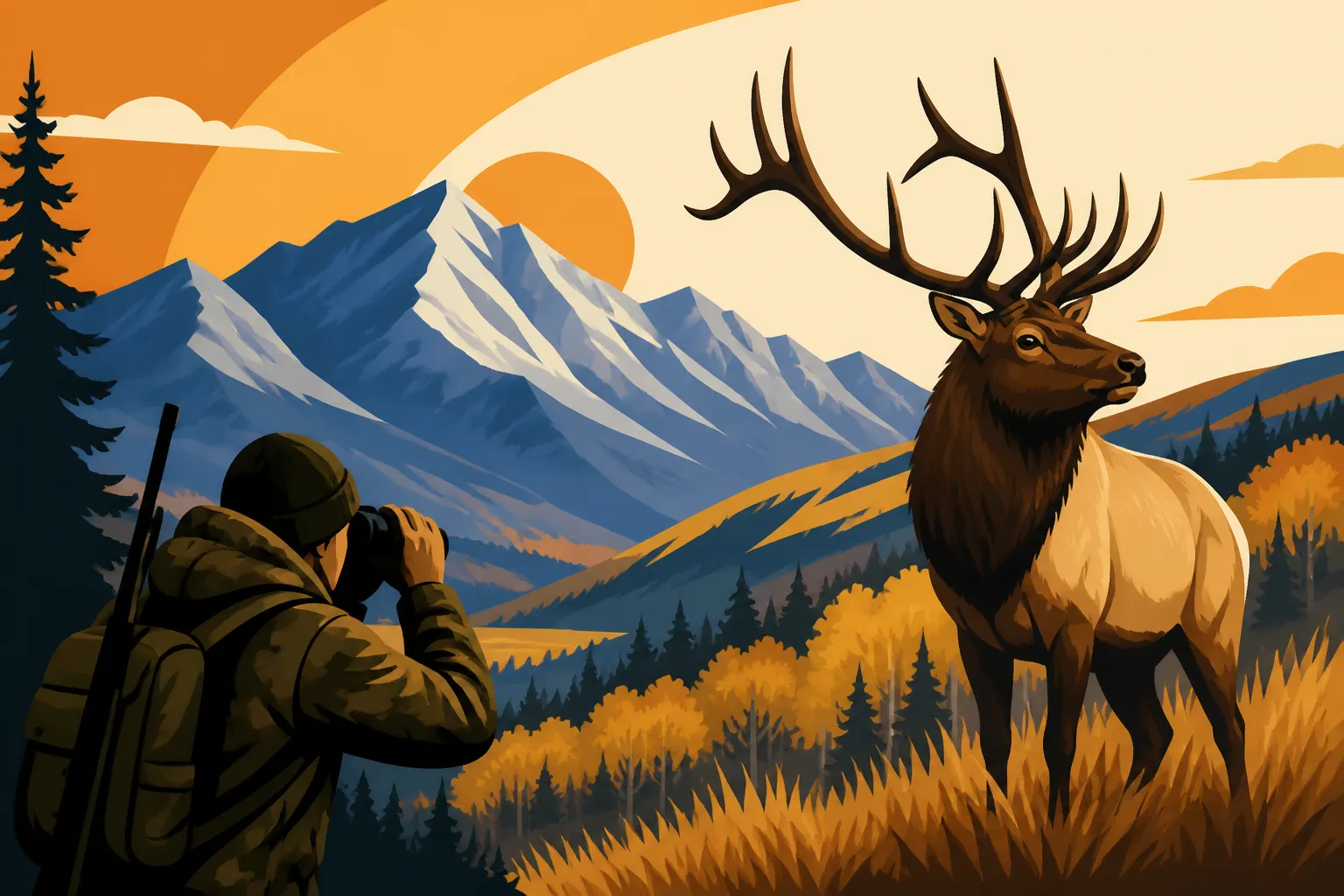
The bare trees and snow-covered landscapes of late season can actually work to your advantage for spot-and-stalk hunting, provided you adjust your tactics. With deciduous trees having lost their leaves and conifer branches often laden with snow, visibility can be excellent, making long-range glassing incredibly effective. You'll spend a lot of time behind your optics, systematically picking apart south-facing slopes, open parks, and aspen groves. Look for any dark blobs against the white snow, paying close attention to shadows and any unusual shapes that might betray an elk's outline.
Once you've spotted a herd, the stalk becomes the ultimate test. The crunchy snow can make silent movement nearly impossible, so timing your movements with gusts of wind or other natural sounds is crucial. Often, it's a game of patience, waiting for the elk to feed into a more favorable position or for a weather change to mask your approach. You'll need to use every bit of available cover, no matter how small. A successful late-season stalk often hinges on your ability to use terrain features, stay out of sight, and manage the wind in conditions where thermals can be unpredictable as the sun hits the snow. Our Spot-and-Stalk Hunting in Colorado guide offers more detailed advice.
Essential Gear and Preparation for Cold Weather Hunts
Hunting in Colorado's late season means embracing the cold. This isn't just about being uncomfortable; it's about survival. Proper gear and meticulous preparation can be the difference between a successful hunt and a miserable, potentially dangerous, experience.
Layering for Extreme Cold
Forget your early season hunting attire; late season requires a serious upgrade to your layering system. Start with a good quality merino wool or synthetic base layer that wicks moisture away from your skin. Sweating in cold weather is a quick route to hypothermia. Next, a warm mid-layer, such as a fleece or lightweight puffy jacket, provides insulation. For your outer layer, you need something that is both windproof and waterproof, capable of shedding snow and blocking icy gusts. Brands like Sitka, KUIU, and First Lite offer excellent systems designed for these conditions. Remember that you’ll be exerting yourself, then sitting still, so your layers need to be adaptable.
Don't forget the extremities. A warm hat that covers your ears, a neck gaiter or balaclava, and insulated, waterproof gloves are non-negotiable. For your feet, high-quality, insulated hunting boots are paramount. Pair them with thick merino wool socks, and consider bringing a spare pair to change into if your feet get wet. Our guide on the Best Boots for Colorado Elk Hunting can help you pick the right footwear for these challenging conditions. Your entire clothing system should prioritize warmth without excessive bulk, allowing for full range of motion.
Navigating Snow and Ice
Snow and ice are integral parts of the late season landscape, and you need to be prepared to navigate them safely and efficiently. Depending on the snow depth, snowshoes or skis might be absolutely essential for covering ground. Post-holing through deep snow is not only exhausting but can also be dangerous, leading to twisted ankles or worse. Even with moderate snow, gaiters are a must-have to keep snow out of your boots. Consider trekking poles for added stability on slick or uneven terrain.
When traversing icy slopes or frozen creeks, microspikes or even full crampons could be a lifesaver. The last thing you want is to slip and fall, especially when carrying a heavy pack or an animal. Being proficient with these tools before your hunt is crucial. Practice walking in snowshoes, hiking with trekking poles, and using traction devices. You'll also need to consider how to remain quiet while moving through crunchy snow, which is where careful foot placement and patience become key. Check out our comprehensive advice on How to Hunt Elk in the Snow for more specific tactics.
Food, Water, and Emergency Preparedness
In the cold, your body burns more calories just to stay warm, so your nutritional needs increase significantly. Pack high-energy, easily digestible foods like nuts, dried fruit, jerky, and energy bars. Hot liquids, like coffee or hot chocolate in a thermos, can also provide a huge morale boost and internal warmth. Hydration is still critical, even if you don't feel as thirsty as in warmer months. Insulated water bottles or hydration systems with insulated hoses are important to prevent freezing.
Beyond sustenance, a comprehensive emergency kit is non-negotiable. This should include a first-aid kit, fire-starting materials, a multi-tool, headlamp with spare batteries, a GPS device or satellite communication device (like a Garmin inReach), and extra warm layers. Cell service is unreliable in many Colorado hunting areas. Always let someone know your exact hunting plan and expected return time. Late season conditions can change rapidly, with whiteout blizzards appearing almost out of nowhere, so being prepared to spend an unexpected night out is paramount. For a full breakdown of what to carry, our Best Colorado Elk Hunting Gear guide has a detailed checklist.
Processing Your Harvest in Icy Conditions
Taking down an elk is only half the battle; getting it from the mountain to your freezer is often the most challenging part, especially in the late season. The cold weather brings its own set of advantages and disadvantages to field processing and meat care.
Field Dressing in the Cold
Field dressing an elk in freezing temperatures presents unique challenges and some surprising benefits. On the upside, the cold acts as a natural refrigerator, slowing bacterial growth significantly. This means you don't have the same immediate pressure to cool the meat down rapidly as you would in an early-season hunt. However, your hands will get cold, fast. Insulated, waterproof gloves are essential, and having a thinner pair of surgical gloves underneath can help keep things clean and prevent frostbite. You'll also find that blood can freeze quickly, making a messy job even more challenging.
Be prepared for stiff joints and muscles on the animal, which can make quartering more difficult. Sharp knives are more critical than ever; dull blades will just frustrate you and increase the time your hands are exposed to the cold. Consider bringing a small hatchet or bone saw for certain cuts. Once field dressed, ensure adequate airflow around the carcass to promote cooling, even in cold weather. Propping the animal up or hanging it if possible prevents warm spots and freezing to the ground. Our guide on How to Quarter an Elk in the Field offers step-by-step instructions that can be adapted for cold conditions.
Packing Out and Meat Care in Winter
Packing out an elk in deep snow or icy conditions is physically brutal. You'll likely be dealing with heavy quarters that are cumbersome and slick. This is where a sturdy frame pack, like those from Mystery Ranch or Kifaru, becomes absolutely indispensable. Consider using a sled or game cart if the terrain allows, especially if you're on a relatively flat snow-covered trail. Otherwise, prepare for multiple trips and a physically demanding trek. The cold weather means you don't have to worry about flies or rapid spoilage, which is a huge relief.
However, you do need to prevent the meat from freezing solid before it can be processed. While cold is good, extreme freezing can make butchering difficult and can potentially damage the meat if not handled properly during thawing. If you're packing meat out over multiple days, ensure it's protected from direct snow or rain, but still exposed to cool air. Game bags are crucial for keeping the meat clean and allowing it to breathe. Once home, either get it to a processor quickly or have a plan for dry aging in a controlled cool environment, ideally above freezing but below 40 degrees Fahrenheit. If you're considering targeting an antlerless animal, pursuing Colorado Late-Season Cow Elk Tags can often provide more opportunities and typically lead to easier packing due to their smaller size.
Disclaimer
Hunting is an inherently dangerous activity. This article provides general information and recommendations. Always consult the official Colorado Parks and Wildlife regulations for the current year, respect private property boundaries, and prioritize safety above all else. Ethical hunting practices and responsible wildlife management are paramount.