How to Hunt Colorado Elk Benches and Saddles
The mountains of Colorado can feel like a labyrinth when you’re chasing elk, especially when they’re pressured and seemingly vanish into thin air. Many hunters focus on big basins or dense timber, but often overlook some of the most consistent hotspots for elk: benches and saddles. These subtle topographic features are critical travel corridors and secure bedding areas, and understanding how to effectively hunt them can drastically change your success rate. This guide will walk you through identifying, scouting, and employing effective tactics to find and harvest elk on these often-underestimated features.
Understanding Elk Movement on Benches and Saddles
Elk are creatures of efficiency and security. They're constantly looking for the easiest path of travel while also staying hidden from predators, including us. Benches and saddles perfectly fit this bill, acting as natural highways and secure havens in steep, rugged terrain. If you can learn to "read" the land for these features, you'll be one step closer to consistently finding elk.
What are Benches and Why Do Elk Use Them?
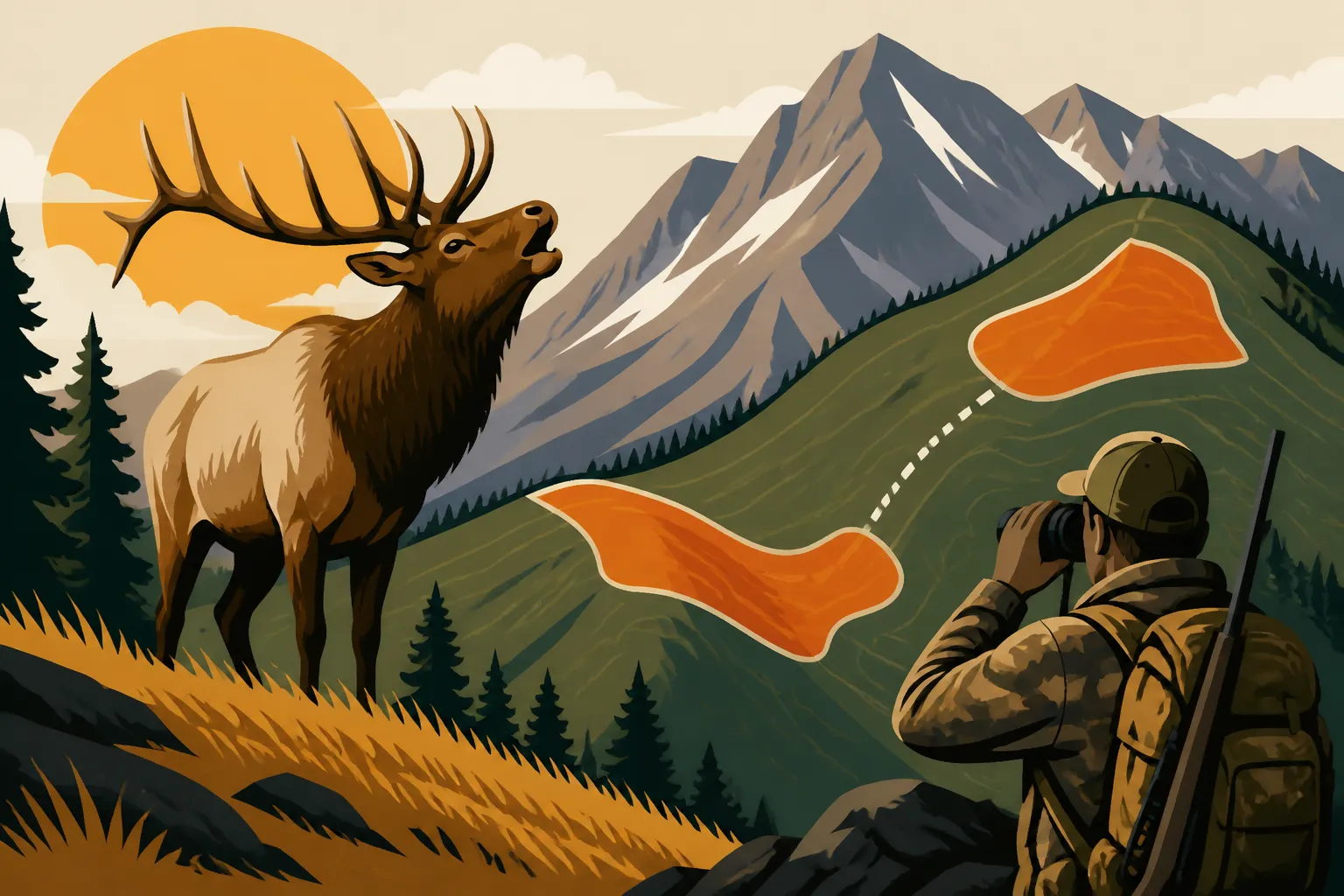
Think of a bench as a relatively flat, horizontal strip of terrain on an otherwise steep mountain face. It's like a natural ledge or terrace, often running for hundreds of yards, sometimes even miles. These aren't always obvious to the untrained eye, but when you spot one, you’ll realize their significance.
Elk absolutely love benches because they offer several key advantages. First, they provide a much easier travel route than constantly climbing or descending steep, unstable slopes. Imagine moving a large herd of elk through thick timber on a 40-degree incline versus a flat, well-worn bench – the efficiency is undeniable. Second, benches frequently hold thicker vegetation, offering both cover for bedding and browse for feeding. Elk can move along a bench, feeding intermittently, without expending excessive energy. Finally, benches often serve as critical bedding areas. The flat ground allows elk to lie down comfortably, and the surrounding steepness provides security, as they can easily spot or hear anything approaching from below or above. Many a hunter has walked right past a bedded bull on a timbered bench, never knowing he was just feet away.
The Strategic Importance of Saddles
Saddles, on the other hand, are low points or depressions along a ridge line, effectively connecting two higher peaks or ridges. Picture the dip between two humps on a camel's back – that's a saddle. They can be narrow and distinct, or broad and undulating.
Saddles are primarily travel corridors, pure and simple. Elk use them to cross from one drainage to another, move between feeding and bedding areas, or escape hunting pressure. They are the path of least resistance when traversing high country. A saddle might connect a north-facing slope where elk bed during the day to a south-facing slope where they feed in the evening. During the rut, these can be absolute hotspots as bulls cruise them looking for cows, or as herds shift between areas. The wind currents in saddles can be tricky, often swirling as air is funneled through the low point, making them challenging but incredibly rewarding spots to ambush elk. Knowing how to predict and use thermals in Colorado elk country can be vital when hunting these natural funnels.
Scouting and Locating Key Benches and Saddles
Finding these prime locations isn't always about stumbling upon them. With modern tools and some diligent legwork, you can systematically identify high-potential benches and saddles long before your boots hit the dirt.
E-Scouting for Hidden Gems
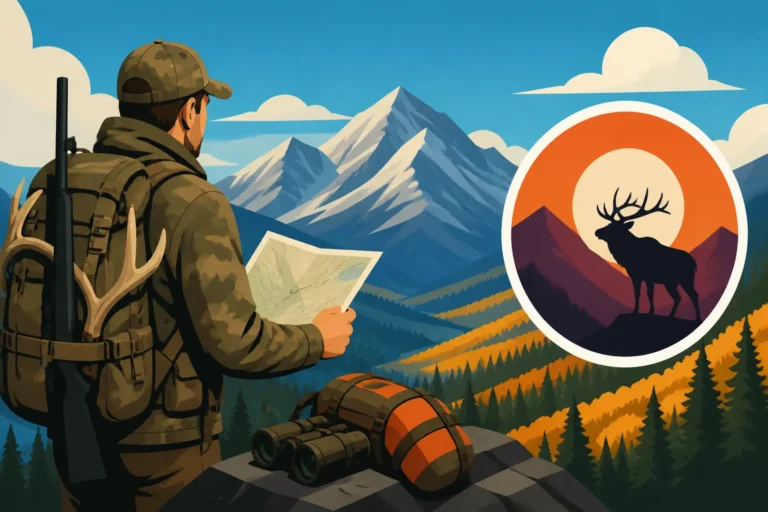
E-scouting has revolutionized elk hunting, allowing us to virtually explore vast wilderness areas from the comfort of home. Tools like GoHunt, onX Hunt, and Gaia GPS are indispensable for this task. Start by pulling up topographic maps of your hunting unit. Look for contour lines that spread out horizontally on steep slopes – those indicate benches. For saddles, identify prominent ridge lines and then zoom in on the lowest points where these ridges dip.
Pay close attention to the confluence of various habitat types. A bench that runs through dark timber, transitions into an aspen stand, and then skirts a natural spring or a wallow is a five-star location. Similarly, a saddle that connects a dense bedding area to an open feeding meadow is gold. Use the various map layers these apps provide – satellite imagery to verify vegetation, public land boundaries to confirm access, and even historical burn areas, which can create new browse opportunities. A successful e-scouting session with GoHunt might reveal several hidden benches that funnel elk between two bedding areas, or a saddle acting as a primary cross-ridge travel route. Look for areas where elk might want to avoid the main valley floor or higher, more exposed ridges, especially if there's hunting pressure. These overlooked "transition zones" are where benches and saddles shine. Learning how to E-Scout Before a Colorado Hunt is a crucial skill for any modern hunter.
On-the-Ground Reconnaissance
As helpful as e-scouting is, nothing beats boots on the ground. Once you've identified potential benches and saddles on your map, plan a pre-season scouting trip if possible. When you arrive in person, confirm what you saw on the map.
Look for actual elk sign:
- Trails: Are there well-worn paths along the bench or through the saddle? Fresh tracks?
- Droppings: Are there piles of fresh droppings indicating recent activity?
- Rubs: Are there trees scarred by bulls rubbing their antlers? This is a huge indicator during the rut, showing specific travel routes or frustration points.
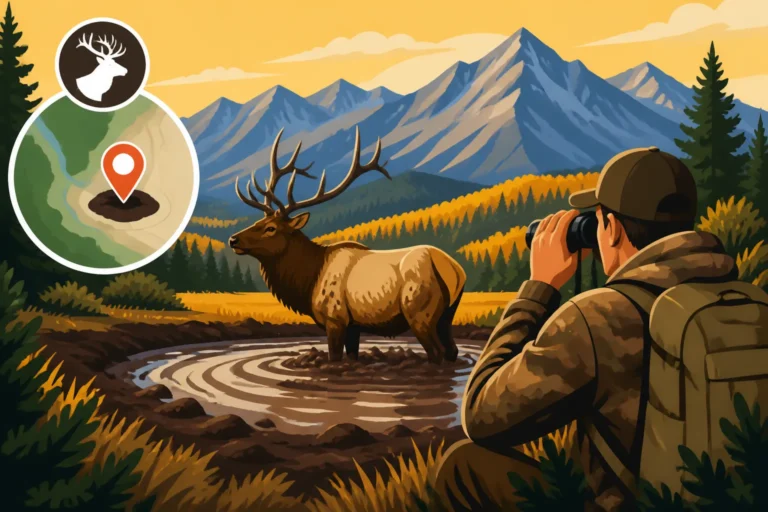
- Wallows: Is there a muddy depression with fresh tracks where elk have rolled around? Elk love wallows, and finding one on a bench or near a saddle means elk are likely using that area. You can learn more about How to Hunt Elk Wallows in Colorado.
- Bedding Areas: On benches, look for flattened areas in the grass or pine needles where elk have rested. These spots often have a distinct smell.
Pay attention to wind direction and thermals. Stand in the saddle or on the bench and feel how the air moves. Does it swirl? Does it consistently blow up in the morning and down in the evening? Understanding these micro-climates is vital for setting up your hunt. These on-the-ground observations help you confirm your e-scouting suspicions and fine-tune your hunting plan for the season.
Hunting Strategies for Benches and Saddles
Once you've identified and scouted your promising benches and saddles, it's time to put a hunting plan into action. The tactics you employ will depend on the specific feature, time of day, and elk activity, but the overarching goal is always to use the terrain to your advantage.
Still-Hunting and Ambush Tactics
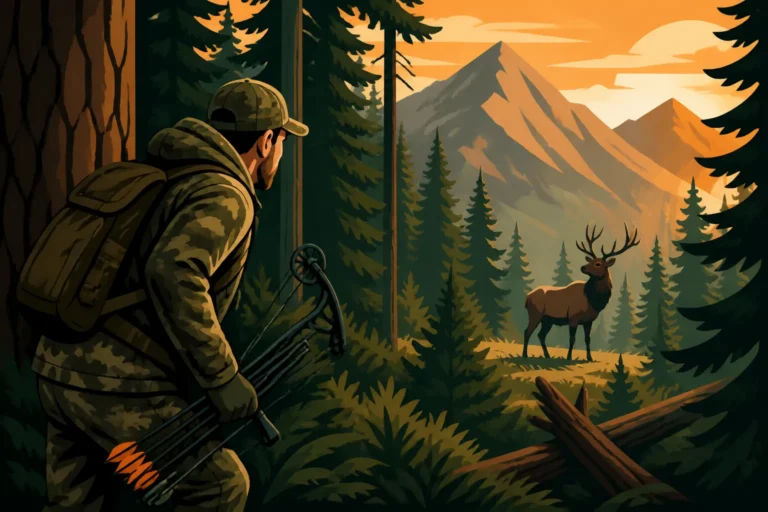
Still-hunting is one of the most effective ways to hunt benches, especially those that are heavily timbered. This involves moving incredibly slowly and deliberately, pausing frequently to glass, listen, and scan your surroundings for any sign of elk. You're not just looking for an entire elk; often, you'll spot an ear flick, the horizontal line of a back, or the subtle glint of an antler.
When still-hunting a bench:
- Use the Wind: Always hunt into the wind, or with a crosswind that is favorable to you. Elk have an incredible sense of smell, and a single whiff of human scent will send them packing. You can't emphasize enough the importance of learning How to Use the Wind Hunting Colorado Elk.
- Move Slowly and Quietly: Every step should be intentional. Place your foot down, feel for twigs, and slowly shift your weight. It's often easier to How to Move Quietly Through Colorado Timber when you're moving downhill or on a slight incline.
- Glass, Glass, Glass: Don't just look with your naked eye. Use binoculars (10x42s are great for this) to pick apart every patch of timber, every shadow, every cluster of trees. Elk are masters of camouflage, and only a detailed scan will reveal them.
- Stay on the Edge: Often, elk will bed on the side of a bench closest to the steepest drop-off, allowing them to survey the terrain below. Hunt the edges of the bench and the subtle terrain features that might conceal a bedded animal.
Saddles, being natural funnels, are prime locations for ambush tactics. Get into a saddle well before daylight or in the late afternoon and position yourself downwind. Find cover behind a cluster of trees or rocks, ensuring you have a clear shooting lane across the most likely travel routes. If you're hunting during the rut, these can be fantastic spots for calling. The challenge with saddles is the swirling wind; thermals tend to rise in the morning and fall in the evening. In a saddle, these thermal currents can meet and create unpredictable eddies. Plan your approach and exit routes carefully to avoid blowing your scent into the area before elk arrive. A good hunting app like GoHunt can help you predict wind and thermal movement for your specific location.
Calling Strategies in These Features
Calling can be incredibly effective when hunting benches and saddles, but it needs to be done strategically. Elk vocalize for many reasons – to locate each other, express dominance, or signal their presence. Your calls should mimic these natural sounds to either draw them in or pinpoint their location.
When hunting a bench:
- Locating Calls: A soft cow call or a subtle bugle can often elicit a response from bedded elk without alarming them too much. If you get a response, you can then move closer, still-hunting carefully, and try to pinpoint their exact location.
- Patience is Key: If you get a response, don't rush in. Set up strategically, ensuring you have clear shooting lanes and good cover, then call again sparingly. Often, a bull will circle downwind to scent-check the source of the call. Be ready for him to appear from an unexpected direction. If they go quiet, knowing How to Call in a Silent Bull is paramount.
- Herd Chatter: Sometimes, soft cow and calf chatter can convince elk on a bench that your calls are just part of the herd, making them less wary and more likely to move towards you or reveal themselves.
For saddles, calling can be even more dynamic, especially during the peak of the rut.
- Bugling: Aggressive bugling can challenge a bull moving through a saddle, or attract one cruising for cows. If you hear a bull bugle, move quickly but quietly to get into a good position within or just above the saddle, then set up for a shot. Many successful hunters have used aggressive bugling and cow calling sequences to draw a bull right into a saddle ambush. Read more on How to Bugle-Locate a Colorado Bull to perfect this technique.
- Cow Calls: Soft cow calls can be incredibly effective when you suspect elk are moving through a saddle at dawn or dusk. Often, a curious cow or even a satellite bull will come to investigate a lone cow call.
- Calling from Above: Consider setting up just above the saddle, calling down into it. This gives you a natural advantage, as elk will often look for the source of the call on the same elevation or higher.
Remember, elk are smart. They get hunted constantly in Colorado, especially on public land. Vary your calling, use natural cover, and always be prepared for a shot, as they can come in silently and quickly.
Here’s a quick overview contrasting benches and saddles for hunting purposes:
| Feature | Primary Elk Use | Best Hunting Method | Key Considerations | When to Hunt |
|---|---|---|---|---|
| Benches | Bedding, feeding, low-energy travel | Still-hunting, ambushing | Wind direction, thick cover, subtle terrain, scent control | Mid-day for bedded elk, dawn/dusk for feeding |
| Saddles | Travel corridors, crossing drainages | Ambush, calling | Swirling thermals, clear shooting lanes, funnel points | Dawn/dusk for moving elk, all day during rut |
The ability to hunt benches and saddles effectively is a testament to understanding elk behavior and terrain. It's not about covering miles of ground, but about dissecting the landscape for these high-percentage spots where elk feel safe and travel efficiently. With careful e-scouting, thorough on-the-ground reconnaissance, and strategic hunting tactics, these often-overlooked features can become your secret weapon in the Colorado backcountry. Whether you're trying to locate a bugling bull or ambush a silent herd, these features offer prime opportunities. You might also find it helpful to read our comprehensive guide on Colorado Elk Hunting Methods Explained.
Disclaimer
Hunting is an inherently dangerous activity. Always prioritize safety, adhere to all Colorado Parks and Wildlife regulations, and respect private land boundaries. The information provided here is for educational purposes and should not replace proper hunter education or professional guidance. Be sure to check current regulations as they can change annually.