How to Hunt Colorado Public Land Pressure
Hunting Colorado public land can feel like stepping into a crowded national park during peak season, especially when you're dreaming of a quiet wilderness experience. It's incredibly frustrating when you spend months planning, scouting, and preparing, only to find boot tracks, orange vests, and ATVs around every corner. This comprehensive guide will help you understand the dynamics of hunter pressure, equip you with smart scouting techniques, and arm you with effective on-the-ground tactics to find success even in the busiest Colorado hunting units.
Understanding the Pressure and Hunter Behavior
It's a common misconception that Colorado's vast public lands are endless stretches of untouched wilderness where you'll never see another soul. While that might be true in the most extreme, remote areas, many easily accessible public lands, especially during popular seasons, are bustling with activity. Understanding why and where hunters congregate is the first step to avoiding them.
The Psychology of Hunter Traffic
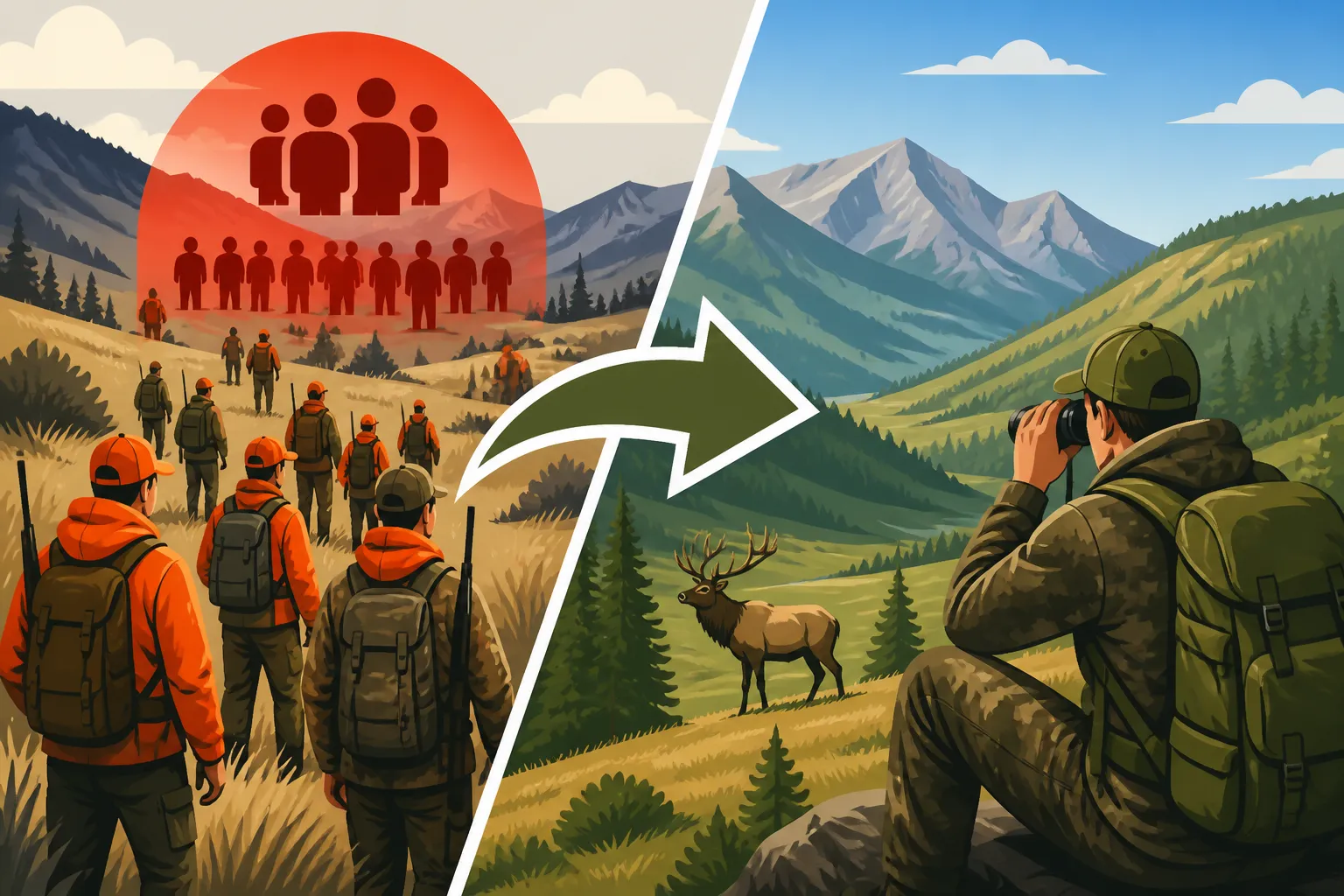
Think about it: most people are looking for convenience. They want to drive their truck as far as possible, hike a short distance, and hopefully stumble upon a legal animal. This isn't a judgment, it's just human nature and the reality of limited time and physical capabilities for many. Roads, trailheads, and easily navigable terrain become natural magnets. Many hunters stick to areas within a mile or two of a road, campground, or popular trail because it’s easier to access and pack out an animal. This creates "pressure pockets" where elk, deer, and other game animals are constantly bumped and pushed, making them extremely wary and nocturnal.
Another factor is the "information age" effect. With so much data available online, from draw odds to harvest reports and forum discussions, popular units and perceived "honey holes" quickly get saturated. Everyone thinks they've found the secret spot, and suddenly, it's not so secret anymore. This makes a deep understanding of game behavior under pressure crucial, because the elk aren't going to stick around where the human disturbance is constant.
Common Pressure Points and Their Impact
Identifying these pressure points is critical for developing a counter-strategy. Major trailheads in areas like the White River National Forest, campgrounds along forest service roads, and even popular hiking trails that cut through hunting units are prime examples. In GMUs known for their over-the-counter (OTC) elk opportunities, particularly during the second and third rifle seasons, these areas can resemble a small town on opening morning. Vehicles will line the roads for miles, and you'll hear more gunshots than bugles.
The impact on game animals is profound. Elk, especially mature bulls, will quickly learn to avoid these high-pressure zones. They become incredibly skilled at finding thermal sanctuaries, bedding in the thickest timber, or moving into steeper, nastier terrain that most hunters shy away from. Their feeding patterns shift to dawn and dusk, or even completely nocturnal, making them incredibly difficult to intercept during legal shooting hours. Often, they'll simply migrate out of the immediate area of disturbance, heading for private lands or truly remote wilderness blocks. Understanding this behavior allows you to anticipate their movements and hunt where others aren't.
E-Scouting for Hidden Sanctuaries
In the modern hunting landscape, your success on pressured public land often begins long before you ever step foot in Colorado. The power of digital scouting tools cannot be overstated. They are your secret weapon for finding those elusive, unpressured pockets that most hunters overlook.
Leveraging Digital Tools for Remote Scouting
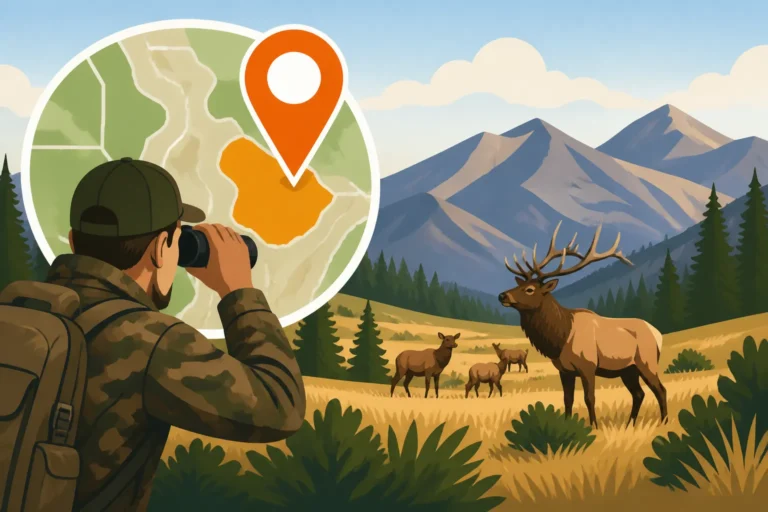
Gone are the days of just staring at paper topo maps (though those still have their place!). Platforms like GoHunt provide an incredible array of data layers that allow you to dissect a unit from your living room. You can identify public versus private land boundaries, crucial for avoiding trespass and finding legal access. Topographic maps reveal elevation changes, potential bedding areas, and travel corridors. Satellite imagery, especially with historical views, can show recent timber cuts, burn areas, water sources, and changes in vegetation that might attract or repel game.
When I'm e-scouting for pressured elk, I'm specifically looking for roadless areas, particularly those 1.5 to 3 miles away from the nearest access point. I also scrutinize steep, north-facing slopes covered in dark timber, or rugged canyons that might deter the average hunter. A great strategy is to use the interactive map features to drop pins on potential glassing knobs, water sources, or saddles that look like natural travel routes between bedding and feeding. Learning how to E-Scout Before a Colorado Hunt is arguably one of the most important skills you can develop to beat public land pressure.
Identifying Overlooked Terrain Features
The key to finding unpressured game isn't just looking for "no roads," but understanding why a particular piece of terrain might be avoided by other hunters. This means actively seeking out the "nastiness." Areas with extremely steep grades, thick impenetrable timber (often called "dark timber"), large boulder fields, or marshy bottomlands that are a pain to walk through are often passed over. These are exactly the places where pressured elk will seek refuge.
Consider a deep canyon system within a popular GMU. While many hunters might skirt the rim or stick to easier slopes, dropping down into the bottom or committing to a traverse across a steep, brushy hillside can put you in virgin territory. Look for benches and saddles within these rugged features—these are natural stopping points for elk to bed down, particularly on north-facing slopes where they can stay cool. Water sources, even small seeps or mud holes, can become vital draws, especially in dry years. Don't just look for what's easy to access; search for what's hard to access. The harder it looks, the less pressure it likely receives.
On-the-Ground Tactics to Outsmart Other Hunters
E-scouting gets you to the right general area, but once you're on the ground, a different set of skills is needed to seal the deal when facing public land pressure. It's about moving smarter, communicating effectively (or silently), and being more persistent than the competition.
Mastering Stealth and Movement
When you know you're in a pressured unit, every step you take needs to be deliberate. Forget crashing through the woods like a freight train. Elk in these areas are hypersensitive to sound and movement. Focus on still-hunting, taking small steps, pausing frequently to listen and glass. GoHunt's mapping tools can help you identify subtle terrain features that offer cover or allow for quieter movement, like game trails along a ridge or soft pine needle beds in the timber.
Pay meticulous attention to the wind and thermals, as elk will use them to their advantage. Learn How to Use the Wind Hunting Colorado Elk and How to Use Thermals in Colorado Elk Country. Often, in the morning, thermals rise, carrying your scent uphill. In the evening, they fall, carrying your scent downhill. Position yourself accordingly. Move slowly into the wind or crosswind, especially at dawn and dusk when elk are most active. If you bump an animal, don't give up. Pressured elk often won't run far; they'll often circle back or head to the nearest patch of thick timber. Knowing How to Move Quietly Through Colorado Timber is an invaluable skill here. This extreme caution also extends to your camp setup; keep it out of sight and as quiet as possible.
Utilizing Calling and Decoying Strategies
Calling in pressured areas requires a different approach. Aggressive bugling might work during the rut in unpressured areas, but in high-traffic zones, it can simply alert other hunters to your presence or send wary bulls running. Instead, focus on subtle cow calls andLocator bugles to determine where elk are without giving away your exact position. If you do get a response, resist the urge to immediately charge in. Pressured elk are often silent when approaching a call, or they'll try to circle downwind to scent-check you.
A tactic that can be particularly effective is setting up an ambush with a partner, where one person calls and the other sets up 50-100 yards ahead to intercept an approaching animal. A decoy, especially a cow decoy, can sometimes draw a curious bull into range, but be aware of other hunters in the area and use extreme caution. The goal isn't necessarily to bring an elk charging in but to get them to pause, curious, just long enough for a shot. For a deeper dive into vocalizations, explore How to Call Elk in Colorado.
The Power of Persistence and Adaptation
Success on pressured public land often boils down to sheer willpower. Most hunters will quit when things get tough, when they see other hunters, or when they don't find elk easily. This is your opportunity. Be willing to hike further, climb higher, and stay longer. Commit to hunting all day, especially through the midday lull when most hunters are back at camp or in town. This is when pressured elk often start to move between bedding areas or hit secluded water sources.
Adaptability is also key. If your initial plan isn't working, don't be afraid to change it. If a basin is crawling with hunters, shift to a different drainage or climb over a ridge into a neighboring one. Learn to read the sign left by other hunters: where they're going, where they're not going, and how their presence is influencing elk movement. A truly successful hunter on pressured land isn't just hunting elk; they're hunting the other hunters too, by anticipating their moves and positioning themselves where the elk will be pushed to. Consider a Colorado DIY Elk Hunting Guide to really hone these skills.
Adapting to Different Seasons and Conditions
Hunter pressure isn't static; it ebbs and flows with the calendar and the weather. Understanding these shifts and adapting your strategy accordingly can unlock opportunities that many hunters miss.
Early Season Strategies in Crowded Units
During early archery season in Colorado, especially in OTC units, areas near roads and popular trailheads can still see significant pressure. Elk might still be in their summer patterns, high on feed, but they quickly become educated. Your best bet is to get deep into the backcountry, far from easy access points, where elk haven't been continually harassed. This often means embracing a Colorado Backcountry Hunting Guide approach, where you pack in for several days and hunt the remote basins and high country.
Focus on areas with good feed and water sources, particularly those with plenty of escape cover nearby. Elk are creatures of habit, and while they might be pushed, they'll often return to traditional feeding or bedding grounds if they feel secure. Another strategy is to identify natural travel corridors or benches that connect feeding areas to secure bedding. If other hunters are bumping elk from lower elevations early in the morning, position yourself on these natural escape routes higher up. Remember that cooler temperatures mean elk don't need to move as much, but any increase in human activity will still make them more cautious.
Hunting the Rut Amidst Competition
The rifle rut seasons (especially 2nd and 3rd rifle) can be incredibly challenging due to the sheer volume of hunters. Everyone wants to catch a bugling bull, and the woods can sound like a broken record player with all the amateur callers. In these scenarios, avoid the typical "bugle-and-charge" tactics. Instead, use soft cow calls to locate bulls, or even better, be patient and listen for genuine elk vocalizations. Often, finding a secluded wallow or watering hole that other hunters overlook can be a goldmine, especially if it's surrounded by thick cover.
During the rut, elk are less cautious due to their breeding instincts, but this doesn't mean they're stupid. They will still avoid direct human contact. The key is to find pockets of security cover that are adjacent to rutting activity. This could be a dense stand of timber where they feel safe, but from which they can hear and smell cows. Often, the bigger bulls, wise to hunter pressure, will "satellite" the main herd, waiting for the younger bulls to engage. This is where patience and subtle tactics like Spot-and-Stalk Hunting in Colorado really pay off. Use high vantage points to glass vast areas, identifying where the real action is, and then plan a silent, strategic approach.
Late Season Opportunities and Pressure
Late season hunting, usually in November or December, presents a whole new set of challenges and opportunities. Hunter pressure significantly drops off after the main rifle seasons. However, the elk themselves are often concentrated in lower elevation winter ranges, which can make them easier to find, but also more prone to being grouped up. Weather becomes a huge factor, and snow can actually make tracking easier.
If a cold front or significant snowfall pushes elk down from higher elevations, these concentrated herds can still attract a good number of hunters looking for an easy harvest. The key here is again to find the overlooked spots within these winter ranges. Look for steep, south-facing slopes that get maximum sun exposure, allowing elk to warm up and find exposed forage. Often, they will utilize patches of dark timber or dense brush for bedding, providing thermal cover against the cold. Your strategy might involve focusing on How to Hunt Elk in the Snow, using tracks to locate animals, and then carefully planning an ambush. Being prepared for extreme cold and deep snow, and knowing How to Pack Out an Elk in Colorado quickly to preserve the meat, are critical for success in these conditions.
| Pressure Type | Hunter Behavior | Elk Behavior | Effective Counter-Tactics |
|---|---|---|---|
| Roadside/Trailhead | Quick access, short hikes, high volume | Skittish, nocturnal, move deeper | Hike 2+ miles in, hunt off-trail, use e-scouting for roadless areas |
| Mid-Season Rut | Aggressive calling, seeking open areas | Vocal but wary, use thick cover for safety | Soft calling, still-hunting timber, ambush wallows, find overlooked benches |
| Easy Terrain | Stick to gentle slopes, open timber | Avoids open, moves to steep/thick cover | Seek out dark timber, steep canyons, boulder fields, dense brush |
| Visible Activity | High visibility of other hunters/camps | Moves to remote, secluded, quiet zones | Deep backcountry, spike camps, hunt all day, adapt to changing plans |
| "Honey Hole" Effect | Over-reliance on known productive areas | Leaves popular spots for refuge areas | Find alternative food/water sources, hunt migration corridors |
Disclaimer
Hunting in Colorado involves inherent risks, including but not limited to those associated with wildlife, natural terrain, and human activity. Always prioritize safety, adhere to all Colorado Parks and Wildlife regulations, and respect private property. The information provided in this guide is for educational purposes only and should not replace professional guidance or personal due diligence. Conditions in the field can change rapidly, and hunters should always be prepared for the unexpected.