Tree Stand vs Spot-and-Stalk in Colorado
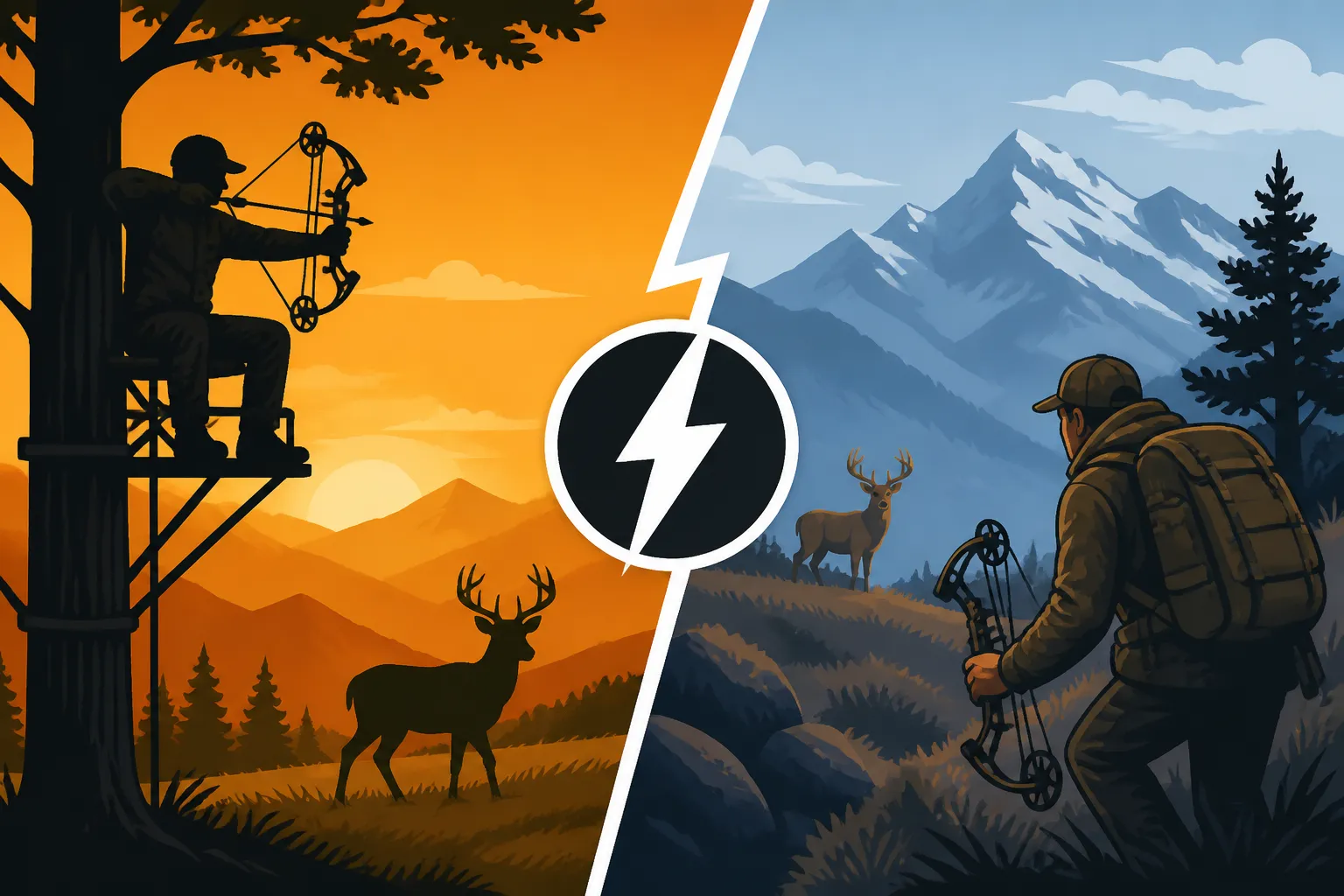
Stepping into the vast, rugged landscapes of Colorado for a hunt, you're immediately confronted with a fundamental choice: do you settle in and wait, or do you actively pursue? Many hunters grapple with the age-old debate between the patient vigil of a tree stand and the relentless pursuit of a spot-and-stalk approach. Both methods hold their unique allure and challenges, especially in Colorado's diverse terrain. This guide is here to unravel the complexities, helping you decide which tactic, or combination thereof, will best suit your next Rocky Mountain adventure and increase your chances of success.
The Fundamental Difference: Understanding Each Method
Before we dive deep into the nitty-gritty, let's establish a clear understanding of what each hunting method entails in the Colorado context. It's not just about a piece of gear; it's about a philosophy, a mindset, and a strategic approach to the wild. The Rocky Mountains present a canvas unlike many other hunting grounds, demanding adaptability and a keen understanding of animal behavior.
The Tree Stand Advantage: Patience from Above
Tree stand hunting, at its core, is a waiting game. You position yourself in an elevated perch, typically overlooking a known game trail, a bedding area, a water source, or a feeding ground. The idea is to intercept animals moving through their natural routines, often at dawn or dusk. In Colorado, this isn't always as straightforward as it might be in the dense, private woodlands of the Midwest or East Coast. Our timber can be sparse, and public land means more pressure. However, in the right locations, a well-placed tree stand offers unparalleled advantages. You're out of sight, your scent is dispersed higher, and you gain a commanding view of your immediate surroundings, often allowing you to observe animals without detection.
Many hunters, especially those new to Colorado or transitioning from other states, mistakenly think tree stands are only for whitetail deer. But an elk, mule deer, or even a bear using a natural travel corridor, a hidden wallow, or a specific food source can be intercepted this way. The key is finding those pinch points or concentrated areas of activity within Colorado's expansive public lands, or if you're lucky enough to have private land access, leveraging known patterns. It demands meticulous scouting, discipline, and a willingness to commit to a location for extended periods, sometimes for days, without seeing much action.
The Spot-and-Stalk Dynamic: Active Pursuit
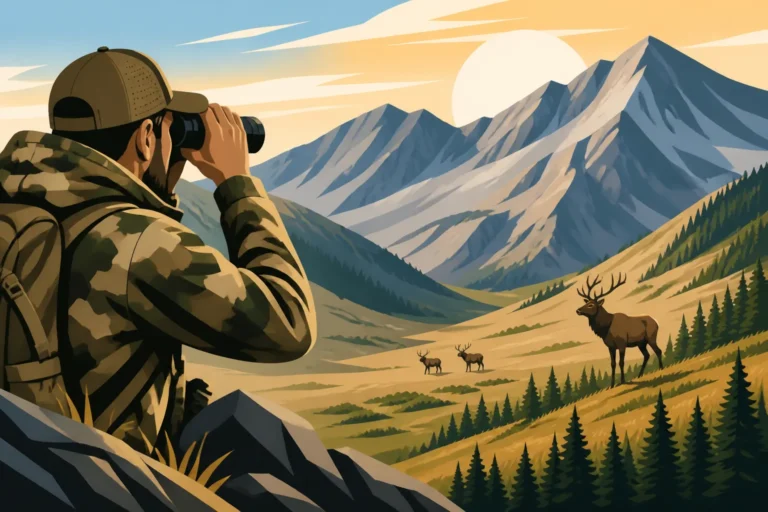
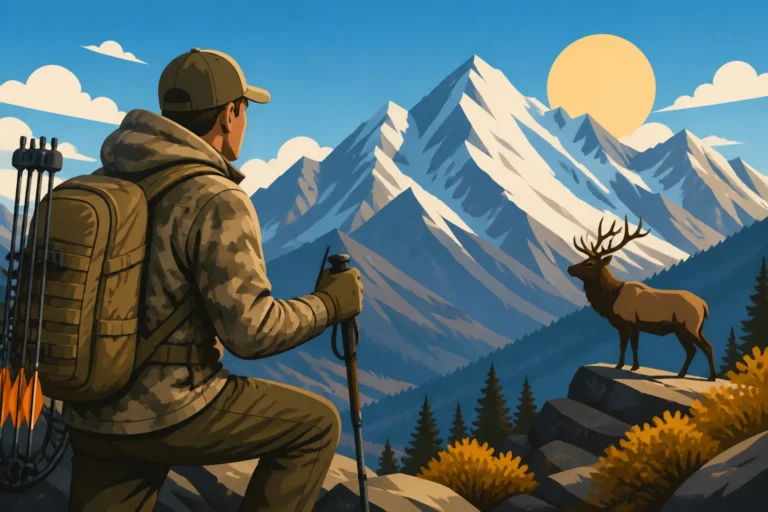
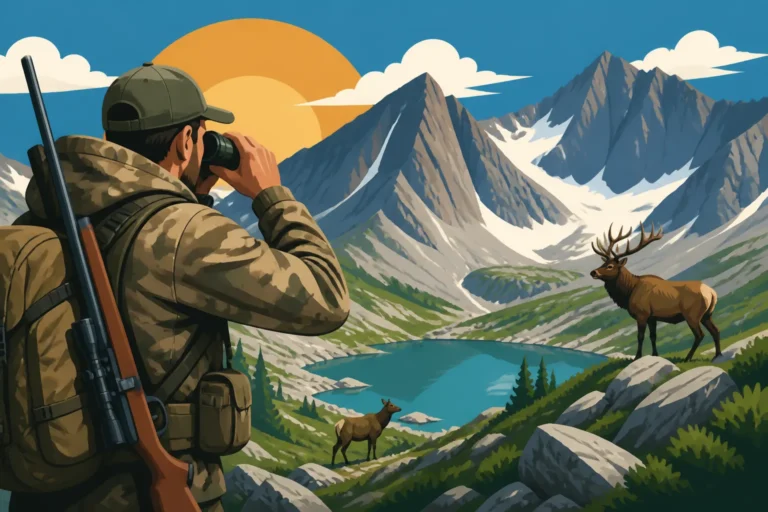
On the flip side, spot-and-stalk hunting is an active, often physically demanding method where you use optics to locate game from a distance and then plan a strategic approach to get within shooting range. This is often seen as the quintessential Western hunting style, perfectly suited for Colorado's vast, open landscapes, alpine basins, and broken timber. It’s about covering ground, constantly glassing, and using the terrain, wind, and cover to your advantage. There's a certain thrill in the chess match of a stalk, slowly closing the distance on a wary animal, trying to anticipate its next move.
The sheer scale of Colorado's hunting units often makes spot-and-stalk a more practical and exciting option for many. You're not tied to one location, which means you can adapt to changing conditions, pressure from other hunters, or shifting animal patterns. This method truly shines when you're targeting animals like elk and mule deer in their natural high-country habitat. It requires excellent physical conditioning, superior woodsmanship, and a profound understanding of topography and wind dynamics. When discussing how to find elk when they go quiet or trying to locate a bull in a vast basin, a good spot-and-stalk approach is often the answer.
When Tree Stands Shine: Ideal Scenarios and Setups
While Colorado might not be the first place you think of for tree stand hunting, there are specific situations and locations where this method can be incredibly effective, often providing an unexpected edge, especially against pressured animals. It’s about identifying those unique pockets where animals funnel or pause, making them vulnerable to a patient hunter.
Identifying Productive Tree Stand Locations
Finding the sweet spot for a tree stand in Colorado requires careful attention to detail and a nuanced understanding of animal movement. Forget those sprawling oak flats back East; here, you're looking for more subtle signs. Think about natural funnels in timbered draws, especially those leading from bedding areas to water or feeding grounds. Creek bottoms and river corridors, like those found along the Colorado River or the Yampa, often provide denser vegetation and distinct travel routes where animals feel secure moving. Look for areas with fresh sign – tracks, rubs, droppings – indicating consistent use.
Another prime location is near wallows, especially during the elk rut. While calling can pull bulls in, sometimes a wary bull will circle downwind to check the wallow before committing. A well-placed stand can intercept him. Similarly, hidden water sources or mineral licks on private land can be gold mines. On public land, these spots are harder to find but can be absolute magnets if you do. Even high-country benches with dark timber that serve as transition zones for elk between bedding and feeding can be excellent ambush points. A robust e-scouting effort using tools like GoHunt can help you identify these potential pinch points and habitat features before you ever set foot on the mountain.
Overcoming Challenges of Tree Stand Use in Colorado
Let's be real: tree stand hunting in Colorado isn't without its hurdles. First off, finding a suitable tree can be a challenge. Much of Colorado's high country is dominated by aspens, pines, and spruces that don't always offer the ideal size, limb structure, or cover for a stand. You might be hiking in miles with a heavy stand and climbing sticks, only to find the perfect tree isn't actually perfect once you're on site. Then there's the terrain itself; steep slopes and rocky ground make setup more difficult and less stable than in flatter regions. Safety is paramount, and ensuring your stand is secure on an uneven mountain slope is a completely different ballgame.
Another significant challenge is the sheer size of the game's home range. Elk and mule deer in Colorado cover vast distances, unlike the more localized movements of whitetails. A stand that's hot one day might be dead for a week if the animals decide to move miles away. Wind is also a constant adversary in the mountains. Thermals shift throughout the day, often rising in the morning and falling in the evening. You might have a perfect wind for dawn, only for it to betray you by mid-morning. Effective scent control and understanding how to use thermals in Colorado elk country become absolutely vital. Despite these challenges, the patience required can pay off handsomely when a wary bull or buck unexpectedly presents a shot.
Mastering the Spot-and-Stalk: Tactics for Colorado's Diverse Landscape
The essence of Western hunting for many, spot-and-stalk is a thrilling, active method that demands skill, endurance, and keen observation. It’s about engaging with the landscape and the animals on their terms, making it a truly immersive experience.
Principles of Effective Spot-and-Stalk
The foundation of a successful spot-and-stalk hunt begins long before you start moving. It's built on two core principles: effective glassing and strategic planning. First, you need to find the game. This means spending significant time behind good optics – a quality pair of binoculars and a spotting scope are non-negotiable for anyone serious about hunting big game in Colorado. You want to find an elevated vantage point that allows you to survey vast areas, then methodically pick apart every patch of timber, every rock slide, every shadow. Early morning and late evening are usually prime times for animals to be active, but during the day, they might be bedded in cover, requiring even more scrutiny. Learning how to glass big Colorado basins is a skill that separates successful hunters from those who just wander.
Once game is located, the planning phase kicks in. This isn't just about walking towards the animal. You need to assess the distance, the terrain, the available cover, and, most importantly, the wind. The wind is king in a spot-and-stalk. You absolutely cannot approach an animal from downwind, especially elk with their incredible sense of smell. You'll need to use maps, like those available on platforms like GoHunt, to identify potential routes that keep you out of sight and with a favorable wind. This often means long, circuitous routes that add significant mileage to your day, but they are crucial for success. You also need to consider your exit strategy, especially when hunting in the backcountry, as packing out an elk in Colorado can be a monumental task.
Executing a Stalk in Mountain Terrain
Executing the stalk itself is a delicate dance between stealth and determination. Once your route is planned, every step becomes critical. You need to move slowly, deliberately, and quietly. This means pausing frequently to listen, look, and confirm the animal's position. The mountain terrain, with its loose rock, deadfall, and varied vegetation, makes quiet movement incredibly difficult. You'll be constantly aware of how to move quietly through Colorado timber, testing each foot placement before committing your weight. A misplaced step on a dry branch or loose scree can send an animal bolting.
As you get closer, the stalk becomes even more intense. This is where patience truly comes into play. You might spend hours covering a relatively short distance, waiting for a cloud to obscure the sun, for the wind to shift favorably, or for the animal to turn its head. Reading the animal's body language is key; if it's agitated, staring in your direction, or looking nervous, you might need to back off and reassess. The goal is to get within comfortable shooting range, ideally without the animal ever knowing you're there. This often requires navigating steep angles, which means you need to know how to shoot uphill and downhill at elk, accounting for trajectory shifts.
Weighing the Demands: Physicality, Patience, and Preparation
Both tree stand hunting and spot-and-stalk hunting in Colorado come with their own distinct demands. Understanding these can help you decide which method aligns best with your personal capabilities, time commitment, and overall hunting philosophy. There’s no right or wrong, only what’s right for you.
Physical and Mental Endurance
When it comes to physical exertion, spot-and-stalk hunting is generally far more demanding. You're covering miles, often at high elevation, navigating steep, uneven terrain with a pack on your back. You'll be climbing ridges, descending into drainages, and potentially pushing yourself for days on end. This requires a high level of cardiovascular fitness, strong legs, and a resilient mindset. Hunters often find themselves asking, "How to physically prepare for Colorado elk?" and the answer involves months of dedicated training. Altitude training for Colorado hunting is also critical, as the thin air can quickly sap your energy, making even simple tasks feel like monumental efforts. It’s a constant grind that requires mental toughness to push through fatigue and frustration, especially when multiple stalks might end in busts.
Tree stand hunting, while less physically demanding in terms of constant movement, still requires a significant amount of effort during the setup phase. Packing in a heavy stand, climbing sticks, and all your gear, sometimes several miles into the backcountry, can be a serious workout. Once in the stand, the endurance shifts from physical to mental. You need the patience to sit still for hours, often in extreme weather conditions, battling boredom, cold, and the temptation to fidget. The mental game of staying focused and alert, ready for that single opportunity, is incredibly challenging. It's a different kind of stamina, a test of will to remain motionless while the forest comes alive around you.
Gear Requirements and Investment
The gear list for each method varies significantly, reflecting their different approaches. For tree stand hunting, your primary investments will be in a comfortable, safe, and portable tree stand (or ground blind if trees aren't available), sturdy climbing sticks, and robust scent-control clothing. Given Colorado's often unpredictable weather, layering systems are crucial, as are quality insulated boots, hand warmers, and a quiet pack that allows easy access to essentials without making noise. A good rangefinder is also vital for accurately judging distances from your elevated position.
For spot-and-stalk hunting, the focus shifts heavily towards high-quality optics and lightweight, durable gear that can withstand the rigors of mountain travel. Premium binoculars (10×42 or 12×50) and a spotting scope (15-45x or 20-60x) are non-negotiable for finding game at extreme distances. A tripod for your optics is equally important for steady glassing. Comfortable, broken-in hunting boots that provide ankle support are paramount, as are technical layers for warmth and moisture wicking, and a lightweight yet robust backpack capable of carrying emergency gear, food, water, and potentially game meat. Lightweight rifles or bows are also preferred to minimize carry weight during long treks. Investing in good mapping software, like that offered by GoHunt, for scouting and navigation is also a must for both methods but particularly for spot-and-stalk.
Optimizing Your Approach: Matching Method to Season, Species, and Terrain
Choosing between a tree stand or spot-and-stalk isn't a static decision; it's a dynamic one that should evolve based on the specific conditions of your hunt. Colorado's diverse ecosystems and varying seasons offer different opportunities, and tailoring your method to these factors is key to increasing your odds.
Terrain and Habitat Preferences
The landscape itself often dictates the most effective hunting method. If you're hunting in vast, open country like the Eastern Plains for pronghorn, or sprawling alpine basins above timberline for high-country mule deer or elk, then spot-and-stalk is almost exclusively the way to go. There simply aren't enough trees for stands, and the ability to cover immense distances with optics is critical. Learning how to hunt Colorado alpine basins means you’ll be doing a lot of glassing and walking. This kind of terrain allows you to effectively use your optics to find animals before they see you, leveraging natural draws and contours for cover during the approach.
Conversely, if you find yourself in dense timber, thick river bottoms, or areas with choked-up transition zones between different habitat types, tree stands (or ground blinds) can become incredibly effective. Think about those areas of dark timber that elk retreat to when pressured, or the pinch points where mule deer funnel along a creek. In such environments, visibility is limited, making long-range spotting difficult, and animals often move through predictable corridors. For hunters targeting elk in the dark timber, a well-placed stand can capitalize on these localized movements where a spot-and-stalk would be too noisy or difficult due to lack of visibility.
Season and Species Specifics
The time of year and the animal you're pursuing also play a huge role in strategy. During the early archery season, when temperatures are often warmer and animals are in their summer patterns, water sources and shaded bedding areas can be excellent for tree stands, especially for mule deer and even bear. As the rut approaches for elk, calling tactics become paramount, but a stand near a wallow or a heavily used travel corridor into a feeding meadow can also be a high-reward play, especially if you're trying to call in a silent bull.
Once rifle seasons roll around and hunter pressure increases, animals often become more wary and nocturnal. They'll seek refuge in thick cover. This is where the ability to quickly adapt and cover ground via spot-and-stalk can be advantageous, allowing you to locate those hidden pockets of game. However, late-season hunts, when snow pushes animals to lower elevations and food sources become scarce, can also make tree stands near predictable feeding or bedding areas incredibly productive. For species like bighorn sheep and mountain goat, found in extreme, rugged terrain, spot-and-stalk is the only viable method. Understanding Colorado hunting seasons explained and knowing when specific species are most vulnerable to certain tactics will significantly boost your success.
Blending the Approaches for Success: The Hybrid Hunter
The truth is, very few experienced Colorado hunters commit exclusively to one method. The most successful hunters are often those who can seamlessly transition between tree stand and spot-and-stalk, adapting to what the terrain, the animals, and the conditions demand. This hybrid approach leverages the strengths of both methods, making you a more versatile and ultimately more effective hunter.
When to Transition Between Methods
The ability to pivot from one strategy to another is a hallmark of an advanced hunter. Imagine you’ve been patiently waiting in a tree stand since before dawn, but by mid-morning, nothing has moved, and the thermals have shifted, carrying your scent down a major game trail. Instead of staying put, the hybrid hunter would pack up quietly and transition to a spot-and-stalk strategy. They might move to a high vantage point to glass, hoping to locate animals that have moved into new bedding areas or feeding grounds miles away. This might involve referring to their GoHunt maps to find new potential glassing locations or identifying unseen terrain features.
Conversely, a hunter on a spot-and-stalk might locate a good bull in heavy timber that is impossible to approach quietly due to dense undergrowth or unfavorable wind. Instead of pushing the stalk and blowing the animal out, they might back out, reassess, and identify a potential ambush point. If there’s a suitable tree nearby, they might set up a mobile tree stand or even a ground blind, waiting for the animal to move during its natural patterns later in the day or the next morning. This fluid transition allows you to maximize opportunities and minimize risk, rather than stubbornly sticking to a single plan that isn't working.
Developing Hybrid Strategies
Beyond simply switching methods, truly integrating them means developing strategies that combine elements of both from the outset. For example, you might conduct an initial spot-and-stalk to locate a general area where elk are frequenting. Once you've identified consistent patterns—say, a specific saddle they cross, a wallow they visit, or a feeding area they prefer—you might then establish a temporary tree stand or ground blind in that location. This gives you the advantage of elevated concealment and scent control at a known hot spot, but only after you’ve actively located the game.
Another hybrid approach involves using your tree stand as a base, particularly in the early morning or late evening, but then spending the middle of the day actively spot-and-stalking surrounding terrain. If you don't connect from the stand, you're not wasting daylight; you're actively searching for new opportunities. This is especially useful in areas with a mix of open and timbered country. You might even use calling tactics from your stand to draw animals closer before transitioning to a quick, close-range stalk if they hang up just out of sight. Ultimately, understanding Colorado Elk Hunting Methods Explained provides a comprehensive toolkit, making you adaptable to the diverse challenges of Western hunting.
Comparison Table: Tree Stand vs. Spot-and-Stalk in Colorado
To help visualize the differences and choose the right approach for your next Colorado hunting adventure, here's a quick comparison of key aspects for both methods.
| Feature | Tree Stand Hunting | Spot-and-Stalk Hunting |
|---|---|---|
| Primary Advantage | Element of surprise, scent control, elevated vantage, covers game trails | Covers vast terrain, adaptive, dynamic, actively seeks game |
| Ideal Terrain | Dense timber, creek bottoms, pinch points, migratory corridors, private land | Open basins, ridge lines, burn areas, sparse timber, public land |
| Physical Exertion | Low to moderate (setting up, getting in/out), patient waiting | High (constant movement, uphill/downhill, navigating rough terrain) |
| Patience Required | High (waiting for game to come to you) | Moderate to high (waiting for opportunities, slow methodical stalks) |
| Gear Focus | Comfortable stand, scent control, warm clothing, rangefinder, quiet pack | Quality optics (bino, spotter), comfortable boots, lightweight pack, rifle/bow |
| Wind/Thermal Impact | Critical (must be impeccable), often dictates stand placement | Constantly monitored, dictates approach and route |
| Best Species/Season | Whitetail, bear, mule deer (certain areas); early season, late season food sources | Elk, mule deer, pronghorn; rut, open country, high elevation |
| Learning Curve | Moderate (scouting, stand placement, scent control) | High (reading sign, wind, terrain, physical conditioning, stalking technique) |
| Hunter Pressure | Can be effective in pressured areas if unique spots are found | Requires getting away from crowds, or adapting to "How to Hunt Colorado Public Land Pressure" |
Disclaimer
Please remember that hunting regulations, seasons, and licensing requirements can change. Always consult the most current Colorado Parks and Wildlife (CPW) regulations before planning any hunt. This guide is for informational purposes only and does not substitute for official resources or professional guidance.