Colorado Guided Mule Deer Hunt: What to Expect
The sheer scale and challenge of hunting mule deer in Colorado can feel overwhelming, especially for those new to Western hunting or seeking a specialized experience. From navigating vast public lands to understanding complex draw systems, many hunters dream of a successful mule deer hunt but aren't sure where to start. This guide aims to demystify the experience of a guided Colorado mule deer hunt, outlining what you can realistically expect from planning, preparation, and the actual time spent in the field.
Deciding on a Guided Mule Deer Hunt in Colorado
Embarking on a guided mule deer hunt in Colorado is a significant investment, both financially and in terms of your time and effort. It's a decision many hunters ponder, weighing the benefits of professional assistance against the allure of a do-it-yourself adventure. For mule deer, in particular, a guide can make a world of difference.
Why Consider a Guide for Mule Deer?
Let's be honest, Colorado mule deer are a tough quarry. They inhabit diverse and often rugged terrain, from the high alpine basins to the sagebrush plains, and their behavior can be elusive. A guided hunt often mitigates many of the common frustrations and challenges that solo or DIY hunters face.
Firstly, a guide provides invaluable expertise and local knowledge. These folks spend countless hours in the field, year after year, studying mule deer patterns, migration routes, and preferred bedding or feeding areas in specific Game Management Units (GMUs). They understand how weather, pressure, and the rut influence deer movement. This isn't just about pointing you toward a buck; it's about interpreting sign, understanding micro-terrain, and knowing where deer are likely to be at any given time. For hunters traveling from out of state, this local knowledge is gold. You might only get a week to hunt, and a guide ensures that week is spent in the most productive areas possible, rather than scrambling to learn the landscape.
Secondly, a guide grants you access. While Colorado boasts extensive public lands, knowing which public lands hold quality bucks and how to effectively hunt them is a different story. Many premier mule deer areas are remote, requiring extensive packing or specialized equipment to access. Guides often have permits for National Forests or Wilderness Areas, or have secured private land leases that offer less pressured hunting opportunities. This can be a huge advantage, especially in units known for trophy potential or during high-pressure rifle seasons. If you've ever spent days hiking through empty timber, you'll appreciate having someone who knows where the deer aren't, saving you precious time and energy. You can learn more about finding good areas in our Colorado Public Land Hunting Guide.
Lastly, a guided hunt streamlines the logistics. From camp setup, cooking, and daily transportation to field dressing and packing out your animal, a reputable outfitter handles the heavy lifting. This allows you to focus 100% on the hunt itself. For hunters with physical limitations, time constraints, or those simply wanting a more comfortable experience, this can be a game-changer. Imagine spending your evening relaxing by the fire, discussing the day's events, instead of cooking dinner and washing dishes after a long hike.
Understanding Different Guide Services
Not all guided hunts are created equal, and understanding the distinctions is crucial for managing your expectations and budget. When looking for a Colorado mule deer hunt, you'll typically encounter a few different service models.
-
Fully Guided Hunts: This is the most comprehensive option. You'll have a dedicated guide (often 1-on-1 or 2-on-1, meaning one guide for one or two hunters) who will accompany you throughout the hunt. This includes scouting, tracking, calling, setting up shots, field dressing, and often packing out the animal. All meals, lodging (which can range from comfortable cabins to wall tents in spike camps), and in-field transportation are typically provided. These hunts offer the highest level of service and instruction, making them ideal for beginners or those seeking maximum convenience and support. You're paying for expertise, service, and infrastructure.
-
Semi-Guided Hunts: This option offers a middle ground. An outfitter will provide a camp, meals, and general hunting area information, but you'll primarily hunt on your own or with your hunting partners. The outfitter might drop you off at trailheads, provide maps, or suggest specific areas to target based on recent deer movement. They'll also typically help with game recovery once you've harvested an animal. This can be a great option for experienced hunters who appreciate the logistical support of a camp but prefer to make their own hunting decisions in the field. It's often more affordable than a fully guided hunt.
-
Drop Camp Hunts: These are for the truly adventurous and self-reliant. The outfitter will pack you and your gear (and often your food) into a remote backcountry location, set up a basic camp (usually wall tents or an established camp), and then leave you to hunt independently for the duration of your trip. They will return at a predetermined time to pack you and any harvested game back out. Drop camps offer excellent access to less-pressured areas, replicating a DIY backcountry hunt experience without the hassle of packing in heavy gear yourself. However, you are responsible for all hunting, cooking, navigation, and field care, so significant hunting experience is a must. If you're considering this, understanding How to Pack Into the Colorado Backcountry is essential.
Here’s a quick overview to help differentiate:
| Feature | Fully Guided Hunt | Semi-Guided Hunt | Drop Camp Hunt |
|---|---|---|---|
| Guide Presence | Guide accompanies you daily | Guide provides info, you hunt independently | No guide during hunt |
| Meals/Lodging | Provided by outfitter (all-inclusive) | Provided by outfitter (often base camp) | You bring/cook your own food, outfitter sets up camp |
| Game Recovery | Guide assists fully | Outfitter assists, often upon notification | You recover yourself, outfitter packs out |
| Experience Level | Beginner to Advanced | Intermediate to Advanced | Advanced (DIY mentality) |
| Cost | Highest | Moderate | Lowest (of guided options) |
| Independence | Lowest | Moderate | Highest |
Before Your Colorado Guided Mule Deer Hunt
The preparation phase for a guided hunt is just as critical as the hunt itself. It’s where you lay the groundwork for a successful and enjoyable experience. Choosing the right outfitter and being physically and mentally ready are paramount.
Choosing the Right Outfitter
Selecting a reputable outfitter is arguably the most important decision you'll make. This individual or company will be responsible for a significant portion of your hunting experience and safety. Start your research early, ideally a year or more in advance, as popular outfitters book up quickly. Platforms like BookYourHunt can be a great starting point, allowing you to browse various outfitters and compare their packages, prices, and available dates for Colorado mule deer hunts.
When evaluating potential outfitters, don't hesitate to ask a lot of questions. Inquire about their experience specifically with mule deer in the region you're interested in. How long have they operated in that area? What are their typical success rates (and be wary of anyone guaranteeing a harvest)? Ask for references from past clients, particularly those who hunted mule deer recently, and actually call them. Ask about the guide-to-hunter ratio, the type of terrain you'll be hunting, and what specific tactics they employ, such as whether they focus on How to Glass for Colorado Mule Deer or still-hunting timber.
Furthermore, understand the specific services included in the hunt package. Are meals, lodging, and in-field transportation covered? What about airport transfers, meat processing, or taxidermy arrangements? Clarify any hidden costs, such as license fees, trophy fees, or gratuities. Ensure they are properly licensed and insured to operate in Colorado. Colorado Parks and Wildlife (CPW) maintains a list of licensed outfitters, which is a good place to cross-reference. A clear, written contract detailing all aspects of the hunt is a must.
Licensing and Tags for Guided Hunts
Even with a guide, you are responsible for securing the necessary licenses and tags. For mule deer in Colorado, this almost always means navigating the draw system. Colorado operates on a preference point system for most limited-entry deer tags. Understanding Colorado Preference Points Explained is vital.
Many desirable mule deer units require a significant number of preference points to draw a tag. Your outfitter can often advise you on units that have better draw odds or recommend strategies for building points over time. Some outfitters, especially those operating on private land, may offer landowner voucher hunts. These vouchers allow you to purchase a tag without going through the public draw, effectively bypassing the preference point system. However, these hunts typically come at a premium price, as the landowner is compensated for the voucher. Discuss tag acquisition thoroughly with your outfitter well in advance. They often assist with the application process or have landowner tags readily available for purchase. You can also explore tools like GoHunt to research draw odds and tag requirements for specific GMUs, even if you plan to go guided. This empowers you with knowledge and helps you understand the difficulty of drawing certain tags.
Always confirm deadlines for license applications and be prepared for non-resident tag costs, which are significantly higher than for residents. A Colorado non-resident big game license and a mule deer tag can run into the hundreds of dollars, separate from the outfitter's fee. Make sure you meet Colorado's hunter education requirements if you weren't born before January 1, 1949, or haven't held a previous hunting license in Colorado or another state.
Physical and Mental Preparation
Colorado mule deer hunting is physically demanding, even with a guide. You'll likely be hunting at elevations ranging from 7,000 to over 10,000 feet, where the air is thin and every step feels like a marathon. The terrain can be steep, rocky, and unforgiving, often requiring long hikes over uneven ground, through thick timber, or across open sagebrush flats.
Start a rigorous physical training regimen months before your hunt. Focus on cardiovascular endurance (hiking, running, stair climbing), strength training (especially legs and core), and carrying a weighted pack. Imagine you're doing How to Physical Prepare for Colorado Elk – the preparation for mule deer is very similar! Practice hiking with your hunting boots and a loaded pack to break in your gear and identify potential hotspots. Altitude sickness is a real concern, so arriving a few days early to acclimate to Colorado's elevation is highly recommended.
Mentally, prepare for long days, unpredictable weather, and the possibility of not harvesting an animal. Hunting is not always glamorous; there will be early mornings, cold evenings, and perhaps challenging conditions. Patience and a positive attitude are crucial. Practice shooting your rifle or bow from various positions (sitting, kneeling, prone, uphill, downhill) to ensure you're confident in making an ethical shot when the opportunity arises. Knowing How to Judge Distance in the Mountains is also a skill you can practice beforehand, as shot opportunities can be fleeting.
What to Expect During Your Hunt
The actual hunting portion of your guided mule deer trip is where all your planning and preparation come to fruition. While every hunt is unique, there are some common elements you can anticipate.
Daily Hunt Routine and Tactics
Your daily routine will be dictated by your outfitter and the specific hunting methods they employ. Expect early mornings, often starting before dawn with a hearty breakfast. You and your guide will head out to pre-scouted areas, usually via truck, ATV, horses, or simply on foot, depending on the terrain and accessibility of your hunting grounds.
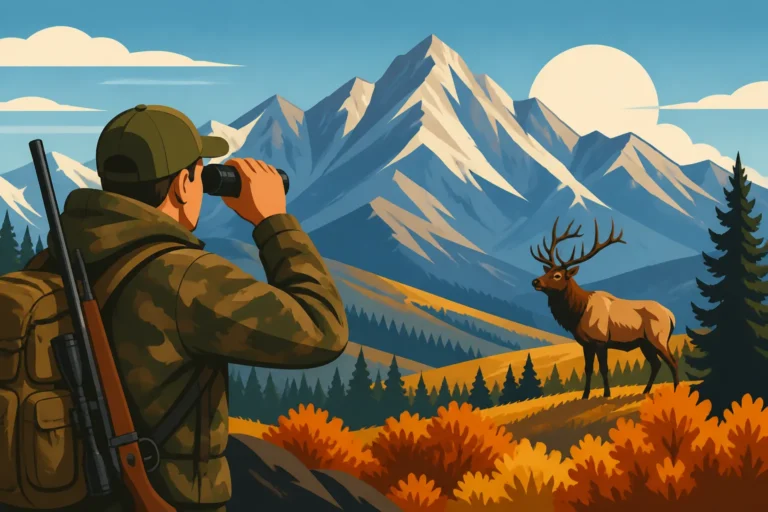
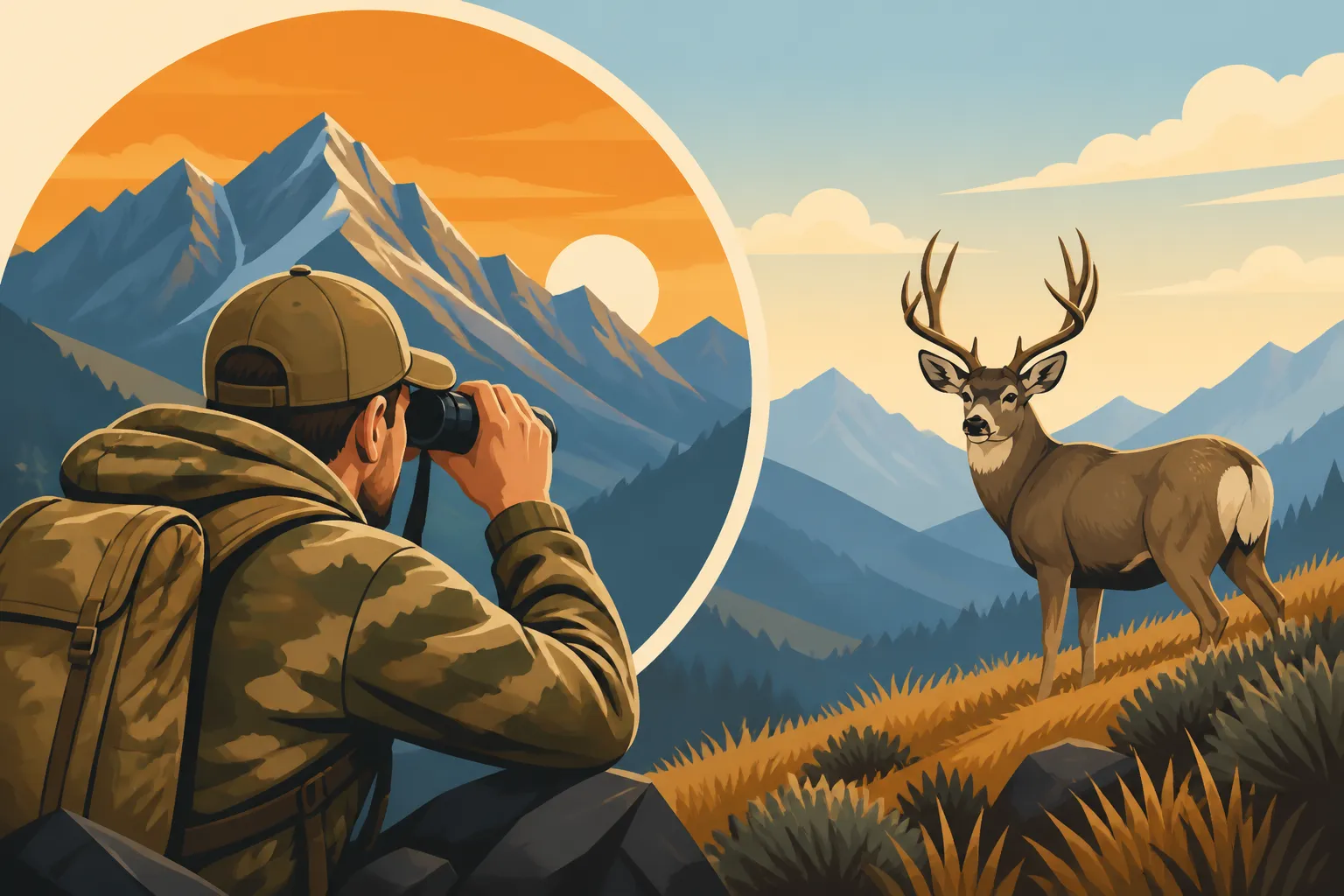
For mule deer, glassing is typically the primary tactic. Your guide will likely lead you to strategic vantage points, often referred to as "glassing knobs," where you'll spend hours patiently scanning distant hillsides, canyons, and timber edges with high-powered binoculars and spotting scopes. This is where quality optics, like those discussed in Best Optics for Colorado Big Game, truly shine. Your guide is looking for subtle signs: a flick of an ear, the gleam of an antler, or a distinct outline against the terrain. Once a buck is spotted, the real work begins. Your guide will meticulously plan a stalk, considering wind direction, terrain features for cover, and the deer's behavior. This can involve extensive hiking, crawling, and careful maneuvering to get within shooting range.
Other tactics might include still-hunting through timber patches, focusing on bedding areas or travel corridors, particularly during adverse weather or high hunter pressure. Some guides might use calling to attract bucks, although this is less common for mule deer than for elk. Regardless of the method, expect to be active. You'll hike, climb, and descend, often covering significant distances in a day. Be ready to move quietly and efficiently when necessary, as presented in How to Move Quietly Through Colorado Timber. Your guide will be a constant source of information, pointing out tracks, rubs, and other deer sign, teaching you how to read the landscape.
Logistics and Camp Life
The specific living arrangements will depend on your outfitter's setup. If you're on a fully guided hunt, you might stay in a comfortable lodge, a rustic cabin, or a well-appointed wall tent camp. These camps usually include cots, heaters, and communal areas for dining. Meals are typically home-cooked and plentiful, designed to fuel your long days in the mountains. Imagine coming back to a hot meal and a warm fire after a grueling day – it's a welcome luxury.
In more remote backcountry hunts or spike camps, accommodations will be simpler, perhaps smaller tents with basic amenities. Food might consist of freeze-dried meals, but even these can be surprisingly good and provide necessary energy. Regardless of the setup, cleanliness and organization are usually high priorities.
Transportation in the field will vary. Many hunts utilize 4×4 vehicles to access trailheads or specific hunting zones. For wilderness areas, expect horseback travel or extensive foot travel. If you're hunting with an outfitter that uses horses, they'll be accustomed to the terrain and handling game. Your guide will manage all the logistics of getting you to and from hunting areas, ensuring safety and efficiency. Always follow their instructions regarding camp etiquette, safety protocols, and daily schedules.
Field Care and Trophy Handling
Should you be fortunate enough to harvest a mule deer, your guide will take charge of the field care. They are experts at properly field dressing, caping, and quartering the animal to ensure the meat is preserved and the hide is prepped for taxidermy. This is a crucial step, especially in warm weather, to prevent spoilage. You can expect to assist as much or as little as you're able and willing. This is a great opportunity to learn proper techniques for How to Quarter an Elk in the Field, which applies well to deer, or How to Field Judge a Colorado Mule Deer Buck before the shot.
Packing out the animal is another significant effort. Depending on the size of the deer and the distance from a road or horse trail, this might involve multiple trips on foot, utilizing pack frames, or loading the meat onto horses or ATVs. Your guide will organize this process, and you'll likely be expected to help carry some of the load, if physically capable. This is a moment where all that physical training pays off! Outfitters often have arrangements with local meat processors and taxidermists, making the post-harvest logistics much smoother. They'll ensure your meat gets to a processor quickly and your trophy is handled with care. If you're planning a DIY hunt in the future, learning How to Pack Out an Elk in Colorado would be a valuable skill gained from a guided hunt experience.
After Your Hunt and Key Considerations
The hunt doesn't truly end until you've settled all the details and reflected on the experience. Understanding the financial aspects and managing expectations are key components of a successful guided hunt.
The Cost of a Guided Mule Deer Hunt
A guided mule deer hunt in Colorado is a premium experience, and the costs reflect the expertise, equipment, and logistical support provided. The price can vary significantly based on the outfitter's reputation, the duration of the hunt, the guide-to-hunter ratio, the services included (fully guided, semi-guided, drop camp), the location, and whether landowner tags are utilized.
- Fully Guided Hunts: Expect to pay anywhere from $4,500 to $10,000+ for a 5-7 day fully guided mule deer hunt. Trophy hunts in highly sought-after units with private land access or guaranteed landowner tags can run even higher, potentially exceeding $15,000.
- Semi-Guided Hunts: These typically fall in the $2,500 to $5,000 range for a similar duration, as you're receiving less direct guiding in the field.
- Drop Camp Hunts: These are generally the most affordable guided option, often costing $1,500 to $3,500 per person, as they primarily cover packing services and basic camp setup.
Remember, these figures usually do not include your Colorado non-resident hunting license and mule deer tag, which can add another $400-$800. Travel expenses (flights, fuel), gear purchases, meat processing, taxidermy, and tips for your guides are also separate costs to budget for. A full breakdown of costs is usually provided by the outfitter, so read your contract carefully. For budgeting purposes, a tool like GoHunt can help you understand the full financial picture, including license and tag costs, before you even begin looking at outfitters on sites like BookYourHunt.
Tipping Your Guide
Tipping your guide and other camp staff (cooks, wranglers) is a customary and expected part of a guided hunt. These individuals work incredibly hard, often putting in long hours in challenging conditions to ensure your comfort and success. A general guideline for tipping a hunting guide is 10-20% of the hunt cost.
For example, on a $5,000 hunt, a tip of $500-$1,000 would be appropriate. If you had multiple guides, or if there were cooks or wranglers, you might distribute a portion of the tip to them as well. However, this is a general guideline, and the actual amount should reflect the quality of service, the effort put in by the guide, and your overall satisfaction. If your guide went above and beyond, a higher tip is certainly warranted. If you feel the service was subpar, adjust accordingly. Tips are usually given in cash at the end of the hunt. It's always a good idea to discuss tipping expectations with your outfitter beforehand if you're unsure.
Realistic Expectations and Success Rates
It's crucial to enter a guided hunt with realistic expectations. While a guide significantly increases your chances of success, there are no guarantees in hunting. Mule deer are wild animals, and numerous factors outside anyone's control can influence the hunt: weather conditions, deer movement, unforeseen hunter pressure, or simply the deer not cooperating.
A reputable outfitter will provide honest success rates, often broken down by harvest rate (percentage of hunters who harvested an animal) and opportunity rate (percentage of hunters who had a legitimate shot opportunity). A high opportunity rate often indicates a good outfitter, even if the harvest rate is slightly lower – sometimes hunters miss, or pass on smaller bucks.
Focus on the overall experience: the camaraderie, the stunning Colorado landscapes, the physical challenge, and the opportunity to learn from seasoned professionals. A guided hunt is an adventure in itself, regardless of whether you punch your tag. Enjoy the process, the pristine wilderness, and the chance to chase one of North America's most iconic big game animals. Even if you don't take a buck, the knowledge gained about Colorado mule deer hunting will be invaluable for future trips, whether guided or Colorado DIY Elk Hunting Guide-style (adapted for mule deer, of course!).
Disclaimer
Please remember that hunting regulations, license fees, and season dates are subject to change. Always consult the most current Colorado Parks and Wildlife (CPW) regulations brochure for accurate and up-to-date information before planning and embarking on any hunt in Colorado.