How to Physically Prepare for Colorado Elk
So, you've decided to chase elk in Colorado. Good for you! But let's be brutally honest: those majestic animals don't live on flat, manicured golf courses. They live in some of the most unforgiving, breathtakingly steep, and oxygen-deprived terrain you'll ever encounter. Showing up unprepared is a recipe for misery, potential injury, and a high likelihood of going home empty-handed. This comprehensive guide is dedicated to helping you physically prepare your body and mind to meet the immense demands of a Colorado elk hunt, transforming you from a flatland warrior into a mountain athlete.
Understanding the Demands of Colorado Elk Country
Before you even think about lacing up your hiking boots or grabbing a pair of dumbbells, it's crucial to truly grasp what you're up against in Colorado's elk country. This isn't just about being "in shape"; it's about being "mountain shape," which is a whole different beast. The unique challenges of high altitude, rugged terrain, and the sheer effort required to pack out a harvested animal can break even the most dedicated hunter if they haven't adequately prepared.
The Altitude Challenge
One of the biggest equalizers in Colorado elk hunting, especially for those traveling from lower elevations, is the altitude. Most prime elk habitat starts around 8,000 feet and often extends up to 12,000 feet or more. At these elevations, the air pressure is lower, meaning there's less oxygen available with each breath you take. This isn't just a minor inconvenience; it can severely impact your physical performance and overall well-being.
Your body simply isn't designed to operate efficiently with reduced oxygen, leading to symptoms of acute mountain sickness (AMS) like headaches, nausea, dizziness, and extreme fatigue. Even if you avoid AMS, your muscles will tire faster, your lungs will burn sooner, and your recovery time will be significantly longer. Imagine trying to hike uphill for an hour with a 40-pound pack, only to feel like you've just run a marathon at sea level. That's the reality for many hunters who haven't spent time acclimatizing or training specifically for high-altitude demands. Learning how to properly prepare your body for these conditions is critical, and you can find a deep dive into this topic in our article on Altitude Training for Colorado Hunting.
Rugged Terrain and Steep Grades
Forget about gentle rolling hills. Colorado elk country is defined by relentless, steep climbs and equally taxing descents. You'll be navigating through dense timber, over fallen logs, across loose scree fields, and up rock-strewn drainages that seem to defy gravity. Every step requires concentration, balance, and significant lower body strength. These are often areas where trails are minimal or non-existent, forcing you to create your own path through the wilderness.
The constant up-and-down movement puts immense strain on your knees, ankles, and hips. Descending can sometimes be even harder than ascending, as you're constantly braking and stabilizing your body to prevent falls, especially with a heavy pack. A misplaced step can lead to a twisted ankle or a nasty tumble, ending your hunt prematurely. Preparing your body for this kind of brutal, uneven terrain is paramount to both success and safety.
The Weight of the Pack and the Harvest
Even if you're a minimalist hunter, you're still going to be carrying a significant amount of weight daily: your rifle or bow, optics, water, food, emergency gear, and extra layers. This often amounts to 25-40 pounds, day in and day out. Hauling that weight up and down mountains for hours on end demands a level of strength and endurance that goes beyond typical gym workouts.
And then there's the truly monumental task: once you've successfully harvested an elk. An adult cow can weigh upwards of 400 pounds, and a bull can easily exceed 700 pounds. You're not just walking back to the truck with a trophy; you're quartering that animal in the field, often miles from the nearest road, and then making multiple trips to pack out hundreds of pounds of meat, hide, and antlers. This is where your physical preparation is truly tested. Each pack-out load can be 80-100 pounds or more, demanding exceptional strength, endurance, and mental fortitude. It’s an exhausting, yet incredibly rewarding, endeavor that many hunters underestimate. For detailed insights into this process, check out our guide on How to Pack Out an Elk in Colorado.
Building Your Foundational Fitness
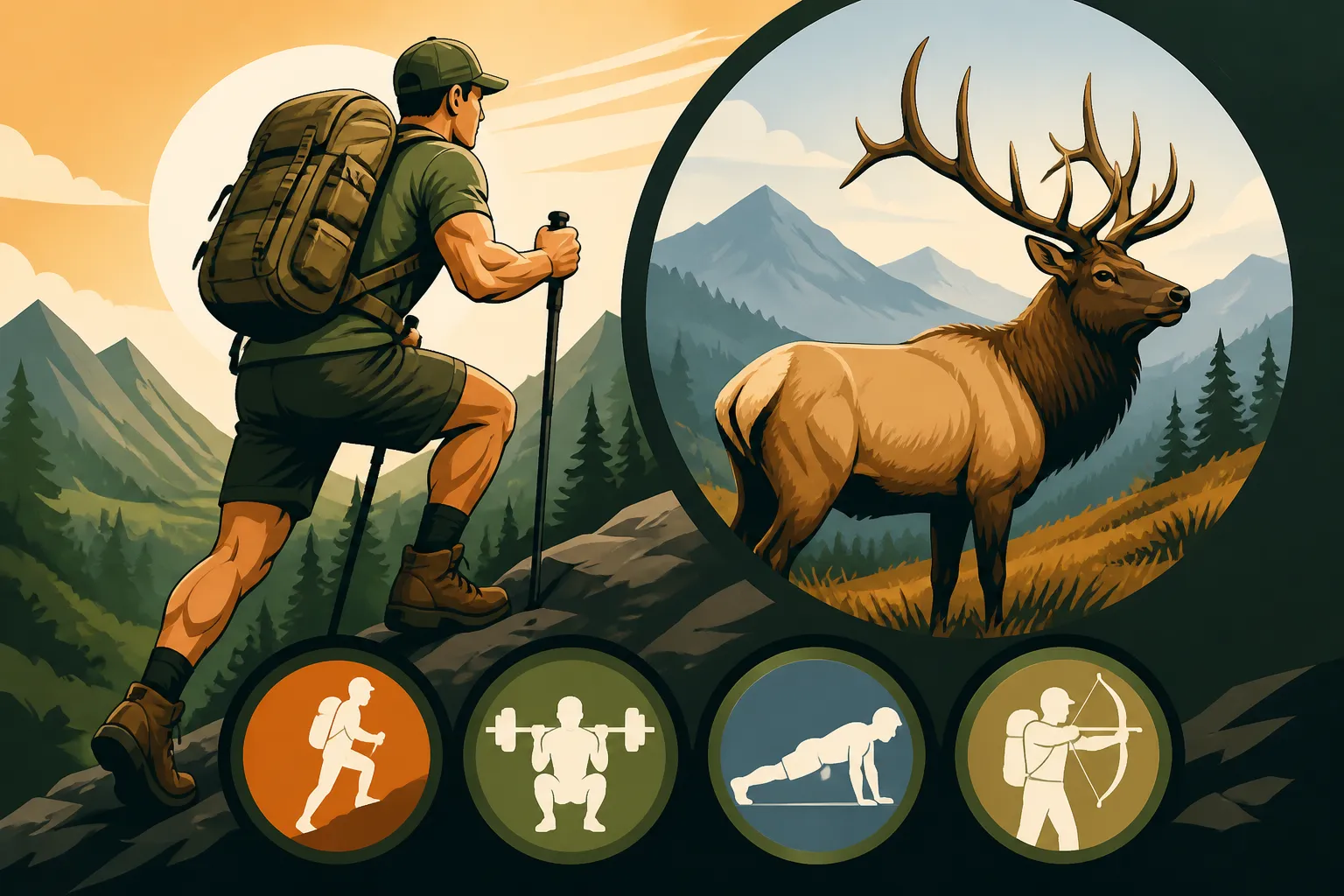
Okay, so you understand the challenge. Now, let's talk about building the engine and chassis that will get you through it. Physical preparation for elk hunting isn't about looking good in a tank top; it's about functional fitness that translates directly to mountain performance. We're talking about a balanced approach that focuses on cardiovascular endurance, full-body strength, and crucial core stability.
Cardiovascular Endurance
Think of cardiovascular endurance as the fuel tank for your elk hunt. You'll be covering miles of ground, often uphill, and sometimes quickly, whether you're chasing a bugle or making a final stalk. This requires a strong heart and lungs that can efficiently deliver oxygen to your working muscles. Marathon-level endurance isn't necessary, but being able to sustain effort for hours at a time is.
Focus on long-duration, low-to-moderate intensity activities. Hiking, trail running, cycling, and even swimming are excellent choices. Aim for sessions that last 45 minutes to 2 hours, 3-4 times a week. Gradually increase your duration and intensity over time. If you live in a flatter area, seek out hills, stair climbers, or even stadium stairs to mimic elevation gain. The goal is to build a solid aerobic base that will allow you to keep moving without completely hitting the wall. Consider incorporating varied terrain into your routine to get your body used to different surfaces.
Strength Training for the Mountains
While cardio gets you there, strength training helps you carry the load, conquer the steep grades, and resist injury. For elk hunting, the focus should be on compound movements that work multiple muscle groups simultaneously, mimicking the movements you'll make in the field. Your legs, core, and back are your primary movers and stabilizers in the mountains.
Prioritize exercises like squats, deadlifts, and lunges for powerful leg strength. Step-ups onto a sturdy box or bench are fantastic for mimicking uphill climbs, especially when done with a weighted pack. Farmer's carries, where you walk with heavy weights in each hand, build incredible grip strength and core stability, directly translating to carrying heavy loads. Don't neglect your upper body entirely; pulling exercises like rows and pull-ups will help with maneuvering through thick timber or pulling yourself up over obstacles. Aim for 2-3 strength training sessions per week, focusing on proper form to prevent injury.
Core Stability and Flexibility
Often overlooked, a strong core is your body's foundation. It connects your upper and lower body, provides stability on uneven terrain, and helps prevent back injuries when carrying heavy packs. A weak core makes every step less efficient and every heavy lift more dangerous. Exercises like planks, Russian twists, and bird-dog variations are excellent for building a rock-solid core.
Flexibility and mobility are equally important. Tight hamstrings, hips, or shoulders can limit your range of motion, make steep climbs more difficult, and increase your risk of strain. Incorporate dynamic stretches before your workouts and static stretches afterward. Activities like yoga or Pilates can significantly improve both core strength and flexibility, helping you move more fluidly and recover better after a long day in the mountains. A few minutes dedicated to mobility each day can make a world of difference when you're scrambling over rocks and logs.
Specific Training for Elk Hunting Scenarios
Once you've established a solid fitness base, it's time to get specific. General fitness is great, but tailoring your workouts to directly simulate elk hunting conditions will give you a significant advantage. This means more than just running on a treadmill; it's about pushing your body and mind in ways that directly translate to the challenges you'll face.
Ruck Training and Elevation Simulation
This is arguably the most critical component of your physical preparation. "Ruck training" or "weighted pack hikes" involve hiking with the same weight you anticipate carrying on your hunt. Start light, perhaps 15-20 pounds, and gradually increase the weight over weeks and months until you can comfortably carry 40-50 pounds for extended periods. This conditions your entire body to the specific demands of hunting.
If you don't have mountains nearby, get creative. Find the steepest hill in your area, use a stair climber at the gym, or walk up and down stadium steps. The goal is to simulate the continuous uphill and downhill movement with a loaded pack. Pay attention to how your pack fits and rides, adjusting it as needed. These training hikes are also a great time to break in your Best Boots for Colorado Elk Hunting and test out your Best Backpack for a Colorado Elk Hunt. These dedicated sessions not only build strength and endurance but also prepare your mind for the grind, allowing you to identify potential hotspots or gear issues long before you hit the trailhead in Colorado. Many hunters use apps like GoHunt to scout terrain and elevation profiles of their target GMUs, which can inform the intensity and gradient of their training hikes.
Uphill and Downhill Movement
Mastering the mechanics of moving efficiently and safely up and down steep terrain is an art form. Uphill, focus on short, deliberate steps, leaning slightly forward, and using your trekking poles for rhythm and support. Engage your glutes and hamstrings, not just your quads, to power each step. Practice pacing yourself, finding a sustainable rhythm that you can maintain for hours.
Downhill, the challenge shifts to control and knee preservation. Avoid long, lunging steps that jar your knees. Instead, shorten your stride, lean slightly back, and allow your trekking poles to absorb impact and provide balance. Zigzagging across the face of a steep slope can also help reduce the direct strain on your knees. Incorporate exercises like box step-ups and step-downs, gradually increasing the height and adding weight, to strengthen the muscles that stabilize your knees and ankles during these movements. This focused training can help prevent common injuries like "hunter's knee" or rolled ankles, which are prevalent in the rugged Colorado landscape.
Shooting Under Duress
Imagine hiking hard for an hour, your lungs burning, heart pounding, and then suddenly, a bull elk bugles just over the ridge. You sprint to get into position, glass the animal, and now you have mere seconds to control your breathing, steady your aim, and make an ethical shot. This is a common scenario in elk hunting, and it demands that you can perform accurately even when physically fatigued.
Integrate physical exertion into your shooting practice. Hike a quarter-mile, then immediately get into a shooting position and take a few shots at your target. Do jumping jacks or burpees, then quickly pick up your rifle or bow and practice your shot sequence. Focus on breath control—slow, deliberate breaths to calm your heart rate and steady your aim. Practice shooting from various positions (prone, kneeling, standing with support) to simulate real-world hunting scenarios. This kind of training is invaluable for developing the mental and physical discipline needed to make a clean kill shot when it truly counts, ensuring you uphold the highest standards of ethical hunting.
Nutrition, Hydration, and Recovery
Your physical preparation won't be nearly as effective without proper nutrition, consistent hydration, and adequate recovery. These three pillars are just as important as your workouts, especially when you're asking your body to perform at its peak for days or even weeks in the challenging Colorado wilderness. Ignoring them is like putting cheap gas in a high-performance engine; you'll break down.
Fueling Your Body for the Hunt
Think of your body as a high-performance vehicle; it needs the right fuel to run efficiently. Leading up to your hunt, focus on a balanced diet rich in whole foods. Complex carbohydrates (oatmeal, brown rice, whole-grain bread) will be your primary energy source. Lean proteins (chicken, fish, legumes) are essential for muscle repair and growth, while healthy fats (avocado, nuts, olive oil) provide sustained energy. Avoid processed foods, excessive sugar, and unhealthy fats that can lead to energy crashes and inflammation.
Once on the mountain, your nutrition strategy needs to be practical and caloric-dense. You'll be burning thousands of calories each day. Pack easily digestible snacks that provide quick and sustained energy. Trail mix, energy bars, jerky, dried fruit, and high-calorie nuts are excellent choices. Don't skip meals, even if you're not feeling particularly hungry due to altitude. Consistent fueling will maintain your energy levels and aid in recovery, allowing you to sustain your effort day after grueling day.
Hydration Strategies
Staying hydrated is crucial, especially at high altitudes where the drier air and increased respiration lead to faster fluid loss. Dehydration can exacerbate altitude sickness symptoms and severely impair physical performance. Don't wait until you're thirsty; by then, you're already behind. Start hydrating well before your hunt begins, and continue to drink consistently throughout the day in the field.
Aim to drink at least 3-4 liters of water per day, and more if you're exerting yourself heavily or if it's warm. Electrolyte supplements, added to your water, can help replace essential minerals lost through sweat and prevent cramping. Always carry a reliable water filter or purification tablets, as natural water sources in the backcountry can be contaminated. Familiarize yourself with the water sources in your hunting area using tools like those found in Colorado Backcountry Hunting Guide to plan your hydration strategy effectively. Proactive hydration is a non-negotiable for a successful and safe mountain hunt.
Rest and Recovery
It's tempting to push yourself relentlessly during training, but your muscles actually grow and repair during rest. Overtraining can lead to burnout, injury, and diminished performance. Similarly, on your hunt, getting adequate sleep is paramount. Your body needs that downtime to recover from the day's physical demands, repair muscle tissue, and process the stress of high altitude.
Aim for 7-9 hours of quality sleep each night, both during your training phase and on the hunt. Incorporate active recovery days into your training schedule, perhaps light walks or stretching sessions instead of intense workouts. Listen to your body; if you're feeling constantly fatigued or experiencing persistent muscle soreness, take an extra rest day. On the mountain, try to establish a consistent sleep schedule and create a comfortable camp environment. The mental and physical benefits of proper rest are enormous, allowing you to maintain peak performance throughout your entire hunt.
Essential Gear for Physical Performance and Safety
Your physical fitness is the engine, but the right gear is the chassis and suspension. Investing in high-quality, reliable gear that supports your physical performance and ensures your safety is not an indulgence; it's a necessity for a demanding Colorado elk hunt. The wrong gear can sabotage even the most physically prepared hunter.
Footwear and Layering Systems
Your boots are your most critical piece of equipment. They must be comfortable, supportive, waterproof, and well broken-in before you ever set foot in elk country. Poor-fitting or unsupportive boots will lead to blisters, sore feet, and potential ankle injuries, effectively ending your hunt. Consider boots designed for rugged mountain terrain, offering good ankle support and stiff soles for stability. Look for reputable brands like Crispi, Kenetrek, or Schnee's that specialize in hunting footwear. You can learn more about choosing the right pair in our article on Best Boots for Colorado Elk Hunting.
Equally important is a versatile layering system. Colorado weather is notoriously unpredictable, often swinging from freezing temperatures to warm sunshine, sometimes within the same hour. A proper layering system allows you to adapt to changing conditions and activity levels, preventing overheating or getting chilled. Start with a moisture-wicking base layer, add insulating mid-layers (fleece or puffy jackets), and finish with a waterproof and windproof outer shell. Merino wool or synthetic fabrics are superior to cotton, which retains moisture and can lead to hypothermia.
Backpacks and Trekking Poles
A well-fitting, high-quality backpack is your mobile base camp. It needs to comfortably carry your daily essentials, optics, and emergency gear, and ideally, be capable of hauling out heavy meat loads if you're successful. Look for packs with adjustable suspension systems, sturdy hip belts, and ample compression straps to distribute weight effectively. Brands like Mystery Ranch, Kifaru, and Stone Glacier are popular among serious elk hunters for their ruggedness and load-carrying capabilities. Choosing the right pack is crucial, and our guide on Best Backpack for a Colorado Elk Hunt can offer more insights.
Trekking poles are non-negotiable in steep, rugged terrain. They provide crucial stability, reduce strain on your knees (especially downhill), and can save you from countless falls. They act like extra legs, helping you maintain balance when crossing streams, navigating scree, or descending steep slopes with a heavy pack. Carbon fiber poles are lightweight, while aluminum offers more durability. Make sure they have comfortable grips and reliable locking mechanisms.
Navigation and Emergency Preparedness
While not directly physical gear, having reliable navigation tools and emergency preparedness items contributes directly to your physical well-being by preventing dangerous situations. A GPS device or a robust mapping app on your phone (like onX Hunt or GoHunt) is essential for knowing where you are, where you're going, and how to get back to camp. Download offline maps, as cell service is non-existent in much of Colorado's backcountry.
Always carry a comprehensive first-aid kit and know how to use its contents. Include items for blisters, sprains, cuts, and any personal medications. A headlamp with extra batteries, a fire starter, a signaling device (whistle or satellite communicator), and emergency shelter are also crucial. Knowing you have the means to handle an unexpected situation provides invaluable peace of mind, allowing you to focus on the hunt rather than worrying about getting lost or injured without support. Being prepared mentally and physically goes hand in hand with having the right tools to navigate the wild landscapes of Colorado.
Training Schedule Examples
To help visualize how you might structure your training, here's a sample weekly schedule. Remember, this is a template; adapt it to your current fitness level, available time, and access to training facilities. The key is consistency and gradual progression.
| Day | Morning Training (Approx. 60-90 min) | Evening Training (Optional, Approx. 30-45 min) | Focus | Notes |
|---|---|---|---|---|
| Monday | Strength Training: Full Body (Legs, Back, Core) | Active Recovery: Light Walk/Stretching | Strength & Recovery | Focus on compound lifts, heavy but controlled. |
| Tuesday | Ruck Hike / Stair Climber (Weighted) | Core & Flexibility Routine | Endurance & Specificity | Mimic elevation with weighted pack. Test boots. |
| Wednesday | Strength Training: Full Body (Chest, Shoulders, Arms, Core) | Mobility Drills | Strength & Mobility | Balance with pushing movements, maintain strong core. |
| Thursday | Long Duration Cardio (Trail Run/Bike) | Stretching / Foam Rolling | Cardiovascular Endurance | Build aerobic base, focus on sustained effort. |
| Friday | Strength Training: Legs & Core (Focus on Step-ups/Downs) | Light Shooting Practice (after exertion) | Leg Power & Shot Practice | Integrate physical stress into shooting. |
| Saturday | Long Ruck Hike (2-4+ hours, with full hunting pack) | Rest / Light Stretch | Peak Endurance & Gear Test | Most important session. Test all gear, nutrition, and hydration strategy. |
| Sunday | Full Rest | Optional Light Walk | Full Recovery | Essential for muscle repair and mental rejuvenation. |
This schedule provides a good framework for building comprehensive fitness. The long ruck hike on Saturday is especially crucial for conditioning your body to carry weight for extended periods, simulating what a real hunting day might entail. Remember, listen to your body and adjust as needed to avoid injury. For a complete plan, you might find our Colorado Elk Hunt Fitness Plan helpful.
Disclaimer
The information provided in this guide is for general informational purposes only and does not constitute professional medical, fitness, or hunting advice. Always consult with a qualified healthcare professional before beginning any new exercise program or making changes to your diet. Hunting can be a dangerous activity, and proper safety precautions, training, and adherence to all local and state regulations are essential. The author and publisher are not responsible for any injuries or damages that may result from the use of this information.