Hunting the Gunnison National Forest
The Gunnison National Forest, with its sprawling wilderness and rugged peaks, can feel like an overwhelming puzzle for any hunter, often leaving you wondering where to even begin your scouting or what to expect once you hit the dirt. It's a vast expanse that challenges even seasoned veterans, but with the right insights, you can unravel its secrets and significantly boost your chances of a successful hunt. This guide aims to break down the complexities of hunting this iconic Colorado region, offering practical advice and a deeper understanding of its unique opportunities.
Why the Gunnison National Forest Stands Out for Hunters
When you think of hunting in Colorado, places like the Gunnison National Forest immediately come to mind for good reason. It’s not just another patch of public land; it’s a mosaic of diverse ecosystems, from high-alpine tundra to dark timber and aspen groves, all teeming with wildlife. This isn't your grandfather's flatland deer hunt; this is big country that demands respect, preparation, and a keen eye for detail. The sheer scale and varied terrain offer incredible challenges and equally incredible rewards, making it a bucket-list destination for many.
Diverse Habitat and Game Species
The Gunnison National Forest is a biological powerhouse, offering an impressive array of habitats that support robust populations of big game. Here, you’ll find everything from open sagebrush parks that mule deer love to high-elevation basins where elk seek refuge in the summer and during periods of heavy hunting pressure. The dense conifer forests provide cover and bedding areas, while the aspen groves burst into golden hues in the fall, providing both forage and sanctuary. This incredible diversity means that, depending on the season and your target species, you might be glassing wide-open hillsides one day and still-hunting through thick timber the next.
Elk are undoubtedly the crown jewel of the Gunnison, with healthy herds scattered throughout its boundaries. These majestic animals thrive in the mixed conifer and aspen forests, especially where food and water are readily available. You'll find them ranging from the lower elevations near communities like Gunnison and Crested Butte, all the way up into the remote wilderness areas above timberline. Mule deer also call this forest home, often preferring the steeper, rockier terrain and more open slopes, though they too will utilize the timber for cover. Beyond the big two, the Gunnison also offers opportunities for black bear, particularly in areas with good berry production, and even the occasional moose in riparian zones. For smaller game, hunters can pursue a variety of grouse species, making for a truly comprehensive hunting experience. This rich biodiversity is one of the primary reasons so many hunters are drawn to the rugged beauty of the Gunnison.
Accessibility and Wilderness Opportunities
Despite its wild nature, the Gunnison National Forest offers a surprising blend of accessibility and true wilderness experiences. You can find areas with relatively good road access, particularly along major thoroughfares like US-50 or near popular trailheads, which might suit those looking for a more front-country approach or day hunts. These areas, while often seeing more pressure, can still yield success for the diligent hunter. However, the real draw for many is the vast network of wilderness areas and roadless country, such as parts of the West Elk Wilderness or Fossil Ridge Wilderness, that truly challenge your backcountry skills.
For those willing to pack in, whether on foot or with horses, the opportunities expand exponentially. These remote areas offer a chance to escape the crowds, find less pressured animals, and immerse yourself in an untamed landscape. Planning a trip into these wilderness zones requires significant preparation, from understanding navigation without trails to packing everything you need for an extended stay. It's a chance to truly experience a Colorado Backcountry Hunting Guide, testing your endurance and self-reliance. While some areas are quite reachable, others demand a multi-day effort just to reach prime hunting grounds, making the Gunnison a versatile hunting destination that can cater to various levels of ambition and physical capability.
Navigating the Terrain and Regulations in Gunnison
Hunting the Gunnison National Forest isn't just about finding game; it's about understanding the land and its rules. Colorado's hunting regulations can be complex, and the vastness of the Gunnison means you need to be intimately familiar with specific Game Management Units (GMUs), public and private land boundaries, and seasonal variations. It’s easy to get turned around, both literally and figuratively, if you don't do your homework.
Understanding GMUs and Public Land Access
The Gunnison National Forest spans across numerous GMUs, and knowing which one you're in, and its specific regulations, is absolutely critical. For example, GMU 54 and GMU 55 are large, popular units within the Gunnison National Forest, each with distinct draw odds, tag allocations, and antler point restrictions (APRs) for bull elk. You might find different archery, muzzleloader, or rifle seasons and bag limits depending on the unit you're hunting. It's not uncommon for a single major drainage to straddle multiple GMU boundaries, so constant awareness of your location is paramount.
This is where tools like onX Hunt become invaluable. Before you even set foot in the field, you can use a mapping application like onX Hunt to precisely identify GMU boundaries, distinguish between public lands (National Forest, BLM, State Trust Lands, etc.) and private land, and even locate water sources, trails, and potential bedding areas. Many frustrating situations arise from hunters unknowingly crossing onto private property, which can lead to legal issues and a ruined hunt. By meticulously scouting on your computer and then verifying in the field with your GPS or phone app, you can avoid these pitfalls and maximize your time in productive areas. Consulting a detailed Colorado Hunting Atlas Explained is also a great resource for initial planning.
Key Regulations and Season Dates
Colorado's hunting seasons are structured and specific, and the Gunnison National Forest adheres to these state-wide rules, often with unit-specific nuances. Elk seasons typically include an archery season, a muzzleloader season, and four separate rifle seasons. For mule deer, seasons often align with elk seasons but might have different opening and closing dates or specific units closed to deer hunting. It’s absolutely essential to consult the current year’s Colorado Parks and Wildlife (CPW) big game brochure to verify dates, legal methods of take, and any antler point restrictions that apply to your chosen GMU.
For instance, in some Gunnison GMUs, bull elk tags might be either-sex during certain archery or muzzleloader seasons, but restricted to antlered only during rifle seasons, and sometimes even require a minimum of four points on one side. Misinterpreting these regulations could lead to a citation, or worse, the loss of your harvested animal. Pay close attention to carcass transport rules, mandatory check stations, and any CWD (Chronic Wasting Disease) testing requirements that might be in place for your unit. These rules are designed for wildlife management and ethical hunting, and ignoring them isn't an option. Staying current with all Colorado Hunting Seasons Explained is a critical part of a responsible hunt.
| Species | General Season Type | Typical Dates (Approx.) | Notes (Unit-Specific Rules Vary) |
|---|---|---|---|
| Elk | Archery | Late Aug – Late Sept | OTC options, some draw units, often either-sex. |
| Elk | Muzzleloader | Mid-Sept | Draw only, often antlered, specific projectile rules. |
| Elk | 1st Rifle (Limited) | Mid-Oct | Draw only, often bull-only, limited pressure. |
| Elk | 2nd Rifle (OTC/Draw) | Late Oct – Early Nov | Mix of OTC and draw units, higher pressure. |
| Elk | 3rd Rifle (OTC/Draw) | Early Nov – Mid-Nov | Mix of OTC and draw units, often good rut activity. |
| Elk | 4th Rifle (Limited) | Mid-Nov – Late Nov | Draw only, often migrating animals, snow can be key. |
| Mule Deer | Archery | Late Aug – Late Sept | Draw only, limited opportunities. |
| Mule Deer | Muzzleloader | Mid-Sept | Draw only. |
| Mule Deer | Rifle (Staggered) | Mid-Oct – Late Nov | Draw only, often paired with elk rifle seasons. |
| Black Bear | Archery/Muzzleloader | Early Sept – Late Sept | Often concurrent with elk, requires separate tag. |
| Black Bear | Rifle | Early Sept – Late Nov | Often concurrent with elk, requires separate tag. |
This table provides general season date approximations for the Gunnison National Forest. Always consult the official Colorado Parks and Wildlife Big Game Regulations for precise, up-to-date information for your specific GMU and season.
Essential Strategies for Success in Gunnison
The Gunnison National Forest is a land of extremes, and successful hunting here means adapting your strategies to its unique challenges. From steep climbs to unpredictable weather, every hunt is an adventure. You can’t just walk out the door and expect to stumble upon a bull; it requires meticulous planning and persistent effort.
E-Scouting and On-the-Ground Reconnaissance
Before you ever pack your hunting boots, a significant portion of your success will be determined by your e-scouting efforts. This involves spending hours poring over maps, satellite imagery, and terrain data from the comfort of your home. Platforms like onX Hunt are indispensable for this, allowing you to identify potential travel corridors, bedding areas, feeding zones, and water sources. Look for north-facing slopes with dense timber for bedding, especially as hunting pressure increases. Identify saddles, benches, and dark timber pockets that act as natural funnels. Pay attention to elevation changes and draw lines that might indicate natural travel routes or escape cover.
Once you’ve narrowed down a few promising areas, if possible, conduct some on-the-ground reconnaissance, even if it’s just a hiking trip outside of hunting season. This allows you to verify what you saw on the map, understand the terrain's true steepness, and identify subtle features that satellite imagery might miss. Look for sign: tracks, scat, rubs, and wallows. Note the vegetation types and their density. Even if you can’t scout in person, use your e-scouting to build a mental map and mark waypoints for glassing points, potential campsites, and escape routes. Tools like GoHunt can also provide valuable insights into specific GMU characteristics, success rates, and historical data, giving you an edge in unit selection and strategy development. This combination of digital and physical scouting is crucial for making informed decisions once your hunt begins.
Adapting to Mountain Conditions and Elk Behavior
Hunting in the Gunnison National Forest means hunting at altitude, often between 8,000 and 12,000 feet, sometimes even higher. This dramatically impacts both your physical performance and animal behavior. Elk, being creatures of habit, are incredibly sensitive to pressure, weather changes, and food availability. During early archery seasons, elk might be found higher up in the cooler alpine basins, often in bachelor groups. As the rut approaches in September, bulls become more vocal and aggressive, making How to Call Elk in Colorado a vital skill. However, as rifle seasons begin and pressure increases, elk will often retreat to thick timber and north-facing slopes, becoming notoriously difficult to locate.
Weather can shift dramatically in the mountains. A warm, sunny morning can quickly turn into a snowy, frigid afternoon, especially in the late seasons. Knowing How to Hunt Elk in the Snow can be a game-changer, as fresh snow can reveal tracks and push animals to lower, more accessible feeding areas. Understanding thermals—how air rises in the morning and falls in the evening—is also critical for keeping your scent from spooking game. Always hunt into the wind, paying close attention to these thermal shifts. Be prepared for silence; after initial pressure, elk often go quiet, requiring more patience, still-hunting through timber, and keen observational skills rather than relying solely on calling. Adapting your tactics hourly based on conditions and elk response is key to success in this dynamic environment.
Gear and Preparation for a Gunnison Hunt
Hunting the Gunnison National Forest is physically demanding, and your gear choices can make or break your trip. You're not just fighting the elk; you're battling elevation, weather, and rugged terrain. Being ill-prepared can quickly turn a dream hunt into a miserable ordeal.
Physical Conditioning for High Elevation
Let's be real: Colorado elk hunting is an athletic endeavor, and the Gunnison National Forest is no exception. The vertical climbs, long miles, and thin air will test your limits. Many hunters underestimate the impact of altitude, experiencing symptoms like headaches, nausea, and extreme fatigue, which can severely compromise their hunt. It's not enough to be "in shape" by flatland standards; you need to be mountain fit.
Start your physical preparation months in advance. Focus on cardiovascular endurance with activities like running, hiking, or cycling, and incorporate resistance training, especially for your legs and core. Most importantly, practice hiking with a weighted pack, simulating the load you'll carry, both going in with gear and, hopefully, coming out with meat. If possible, seek out hills or stairs to train on. Remember, you'll need to be able to carry a substantial load of meat and gear back to your vehicle, potentially over difficult terrain and at high altitude. Consider following a specific Colorado Elk Hunt Fitness Plan or looking into How to Physically Prepare for Colorado Elk to ensure you're ready for the rigors of the mountains. Hydration and proper nutrition leading up to and during your hunt are also paramount for mitigating the effects of elevation.
Must-Have Gear for Western Colorado
Your gear selection for a Gunnison hunt needs to be robust, reliable, and appropriate for the varying conditions you'll encounter. Forget your cotton hoodies; layering is king in the mountains. Start with good base layers that wick moisture, add insulating mid-layers like fleece or puffy jackets, and top it off with waterproof and windproof outer shells. Temperature swings of 40 degrees in a single day are common.
Here’s a quick list of essentials:
- Boots: Invest in high-quality, broken-in mountaineering or sturdy hiking boots. Your feet are your most important asset. Check out Best Boots for Colorado Elk Hunting for detailed recommendations.
- Backpack: A comfortable, load-hauling pack (3,000-6,500 cubic inches depending on trip length) is non-negotiable for carrying gear and, if you're lucky, an elk quarter. Look for designs that allow you to carry heavy loads close to your body. See Best Backpack for a Colorado Elk Hunt for more insights.
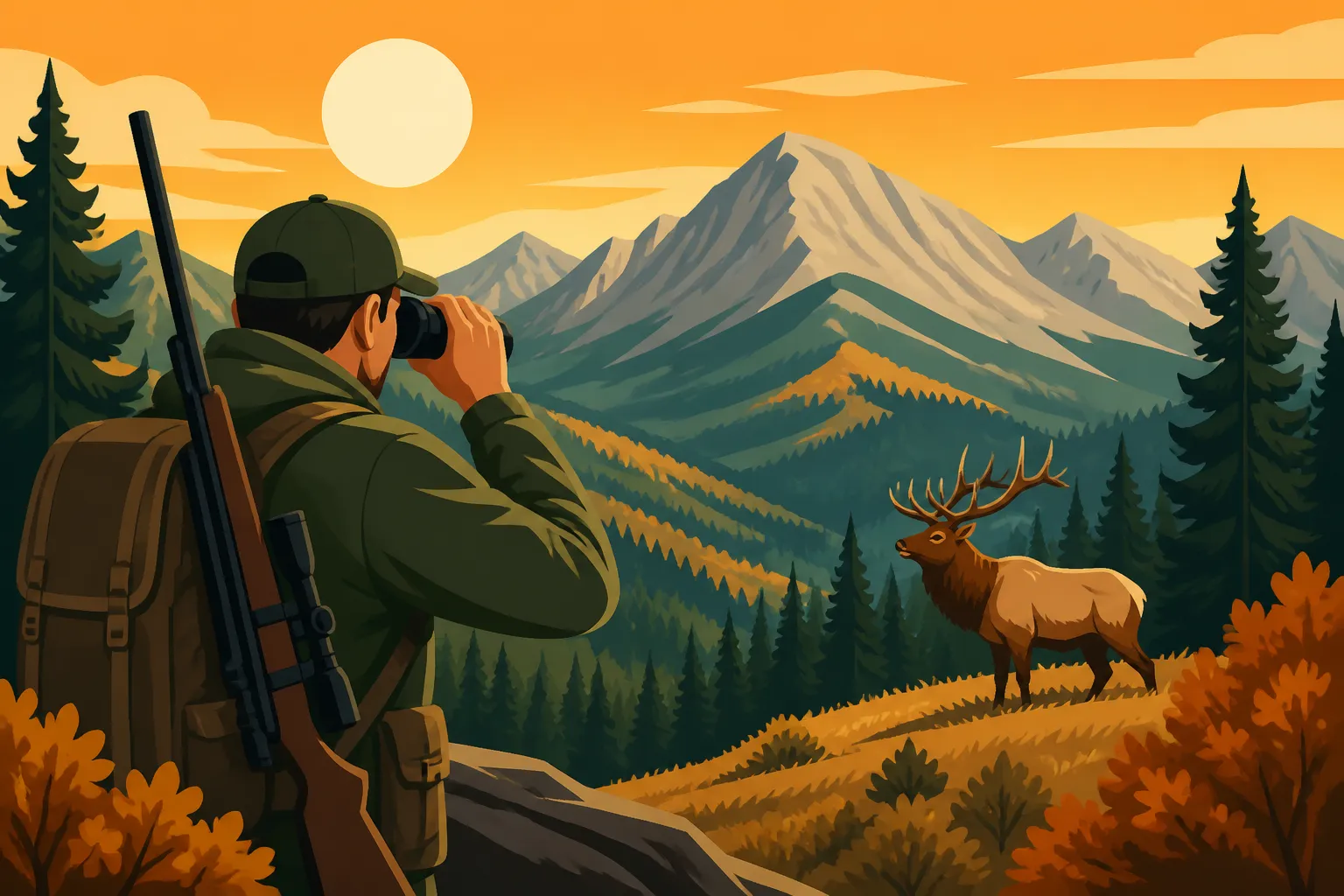
- Optics: High-quality binoculars (10×42 or 12×50) are crucial for glassing vast landscapes, especially for How to Glass Big Colorado Basins. A spotting scope and tripod can extend your range significantly.
- Navigation: A reliable GPS device or a smartphone with a pre-downloaded offline mapping app (like onX Hunt) is critical. Always carry a physical map and compass as backup.
- Shelter: A lightweight, durable tent or bivy system if you plan on spike camps or backpacking.
- Sleep System: A sleeping bag rated for colder than you expect, and an insulated sleeping pad.
- Water Filtration: A water filter or purification tablets are essential as you'll rely on natural sources.
- First-Aid Kit: Comprehensive and tailored for backcountry emergencies.
- Headlamp: With extra batteries.
- Game Processing Tools: Sharp knife, game bags, sharpening stone or replaceable blades.
- Trekking Poles: Save your knees on descents and aid stability on uneven terrain.
Every item should be weighed for its necessity and utility. Being too heavy will hinder your mobility, but lacking essential items can be dangerous. Pack smart, pack light, and prioritize comfort and safety in this demanding environment.
Disclaimer
Please remember that hunting regulations, season dates, and unit boundaries are subject to change. Always consult the official Colorado Parks and Wildlife (CPW) website and current year's hunting brochures before planning and executing any hunt. This guide is for informational purposes only and does not substitute for official regulations.