Rawah Hunting Guide
Thinking about hunting the Rawah Wilderness Area in Colorado can feel like stepping into a whole new world, full of rugged beauty but also immense challenges for even seasoned hunters. The sheer scale, elevation, and remote nature of Rawah mean that preparing thoroughly isn't just a suggestion, it's a requirement to ensure a safe and successful trip. This guide will walk you through everything you need to know to plan and execute a productive hunt in this iconic Colorado backcountry haven, from understanding its unique terrain to effective hunting strategies.
Unveiling the Rawah Wilderness: A Hunter's First Look
The Rawah Wilderness Area, nestled in the Roosevelt National Forest, is a gem for backcountry enthusiasts, but it demands respect and thorough preparation from any hunter who dares to venture into its sprawling 76,000 acres. This isn't your average roadside hunt; we're talking about elevations ranging from 8,500 feet up to over 13,000 feet, dozens of alpine lakes, and miles upon miles of challenging, often trail-less terrain. The beauty is undeniable, but so is the difficulty.
Location and Geographic Characteristics
The Rawah Wilderness is situated in north-central Colorado, west of Fort Collins and north of Rocky Mountain National Park. It's a significant portion of the Mummy Range and the Never Summer Mountains, characterized by towering peaks, deep cirques, vast open meadows, and dense timber. This area serves as a critical habitat for a variety of wildlife, most notably elk and mule deer, which thrive in its diverse ecosystems. The headwaters of the Laramie River originate here, carving out steep canyons and providing vital water sources. Expect dramatic elevation changes, unpredictable weather, and true wilderness solitude once you get a few miles from the trailheads. This is the kind of place where even a short hike can feel like a monumental endeavor, especially when carrying a heavy pack or an animal quarter.
Navigating Rawah's Game Management Units (GMUs) and Regulations
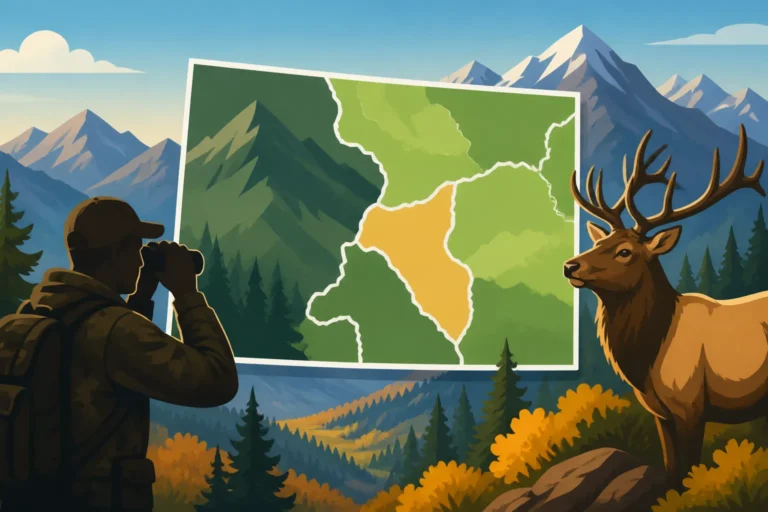
The Rawah Wilderness spans several Game Management Units (GMUs), primarily GMU 7, GMU 8, and portions of GMU 19 and GMU 191. Understanding which GMU you're hunting in is paramount, as tag requirements, season dates, and specific regulations can vary significantly. For instance, some units might be draw-only for certain species or seasons, while others might offer over-the-counter (OTC) opportunities, particularly for archery elk. Always consult the current Colorado Parks and Wildlife (CPW) hunting regulations brochure specific to your chosen season and GMU.
Hunting in a designated wilderness area also comes with its own set of rules. Motorized vehicles, including ATVs and e-bikes, are strictly prohibited. The use of chainsaws is also generally not allowed. While these restrictions might seem daunting, they are precisely what preserves the wild character of Rawah, offering an authentic backcountry experience that's hard to find elsewhere. Pack in, pack out is not just a suggestion but a legal and ethical imperative. Be prepared for self-sufficiency; emergency services are hours, if not a day, away in most remote sections. For a broader understanding of land classifications, you might find our Colorado National Forest Hunting Guide helpful, as the Rawah Wilderness is a prime example of hunting within these federal lands.
Prime Species and Optimal Seasons in the Rawah Wilderness
The Rawah Wilderness is synonymous with quality big game hunting, primarily for elk and mule deer. While other species like black bear and moose are present, they are less common pursuits for general hunters in this specific area due to their lower populations or extremely difficult draw odds. Understanding the behavior of elk and mule deer within this high-elevation environment is crucial for success.
Elk Hunting in Rawah's Backcountry
Elk are the undisputed kings of the Rawah Wilderness. Their populations are robust, and the vast, rugged terrain provides excellent cover and forage. During the early archery season, typically late August into September, the elk are often scattered in higher alpine basins, feeding on lush grasses. As the rut approaches in mid-September, bulls become more vocal, and the sound of bugles echoes through the timbered slopes and open parks. This is an incredible time to be in Rawah, but it also brings increased hunter pressure, particularly near trailheads and accessible basins.
Later rifle seasons push elk into denser timber and down to lower elevations as snow accumulates, making them harder to locate. Hunting elk at high elevation, especially in the Rawah, demands serious physical conditioning and a willingness to put in miles away from trails. Success often comes down to finding those secluded pockets where elk seek refuge from pressure. Knowing how to call elk in Colorado is a vital skill here, as is understanding how to leverage the wind and thermals in your favor.
Mule Deer Opportunities in the Rugged High Country
Mule deer in the Rawah Wilderness are typically found in similar habitats to elk, favoring timbered slopes, aspen groves, and rocky outcrops. They are known for their impressive size and the challenging nature of hunting them in this steep terrain. Archery and muzzleloader seasons offer unique opportunities before the general rifle seasons. Mule deer tend to be more solitary than elk, making them a true test of a hunter's glassing and stalking abilities.
During the late rifle seasons, particularly the 3rd and 4th rifle seasons, mule deer bucks can begin their migration to lower wintering grounds, offering some fantastic opportunities if you can intercept them. This is often triggered by heavy snows in the high country, pushing them out of the deepest parts of the wilderness. However, securing a mule deer tag for these units can be highly competitive and often requires accumulating several preference points, especially for prime buck tags. Always check the current Colorado Mule Deer Season Dates and Tags to plan your hunt accordingly.
| Species | Typical Habitat | Peak Season Behavior | Hunting Strategy Tips |
|---|---|---|---|
| Elk | Alpine basins, dark timber, aspen groves, saddles | Rut (bugling), migration (snow) | Calling, spot-and-stalk, still-hunting, glassing |
| Mule Deer | Timbered slopes, rocky outcrops, aspen, benches | Post-rut (late rifle), migration (snow) | Spot-and-stalk, glassing, silent movement |
| Black Bear | Dense timber, berry patches, oak brush | Hyperphagia (feeding heavily before winter) | Still-hunting, opportunistic, often concurrent with elk |
Strategic Planning for a Rawah Hunting Expedition
A successful hunt in the Rawah Wilderness doesn't start at the trailhead; it begins months, sometimes even a year, in advance with meticulous planning. The sheer scale and difficulty of this environment demand a comprehensive approach to e-scouting, physical conditioning, and gear selection.
Essential E-Scouting and Pre-Season Research
Before you pack a single piece of gear, you need to spend significant time behind a computer screen. E-scouting is your most powerful tool for dissecting the vastness of Rawah. Platforms like onX Hunt are invaluable here. You can identify potential bedding areas, feeding grounds, water sources (especially critical during drier periods), and travel corridors between them. Look for saddles, benches, and north-facing slopes with dense timber that provide cover and thermal protection for elk. Pay close attention to terrain features that might funnel animals or create natural barriers. Identifying escape routes and potential pack-out paths before you're standing over an animal is a game-changer. For a deeper dive, our guide on How to E-Scout Before a Colorado Hunt offers many actionable steps.
Beyond topography, research historical weather patterns, snowfall averages, and migration routes if you're hunting later seasons. Use resources like CPW's interactive mapping tools to understand public land boundaries, private land inholdings, and seasonal closures. Forums and online hunting communities can also provide anecdotal information, but always verify it with official sources and your own e-scouting. If you're looking at specific draw-only units, services like GoHunt can provide invaluable data on draw odds and harvest success rates, helping you strategize your tag application.
Physical Preparation and Altitude Acclimation
Let's be blunt: Rawah will test your physical limits. Hunting at 10,000 to 12,000 feet with a heavy pack is no joke. Lung-busting climbs, steep descents, and navigating blowdowns are par for the course. Therefore, physical preparation is non-negotiable. Start your training regimen months out, focusing on cardiovascular endurance, leg strength, and core stability. Hiking with a weighted pack, stair climbing, and varied terrain running will serve you well. Our article on How to Physically Prepare for Colorado Elk provides an excellent foundation.
Beyond general fitness, understanding altitude sickness and how to acclimate is vital. If you're coming from sea level, plan to arrive in Colorado a few days early to allow your body to adjust. Stay hydrated, avoid alcohol, and don't push yourself too hard on the first day or two. Symptoms of acute mountain sickness (AMS) can range from headaches and nausea to more severe, life-threatening conditions. Be honest with yourself and your hunting partners about how you're feeling. A slow, steady pace is often more effective and safer than trying to power through. You'll find more insights on this in Altitude Training for Colorado Hunting.
Gear Selection and Backcountry Logistics
Your gear is your lifeline in the Rawah Wilderness. Every item needs to be carefully considered for its weight, durability, and functionality. This is a place where lightweight, high-performance gear truly shines.
Key Gear Considerations:
- Backpack: A capable internal frame pack, 65-80 liters, designed for carrying heavy loads is a must. You'll be packing in all your supplies and potentially packing out an entire elk. Check out our recommendations for the Best Backpack for a Colorado Elk Hunt.
- Shelter: A lightweight, durable tent or tarp system suitable for alpine conditions.
- Sleeping System: A warm sleeping bag (15-0°F rating, depending on season) and an insulated sleeping pad.
- Clothing: Layering is key for the unpredictable mountain weather. Think merino wool base layers, a good mid-layer, and a waterproof/breathable outer shell.
- Optics: High-quality binoculars (10×42 or 12×50) and a spotting scope (if glassing large basins) are crucial.
- Navigation: GPS device (like your onX Hunt app), a physical map, and a compass. Always have redundant navigation.
- Water: Water filter or purification tablets are essential. There are many water sources, but don't rely solely on them without purification.
- Food: Lightweight, high-calorie, non-perishable options for the duration of your trip, plus a buffer.
- Safety: First-aid kit, emergency shelter, fire starter, headlamp with extra batteries, satellite communication device (Garmin InReach or similar). Cell service is nonexistent in most of Rawah.
- Game Processing: Game bags, sharp knife, saw, and paracord. Knowing How to Quarter an Elk in the Field is a non-negotiable skill for this kind of hunt.
If you're considering a more extensive trip, understanding how to plan a Colorado backpack hunt is crucial. Our Colorado Backcountry Hunting Gear List offers a comprehensive checklist to ensure you're well-equipped. Planning your route for packing in your camp, and ensuring you can efficiently pack out an animal, is part of the logistics. Some hunters opt for a drop camp setup, utilizing outfitters to bring in supplies, but even then, personal gear remains critical.
Effective Hunting Tactics for Rawah's Rugged Terrain
Once you've done all your research and preparation, it's time to hit the ground. But hunting in the Rawah Wilderness is a different beast than hunting lower, more accessible areas. Your tactics need to adapt to the elevation, the timber, and the sheer vastness of the landscape.
Mastering Movement and Scent Control in High Elevations
Moving quietly through Rawah's dense timber and steep, rocky terrain is an art form. The ground is often littered with fallen timber, scree, and thick underbrush, making silent footsteps a constant challenge. Focus on slow, deliberate movements, picking each foot placement carefully. Utilize natural features like game trails or softer ground when possible. This is particularly important when still-hunting through bedding areas or approaching a bugling bull.
Scent control becomes even more critical in the mountains. Thermals, which are air currents driven by temperature changes, play a massive role here. In the mornings, air generally flows downhill as the ground cools. In the afternoons, as the sun warms the slopes, air rises uphill. Understanding and using these thermals to your advantage can be the difference between getting winded and closing the distance on an animal. Always try to approach from downwind, especially when elk are bedded. The wind currents in the high country can be swirling and unpredictable, so constant vigilance is required.
Spot-and-Stalk and Calling Strategies
Given the mix of open alpine parks, high meadows, and dense timber, a combination of spot-and-stalk and calling tactics will be most effective.
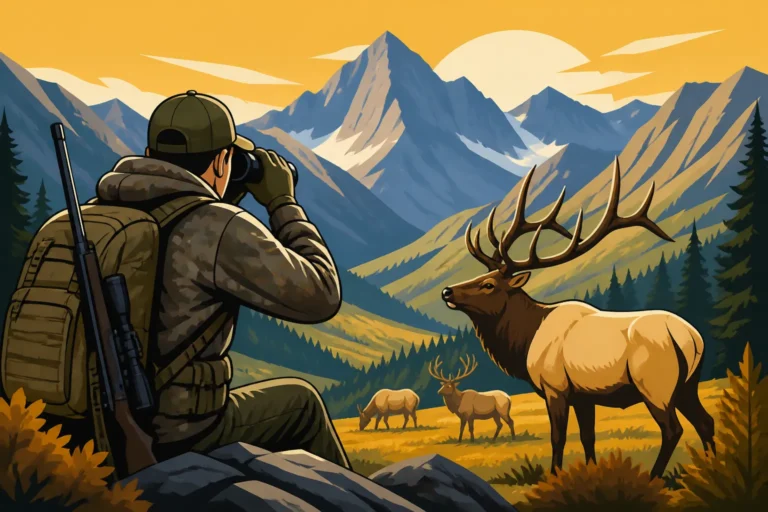
- Glassing: In the morning and evening, position yourself in a vantage point overlooking open basins, avalanche chutes, or clear-cuts. Use your optics to patiently pick apart the landscape, looking for any sign of movement or distinct shapes that break the natural lines of the terrain. Elk and deer can be surprisingly difficult to spot even in wide-open areas if they are bedded down.
- Spot-and-Stalk: Once an animal is located, planning your approach is crucial. Use the terrain to your advantage, staying out of sight and wind. This often involves significant detours and difficult climbs. The ground is often uneven, and maintaining silence while moving quickly can feel impossible, but it's essential for a successful stalk.
- Calling: During the rut, elk calling can be highly effective. Locating a bull with a bugle and then moving in to set up an ambush is a classic Rawah strategy. Be prepared for silent bulls outside the peak rut; cow calls and soft chirps can sometimes coax a curious animal closer, especially if they haven't been pressured. However, in heavily hunted areas, over-calling can educate elk quickly. Sometimes, a quiet approach, utilizing the terrain and thermals, is more successful. For more specific techniques, refer to Colorado Elk Hunting: Backcountry Tactics and Colorado Elk Hunting: Calling Tactics.
Dealing with Pressure and Finding Secluded Animals
The Rawah Wilderness, while vast, does see hunter pressure, especially during the archery and first rifle seasons. Many hunters will stick to within a few miles of popular trailheads like Cameron Pass, Blue Lake, or West Branch. The key to success often lies in your willingness to go deeper, further into the backcountry, where fewer hunters venture. This might mean packing in several miles, establishing a spike camp, and hunting drainages that are harder to access.
Elk, particularly, will retreat to the thickest, nastiest timber and steepest slopes when pressured. Learning to still-hunt Colorado timber, especially on north-facing slopes, is a critical skill. Don't be afraid to leave the trails and navigate through dense forests. Sometimes, the most rewarding hunting is found just over the next ridge, away from the well-trodden paths. Persistence and a solid understanding of elk behavior under pressure are your best allies in finding those secluded, unpressured animals in the heart of Rawah.
Disclaimer
Hunting in the backcountry, especially in a wilderness area like Rawah, carries inherent risks. This guide provides general information and recommendations but is not a substitute for official Colorado Parks and Wildlife regulations, comprehensive safety training, or personal judgment. Always prioritize safety, be prepared for emergencies, and adhere to all local, state, and federal laws and regulations. Weather conditions, wildlife behavior, and terrain can change rapidly. Hunt at your own risk.