Colorado Mountain Goat Range
Colorado mountain goats live above 11,000 feet, utilizing steep cliffs, specific alpine forage, and designated game management units for survival.

Colorado mountain goats live above 11,000 feet, utilizing steep cliffs, specific alpine forage, and designated game management units for survival.

Colorado bighorn sheep habitat features steep alpine terrain, reliable water sources, and seasonal migration routes across rugged mountain environments.
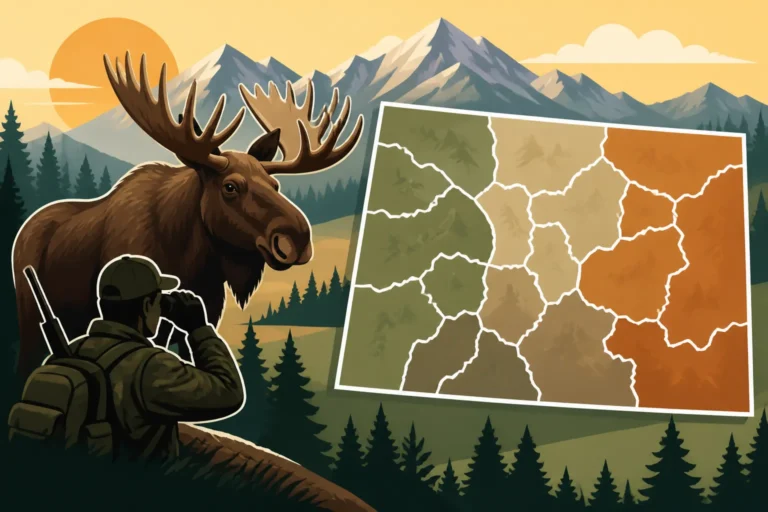
Colorado moose populations and habitats, including historical reintroduction, specific Game Management Units, preferred willow areas, and tag strategies.
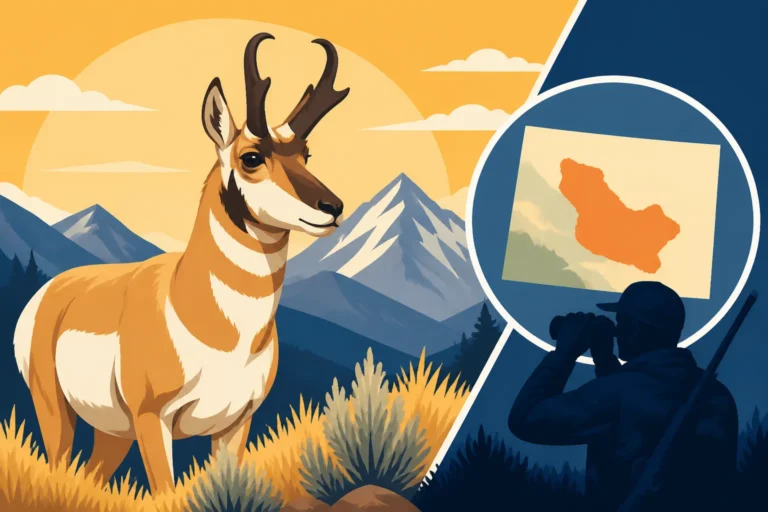
Colorado pronghorn inhabit the vast eastern plains, high-desert basins, and agricultural fields, relying on keen eyesight across open terrain.
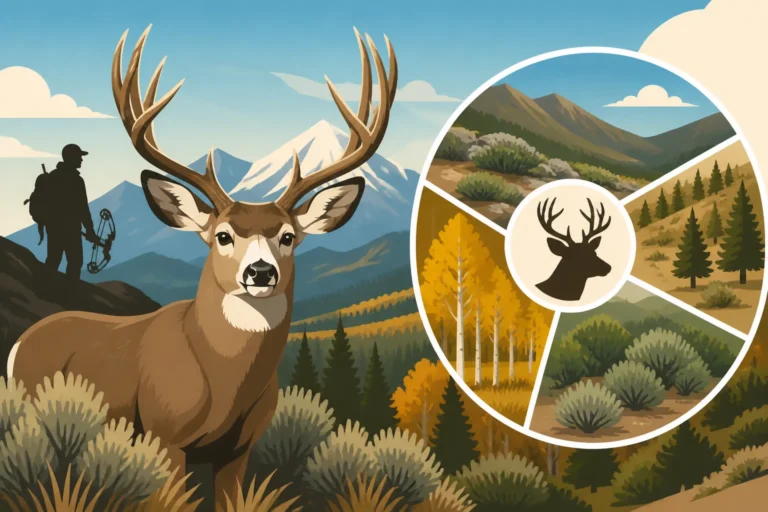
Colorado mule deer inhabit alpine peaks, mid-elevation forests, and river bottoms, shifting locations seasonally for food, water, and security.
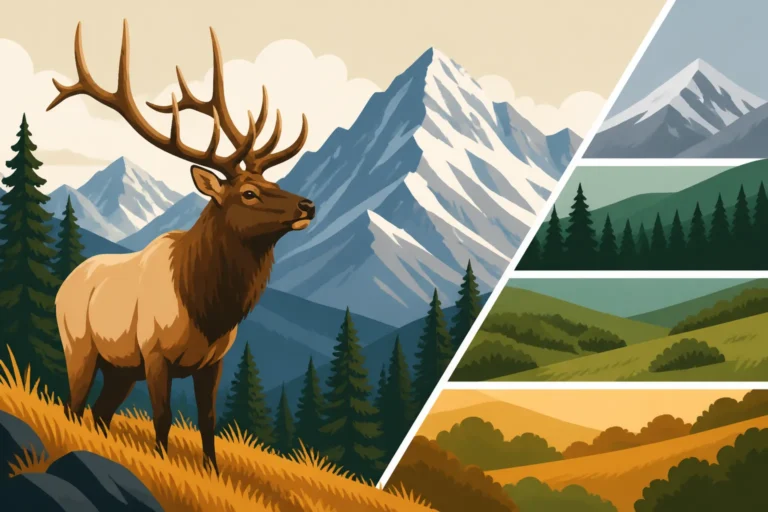
Colorado elk movement connects directly to changing seasonal elevations, food sources, water access, and dense timber cover across mountainous terrain.
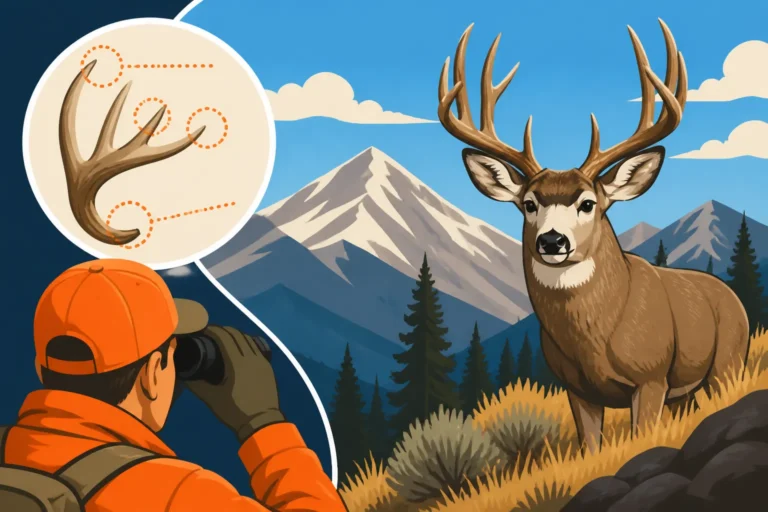
Field-judging Colorado mule deer bucks involves evaluating antler spread, mass, tine length, and symmetry to make confident harvest decisions.
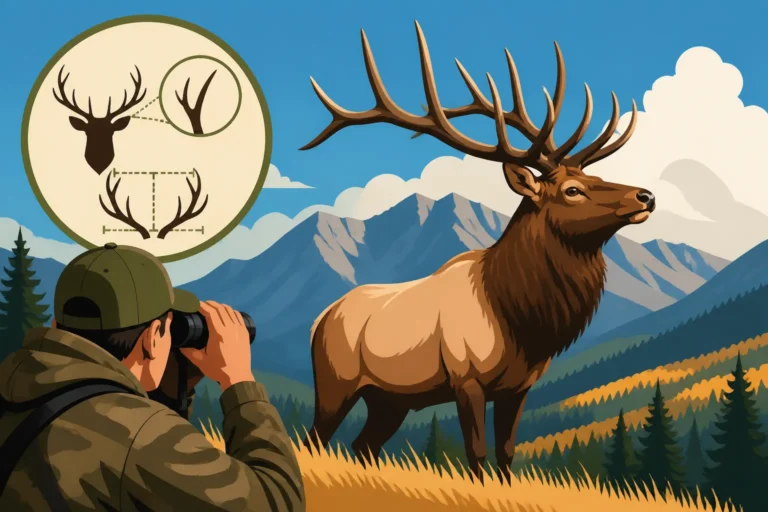
Field elk evaluation involves analyzing body size, antler mass, tine length, and legal point restrictions across different Colorado game management units.

Evaluating pronghorn horn size helps hunters judge trophy potential using ear lengths, prong measurements, mass, and age classes in the field.

Colorado mule deer antler growth involves annual shedding, velvet development, and mineralization driven by age, genetics, and nutrition.