How to Compare Colorado Guided Hunt Packages
The dream of chasing elk through Colorado’s breathtaking landscapes often begins with researching guided hunt packages. But let's be honest, staring at countless options, each with different promises, price tags, and inclusions, can feel like trying to solve a complex puzzle. It's incredibly frustrating to sift through vague descriptions, fearing hidden costs or that you're somehow comparing apples to oranges. This comprehensive guide is specifically designed to help you navigate that labyrinth, meticulously breaking down how to compare Colorado guided hunt packages so you can confidently choose the perfect adventure that aligns with your expectations, effort, and budget.
Understanding the Different Types of Guided Hunts
Before you can even begin comparing, it’s absolutely essential to grasp the fundamental differences in the types of guided services an outfitter might offer. This distinction isn’t just about price; it's about the level of support, independence, and comfort you can expect during your hunt. Knowing these categories will clarify what questions you need to ask and what kind of experience you're truly seeking.
Fully Guided All-Inclusive Adventures
These packages represent the pinnacle of service and, predictably, come with the highest price tag. A fully guided, all-inclusive hunt means that, from the moment you arrive until you depart, almost every detail is handled by your outfitter and guide. Your guide will be with you in the field daily, leading the hunt, tracking animals, and making tactical decisions. This setup is designed to remove as much logistical stress as possible, allowing you to focus purely on the hunting experience itself.
Imagine flying into Grand Junction and being picked up by your outfitter. You’re driven to a cozy lodge nestled in the mountains near Meeker, where warm meals are prepared, and your guide discusses the next day's strategy over a roaring fire. Your lodging, delicious meals, and all in-field transportation—be it via 4×4, ATV, or horseback—are covered. When you successfully harvest an elk, your guide is there to assist with field dressing, quartering, and often even packing the meat out of the steep timber to a vehicle or game retrieval point. This is often the ideal choice for first-time Western hunters, those seeking a truly immersive but comfortable experience, or anyone who wants to maximize their hunting time without the burdens of camp chores. These experiences often take place on prime private land or in less accessible public land units within areas like the White River National Forest.
Semi-Guided and Drop Camp Options
This is where the nuances of guided services really come into play, and where careful reading of package details becomes paramount. These options offer a blend of support and independence, catering to hunters who want some assistance but prefer a more hands-on approach. You can dive deeper into these distinctions with our guide on "Fully Guided vs Semi-Guided Colorado Hunts".
Semi-Guided Hunts
A semi-guided hunt typically provides significant logistical support, like a base camp and sometimes meals, but the day-to-day hunting decisions and execution are largely left to you and your hunting party. The outfitter might provide daily transportation to specific hunting areas, offer detailed maps and recent intel on animal movement, and check in with you periodically. However, a guide won't be accompanying you in the field throughout the entire day. You'll be responsible for your own stalking, calling, and navigation once you're dropped off.
Consider a scenario where you've booked a semi-guided elk hunt in a unit like GMU 54 near Gunnison. You arrive at a comfortable tent camp, where dinner is cooked, and the outfitter gives you hot tips on elk locations, wallows, and travel corridors in the morning. You and your buddies head out, map in hand, to execute your own hunt. This setup is fantastic for experienced hunters who are confident in their abilities but want help accessing prime areas or prefer a comfortable camp without the full cost of a dedicated guide shadowing them. It offers a good balance of professional support and personal freedom.
Drop Camps
Drop camps are the most independent form of an outfitted hunt. Here, the outfitter's primary service is to transport you, your gear, and sometimes a pre-established camp (including tents, cots, cooking gear, and water filters) into a remote backcountry location. They’ll drop you off and then return on a pre-arranged date, usually a week or so later, to pack you and any game out. Everything in between—hunting, cooking, camp maintenance, and emergency preparedness—is entirely your responsibility. This is a true DIY experience once you're in the wilderness.
For instance, you might arrange for a drop camp in a pristine, roadless area of the Weminuche Wilderness in the San Juan Mountains. The outfitter uses horses or mules to pack your provisions deep into the backcountry, where they've already set up a sturdy wall tent. You and your group are then left to tackle the elements and the elk entirely on your own for the duration. This option significantly reduces the overall cost compared to a fully guided hunt and grants access to areas that would be incredibly difficult to reach otherwise. It's perfect for seasoned backcountry enthusiasts who own their own gear and want to avoid the logistical hassle and physical toll of packing in livestock themselves. For those considering this adventure, our guide on "How to Set Up a Colorado Drop Camp" offers invaluable insights.
Key Factors to Evaluate in Any Hunt Package
Once you understand the different service levels, it's time to meticulously dissect what each package actually offers. Don't be swayed by an attractive price alone; the true value lies in the details of the inclusions and the quality of the outfitter. This stage demands a thorough review, much like e-scouting a new hunting unit.
Inclusions and Exclusions: What's Really Covered?
The devil is always in the details, and this is especially true for hunting packages. A seemingly good deal can quickly become less appealing if essential services are left out. Always request a written, detailed list of what is and isn't part of the package. This is where sites like BookYourHunt can be very useful for their detailed breakdowns.
- Lodging and Meals: What kind of lodging is provided? Is it a permanent lodge with amenities, a comfortable wall tent with cots and heaters, or a spike camp consisting of smaller backpacking tents? Similarly, clarify the meal plan. Are gourmet meals prepared by a camp cook, hearty backcountry fare, or are you expected to provide and prepare your own food, even if the outfitter provides a kitchen setup? These seemingly small details drastically impact your comfort and the overall feel of the hunt.
- Guide-to-Hunter Ratio: This is a crucial element for the quality of your hunting experience and often overlooked.
- 1:1 Ratio: One guide for one hunter. This provides the most personalized attention, allowing the guide to tailor the hunt entirely to your physical capabilities, preferences, and skill level. It often leads to higher success rates and a deeper bond with your guide.
- 1:2 Ratio: One guide for two hunters. This is a very common and effective ratio. The guide can still dedicate significant attention to both hunters, though some compromises in strategy might be necessary.
- Higher Ratios (e.g., 1:3, 1:4): As the number of hunters per guide increases, the individual attention decreases. While these hunts are often more affordable, they might require more patience and flexibility from hunters, as the guide must juggle multiple needs. Always ask about the typical ratio for the hunt you're considering.
- Game Retrieval and Field Processing: Killing an elk is only half the battle; getting it off the mountain is often the harder, more physically demanding part. Clarify the outfitter's policy on game retrieval. Does it include field dressing, quartering, and packing the meat out of the woods? Will they use horses, ATVs, or human pack frames? Some outfitters go the extra mile, delivering your animal to a local meat processor, which is a massive convenience. Understanding this is key, as packing out an elk can be a monumental task, especially if you're unfamiliar with the terrain or short on manpower. If you're on your own, our guide on "How to Pack Out an Elk in Colorado" will be essential.
- In-Field Transportation: How will you get around in the hunting area? Some outfitters use rugged 4×4 vehicles for access, while others rely on horses to cover vast wilderness areas. If you're considering a horseback hunt, know that it requires a different kind of preparation and offers unique advantages for reaching remote spots. Conversely, an entirely foot-based hunt demands excellent physical conditioning. You can learn more about this in articles like "How to Hunt Colorado with Horses".
Reputation, Experience, and Logistics
Beyond the physical items and services, the caliber of the outfitter and their operational efficiency are paramount to a successful and enjoyable hunt. This aspect requires more investigative work than simply reading a checklist.
- Outfitter Experience and References: How long has the outfitter been operating in Colorado, particularly in the units you're interested in? Longevity often translates to deep knowledge of animal patterns, terrain, and weather conditions. Always request a list of recent references (from the last 1-2 years) who hunted the same species and season you plan to. Speaking with past clients provides invaluable, unbiased insights. Our guide on "How to Vet a Colorado Hunting Outfitter" offers a deeper dive into this crucial step.
- Success Rates and Realistic Expectations: While a reputable outfitter will never guarantee a kill, they should provide realistic "opportunity rates" (the percentage of hunters who had a legitimate shot opportunity) and "harvest rates" (the percentage of hunters who successfully took an animal) based on their historical data. Be extremely wary of outfitters promising "100% success"—hunting is inherently unpredictable, and such claims are often red flags. An ethical outfitter will manage your expectations, emphasizing the quality of the experience and the opportunity to hunt. Understanding the typical "Colorado Guided Hunt Success Rates" will help you discern realistic claims from exaggerated ones.
- Hunting Unit (GMU) and Terrain: Research the specific Game Management Unit (GMU) where the outfitter operates. Tools like GoHunt provide excellent data on GMU draw odds, harvest statistics, and detailed terrain maps. Does the unit consistently produce quality animals? What kind of terrain will you be hunting – dense timber, high alpine basins, or rolling foothills? Knowing this will influence your physical preparation, gear choices, and overall hunting strategy. For instance, hunting the Flat Tops Wilderness presents different challenges than hunting the Sangre de Cristos.
- License and Tag Acquisition: This is usually a separate but critical component of any Colorado hunt. Does the outfitter assist with understanding the Colorado Draw System and preference points? For non-residents, drawing a quality bull elk tag can take several years of building points. Does the outfitter have access to private landowner tags, which can bypass the draw entirely but come at a significant premium? Clarify whether the hunt takes place on public land, private land, or a combination, as this affects tag availability and hunting pressure. Many outfitters specialize in areas where over-the-counter (OTC) elk tags are available for seasons like archery or specific rifle seasons. Make sure you understand all the options for "Colorado OTC Elk Tags Explained".
Decoding the Fine Print and Hidden Costs
The sticker price on a guided hunt package can be deceiving. Many packages have additional costs that aren't immediately obvious but can significantly inflate your final expenditure. Overlooking these details can lead to unpleasant surprises and budget stress, so it's vital to scrutinize the contract and ask clarifying questions upfront.
Fees Beyond the Base Price
Don't let the excitement of a potential hunt blind you to the expenses lurking just outside the advertised package price.
- License and Tag Fees: These are almost universally separate from the outfitter's fee. For a non-resident in Colorado, you'll need a qualifying small game license, a habitat stamp, and your actual elk or deer tag. These costs add up to several hundred dollars, sometimes over a thousand, and must be budgeted for independently. Ensure you understand the current "Colorado Non-Resident Elk Tag Cost" and application deadlines.
- Trophy Fees: While less common for general elk hunts in Colorado, some outfitters, particularly those on private land or specializing in high-end trophy animals, might charge an additional "trophy fee" if you harvest an animal exceeding a certain size (e.g., a bull scoring over 300 inches Boone and Crockett). Always confirm if such fees apply and what the thresholds are.
- Meat Processing and Taxidermy: After the hunt, you'll need to decide what to do with your game. While many outfitters assist with getting your animal to a local processor or taxidermist, the actual cost of these services is almost always your responsibility. Processing an elk can run into several hundred dollars, and quality taxidermy can cost thousands. Inquire about reputable local services in areas near your hunt, like Rifle or Montrose, and their typical pricing.
- Travel Costs: Don't forget the expenses of getting to and from Colorado. This includes airfare, rental cars, fuel, and any pre- or post-hunt hotel stays. These travel logistics can be a significant portion of your overall trip budget, especially if you're coming from out of state.
- Gratuities for Guides and Staff: Tipping your guide and any support staff (cooks, wranglers) is a long-standing tradition in the hunting industry and is a significant expected expense. A typical gratuity for a guided hunt ranges from 10-20% of the hunt's cost, based on the service received and your satisfaction. Make sure you budget for this substantial amount. Our guide on "Tipping a Colorado Hunting Guide" provides more context on industry standards.
Contractual Details and Policies
The hunt contract is more than just paperwork; it’s a legally binding agreement that protects both you and the outfitter. Reading and understanding every clause is crucial.
- Deposit and Payment Schedule: What percentage of the total cost is due as a deposit, and when is the final balance due? What payment methods are accepted? Be wary of outfitters demanding full payment far in advance with no clear refund policy.
- Cancellation and Refund Policies: Life is unpredictable. What happens if you need to cancel due to an emergency, illness, or unforeseen circumstances? What if the outfitter cancels (e.g., due to wildfires, natural disasters, or guide unavailability)? A clear, fair cancellation policy is a hallmark of a professional operation. Some outfitters may offer to reschedule, while others have strict no-refund policies after a certain point.
- Liability and Insurance: Hunting in the mountains carries inherent risks. What liability does the outfitter assume, and what are your responsibilities? Is personal trip insurance recommended or required? Many hunters purchase specialized travel or hunt insurance to protect their investment in case of unforeseen events.
- Weapon and Ammunition Restrictions: Confirm any specific requirements or recommendations for your chosen weapon. Some outfitters might have preferences for rifle calibers, arrow weights, or broadhead types. It's also important to confirm if there are any restrictions on transporting firearms, especially if flying. Ensure you've practiced extensively and know "How to Sight In for a Colorado Elk Hunt" for various distances and angles.
Leveraging Resources for Informed Decisions
In today's interconnected world, you have an incredible array of resources at your fingertips to help you make an informed decision about your Colorado guided hunt package. Don't limit your research to just an outfitter's website; cast a wide net to gather as much information as possible.
Online Platforms and Outfitter Directories
The internet has revolutionized the way hunters research and book trips. Take advantage of specialized platforms and community forums.
- Booking Platforms and Directories: Websites like BookYourHunt or GoHunt are invaluable tools. They function as comprehensive directories where you can filter outfitters by species (elk, mule deer, pronghorn), location (e.g., specific GMUs or regions like the Gunnison Basin), weapon type (archery, rifle, muzzleloader), and even budget. These platforms often feature detailed package descriptions, real-world reviews from past clients, and consistent formatting that makes side-by-side comparisons much easier. Using these can significantly streamline your initial search and help you find top-rated guides specializing in areas like the San Juan National Forest.
- Hunting Forums and Social Media Groups: Online communities dedicated to Western hunting, and specifically Colorado hunting, are treasure troves of candid, unfiltered experiences. Join relevant Facebook groups or forums and use the search function to find discussions about specific outfitters you're considering. Don't hesitate to post questions; many experienced hunters are eager to share their insights. While you should always be discerning and consider the source, these platforms offer perspectives you won't find in marketing materials.
- Outfitter Websites: Once you've identified a few potential outfitters, spend significant time exploring their individual websites. Look for detailed photos of their camps, guides, and past successful hunts. Check their "About Us" or "Testimonials" sections, and look for any blog posts or news updates that indicate recent activity and transparency. A professional, up-to-date website often reflects a well-run operation.
Direct Communication and Due Diligence
While online research is excellent for narrowing options, nothing replaces direct, personal communication with the outfitter themselves. This is your chance to clarify specifics, gauge their professionalism, and ensure they're a good fit for you.
- Ask Specific Questions: Use all the factors discussed in this guide as your checklist. Don't be afraid to ask about guide experience, their philosophy on ethical hunting, specific camp logistics, emergency plans, and even a typical day's routine on the hunt. A reputable outfitter will appreciate your thoroughness and be happy to provide clear, honest answers. If they're vague or evasive, consider it a red flag.
- Check Licensing and Insurance: Confirm that the outfitter is properly licensed and insured to operate in Colorado. You can usually verify this through the Colorado Parks and Wildlife (CPW) website. This ensures they meet state regulations and have liability coverage, which is crucial for your safety and legal protection. Without proper licensing, you could be risking your entire trip and potentially facing legal issues. This is covered in more depth in "Colorado Outfitter Licensing Explained".
- Read Reviews and Testimonials with a Critical Eye: While online reviews are valuable, approach them thoughtfully. Look for consistent themes across multiple reviews rather than relying on just one or two. Did past clients praise the quality of the guides, the food, the camp comfort, or the overall hunting experience? Be wary of reviews that seem overly generic or that are consistently negative without specific, verifiable details. Both BookYourHunt and GoHunt often aggregate reviews, giving you a broader perspective.
- Understand the "Fit": Beyond all the logistics, it's vital to consider if the outfitter's overall philosophy and hunting style align with your own. Are you looking for a hardcore, physically demanding backcountry experience, or a more relaxed hunt with comfortable amenities? Do you prefer an aggressive calling approach or a more patient spot-and-stalk method? A simple phone call can often tell you a lot about an outfitter's personality and whether you’ll mesh well with them and their team. Remember, you'll be spending a significant amount of time with these individuals, so personality fit matters.
Choosing a Colorado guided hunt package is a significant investment of time, money, and anticipation. By diligently understanding the types of hunts available, meticulously evaluating all inclusions and exclusions, scrutinizing the financial details, and leveraging all available resources for due diligence, you can confidently compare your options. This thorough approach ensures you select a guided adventure that not only fits your budget but also delivers the unforgettable Colorado hunting experience you've been dreaming of.
Comparison Table: Colorado Guided Hunt Package Types
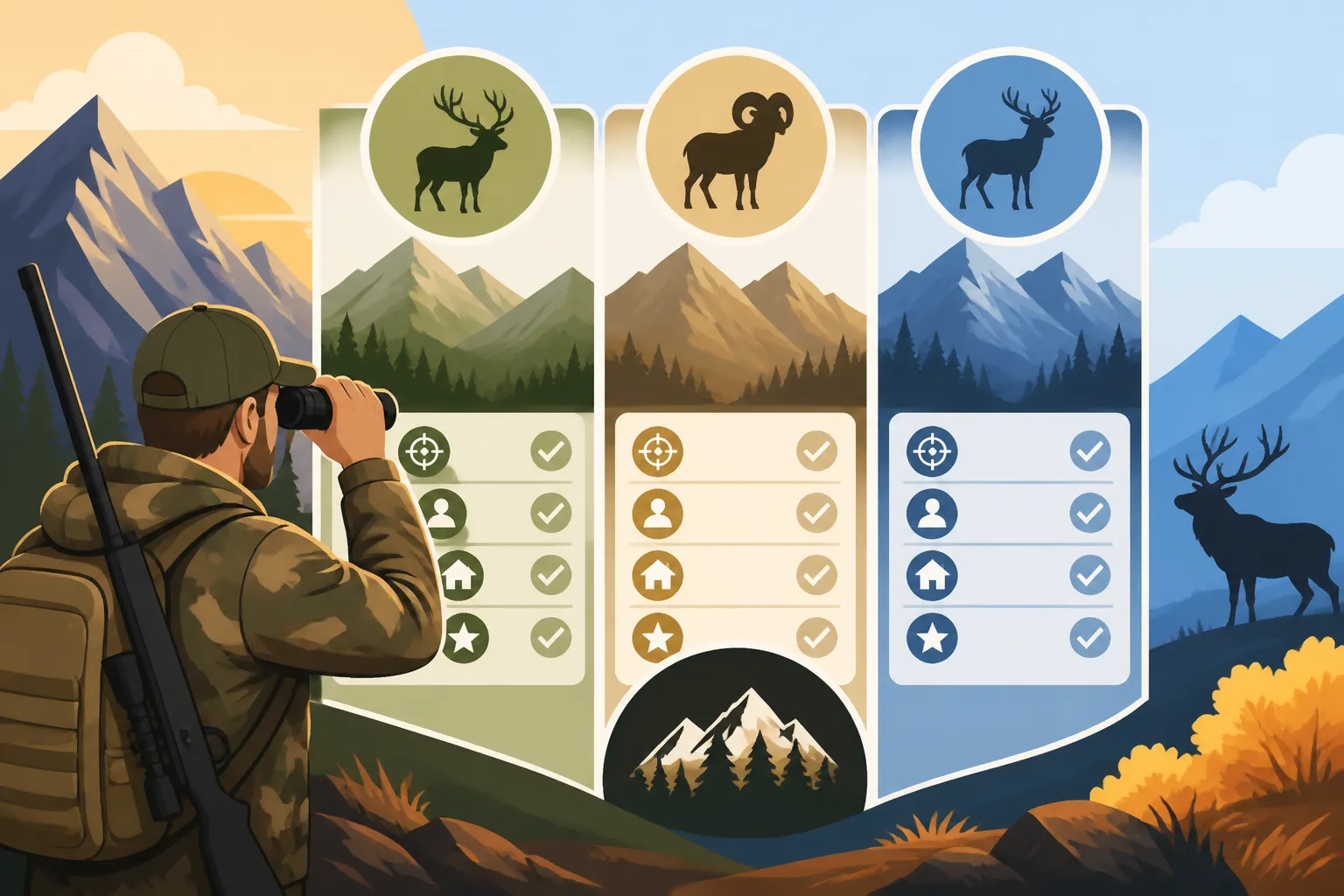
To help visualize the differences between popular guided hunt package types, here's a quick comparison:
| Feature | Fully Guided Hunt | Semi-Guided Hunt | Drop Camp Hunt |
|---|---|---|---|
| Guide Presence | Dedicated guide with you daily | Guide offers intel, occasional checks-ins | No guide present during the hunt |
| Lodging | Lodge, cabin, or established deluxe camp | Base camp (wall tent) or rustic cabin | Pre-set camp (tent, cots, stove) or bare site |
| Meals | Provided and prepared (often by a cook) | Sometimes provided, often shared responsibility | Your responsibility (bring & cook own food) |
| Field Transportation | Provided (trucks, horses, ATVs) | Provided to general area, often self-navigated | Pack-in/pack-out only (horses/mules) |
| Hunting Strategy | Primarily led by guide | Your responsibility with outfitter's input | Entirely your responsibility |
| Game Retrieval | Fully assisted | Some assistance, often shared effort | Entirely your responsibility |
| Cost (Relative) | Highest | Medium | Lower (after initial pack-in fee) |
| Ideal For | First-timers, convenience-seekers, specific trophy hunts | Independent hunters, some Western experience | Experienced backcountry hunters, budget-conscious |
Disclaimer
Please remember that hunting regulations, season dates, and tag availability in Colorado can change. Always verify the most current information with Colorado Parks and Wildlife (CPW) directly before making any plans or financial commitments. This guide is for informational purposes only and does not constitute professional advice.