Colorado Plains Rifle Season Dates and Rules
Trying to navigate Colorado’s hunting seasons can feel like deciphering an ancient scroll, especially when you step away from the well-trodden mountain elk units and look to the vast, often misunderstood, eastern plains. Hunters often struggle to pin down exact dates, weapon rules, and the crucial details for securing a tag in these unique landscapes. This guide is here to untangle the complexities of the Colorado Plains Rifle Season, providing clear insights into dates, rules, and how to successfully plan your hunt for species like deer and pronghorn.
Understanding Colorado's Plains Rifle Season
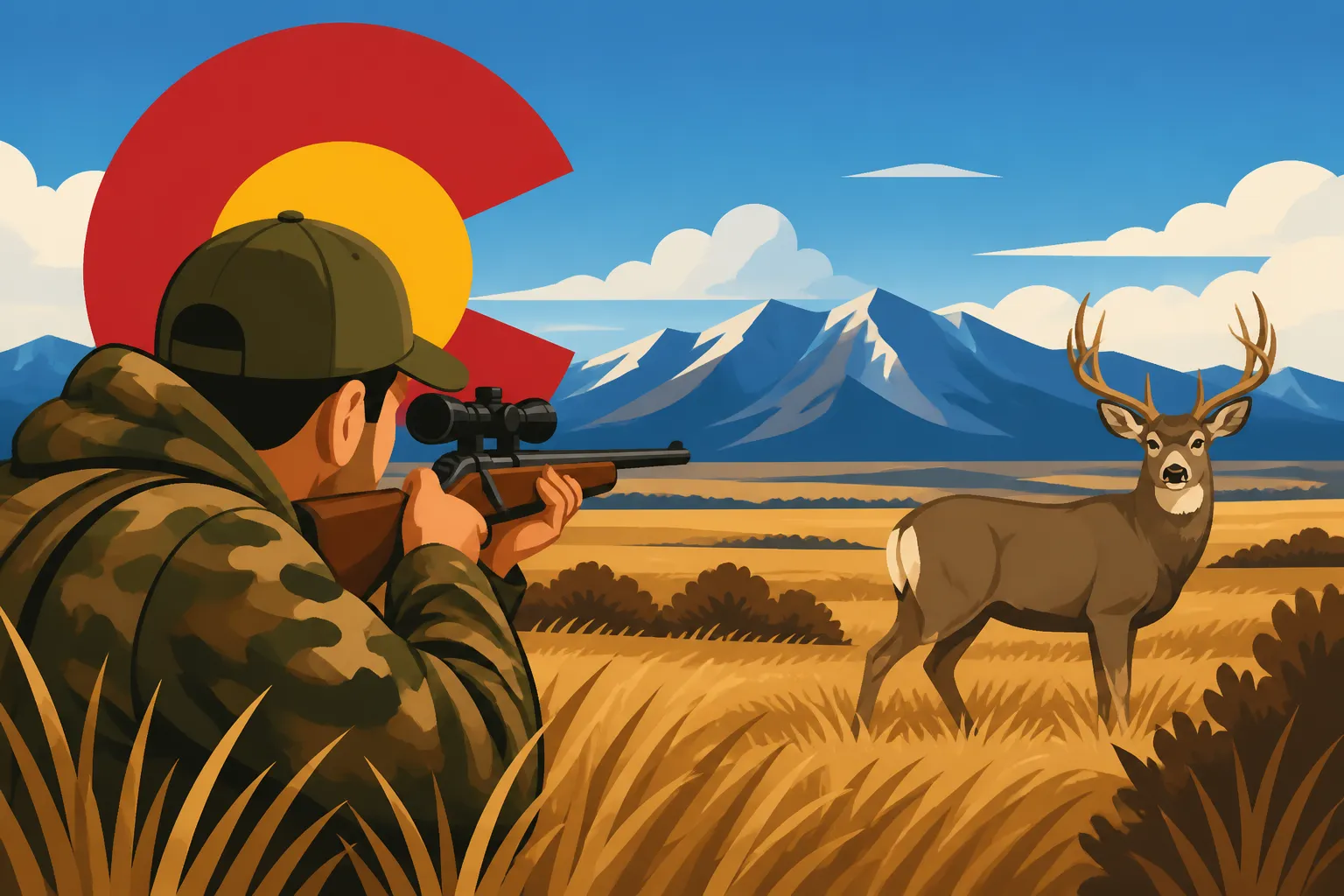
The Colorado Plains Rifle Season is a distinctive period, offering hunters a different kind of challenge and experience than the state's famous mountain hunts. While many dream of chasing elk through the high country, the plains offer fantastic opportunities for mule deer, whitetail deer, and pronghorn in a vast, open, and often wind-swept environment. However, this unique geography comes with its own set of rules, timelines, and considerations that are vital to understand before you even think about packing your rifle.
What Makes the Plains Rifle Season Unique?
First off, let's talk geography. The "plains" in Colorado typically refer to the eastern half of the state, a region characterized by expansive grasslands, rolling hills, agricultural fields, and riparian corridors along rivers like the South Platte and Arkansas. This is a stark contrast to the dense timber and steep elevations of the Rocky Mountains. As such, the hunting pressure, tactics, and even the behavior of the game animals themselves are vastly different. You’re less likely to be still-hunting deep timber or calling elk and more likely to be glassing vast distances, employing long-range shooting skills, and focusing heavily on securing access.
Species on the plains include healthy populations of both mule deer and whitetail deer, which often thrive in the agricultural interfaces and river bottoms. Pronghorn, with their incredible eyesight and speed, are another primary draw, offering a truly open-country hunting experience. The tactics for pursuing these animals often revolve around spotting and stalking in open terrain, making optics and shooting proficiency at extended ranges paramount. Unlike some mountain units where Over-The-Counter (OTC) elk tags are available, most quality plains hunting for deer and pronghorn requires drawing a limited license, which means understanding the application process is critical.
Key Season Dates and Structures
The Colorado Plains Rifle Season dates are typically structured around the general rifle seasons but are specifically allocated for various plains Game Management Units (GMUs). While mountain rifle seasons for elk and deer usually run from late October into November, plains rifle seasons for deer and pronghorn can vary. Generally, you'll find rifle seasons for plains deer (both mule and whitetail) occurring in late October through mid-November, sometimes with multiple consecutive or overlapping seasons, much like the general rifle seasons in the mountains. For instance, specific GMUs might have a "Plains Deer Season 1" followed by "Plains Deer Season 2."
Pronghorn rifle seasons on the plains are often earlier, typically starting in late September or early October and running through October, again with specific GMU allocations. These earlier dates for pronghorn often align with cooler weather but before heavy snows, which can make field conditions more manageable. It's incredibly important to remember that these dates are subject to change annually by Colorado Parks and Wildlife (CPW). Always consult the current year's Big Game Brochure, available on the CPW website, for the precise dates for the GMU you’re interested in. Third-party resources like GoHunt also offer excellent tools to track season dates and unit specifics, helping you stay up-to-date with any changes.
Here’s a general overview of typical Plains Rifle Season date ranges, but remember to always verify with current CPW regulations:
| Species | Season Type | Typical Start Date | Typical End Date | Notes |
|---|---|---|---|---|
| Pronghorn | Rifle | Late Sept | Mid-Oct | Often specific to buck/doe, or either-sex tags. |
| Mule Deer | Rifle (Plains) | Late Oct | Mid-Nov | Specific to buck (antlered) or doe (antlerless) tags. |
| Whitetail Deer | Rifle (Plains) | Late Oct | Mid-Nov | Specific to buck (antlered) or doe (antlerless) tags. |
| Deer | Late Season (Plains) | Dec | Early Jan | Often for antlerless tags to manage populations, weather dependent. |
This table provides a snapshot, but GMU-specific variations are common. For example, some units might offer a late plains deer season in December or early January, often targeting antlerless deer for population control. These late seasons can be incredibly challenging due to winter weather but can also present unique opportunities as deer concentrate on remaining food sources.
Essential Rules and Regulations for Plains Rifle Hunting
Successfully hunting during Colorado's Plains Rifle Season isn't just about knowing when to go; it's about deeply understanding the regulations that govern how you can hunt. These rules are put in place to manage game populations, ensure fair chase, and promote hunter safety. Overlooking any detail could lead to a forfeited tag, or worse, legal trouble.
Licensing and Tag Acquisition
For almost all plains rifle deer and pronghorn hunting, you're looking at a limited license scenario, meaning you'll need to participate in the Colorado Draw System and Preference Points. This is a critical distinction from the general Over-The-Counter (OTC) elk tags available in the mountains. The primary draw deadline is typically in early April each year, and you must apply by this date to be considered for a plains deer or pronghorn tag. This means planning your hunt months in advance. Many hunters use resources like GoHunt's draw odds calculators to determine how many preference points they might need for a specific plains unit.
To even apply, you'll need to purchase a qualifying license and a Colorado Habitat Stamp. Non-residents face different allocations and costs compared to residents, so be sure to check the specific requirements for your residency status. After the primary draw results are announced (usually in June), any remaining licenses that weren't drawn might be available during the secondary draw or as "leftover tags" later in the summer. However, high-demand plains tags for quality bucks or pronghorn are rarely available as leftovers. Understanding Colorado Preference Points Explained is vital, as some plains units can take a significant number of points to draw, making it a multi-year strategy.
Weapon Restrictions and Ammunition
When it comes to the Plains Rifle Season, the name itself gives a big clue: you'll be using a rifle. Colorado has specific regulations regarding legal firearms for big game, which are consistent across the state, whether you're in the mountains or on the plains. For rifles, the minimum caliber permitted is .24 caliber (6mm), and it must have a minimum bullet weight of 70 grains and produce at least 1,000 foot-pounds of energy at 100 yards. This pretty much covers most common deer and elk calibers like .243 Winchester, .270 Winchester, .30-06 Springfield, .308 Winchester, and magnum cartridges.
It's also essential that your rifle fires a "soft-nosed" or expanding projectile. Full Metal Jacket (FMJ) bullets, often used for target practice, are illegal for big game hunting in Colorado because they do not expand reliably upon impact, which can lead to unethical wounds. While Colorado doesn't generally have magazine capacity restrictions for big game hunting with rifles, it's always wise to be aware of local ordinances, especially if hunting near populated areas or on specific private properties. Compared to Colorado Archery Elk Hunting Guide or Colorado Muzzleloader Hunting Guide, rifle hunting offers significantly different effective ranges and shot placement considerations, which are particularly relevant in the wide-open spaces of the plains.
Antler Point Restrictions and Species-Specific Rules
Colorado implements antler point restrictions (APRs) in many of its GMUs to help manage herd quality and buck-to-doe ratios. On the plains, these rules can vary. For deer, some GMUs might be "four-point or better" on one antler, meaning a buck must have at least four points on one side to be legally harvested. Other plains units may be "either-sex," allowing the harvest of any antlered buck regardless of point count, or even "antlerless" tags, specifically for does. It's paramount to know the specific APRs for your chosen GMU before you hunt. A legal buck in one unit might be illegal in an adjacent unit.
Pronghorn regulations also distinguish between buck and doe tags, with most high-demand units requiring a drawn buck tag. Doe (antlerless) pronghorn tags are typically easier to draw, or sometimes even available as leftovers, and are excellent for meat hunters or those looking to build points while still getting to hunt. Always double-check your tag to ensure it matches the animal you're pursuing – an antlered deer tag won't allow you to harvest a doe, and vice-versa. While you're primarily targeting deer and pronghorn, it's also important to know that certain plains units might have opportunities for species like coyotes or small game, but these require different licenses and fall under different rules. For a complete understanding of different species and their unique rules, you might find the Colorado Big Game Species Guide helpful.
Navigating Access and Hunter Ethics on the Plains
One of the biggest realities, and often frustrations, for hunters interested in the Colorado Plains Rifle Season is the vastly different land ownership landscape compared to the mountainous public lands. The eastern plains are predominantly private, which fundamentally changes how you approach and plan your hunt.
Public vs. Private Land: A Crucial Distinction
Unlike the vast expanses of National Forest and BLM land found in Western Colorado, the eastern plains are overwhelmingly privately owned, often by ranchers and farmers. This means that securing landowner permission is not just a polite request; it's a legal necessity. Hunting on private land without explicit permission is trespassing and carries serious legal consequences, including fines, loss of hunting privileges, and even confiscation of equipment. This reality often catches out-of-state hunters by surprise, as they might be used to more readily available public access in other areas.
Don't despair, though. While challenging, public access does exist. Colorado offers several programs to increase access on private and state lands. The Colorado Walk-In Access Program (WIA) opens up tracts of private land to public hunting through agreements with landowners, often for specific seasons and species. State Trust Lands (STL) also offer hunting opportunities, but usually require a valid hunting license and often a separate State Trust Land Public Recreation license. Always check the specific regulations for each STL parcel, as some may have unique restrictions.
To navigate this complex checkerboard of public and private land, tools like onX Hunt or GoHunt Maps are invaluable. These mapping applications allow you to clearly see property boundaries, landowner names, and identify public land pockets like State Wildlife Areas (SWAs), BLM parcels, or WIA properties. This "e-scouting" is absolutely crucial for a successful plains hunt, allowing you to identify potential hunting grounds and research landowner contact information long before you ever set foot in Colorado. When planning your hunt, consider starting with the Colorado Public Land Hunting Guide to understand the broader framework.
Understanding GMUs on the Plains
Colorado is divided into hundreds of Game Management Units (GMUs), and understanding their boundaries and characteristics is fundamental to plains hunting. On the plains, GMUs tend to be much larger geographically than their mountain counterparts, encompassing vast tracts of private agricultural land, rolling prairie, and occasional small towns. These units are often characterized by less dramatic topographical features, meaning finding "honey holes" often comes down to identifying critical resources like water, food plots (e.g., corn, alfalfa), and thick cover along riparian corridors or shelterbelts.
Choosing the right GMU for your plains rifle hunt involves more than just looking at draw odds; it also means considering the availability of public access within that unit or the feasibility of obtaining private land permission. A GMU might have excellent deer populations and high draw odds, but if it's 99% private land and you can't secure permission, that tag is essentially worthless. This is where the Colorado Hunting Atlas Explained becomes your best friend. It's an interactive map provided by CPW that shows land ownership, GMU boundaries, and designated public access areas, helping you select a unit where you can actually hunt. Spend significant time researching your chosen GMU, looking for a balance of good game populations, reasonable draw odds, and realistic access options.
Planning Your Plains Rifle Hunt
A successful plains rifle hunt in Colorado demands meticulous planning, perhaps even more so than a mountain hunt due to the unique challenges of access and terrain. From researching draw odds to understanding the nuances of open-country hunting, every detail matters.
Researching Draw Odds and Unit Selection
As discussed, most quality plains deer and pronghorn tags are limited and require participation in the draw. This means you need to be strategic about which GMUs you apply for. CPW publishes annual draw reports that show the number of applicants, tags available, and the minimum number of preference points required to draw a tag in previous years. These statistics are your best friend. Resources like GoHunt's Insider platform specialize in compiling and analyzing this data, providing invaluable insights into drawing odds and unit quality.
When selecting a unit, consider your goals. Are you looking for a trophy animal, or primarily interested in a meat hunt? Trophy units, especially for mule deer and whitetail bucks, often require many preference points, sometimes 5-10 or more for non-residents, and even several for residents. If you're point-poor, focus on units with higher draw odds, which might mean a lower trophy potential but a much better chance of drawing a tag and getting out to hunt. Some units might offer easier-to-draw antlerless tags, which can be a great way to gain experience and fill the freezer while continuing to build points for a trophy tag. Understanding How Many Preference Points for Colorado Mule Deer or How Many Preference Points for Colorado Pronghorn is an excellent starting point for your research.
Practical Considerations for Plains Hunting
Once you've drawn a tag for the Colorado Plains Rifle Season, the real planning begins. Scouting is paramount. While physical scouting is ideal, especially for securing private land permission, digital scouting using satellite imagery and plat maps (often found in mapping apps) is crucial. Look for natural funnels, cover provided by creek bottoms, shelterbelts, and edges of agricultural fields where deer and pronghorn might travel or bed. Identifying water sources is also key, especially for pronghorn.
The weather on the plains can be brutal and unpredictable. Expect significant wind, which can make long-range shooting challenging and amplify cold temperatures. Snow is common in late fall and winter, which can drastically alter animal movement and access to dirt roads. Your gear needs to reflect this:
- Optics: High-quality binoculars (10×42 or 12×50) and a spotting scope are indispensable for glassing vast distances. A rangefinder is non-negotiable for ethical shot placement in open country. Check out our guide on Best Optics for Colorado Big Game for recommendations.
- Rifle & Ammo: Practice shooting at extended ranges from various field positions. A flat-shooting rifle and reliable, expanding ammunition are critical.
- Clothing: Layers are your friend. Windproof outer layers are a must.
- Vehicle: Four-wheel drive is often necessary, especially if snow or mud is a possibility.
- Navigation: A GPS device or mapping app like onX is essential for staying within legal boundaries and on public access. You can learn more about how to use these tools in How to E-Scout Before a Colorado Hunt.
Remember, plains hunting often involves significant driving between areas and glassing from vehicles, followed by long stalks on foot. Being physically prepared to cover ground quickly and quietly is important, even if the terrain isn't as steep as the mountains.
Disclaimer
Please remember that hunting regulations and season dates can change annually. While this guide provides comprehensive information, it is your responsibility to consult the most current Colorado Parks and Wildlife (CPW) regulations and official big game brochures before planning and embarking on any hunt. This content is for informational purposes only and does not constitute legal advice. Always prioritize safety, ethical hunting practices, and respect for wildlife and landowners.