How to Choose a Colorado Hunting Unit
You open the Colorado big game brochure, see a map carved into well over a hundred Game Management Units, and freeze. Which one has elk, which one can you draw, and which one will be a parking lot full of trucks on opening morning? Picking a unit is the decision that shapes everything else. This guide gives you a clear, step-by-step way to choose.
Start With Your Goals and Your Points
Before you look at a single map, decide what kind of hunt you want. A unit that is perfect for a trophy hunter with years of preference points is a poor choice for a first-timer who just wants a fair chance at any legal elk.
Define What Success Means
Ask yourself a few honest questions. Are you hunting for meat, a mature bull, or simply the experience? Do you want a backcountry trip or a hunt you can drive to each morning? How many days can you hunt, and how fit are you at high elevation? Your answers narrow the field quickly.
A meat hunter might look for units with strong cow tag availability and road access. A trophy hunter might target limited units with low hunter numbers and older bulls. A first-timer might pick a unit with good elk numbers, decent access and manageable terrain. If you need a refresher on how units are organized, see Colorado Hunting Units (GMUs) Explained.
Know Where You Stand in the Draw
Colorado allocates many big game licences through a draw that uses preference points. Some units can be drawn with zero points, while others take many years. Before you fall in love with a unit, check how many points it takes to draw the hunt code you want. The system is explained in Colorado Draw System and Preference Points.
Draw results change each year as demand shifts. Look at several years of draw recaps rather than one year alone, and pay attention to the difference between resident and nonresident odds. For unit-level numbers, see Colorado Elk Draw Odds by Unit.
Consider Over-the-Counter Options
For elk, some seasons and units have offered over-the-counter licences that do not require a draw. These hunts are popular and often crowded, but they let you hunt every year. Rules on which seasons and hunters qualify for OTC licences have changed in recent years, so always confirm availability in the current brochure. The basics are in Colorado OTC Elk Units Explained.
Research Unit Data
Once you know your goals and your draw position, it is time to dig into the numbers.
Harvest Statistics
Colorado Parks and Wildlife publishes harvest statistics by unit and season, including the number of hunters, harvest and success rates. Look for units with consistent success rates over several years rather than a single spike. Remember that success rates reflect hunter effort, access and weather as well as elk numbers.
Pay attention to hunter numbers. A unit with high success but thousands of hunters may feel crowded. A unit with moderate success and fewer hunters may offer a better experience.
Herd Population and Bull to Cow Ratios
Elk herds are managed in larger herd units, often called Data Analysis Units, which can include several GMUs. CPW publishes population estimates and bull to cow ratios for these herds. Higher bull ratios often mean more mature bulls and more rut activity.
Population trends matter too. A herd that is growing or stable is a better bet than one in decline. Read herd management plans if you want deeper insight.
Using Research Tools
Research tools make this much easier. GoHunt compiles draw odds, harvest data and unit profiles in one place, which saves a lot of time compared with digging through spreadsheets. onX Hunt helps you see land ownership, roads, trails and terrain. Many hunters use both, along with CPW’s own data, to build a short list.
| Data Point | Where to Find It | What It Tells You |
|---|---|---|
| Draw odds | CPW draw recaps, GoHunt | How many points you need |
| Harvest success | CPW harvest statistics | How often hunters fill tags |
| Hunter numbers | CPW harvest statistics | How crowded the unit may be |
| Bull to cow ratio | CPW herd data | Quality and rut activity |
| Public land | onX Hunt, BLM and Forest Service maps | Where you can legally hunt |
Evaluate Terrain and Access
Numbers only tell part of the story. The terrain and access shape your day-to-day hunt.
Public Land and Access
Most Colorado elk hunting happens on public land: national forests, BLM land and wilderness areas. Check how much public land a unit has and how easy it is to reach. Be careful with checkerboard land patterns and landlocked parcels that cannot be reached without crossing private property. Colorado State Trust Lands are not automatically open to hunting either; only parcels enrolled in public access programs are available, and they come with their own rules and dates. For tips, see How to Find Public Land in a Colorado GMU and How to Access Landlocked Public Land in Colorado.
Elevation and Terrain
Colorado units range from sagebrush flats to alpine basins above 11,000 feet. Steep, high country holds elk but demands fitness. Lower units can be easier to hunt but may hold fewer elk early in the season. Consider your fitness, age and experience when choosing. More detail is in How Elevation Affects Colorado Unit Choice.
Hunter Pressure and Roads
Units with many roads and trailheads often see heavy pressure. Elk respond by moving to steep, timbered or roadless areas. Look for areas at least a mile or two from roads, or wilderness areas with limited access. For more, see Best Colorado Units with Low Hunter Pressure.
E-Scouting and Building a Short List
With a few candidate units, it is time to e-scout.
Map Study
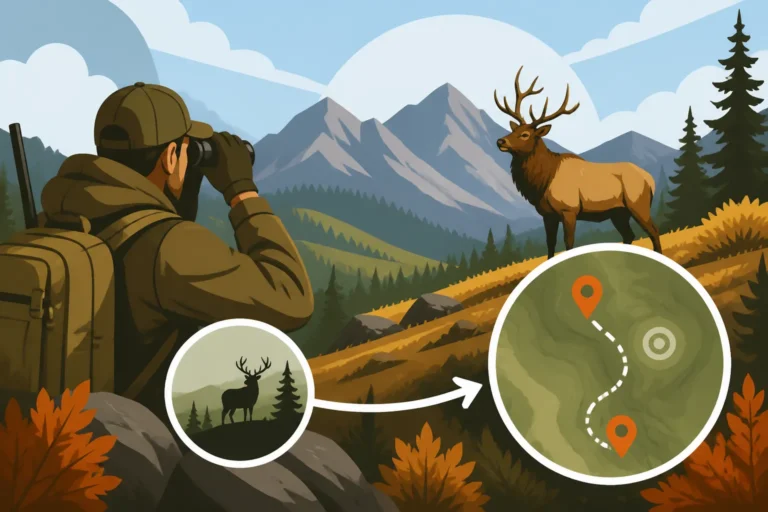
Use satellite imagery and topographic maps to find likely elk habitat: dark timber, north-facing slopes, benches, meadows and water. Identify access points, trails and possible camp locations. onX Hunt layers make this easier by showing land ownership and boundaries. A full process is in How to E-Scout Colorado Units.
Ground Truthing
If possible, visit your unit before the season. Hike trails, look for sign, and talk to locals and other hunters. Even a weekend scouting trip can reveal access issues or productive areas you would never find on a map. Look for rubs, wallows, tracks in muddy seeps and trails worn into the timber. Note which trailheads are busy on a summer weekend, because those are likely to be busy in the fall too.
Comparing Your Options
Build a short list of two or three units and compare them on draw odds, success rates, hunter numbers, public land and terrain. Choose the one that best fits your goals. Have a backup unit in mind in case access is blocked or elk are not where you expected.
Here is how that looks in practice. Imagine a Front Range resident with two preference points who wants a September bow hunt within four hours of home. Unit A can be drawn with zero points, has plenty of national forest, but posts high hunter numbers and modest success. Unit B takes two points, has a similar success rate, far fewer hunters and a large roadless area. Unit C is a trophy unit that takes many more points than the hunter has. Unit C is off the table, and Unit B wins on pressure, with Unit A as a solid backup if the draw falls short.
Special Considerations for Nonresidents
Nonresidents face different draw quotas, licence prices and OTC rules. Nonresident draw odds are often lower than resident odds in popular units. Plan for travel time, lodging and acclimation to elevation. For details, see Colorado Unit Selection for Non-Residents.
Planning Logistics
Consider how far the unit is from airports, towns and processors. A remote unit can be rewarding but adds logistical challenges. Make sure you have a plan for getting meat out and cooled. Think about where you will camp, whether a trailer or tent works at the elevation you plan to hunt, and how far you are willing to drive each day. A unit three hours from the nearest processor can turn a successful hunt into a scramble on a warm afternoon.
Getting Help
If you are short on time or experience, consider hiring an outfitter or guide who holds permits in your chosen unit. Ask about their success rates, hunter numbers and access. For trophy units, an outfitter can be especially valuable. Ask for references, confirm the outfitter is licensed with the state and holds the right permits for the land they hunt, and get the terms of any deposit in writing before you commit.
Putting It All Together
Choosing a unit is part research, part intuition. Use a simple process:
- Define your goals and timeframe.
- Check your preference points and draw options.
- Research harvest statistics and herd data.
- Evaluate public land, terrain and pressure.
- E-scout and, if possible, scout on the ground.
- Build a short list and pick a primary and a backup.
Revisit your choice each year. Draw odds, herd numbers and access change. With careful planning, you will find a unit that fits your goals and gives you the best chance of a successful Colorado hunt. For a deeper comparison of unit types, read Colorado Trophy Units vs OTC Units.
Disclaimer
This article is for general informational purposes only and does not constitute professional advice. Laws, prices and regulations vary by location and change over time. Consult a qualified professional for guidance on your specific situation.