Colorado Pronghorn Hunting for Beginners
Stepping into the world of Colorado pronghorn hunting can feel like trying to navigate a vast, flat ocean with no compass. You've heard stories of these incredibly fast, keen-eyed animals, often referred to as "speed goats," and the wide-open plains they inhabit. It's completely normal to feel a bit intimidated, wondering where to even begin with tags, gear, and strategies for a creature that seems to vanish into thin air. This guide is here to demystify Colorado pronghorn hunting for beginners, walking you through everything you need to know to get started, from understanding their habits to securing your tag and hitting the prairie with confidence.
Understanding Colorado Pronghorn
Pronghorn are unique North American animals, often mistakenly called antelope, but they are in a league of their own. They are built for speed and survival on the open plains, which means hunting them effectively requires understanding their natural adaptations and preferred habitats. Their eyesight is legendary, often compared to that of a human equipped with 8x binoculars, making spotting them before they spot you a crucial challenge.
Pronghorn Biology and Behavior
Colorado's pronghorn population thrives mostly on the eastern plains and in sagebrush basins in the western part of the state. These animals are grazers and browsers, meaning their diet consists of a mix of grasses, forbs, and shrubs. They prefer wide-open spaces, which allows them to use their incredible eyesight to detect predators from a long distance. When spooked, they can reach speeds up to 60 miles per hour, making a chase practically impossible for a human hunter. This is why understanding their patterns and anticipating their movements is far more effective than trying to pursue them directly.
Their daily routine often involves feeding during cooler parts of the day, typically mornings and evenings, and resting or bedding down during the warmer midday hours. However, unlike deer or elk that might seek thick cover, pronghorn will often bed down in shallow depressions or behind low sagebrush, still maintaining a panoramic view of their surroundings. Wind is another critical factor; they almost always feed and travel into the wind, or at least quartering into it, to optimize their sense of smell for detecting threats. Being aware of these behaviors, as detailed in our guide on Colorado Pronghorn Behavior and Biology, can significantly improve your chances of locating them.
Where to Find Pronghorn in Colorado
When it comes to finding pronghorn in Colorado, you're primarily looking at two distinct geographical regions: the expansive Eastern Plains and the more arid, sagebrush-filled basins of Western Colorado, particularly around areas like the San Luis Valley or parts of Moffat County. On the Eastern Plains, counties like Yuma, Washington, Lincoln, and Elbert are prime territory. These areas are characterized by vast stretches of private agricultural land interspersed with significant blocks of public land, often managed by the Bureau of Land Management (BLM) or State Trust Lands. Access is a huge consideration here, as much of the land is privately owned, making advanced scouting and permission crucial.
In Western Colorado, you'll find pronghorn herds in sagebrush country, where the terrain can be a bit more varied with rolling hills and draws. These areas also present a mix of public and private land. For beginners, focusing on areas with good public land access is often the most straightforward approach. Utilizing resources like the Colorado Hunting Atlas or online mapping tools such as onX Hunt is indispensable for identifying public land boundaries, roads, and potential access points. Many aspiring hunters find themselves overwhelmed by the sheer scale of the landscape, but with a good map and some pre-season scouting, either virtually or in person, you can pinpoint promising areas. Remember, "wide open" doesn't mean "barren"; pronghorn are often drawn to areas with specific forage and water sources, even if they appear sparse to the untrained eye.
Getting Started with Tags and Seasons
Navigating the tag system and understanding season dates can be one of the biggest hurdles for any new hunter in Colorado, and pronghorn are no exception. Colorado Parks and Wildlife (CPW) manages these resources carefully, and success often hinges on knowing the application process and what options are available.
Colorado Draw System and OTC Options
Unlike elk or deer, where over-the-counter (OTC) tags are common for archery and some rifle seasons, pronghorn tags in Colorado are almost exclusively allocated through a limited draw system. This means you need to apply for a tag during the application period, typically in March or April, and hope you get drawn. The draw system utilizes preference points, which are essentially loyalty points you earn if you apply for a tag and are unsuccessful. The more points you accumulate, the better your odds of drawing a desirable tag in future years. For a comprehensive dive into the system, check out our guide on Colorado Draw System and Preference Points.
Drawing a pronghorn buck tag can take several preference points, especially for units known for large animals or good public access. Doe tags, or "antlerless" tags, are often easier to draw and sometimes even available as leftover tags after the primary and secondary draws conclude. This makes doe tags an excellent option for beginners looking to gain experience and fill the freezer without the pressure of a trophy buck hunt. Websites and apps like GoHunt are incredibly valuable for researching draw odds, success rates, and the number of preference points required for specific Game Management Units (GMUs), helping you make informed decisions when applying. They compile data that can feel overwhelming to sift through on the CPW website alone, simplifying the process for a new hunter.
Key Season Dates for Pronghorn
Colorado offers several distinct seasons for pronghorn, each with its own characteristics and challenges. The primary seasons are archery, muzzleloader, and rifle. Understanding the timing of these seasons and what they entail is critical for planning your hunt.
Here’s a general overview of Colorado pronghorn seasons:
| Season Type | Typical Dates (Approximate) | Weapon | Key Characteristics |
|---|---|---|---|
| Archery | Mid-August to Mid-September | Bow | Early season, generally warmer, often coincides with the pre-rut, requires close-range skill. |
| Muzzleloader | Late September | Muzzleloader | Limited season, specific equipment requirements, typically follows archery. |
| Rifle | Early October | Rifle | Most popular, highest success rates, typically one to two weeks long. |
| Late Rifle | Late October to Mid-November | Rifle | Limited, often for doe tags, colder weather, potential for snow. |
Archery season, while challenging due to the pronghorn's keen senses and open habitat, offers a unique opportunity to hunt during the early stages of the rut, when bucks are more active. Muzzleloader season is short but can be productive, appealing to hunters who enjoy the challenge of traditional firearms. Rifle season is by far the most popular and generally offers the highest success rates, but it also often coincides with increased hunter pressure, especially on public lands. For the most up-to-date and exact dates, always consult the current year's Colorado Hunting Seasons Explained and specific CPW Big Game Brochure, as dates can shift slightly year to year. Selecting your season carefully based on your skill level and desired hunting experience is just as important as drawing the tag itself.
Essential Gear for Pronghorn Hunting
Hunting pronghorn effectively, especially as a beginner, isn't about having the most expensive gear, but rather the right gear. Given the open terrain and the animals' exceptional senses, certain items become non-negotiable for a successful and enjoyable hunt.
Optics: Your Most Important Tool
If there's one piece of gear to invest in for pronghorn hunting, it's good optics. Forget the latest fancy rifle or bow for a moment; you simply can't hunt what you can't see, and pronghorn country demands powerful viewing capabilities. You'll spend the vast majority of your time glassing wide-open landscapes, looking for tan and white specks that betray the presence of a herd, or the tell-tale black horns of a buck. A good pair of 10×42 or 12×50 binoculars is essential for scanning. Brands like Vortex, Leupold, and Zeiss offer excellent options across various price points.
Beyond binoculars, a spotting scope is highly recommended. Pronghorn often appear as tiny dots miles away, and a spotting scope with 15-45x magnification will allow you to discern if that dot is a rock, a doe, or a shootable buck without hiking miles just to check. It's also crucial for evaluating horn size and making ethical decisions from a distance. A sturdy tripod is a must for both your binoculars (with an adapter) and your spotting scope, as hand-holding at high magnifications is practically impossible for steady viewing. Learning How to Glass Big Colorado Basins is a skill that translates directly to pronghorn hunting, helping you systematically cover ground with your optics. Without solid optics, you'll be constantly on the move, burning daylight and energy, and likely spooking more animals than you locate.
Weapon Choices for Pronghorn
When it comes to selecting your weapon, Colorado's regulations allow for bows, muzzleloaders, and rifles, each with specific requirements. For beginners, a rifle is often the most forgiving option due to its effective range and ease of use.
For rifle hunters, a flat-shooting cartridge is highly advantageous given the often-long shot distances on the plains. Calibers like .243 Winchester, 6.5 Creedmoor, .270 Winchester, or .30-06 Springfield are popular and effective choices. Most importantly, practice, practice, practice at various distances, especially out to 300-400 yards, which are not uncommon shot opportunities in pronghorn country. Understanding How to Judge Distance in the Mountains or on flat plains and compensating for bullet drop are crucial skills.
Archery hunters face a significant challenge. Getting within bow range (typically 20-60 yards) of a pronghorn in open country demands exceptional stealth, patience, and often, specialized tactics like decoying or hunting waterholes. A reliable bow setup that you are proficient with is paramount. Muzzleloader hunters must contend with stricter regulations on projectile types and ignition systems, and also the limited range and slower reload times, adding another layer of challenge. Regardless of your weapon, ensure it's sighted in precisely, you're familiar with its capabilities, and you understand the ethical shot placement for pronghorn.
Clothing and Footwear Considerations
Hunting in Colorado, especially on the plains, means dealing with unpredictable weather. Early archery seasons can be scorching hot, with temperatures well into the 80s or 90s, while late rifle seasons can bring snow and freezing winds. Layering is key. Start with a good moisture-wicking base layer, add insulating layers, and top it off with a windproof and water-resistant outer shell. While camouflage patterns can be helpful for breaking up your silhouette, neutral earth tones are often sufficient. The key is to avoid bright colors that contrast sharply with the landscape.
Footwear is another critical component. You'll be doing a lot of walking, often over uneven, thorny, or rocky terrain. A comfortable, supportive pair of hiking boots that are well broken-in is essential. Look for boots with good ankle support and sturdy soles. Waterproofing is a bonus, especially if you encounter morning dew or unexpected rain. Avoid stiff, heavy mountaineering boots that are overkill for the plains, but also steer clear of flimsy athletic shoes that won't protect your feet. Proper socks, preferably wool or synthetic blends, will help manage moisture and prevent blisters, which can quickly ruin a hunt. Don't forget a wide-brimmed hat and sunglasses for sun protection, as the plains offer little natural shade.
Basic Hunting Strategies for Beginners
Pronghorn hunting isn't typically a sit-and-wait game. It's active and often involves covering significant ground, either on foot or by vehicle (where legally allowed), to locate animals and plan your approach.
Spot-and-Stalk Fundamentals
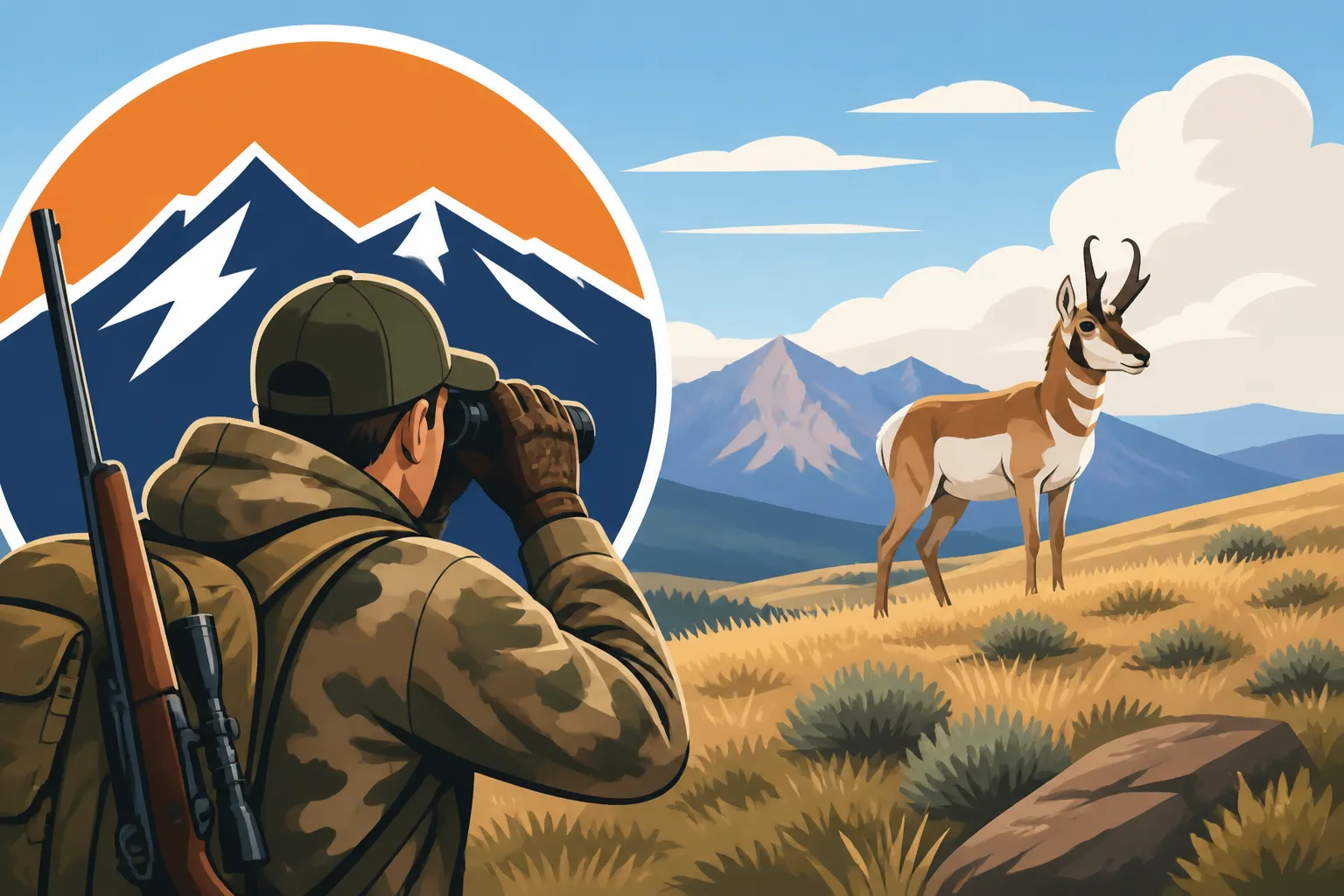
The spot-and-stalk method is the bread and butter of pronghorn hunting and will be your primary tactic. It combines extensive glassing to locate animals with a careful, calculated approach to get within shooting range.
Here’s how it generally works:
- Spotting: Find a high point or an advantageous position with a wide view. Use your binoculars and spotting scope to systematically scan the landscape, looking for pronghorn. Take your time; don't rush this step. It's amazing how many animals you'll miss if you're not meticulous. Pay attention to subtle movements, changes in color, or the glint of sun off a horn. Tools like GoHunt's maps can help identify potential high points or areas with good visibility and public access.
- Evaluating: Once you spot an animal, use your spotting scope to determine if it's a buck or a doe, and if it's a buck, evaluate its size. Also, assess the terrain between you and the animal. Are there draws, ridges, or sagebrush patches that can provide cover for an approach?
- Stalking: This is the most challenging part. Plan your route meticulously, using every available piece of cover to stay out of sight. Pronghorn have an uncanny ability to spot even the slightest movement. Always consider the wind direction, as pronghorn have an excellent sense of smell. You generally want to approach with the wind in your face or quartering. This often means making long detours to get into position. Move slowly, deliberately, and be prepared to crawl the last few hundred yards if necessary. A quiet, patient approach, as outlined in our guide on Spot-and-Stalk Pronghorn Tactics, is critical. Many stalks fail because hunters rush or don't respect the pronghorn's eyesight.
Decoying and Waterhole Tactics
While spot-and-stalk is dominant, other tactics can be effective, especially for archery hunters or when spot-and-stalk proves too difficult due to lack of cover or terrain.
Decoying: Pronghorn are naturally curious animals, especially during the rut. A full-body pronghorn decoy or a silhouette decoy, particularly a buck decoy, can sometimes draw in a wary buck. This tactic works best during the rut (late August into September) when bucks are territorial and aggressive. The hunter typically sets up the decoy to face away from the approaching buck, mimicking a rival entering its territory. The hunter then hides behind the decoy or nearby cover. This can be an exciting, heart-pounding method for archery hunters. Be aware that this tactic can also attract other hunters if they mistake your decoy for a real animal, so always take precautions, like wearing hunter orange on your person while stalking with a decoy. For more specific details, consider reading up on Colorado Pronghorn Decoying.
Waterhole Hunting: In arid environments, water sources are precious, and pronghorn need to drink regularly. Setting up a ground blind near a known waterhole can be a highly effective ambush strategy, particularly during dry years or periods of intense heat. This requires careful scouting to identify active waterholes and subtle blind placement to avoid alarming the animals. The wind is again crucial; you must ensure your scent isn't blowing towards the waterhole. This is a more passive approach, often requiring hours of patience, but it can pay off handsomely when other methods fail. You can learn more about this approach by searching for Colorado Pronghorn Water Holes. Always check private land boundaries carefully, as many prime water sources are on private property. Remember, ethical hunting always involves knowing your shot range and ensuring a clean kill.
Field Care and Regulations
Successfully harvesting a pronghorn is only part of the journey. Proper field care of the meat and adhering to Colorado's specific hunting regulations are crucial responsibilities for every hunter.
Field Dressing Your Pronghorn
Pronghorn meat is lean and delicious, but it can spoil quickly if not handled properly, especially in the warm temperatures often experienced during early season hunts. The moment your animal is down, the clock starts ticking.
- Safety First: Ensure the animal is truly deceased and handle your weapon safely.
- Bleed It Out: If possible, turn the animal onto its side and make a deep cut at the base of the neck, near the brisket, to sever the major arteries and allow it to bleed out. This cools the meat and improves its quality.
- Evisceration: Roll the animal onto its back. Make a shallow cut from the sternum to the pelvis, being careful not to puncture the intestines. Cut around the anus and then reach into the cavity to sever the esophagus and trachea. Roll the animal to allow gravity to assist in removing the guts. Be meticulous in removing all organs.
- Cooling: Once eviscerated, spread the cavity open to allow air circulation. If it's warm, pack the cavity with ice in game bags or cool the animal quickly by placing it in the shade or using a cooler. Getting the hide off and the meat into game bags as soon as possible is paramount. For detailed instructions on efficient field dressing and meat care, a resource like How to Quarter an Elk in the Field can offer transferable techniques, even if adapted for a smaller animal. Always carry multiple clean game bags to protect the meat from dirt, flies, and debris.
Important Colorado Regulations
Colorado has a robust set of hunting regulations designed to manage wildlife populations and ensure ethical hunting practices. As a beginner, it's your responsibility to know and follow all rules.
- License and Tags: You must possess a valid Colorado hunting license and the specific pronghorn tag for the GMU and season you are hunting. Tags are non-transferable.
- Hunter Orange: During rifle seasons, hunters are typically required to wear 500 square inches of solid fluorescent orange or pink material, visible from all directions, above the waist. This includes a head covering. Always double-check the current regulations as there might be specific exceptions or additional requirements for certain seasons or areas.
- Proof of Sex/Species: You must leave proof of sex (e.g., the head with horns for a buck, or an udder for a doe) naturally attached to the carcass until it reaches its final destination for processing or taxidermy. This helps wildlife officers ensure compliance with tag regulations.
- Private Land Access: Always obtain landowner permission before hunting on private land. This is not just courteous, it's the law. Violating private property rights can lead to significant penalties and loss of hunting privileges.
- Roads and Vehicles: Most public land regulations restrict vehicle use to designated roads. Off-road travel to retrieve game is often prohibited without specific authorization. Plan to pack your animal out on foot. Familiarize yourself with the Colorado Public Land Hunting Guide for general rules on access.
- Waste of Game: It is illegal to waste game meat. All edible portions of the pronghorn must be retrieved and taken from the field.
Always carry the most current CPW Big Game Brochure with you and consult the Colorado Hunting Atlas to verify GMU boundaries and public/private land ownership. Ignorance of the law is not an excuse, and adhering to these regulations ensures a respectful and legal hunt.
Disclaimer
Always consult the most current Colorado Parks and Wildlife (CPW) regulations and season brochures before planning any hunting trip, as rules and dates are subject to change annually. This guide provides general information and should not be considered a substitute for official CPW resources.