Colorado Sheep and Goat Hunting Explained
Chasing bighorn sheep or mountain goats in Colorado's rugged high country is often seen as the pinnacle of Western big game hunting. However, the extreme difficulty in drawing a tag, coupled with the immense physical and mental demands of the hunt itself, can leave many aspiring hunters feeling overwhelmed and unsure of where to even begin. This guide will meticulously break down everything you need to know about pursuing these majestic animals, offering realistic insights and practical advice to help you navigate the draw, prepare for the brutal terrain, and, if you're lucky enough to draw a tag, execute a successful and ethical hunt.
Understanding Colorado's Bighorn Sheep and Mountain Goats
Before you even think about applying for a tag, it's crucial to understand the animals you're pursuing. Bighorn sheep and mountain goats are creatures perfectly adapted to some of the most unforgiving environments on Earth, and their biology and behavior dictate much of how we hunt them.
Species Overview: Rocky Mountain Bighorn Sheep
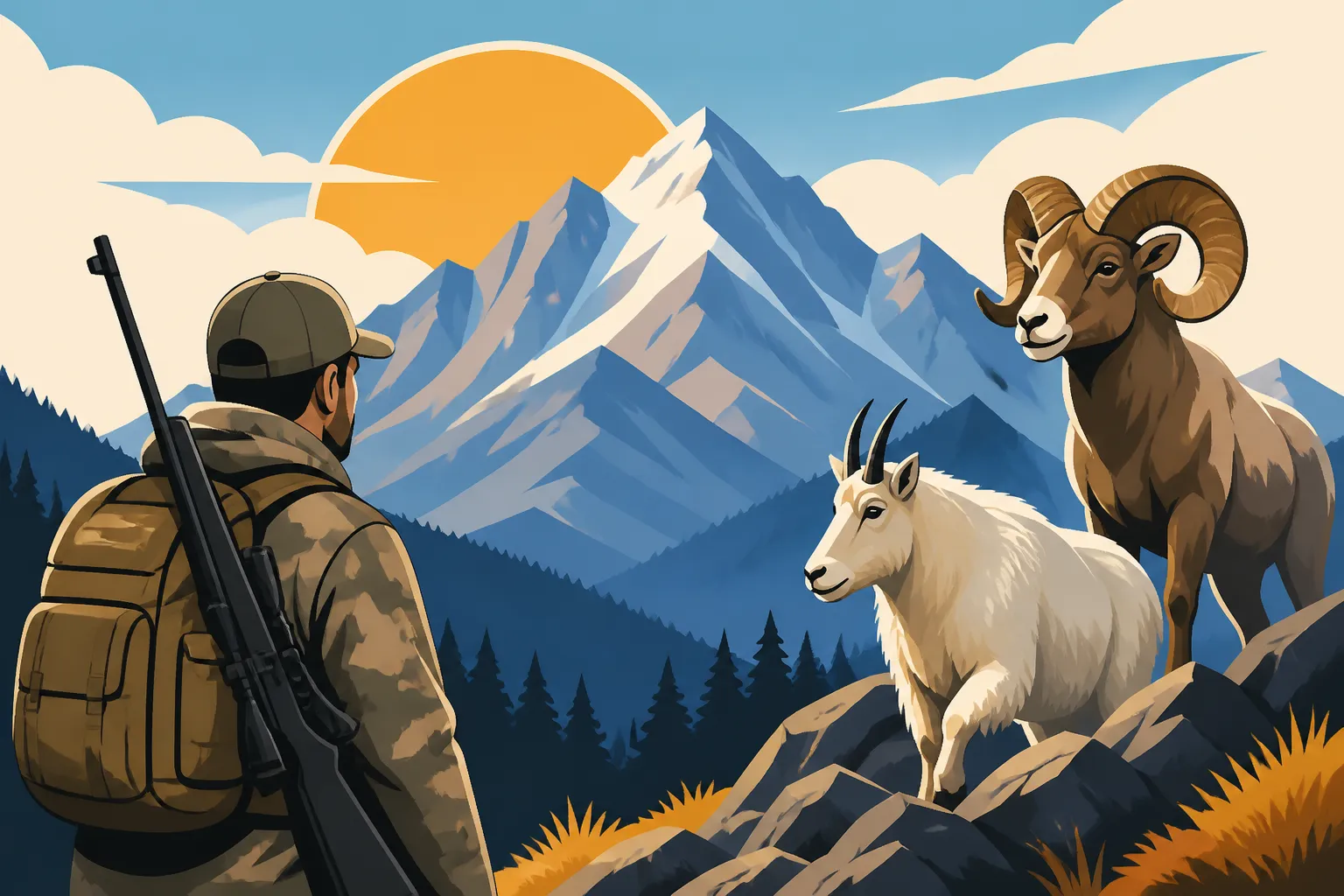
Let's talk about the kings of the crags: the Rocky Mountain Bighorn Sheep. These magnificent animals are known for their impressive, curling horns that can grow into full, heavy "full curl" trophies on mature rams. They're typically a reddish-brown to grayish-brown color with a distinctive white rump patch. You'll find them almost exclusively on steep, rocky slopes, cliffs, and alpine meadows at high elevations, typically between 8,000 and 14,000 feet.
Bighorns are incredibly social animals, usually living in gender-segregated groups for much of the year. Rams form bachelor herds, while ewes, lambs, and younger rams form nursery herds. This social structure can be a blessing and a curse for hunters; finding one might mean finding several, but it also means many more eyes and ears to contend with. Their eyesight is legendary, often cited as being comparable to 8-power binoculars in a human, making spotting them from a distance a necessary skill and approaching them an art form. Their primary defense is their ability to navigate seemingly impossible terrain with astounding agility, making a difficult stalk even more challenging.
Species Overview: Mountain Goats
Mountain goats, often confused with bighorns by the uninitiated, are a completely different animal, biologically speaking. They are true goats, characterized by their shaggy, pure white coats, long black horns that are typically thinner and spike-like (though they curve back slightly), and a distinctive "beard." While bighorns prefer rocky terrain, goats live on it. You'll find them in even more extreme, rugged, and precipitous landscapes, often higher than bighorns, well into the truly desolate alpine and subalpine zones, commonly above 11,000 feet.
Unlike bighorns, both male (billies) and female (nannies) mountain goats possess horns, though billies' horns tend to be thicker at the base and have a more pronounced curve. Goats are incredibly tough animals, renowned for their climbing prowess and ability to thrive in conditions that would kill most other creatures. They tend to be a bit more solitary than bighorns, though nannies and kids will form small groups. Billies, especially mature ones, are often found alone or in very small bachelor groups. Their white camouflage in snowy environments, combined with their incredible climbing ability, makes them incredibly difficult to locate and pursue.
Habitat, Behavior, and Seasonal Movements
Both species are inextricably linked to the high-alpine environment, but their specific niches differ. Bighorns, while living in steep country, often utilize adjacent grassy slopes for foraging. They're grazers, relying on grasses and forbs found in mountain meadows. Their movements are often dictated by forage availability and predator avoidance, meaning they will move to south-facing slopes in winter to find snow-free areas.
Mountain goats, on the other hand, are browsers and grazers, able to subsist on a wider variety of sparse alpine vegetation, including lichens and mosses, right on the edge of permanent snowfields. They are true masters of vertical terrain, rarely venturing far from the safety of cliffs and rock bands. Their coat provides incredible insulation, allowing them to withstand extreme cold.
Understanding these subtle differences in habitat and behavior is critical. In Colorado, a bighorn sheep hunt often involves glassing vast basins and ridgelines, looking for that telltale white rump patch, and then initiating a long, careful stalk across broken ground. A mountain goat hunt, conversely, might mean spotting a white speck against a towering cliff face, then enduring an even more grueling climb to get into position. Both hunts will test your physical and mental limits, but in slightly different ways.
Here's a quick comparison of these two high-country monarchs:
| Feature | Rocky Mountain Bighorn Sheep | Mountain Goats |
|---|---|---|
| Coat Color | Brownish-gray, white muzzle, white rump patch | Shaggy pure white |
| Horns | Large, curling, spiraling horns (primarily rams) | Black, slender, slightly curved spikes (both sexes) |
| Beard | Absent | Present |
| Habitat | Steep, rocky slopes, cliffs, alpine meadows (8,000-14,000 ft) | Extreme, precipitous cliffs, high alpine (11,000-14,000+ ft) |
| Social Structure | Social, gender-segregated herds | More solitary, nannies/kids in small groups, billies often alone |
| Diet | Primarily grazers (grasses, forbs) | Browsers and grazers (alpine vegetation, lichens) |
| Defense | Eyesight, incredible agility, flight | Eyesight, unparalleled climbing ability, tenacity |
Navigating the Colorado Draw System for Sheep and Goats
Drawing a bighorn sheep or mountain goat tag in Colorado is notoriously difficult. It's often referred to as a "once-in-a-lifetime" opportunity, and for good reason – the odds are incredibly low. Don't let that deter you, though; someone always draws! The key is understanding the system, being realistic, and playing the odds smartly over many years. This isn't like drawing an elk tag; the competition is fierce, and the number of available tags is minuscule. To give yourself the best shot, you'll want to thoroughly understand the nuances of the Colorado Draw System and Preference Points.
The Rarity of Tags and Draw Mechanics
Colorado Parks and Wildlife (CPW) issues a very limited number of sheep and goat tags each year, often in the single or low double digits for many units. This scarcity is due to the smaller populations of these animals and strict management goals to maintain healthy herds. For non-residents, the allocation is even smaller, typically capped at a very low percentage of the total tags for any given unit. This means your non-resident odds might be in the tens of thousands to one for some units.
The draw system for sheep and goats is different from other big game species. For Rocky Mountain Bighorn Sheep, it's a weighted preference point system. You earn one preference point for each year you apply unsuccessfully. When you apply, the total number of points you have accumulated is squared, and that number represents your "draw entries." For example, 5 points give you 25 entries. This system favors those with more points, but it's not a pure preference point system where the highest points automatically draw. There's still a significant random component, meaning even with many points, there's no guarantee.
Mountain goats, however, are a pure random draw. There are no preference points for mountain goats. Every applicant, regardless of whether they're a first-time applicant or have been trying for decades, has an equal chance each year they apply. This means a new hunter has the same mathematical odds as a seasoned veteran with 30 years of applications under their belt. This can be frustrating for those who've been at it forever, but it also means you truly have a shot every single year you apply.
Strategies for Maximizing Your Odds
Given the extreme difficulty, how do you even approach the draw? First, you need to commit to playing the long game. For bighorns, accumulating points is the only way to significantly increase your chances, however small. This means applying consistently year after year, even if you don't plan to hunt that specific year, just to build points. Many hunters apply for 15, 20, even 30+ years before drawing a bighorn tag. Tools like GoHunt's Insider service are invaluable here, providing detailed draw odds and trend data that can help you identify units where you might have a slightly better chance at your current point level, or where point creep is less severe.
For mountain goats, since it's a random draw, the strategy is simpler: apply every year. You can't improve your odds beyond that. However, researching units with slightly higher tag allocations or those that might see less application pressure (though this is increasingly rare) can't hurt. Consider applying for "either sex" tags if available and your primary goal is just a goat, as these often have marginally better odds than "billy" specific tags.
Another strategy, especially for non-residents, is to look at the "List B" tags or secondary draws, though these are even rarer for sheep and goats. These leftover or reissued tags sometimes become available, offering another slim chance, often on a first-come, first-served basis or through a smaller, subsequent draw. Always keep an eye on the official Colorado Big Game Draw Deadlines to ensure you don't miss any application windows.
Key Deadlines and Application Process
Applying for a Colorado hunting license, especially for limited draw species like sheep and goats, requires meticulous attention to detail. The primary draw deadline for most big game species, including sheep and goats, is typically in early April. You must purchase a qualifying small game or fishing license before you can apply for big game preference points or tags. This is often an overlooked step that can disqualify an application.
The application process is entirely online through the Colorado Parks and Wildlife website. You'll need to create an account, purchase the necessary qualifying license, and then select your hunt codes. Each hunt code specifies the species, unit, sex, and season. For sheep and goats, you generally apply for a specific hunt code, and then you can also apply for a preference point if unsuccessful. It's vital to double-check all hunt codes and make sure you're applying for the correct species and units. Websites like GoHunt provide comprehensive application tools that can help streamline this process and reduce errors. Be aware of the fees involved: a non-refundable application fee, plus the full cost of the tag which is held on your credit card if you draw. If you don't draw, your money is refunded, minus the application fee.
Remember, the goal for most is to build points for bighorn sheep and simply take a yearly swing at mountain goats. The wait can be incredibly long, but the reward is a truly unique Colorado experience.
Essential Gear and Rigorous Physical Preparation
A sheep or goat hunt in Colorado is not for the faint of heart or body. These hunts take place in the most remote, rugged, and high-altitude terrain the state has to offer. Success, and more importantly, safety, hinge on having the right gear and being in peak physical condition. This isn't just a suggestion; it's a non-negotiable requirement. For anyone contemplating a hunt like this, studying a Colorado Backcountry Hunting Guide is a great starting point, as much of the advice on gear and fitness translates directly.
High-Country Gear Necessities
Forget your comfortable cotton clothes; this is extreme mountain hunting. Your gear needs to be lightweight, durable, and highly functional. Layering is paramount. You'll experience everything from scorching sun to torrential rain, hail, and snow squalls, often within hours. Start with a good base layer (merino wool or synthetic), add mid-layers for insulation (fleece or puff jacket), and top it off with a bomb-proof waterproof/breathable outer shell (jacket and pants). Brands like Kuiu, Sitka, and First Lite offer excellent systems designed for these conditions.
Footwear is arguably the most critical piece of equipment. You need sturdy, high-ankle mountain hunting boots that offer excellent support, traction, and waterproofness, especially when you consider how to move quietly through Colorado timber. Break them in well before your hunt! Pair them with quality merino wool socks to prevent blisters.
Your backpack needs to be able to carry everything you need for several days, including meat if you're successful. A pack with an external frame or a strong internal frame designed for heavy loads (70+ lbs) is essential. Think Kifaru, Mystery Ranch, or Stone Glacier. Don't skimp on a quality sleeping system (tent, sleeping bag, pad) appropriate for potentially freezing alpine nights, even in August or September.
Finally, don't forget the small but mighty essentials: a reliable headlamp with extra batteries, a first-aid kit, fire-starting supplies, water filtration system, plenty of high-energy food, a robust knife, and a repair kit for gear. Every ounce counts, but so does redundancy in critical items. For a full breakdown, check out a detailed Colorado Backcountry Hunting Gear List.
Training Your Body for Alpine Extremes
This cannot be stressed enough: you must be in phenomenal shape. Colorado sheep and goat hunts are often conducted at elevations between 10,000 and 14,000 feet, where the air is thin, and every step is a monumental effort. Acclimatization helps, but it doesn't replace months of dedicated physical training. If you want to know How to Physically Prepare for Colorado Elk, then double that effort for sheep and goats.
Your fitness plan should focus on endurance, strength, and mental fortitude. Incorporate long hikes with a weighted pack (mimicking your hunting pack, starting light and gradually increasing weight), stair climbing, and exercises that build core and leg strength. Simulate the vertical climb: find a steep hill or stadium stairs and go up and down repeatedly. Don't forget about altitude training; while full acclimatization takes weeks, you can improve your body's efficiency by training at higher elevations if accessible or focusing on high-intensity interval training.
The physical demands are compounded by the technical nature of the terrain. You'll be scrambling over talus fields, navigating steep snowfields, and climbing through rocky chutes. Good balance, agility, and strong ankles are crucial to prevent injuries. Remember, a fall in this environment can be catastrophic, and self-rescue or extraction is extremely difficult. Train not just to endure, but to thrive in these conditions.
Optics and Ethical Long-Range Shots
Optics are your most important tool, second only to your physical fitness. You'll spend countless hours glassing, and poor optics will lead to eye strain, missed animals, and frustration. Invest in top-tier binoculars (10×42 or 12×50) and a high-quality spotting scope (20-60x or 27-60x) on a sturdy tripod. This allows you to dissect distant slopes, identify animals, and more importantly, accurately judge them to ensure they meet legal harvest requirements. Being able to Glass Big Colorado Basins efficiently is a skill that takes practice.
Rangefinders are also critical, especially for the typically longer shots often presented in alpine environments. Combine this with a ballistic app on your phone or a ballistic turrets system on your rifle scope. For ethical long-range shooting, practice extensively from field positions, not just a bench rest. Practice shooting uphill and downhill at various ranges, understanding how bullet trajectory changes with angle. If you're going to attempt longer shots, you need to be absolutely proficient and confident in your rifle and your ability, especially given Colorado Long-Range Shooting Considerations. A wounded animal in this terrain is nearly impossible to recover, making precise shot placement paramount. Brands like Swarovski, Zeiss, Leica, and Vortex offer some of the Best Optics for Colorado Big Game.
Hunting Tactics and Ethical Pursuit in the High Country
Once you've drawn that coveted tag and put in the work to get in shape, the real adventure begins. Hunting sheep and goats is a chess match against animals that live in an environment that often seems to defy gravity. Success isn't guaranteed, but understanding the core tactics and upholding ethical standards will define your experience.
Spot-and-Stalk: The Core Method
The vast majority of sheep and goat hunting in Colorado is done via the spot-and-stalk method. These animals are simply too wary and live in terrain too open and rugged for other common hunting techniques like calling or treestands. It all begins with glassing. You'll spend hours, often days, behind your binoculars and spotting scope, systematically scanning every rock outcrop, every sliver of green vegetation, and every shadow on distant mountainsides. Being patient and thorough is key. Many hunters miss animals because they glass too quickly or don't scrutinize likely bedding areas.
Once an animal is spotted and identified as a legal ram or billy/nanny, the stalk begins. This is where the hunt often gets complicated and incredibly physical. The goal is to close the distance without being seen, heard, or smelled. This means using terrain features for cover, moving slowly and deliberately, and paying constant attention to the wind and thermals. In high-altitude environments, thermals often flow uphill in the morning and downhill in the evening, but micro-thermals can be unpredictable in broken terrain.
A successful stalk might take hours, involve thousands of feet of elevation gain and loss, and cover significant distances. Sometimes, you'll get within a reasonable shooting distance only for the animal to move, forcing a restart or a change in plans. It's a test of patience, physical endurance, and mental toughness. Think of it like trying to get close to a herd of elk, but on the side of a sheer cliff – it’s a whole different ballgame. For more on similar high-country tactics, read up on How to Hunt Elk at High Elevation.
The Art of the Stalk and Shot Placement
The stalk is an art form. Every step matters. When you're closing in, keep your profile low, move when the animal's head is down or it's looking away, and constantly re-evaluate the wind. The final approach to shooting distance can be the most nerve-wracking. Often, there's no perfect flat shooting rest. You might find yourself bracing against a rock, sitting on a steep incline, or even having to shoot from a prone position on unstable scree. This is why practicing various shooting positions during your physical training is so vital.
Shot placement on sheep and goats is critical. Their vitals are relatively small compared to their body mass, and their tough hides and heavy bone structure mean that a poorly placed shot can result in a wounded animal that disappears into impossible terrain. Aim for a double-lung shot, just behind the shoulder. For rams, be mindful of their heavy shoulder bones and the thick musculature that protects their vitals. For mountain goats, their shaggy hair can make judging the precise location of the vitals difficult; always aim for the center mass of the chest behind the front leg.
In these extreme environments, every effort must be made to ensure a clean, ethical kill. If you have any doubt about the shot, your ability to make it, or the recovery, pass. There will always be another opportunity (though it might be years away for sheep and goats!), but an unethical shot tarnishes the entire experience and is a disservice to these magnificent creatures.
Conservation and Responsible Hunting Practices
Hunting sheep and goats comes with a profound responsibility. These are incredibly special animals, and the privilege of pursuing them is reserved for a select few. As hunters, we are critical stewards of these populations. This means adhering to all regulations, including legal judging criteria for rams (often a 3/4 curl or specific horn length for youth hunters in some units, always check the current regulations), and ensuring a clean harvest.
Respect for the land and other users is also paramount. You will likely encounter hikers, climbers, and wildlife photographers in these areas. Be courteous, be a good ambassador for hunting, and understand that you are sharing these wild spaces. Minimize your impact by practicing Leave No Trace principles: pack out all your trash, bury human waste properly, and disturb the environment as little as possible. Your actions reflect on the entire hunting community. By upholding the highest ethical standards, we ensure that the tradition of sheep and goat hunting can continue for future generations.
Selecting a Unit and Overcoming Public Land Challenges
Drawing a sheep or goat tag is only half the battle. Once you have that tag in hand, the real work of planning your hunt begins. Choosing the right unit, understanding its terrain, and knowing how to navigate public land challenges are critical steps toward success. This is where your e-scouting skills will really be put to the test.
Researching and Choosing Your Dream Unit
If you've been putting in for years, you've likely applied for a specific unit or at least have a general idea of where you want to hunt. However, once that tag is drawn, it's time to dive deep. Start with the CPW website for official unit descriptions, harvest data, and population trends. This will give you a baseline understanding.
Next, leverage advanced mapping tools like onX Hunt, Gaia GPS, or CalTopo. These tools allow you to E-Scout Before a Colorado Hunt from the comfort of your home. You can analyze topography, identify potential bedding and feeding areas, locate water sources, pinpoint glassing knobs, and map out potential travel routes. Look for areas with steep, broken terrain for both species, but pay attention to vegetation differences – bighorns might utilize more grassy benches, while goats will be right in the rockiest, highest country. GoHunt's mapping and data layers can also provide invaluable insights into historical harvest locations and potential animal concentrations, giving you a serious edge in your unit research.
Consider access points. Are there trails, or will you be bushwhacking through dense timber or over exposed alpine tundra? How long will it take to get to likely sheep or goat habitat from the trailhead? Factor in elevation gain and distance. Don't be afraid to contact CPW biologists or game wardens for the unit. They often have invaluable insights into herd movements, habitat conditions, and potential challenges. However, remember they can't tell you exactly where to find an animal.
Accessing Remote Public Lands
The best sheep and goat hunting in Colorado often occurs in the most remote and challenging public land areas. This typically means designated wilderness areas, vast national forests like the White River National Forest or San Juan National Forest, or Bureau of Land Management (BLM) lands. These areas offer the solitude and undisturbed habitat that these animals prefer, but they also present significant logistical challenges.
Road access can be limited, requiring long hikes or even pack trips with horses or llamas to get into prime country. Be aware of private land inholdings or easements that might restrict access to public lands. Always verify property boundaries using your mapping apps. Some areas might have seasonal road closures, especially at higher elevations, which could impact your hunt plans if you're hunting early or late in the season.
Planning for an extended stay in the backcountry is crucial. You'll likely establish a base camp or a series of spike camps to hunt effectively. This ties directly back into your gear and physical preparation. You need to be self-sufficient and prepared for any eventuality, as help will be hours, if not days, away. Understanding the intricacies of How to Pack Into the Colorado Backcountry and How to Set Up a Colorado Drop Camp will be essential knowledge for this type of endeavor.
Coexisting with Other Outdoor Enthusiasts
Colorado's high country is a playground for many different outdoor enthusiasts, not just hunters. During the early archery and muzzleloader seasons (often when sheep and goat seasons run), you'll share the mountains with hikers, backpackers, climbers, and photographers. While some may understand and even appreciate hunting, others might not.
It's your responsibility to be a respectful and courteous representative of the hunting community. Avoid confrontational situations. If you encounter non-hunters, offer a friendly greeting. Keep your weapon safely handled and out of sight if possible, especially when in close proximity to others. Remember that these individuals have just as much right to enjoy the public lands as you do.
This can sometimes add another layer of complexity to a stalk. Imagine spending hours getting into position, only for a group of hikers to inadvertently walk through the area and spook your target animal. It's frustrating, but it's part of hunting in heavily used public lands. Patience, flexibility, and a calm demeanor are crucial when dealing with these situations. Adjust your plans, find another approach, or simply wait them out.
Post-Harvest: Field Care and Preserving Your Trophy
Congratulations, you've done it! You've drawn the tag, trained for months, endured the brutal hunt, and made an ethical shot on a Colorado sheep or goat. The hard work isn't over, though. The next few hours are critical for ensuring your hard-earned meat doesn't spoil and your trophy is preserved. This is where meticulous field care truly pays off, especially given the remote locations these animals inhabit.
Field Quartering and Packing Out Game
Unlike an elk or a deer, sheep and goats are smaller, but the terrain you're packing them out of is often far more challenging. You'll likely be many miles from the nearest road, traversing steep, uneven ground. Knowing How to Quarter an Elk in the Field will give you a good foundation, but the principles apply here: get the hide off, gut the animal, and break it down into manageable pieces as quickly as possible to allow the meat to cool.
Start by carefully removing the cape if you plan to get a shoulder mount. Make the necessary cuts around the neck and legs, taking extra care around the face and horn bases. Then, focus on the meat. Remove all four quarters, backstraps, tenderloins, and neck meat. Don't forget the rib meat if you desire it. Place the meat in breathable game bags immediately. This protects it from dirt, insects, and helps with cooling.
Packing out will be an arduous task. You'll likely need to make multiple trips or have a hunting partner to share the load. Remember, sheep and goats, especially larger rams and billies, can still weigh well over 150-200 pounds live weight, and packing out their meat, hide, and skull from 13,000 feet is no small feat. Distribute the weight evenly in your pack, secure it tightly, and take frequent breaks. Focus on safety and prevent falls, which can be devastating with a heavy load.
Protecting Your Trophy and Meat Quality
The horns of a bighorn ram or mountain goat are the pride of the harvest. Proper field care is essential to preserve their integrity and beauty. Once the head is caped, remove as much flesh and tissue as possible from the skull plate. This will prevent bacterial growth and "horn rot." If you're several days from a taxidermist, consider salting the cape heavily. For the skull, you can often just get it out of the field and to a professional taxidermist who will handle the skull plate and horns. Avoid getting the horns excessively wet or letting them sit in direct sun if you can help it.
For the meat, rapid cooling is paramount. The high altitude means cooler ambient temperatures, which helps, but direct sunlight and warm daytime temperatures can still cause spoilage. Hang the game bags in the shade, allowing air to circulate around them. If snow is available, you can carefully use it to cool the meat, but avoid direct contact for extended periods as it can "waterlog" the meat. Keep the bags off the ground to prevent insect and rodent access. If you have a longer pack out and warmer temperatures, you may need to consider How to Keep Elk Meat Cool in Warm Weather, using similar principles of airflow and shade. The goal is to get the internal temperature of the meat down as quickly as possible.
Post-Hunt Logistics and Compliance
Once you're off the mountain, don't forget the final steps. Colorado requires big game animals to be physically inspected and validated by CPW within five days of harvest for certain species, including sheep and goats. This typically involves bringing the animal (or at least the head and proof of sex) to a designated CPW office or checkpoint. Check your specific tag and the Colorado regulations for the exact requirements for your species. This inspection helps CPW gather valuable data on herd health, age, and harvest success, contributing to ongoing conservation efforts.
Be prepared for questions from game wardens, who often patrol popular access points during hunting season. They are there to ensure compliance and prevent poaching, which is particularly relevant for high-value species like sheep and goats. Have your license, tag, and proof of harvest readily available.
Finally, savor the moment. A Colorado sheep or goat hunt is a rare and profound experience, one that most hunters only dream of. The effort, the physical challenge, and the beauty of the high country will stay with you long after the hunt is over. Take pride in the animal you've taken and the ethical journey you've completed.
Disclaimer
Please remember that hunting regulations, season dates, and draw procedures are subject to change. Always consult the official Colorado Parks and Wildlife (CPW) website and current year's hunting regulations brochure for the most up-to-date and accurate information before planning any hunt.