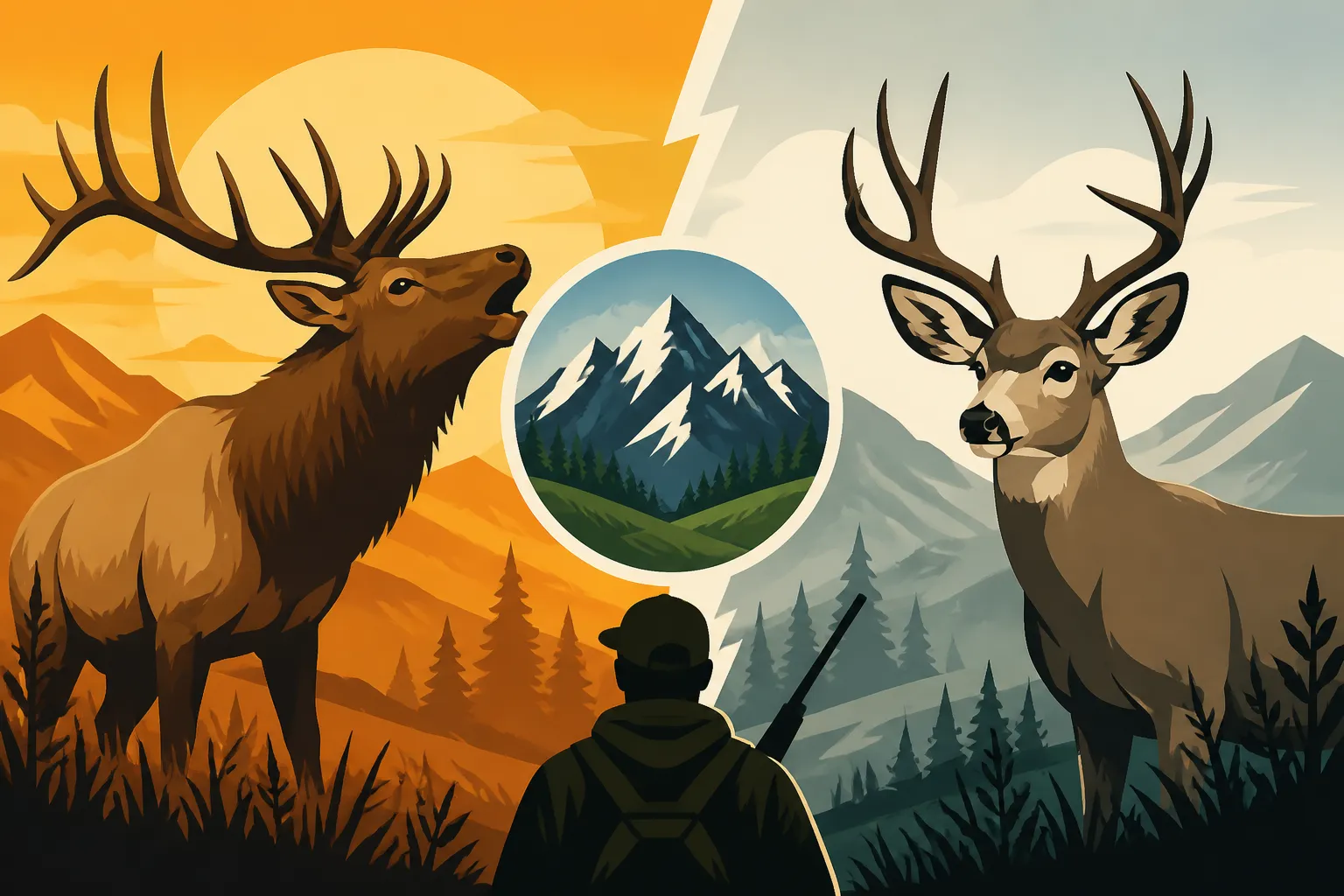
Colorado Elk vs Mule Deer Hunting
Embarking on a Colorado big game hunt is a dream for many, but often the biggest internal debate for hunters boils down to a single question: should I pursue elk or mule deer? Both species offer incredible challenges and rewards in the stunning Western landscape, but they demand vastly different strategies, physical preparations, and tag acquisition approaches. This comprehensive guide will meticulously break down the nuances of Colorado elk hunting versus mule deer hunting, empowering you to make the most informed decision for your next Rocky Mountain adventure.
Understanding the Game: Elk vs. Mule Deer Biology and Behavior
Before you even think about packing your gear, it's essential to understand the fundamental differences between these magnificent animals. Their biology and behavior dictate everything from where you'll find them to how you'll hunt them. They are both iconic symbols of the West, but they truly are creatures of different habits and habitats.
Size, Strength, and Speed Differences
When you first encounter an elk in the wild, its sheer size is often what strikes you most. Mature bull elk can weigh upwards of 700-1000 pounds, with cows typically ranging from 400-600 pounds. These are truly massive animals, built for traversing vast distances and living in herds. Their strength is undeniable, allowing them to push through dense timber and navigate steep, rugged terrain with surprising agility for their size. When spooked, an elk can run for miles, often moving with a powerful, ground-eating stride that seems tireless. The sheer volume of meat from a successful elk hunt also reflects their immense stature, making them a prime target for meat hunters.
Mule deer, on the other hand, are considerably smaller and built for a different kind of movement. A large mule deer buck might weigh 200-300 pounds, with does typically in the 120-180 pound range. Their distinguishing characteristic is their namesake ears, which are large and highly mobile, acting like radar dishes to pick up the faintest sounds. While they lack the brute force and sustained running power of an elk, mule deer are masters of agility in broken terrain. Their famous "stotting" or "pronking" gait – a four-legged bounce – allows them to cover uneven ground quickly and escape predators in short, explosive bursts. They are adept at using terrain and cover to disappear seemingly into thin air, making them incredibly challenging to track once they've been spooked.
Habitat Preferences and Elevation Ranges
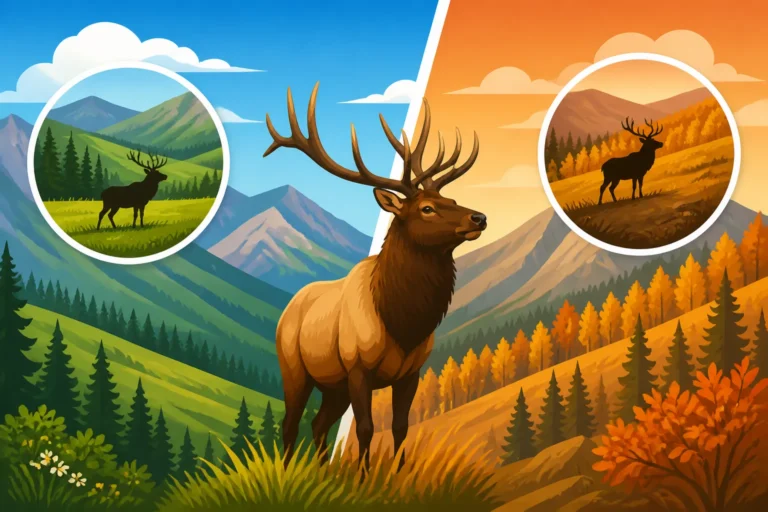
Elk are creatures of the high country, often preferring a mix of dense timber for security and bedding, and open parks or meadows for feeding. In Colorado, you'll typically find them in elevations ranging from 7,000 feet up to the timberline at 11,000-12,000 feet, and sometimes even higher during the summer months. They are highly migratory animals, often moving between summer and winter ranges, with these migrations being triggered by snow depth and forage availability. Dark timber, aspen groves, and north-facing slopes providing thermal cover are classic elk haunts. They are herd animals, and finding one often means finding many, though mature bulls may be solitary or in small bachelor groups outside of the rut. Understanding these migration patterns and knowing how to hunt elk at high elevation are crucial for success.
Mule deer are far more adaptable in their habitat preferences, and you can find them across a much broader range of elevations and landscapes in Colorado. While trophy bucks are often found in the high alpine basins during the summer, they also inhabit the lower Ponderosa pine forests, vast sagebrush flats of the Western Slope, and even the desert fringes. It's not uncommon to find mule deer in broken, rocky terrain with scattered piñon-juniper trees, or utilizing agricultural edges and river bottoms at much lower elevations than elk. Their ability to thrive in such diverse environments means that a mule deer hunter might be glassing wide-open sage country one day and still-hunting through dense Ponderosa timber the next. They tend to be less migratory than elk, often sticking to smaller home ranges, though they will shift elevations with changing seasons and snowpack.
Rutting Behavior and Vocalizations
The elk rut is an electrifying, unforgettable experience and arguably one of the most exciting times to hunt in Colorado. It typically occurs from mid-September through early October, reaching its peak around the last week of September. During this period, dominant bull elk become highly vocal, emitting bugles that echo through the mountains – a sound that can raise the hair on the back of your neck. These bugles are challenges to other bulls and invitations to cows. The entire herd dynamic shifts, with bulls rounding up harems of cows, fighting for dominance, and being less wary than usual. This makes calling tactics incredibly effective, as hunters can use cow calls, bugles, and even raking sounds to draw in curious or aggressive bulls. Knowing how to call elk in Colorado and specific techniques like how to bugle for Colorado elk or how to cow call Colorado elk can dramatically increase your success during this time.
Mule deer rutting behavior is far more subtle and less vocal than that of elk. The mule deer rut generally kicks off later, typically in late October and extending through November, peaking around mid-November. Bucks will begin to chase does, make scrapes, and rub their antlers on saplings and bushes, but you won't hear the loud, territorial vocalizations common with elk. Instead, mule deer hunters must rely more on keen observation, tracking sign, and understanding deer movement patterns. Bucks become focused on breeding, often covering more ground and becoming less cautious, which creates excellent hunting opportunities. However, you won't be actively calling bucks in with the same success as you might with an elk. Hunters often focus on patiently glassing large areas to spot cruising bucks or setting up ambushes along known travel corridors and feeding areas.
Tag Acquisition and Draw Odds: A Crucial Consideration
One of the most significant factors influencing your decision between hunting elk or mule deer in Colorado is the process of acquiring a tag. Colorado's draw system can be complex, and the odds for each species, and even specific units, vary wildly. This distinction often dictates whether a hunt is a once-in-a-lifetime draw or an annual tradition.
OTC vs. Draw Tags for Each Species
For many hunters, the appeal of Colorado elk hunting lies in its robust over-the-counter (OTC) opportunities. Colorado Parks and Wildlife (CPW) offers OTC elk tags for archery season (either-sex) and some rifle seasons (bull elk). This means you can simply purchase a tag without going through the draw, making elk hunting much more accessible, especially for non-residents or those with limited preference points. While these OTC units often see higher hunter pressure, particularly in the easily accessible areas, they still offer incredible opportunities for a DIY hunt. Understanding Colorado OTC Elk Tags Explained is fundamental for planning an accessible elk hunt.
Mule deer hunting in Colorado is a different beast entirely when it comes to tags. The vast majority of quality mule deer tags, especially for antlered bucks, are only available through the limited draw. There are very few, if any, general OTC opportunities for mule deer in Colorado, particularly for non-residents seeking a buck tag. This means that to hunt mule deer, you will almost certainly need to apply in the annual draw and accumulate preference points for several years, depending on the unit you're targeting. This makes mule deer hunting a much longer-term planning endeavor for most hunters.
Preference Point Accumulation and Strategy
Preference points are the currency of the Colorado draw system, and how you choose to use or accumulate them is paramount. For elk, while OTC options exist, many hunters still opt to apply for limited draw tags in specific units known for higher success rates or trophy potential. Building preference points can eventually get you into these premium units, significantly increasing your chances of success and the quality of the animals you might encounter. Some units might require just a few points, while others could demand double-digit points for a coveted bull tag. Hunters often strategically apply for points while hunting OTC elk in other units.
Mule deer hunting, particularly for quality bucks, almost always involves a preference point strategy. Most desirable mule deer units require a significant number of points to draw a tag, especially for non-residents. This means a hunter might spend anywhere from 3 to 15+ years accumulating points before drawing a desirable buck tag. It's a true long-game approach. Tools like GoHunt's Insider platform are invaluable for researching draw odds, unit statistics, and developing a preference point strategy for both species. They allow you to analyze the historical data, success rates, and points required to draw specific hunt codes, helping you decide whether to aim for a unit requiring many points or one that's more accessible. A deep understanding of the Colorado Draw System and Preference Points is critical for any serious mule deer hunter.
Non-Resident Challenges and Opportunities
For non-residents, the tag acquisition landscape for elk and mule deer presents distinct challenges and opportunities. Elk hunting in Colorado is comparatively more accessible for non-residents due to the OTC options available during archery and some rifle seasons. This allows non-residents to experience a Western elk hunt without the lengthy wait of the draw. Many non-residents plan their hunts around these OTC opportunities, knowing they can secure a tag annually. This creates a strong contingent of out-of-state hunters who regularly flock to Colorado for elk.
Mule deer hunting, however, is significantly more challenging for non-residents. With most buck tags being draw-only and a limited percentage of tags allocated to non-residents, drawing a quality mule deer tag often requires a substantial investment in preference points and many years of waiting. The costs associated with licenses and point accumulation for non-residents can also add up, making it a serious financial and time commitment. For a non-resident, the decision to pursue mule deer usually means committing to a multi-year plan and being prepared to wait, whereas an elk hunt can often be planned much closer to the season.
| Feature | Elk Hunting Colorado | Mule Deer Hunting Colorado |
|---|---|---|
| Average Weight | 400-1000 lbs (Cows-Bulls) | 120-300 lbs (Does-Bucks) |
| Primary Habitat | High-elevation timber, aspen, open parks, meadows | Diverse: High alpine, sagebrush, piñon-juniper, forests |
| Vocalization | Highly vocal (bugles, cow calls) during the rut | Mostly silent, subtle rut behavior |
| Tag Difficulty | OTC options available (archery, some rifle) | Almost exclusively draw, often requires many points |
| Hunter Pressure | Higher in OTC units | Variable, but premium units are limited-entry |
| Primary Methods | Calling, spot-and-stalk, still-hunting, ambushing | Extensive glassing, spot-and-stalk, still-hunting |
| Physical Demands | Generally higher, rugged terrain, heavy packs | Variable, can be high in alpine, lighter in lower areas |
| Trophy Focus | Bull (antlers/meat), Cow (meat) | Antler size often primary driver |
Hunting Methods and Tactics: Adapting Your Approach
Once you've secured your tag, the real work begins: putting boots on the ground. The methods you'll employ to find and hunt elk versus mule deer are quite distinct, requiring different skill sets, patience, and physical capabilities. Understanding these differences will help you prepare effectively for your chosen quarry.
Calling and Active Pursuits
Elk hunting, especially during the archery and early rifle seasons when the rut is active, can be an incredibly dynamic and interactive experience thanks to their vocal nature. Calling tactics are a cornerstone of Colorado archery elk hunting. Hunters utilize various calls – bugles, cow calls, chirps, and mews – to locate, attract, and often challenge bull elk. Aggressive calling can sometimes pull a bull right into your lap, creating heart-pounding close encounters. Beyond calling, active pursuits like spot-and-stalk hunting are also highly effective, especially when you can pinpoint a herd in an open park or basin. This involves carefully closing the distance, using terrain features to remain concealed, and setting up for a shot. Even ambushing known travel corridors between bedding and feeding areas is a popular and successful tactic.
Mule deer, in stark contrast, are generally not callable in the same way elk are. While some hunters report success with a fawn bleat or a subtle grunt during the rut, it's not a primary tactic. Instead, mule deer hunting relies heavily on a more methodical and often slower approach. The focus shifts dramatically to observation and stealth. Spot-and-stalk hunting remains a key method, but it's applied differently. You're typically not looking for an entire herd that might respond to a call; you're often targeting a specific buck or a small group. This means long periods of glassing are crucial, followed by an extremely cautious stalk. Techniques for still-hunting Colorado timber are more focused on moving silently and deliberately through habitat where deer might be bedded or feeding without drawing attention.
Glassing and Still-Hunting Strategies
Glassing is an indispensable skill for both elk and mule deer hunting in Colorado, but the application differs. For elk, you might spend hours glassing big Colorado basins from a high vantage point, searching for a herd moving through timber, grazing in a meadow, or even just the flick of an ear or the gleam of an antler in the shadows. Once located, a plan is formulated to move in. Still-hunting for elk involves slowly and quietly moving through dense cover, such as dark timber, where elk are known to bed during the day. This requires extreme patience, a keen eye for subtle signs like fresh tracks or droppings, and the ability to interpret wind and thermals. The goal is to surprise an elk in its sanctuary or intercept it moving between areas.
For mule deer, especially in more open, broken country, extensive glassing is often the primary hunting method. Hunters will find a vantage point overlooking vast expanses of sagebrush, scattered timber, or rocky slopes, and spend hours meticulously picking apart the landscape with high-quality binoculars and spotting scopes. The phrase "let your optics do the walking" truly applies here. The goal is to spot a bedded buck, perhaps just a patch of hide or an antler tip, before it spots you. Once a buck is located, a careful and often lengthy stalk begins. In timbered areas, how to still-hunt Colorado timber for mule deer involves an even slower pace than for elk, often taking 15-20 minutes to cover a mere 50 yards, looking for the tell-tale horizontal line of a deer's back or the white patch of its rump. Learning how to glass for Colorado mule deer is arguably the most important skill you can develop for pursuing this species.
Physical Demands and Backcountry Considerations
Colorado is synonymous with rugged, high-altitude terrain, and both elk and mule deer hunting will test your physical limits. However, elk hunting often demands a higher level of sustained physical exertion. Elk typically inhabit steeper, denser, and higher elevation country. Packing out a downed elk, especially a bull, is an incredibly arduous task, often requiring multiple trips over challenging terrain with hundreds of pounds of meat. Many elk hunters utilize pack animals or hire outfitters with pack strings to assist with meat retrieval, or meticulously plan how to pack out an elk in Colorado solo. Preparing for the physical demands, including altitude training for Colorado hunting and understanding how to physically prepare for Colorado elk, is non-negotiable for a successful and safe elk hunt. Many elk hunters opt for a Colorado backcountry hunting guide approach, venturing deep into wilderness areas where the game is less pressured.
Mule deer hunting can be equally demanding, especially if you're targeting high-country bucks above timberline. The pursuit of these alpine ghosts often involves steep climbs, long traverses, and navigating scree fields. However, mule deer are also found in more accessible areas at lower elevations, meaning the physical demands can vary more widely depending on your chosen unit and hunting style. While packing out a mule deer is still hard work, it's generally less physically taxing than packing out an elk. You might still consider how to pack into the Colorado backcountry for a high-country mule deer hunt, but it's less of a universal requirement than for elk. Regardless of the species, being in top physical condition is crucial for safety and enjoyment in Colorado's challenging mountains.
Gear, Logistics, and Overall Experience
Beyond the tactics, the gear you carry, the planning involved, and the overall feel of the hunt can differ significantly between chasing elk and pursuing mule deer. While there's overlap in essential western hunting gear, subtle distinctions can make a big difference in the field.
Essential Gear Differences and Similarities
For both species, high-quality optics are non-negotiable. You'll want excellent binoculars, and a spotting scope is almost mandatory for mule deer hunting where you're picking apart distant hillsides. For elk, a good pair of 10×42 or 12×50 binoculars will serve you well for locating herds and assessing terrain. For mule deer, however, a powerful spotting scope (20-60x or higher) and a solid tripod are often considered indispensable, allowing you to identify a specific buck and judge its size from extreme distances before committing to a stalk. Brands like Vortex, Maven, and Swarovski are popular choices among serious hunters.
Footwear and backpacks are critical for both, but the emphasis shifts slightly. For elk, given the often rugged and wet conditions and the sheer weight you might carry, extremely durable, waterproof boots with excellent ankle support are paramount. Think a stiff-soled boot like those from Kenetrek or Crispi. A larger, more robust pack (65-80L) is also recommended for elk, designed to comfortably carry heavy loads of meat and gear. For mule deer, especially if you're doing extensive glassing and lighter stalks, a slightly lighter but still rugged boot might suffice, and a slightly smaller pack (45-65L) could work, assuming you're not planning to pack out an entire elk's worth of meat. Still, having the best boots for Colorado elk hunting and a reliable backpack for a Colorado elk hunt is a good baseline for either species.
Weapon choice also varies somewhat. For elk, a powerful rifle caliber that can deliver ample energy for a clean kill on a large animal at varying ranges is key. Popular choices include .30-06 Springfield, .300 Win Mag, 7mm Rem Mag, and .308 Winchester, though many hunters are also successful with other calibers. For mule deer, while similar calibers are perfectly suitable, you might see hunters favoring slightly flatter-shooting cartridges like 6.5 Creedmoor or .270 Winchester, especially if long-range shots in open country are anticipated. Regardless of the species, knowing how to sight in for a Colorado elk hunt is critical, practicing at various distances and angles to prepare for mountain shooting.
The Solo Hunter vs. Group Dynamics
The decision to hunt solo or with a group often aligns with the species you pursue. Elk hunting, particularly in the backcountry, often lends itself well to group dynamics. Having multiple hunters can be incredibly advantageous for calling, especially when trying to "herd" a bull towards an archery shooter. More importantly, when a large animal like an elk is on the ground, having extra hands to assist with quartering, caping, and packing out the meat is invaluable. A team can shuttle loads more efficiently, reducing the overall time and physical strain. For a deep dive into hunting without a partner, check out the guide on How to Hunt Colorado Archery Elk Solo, which highlights the unique challenges and preparations required.
Mule deer hunting, while certainly enjoyable with a partner or small group, is often a more solitary endeavor by nature. The quiet, methodical process of extensive glassing and slow, deliberate stalks can sometimes be more effective with fewer people. A lone hunter or a pair can move more stealthily and make decisions quickly without needing to coordinate a larger group. When a buck is down, while it's still hard work, packing out a mule deer is typically manageable for one or two fit individuals. Many mule deer hunters cherish the solitude and intense focus that a solo or small-group hunt provides.
The "Trophy" Mindset and Realistic Expectations
Both elk and mule deer hunting in Colorado can evoke a "trophy" mindset, but the definition of a trophy might differ. For elk, any legal bull, whether it's a spike or a giant six-point, is often considered a trophy, especially for a hunter new to the West. The challenge of locating, calling, and harvesting such a powerful animal in its natural environment is a profound achievement. Beyond antlers, many hunters consider a cow elk hunt a highly rewarding experience, focusing purely on the substantial amount of organic, lean meat it provides for the freezer. The true trophy can often be the memory of the adventure itself.
For mule deer, the "trophy" conversation often leans more heavily towards antler size. A mature, wide-antlered mule deer buck is a highly coveted prize, known for its distinctive, symmetrical rack. Hunters often dedicate years of point accumulation and scouting to pursue a specific caliber of buck. The difficulty in drawing tags for trophy units and the elusive nature of mature bucks make them a sought-after quarry. However, it's crucial to temper expectations. Drawing a tag for a trophy unit doesn't guarantee a trophy buck, and success rates, even in premium units, can be lower than anticipated. Whether you're chasing antlers or simply the experience of a fair chase hunt, setting realistic expectations for both species is key to avoiding disappointment and truly appreciating the hunt.
Choosing Your Adventure: Which Hunt is Right for You?
Ultimately, the decision to pursue elk or mule deer comes down to your personal goals, experience level, available resources, and what kind of hunting experience you're truly seeking. Both offer unparalleled adventure in the Colorado wilderness, but they deliver it in different packages.
First-Time Colorado Hunter Considerations
For a first-time Colorado hunter, especially one new to Western big game, elk hunting often presents a more accessible entry point. The existence of Colorado OTC Elk Tags Explained allows you to purchase a tag without the complex draw system, enabling you to get out into the field relatively quickly. While still incredibly challenging, the vocal nature of elk during the rut can make them slightly easier to locate and interact with, providing more immediate action and a steeper learning curve in the field. There are many resources for Colorado elk hunting for beginners, including guided options and units with relatively high public land access. The sheer number of elk in Colorado also means that while success is never guaranteed, the odds of encountering animals are generally higher.
Mule deer hunting, particularly for bucks, can be a tougher proposition for a beginner. The draw-only nature of most tags means a multi-year commitment to preference points before you even get a chance to hunt. The subtle nature of mule deer, their incredible ability to blend in, and the extensive glassing required can be frustrating for those without prior experience. While not impossible, Colorado mule deer hunting for beginners often requires more patience and a higher level of fieldcraft from the outset. If you're looking to jump right into a Western big game hunt, elk is often the more immediate and potentially less frustrating choice for your first foray into Colorado's mountains.
Time, Budget, and Physical Fitness Alignment
Your available time, budget, and physical fitness are critical components in deciding between these two magnificent species. Elk hunting, particularly if you're doing a DIY backcountry hunt, demands a significant time commitment for scouting, hunting, and packing out. If you opt for a guided elk hunt, the costs can range from several thousand to over ten thousand dollars, depending on the outfitter and services. Physically, it's arguably the more demanding hunt, requiring peak fitness to navigate steep terrain, cover long distances, and handle heavy loads. For an extensive guide on preparing, consider reading How to Physically Prepare for Colorado Elk.
Mule deer hunting can be more flexible in terms of time and physical demands, depending on the unit and style of hunt. A high-country mule deer hunt will be just as, if not more, physically demanding than an elk hunt. However, if you're hunting lower elevation sagebrush country, the physical exertion might be less intense, though the mental game of glassing for hours remains. The budget for a mule deer hunt can also vary widely. While the tag cost itself might be lower than a fully guided elk hunt, the multi-year investment in preference points and the cost of traveling annually to apply can add up. Understanding Colorado hunting license costs and planning for the long haul is essential.
The Ultimate Colorado Challenge
Ultimately, both Colorado elk hunting and mule deer hunting offer their own unique set of challenges and rewards, each representing a quintessential Western hunting experience. The elk hunt is often seen as the iconic Western adventure: the thrill of a bugling bull, the camaraderie of a group packing out a heavy load, and the sheer scale of the landscape. It's a hunt that engages all your senses and tests your endurance.
Mule deer hunting, on the other hand, is often described as a more solitary, cerebral pursuit. It's about outwitting the "ghost of the Rockies," a cunning animal that masters its environment to evade detection. The reward comes from the meticulous planning, the hours spent behind glass, and the successful execution of a precise stalk on an animal that is often less forgiving of mistakes. Whether you choose the boisterous challenge of the elk or the silent pursuit of the mule deer, Colorado offers some of the finest big game hunting in North America. By understanding the distinct characteristics and demands of each, you can select the adventure that best aligns with your passion and capabilities.
Disclaimer
Please remember that hunting regulations, season dates, and draw odds in Colorado can change. Always consult the most current Colorado Parks and Wildlife (CPW) regulations and official resources before planning any hunt. This guide is for informational purposes only and should not replace official state wildlife agency information.