Colorado Black Bear OTC vs Draw Tags Explained
Hunting for black bears in Colorado can feel like navigating a complex maze of rules, seasons, and tag types. Many hunters, especially those new to the state or bear hunting in general, often get tangled up trying to figure out the difference between over-the-counter (OTC) tags and those obtained through the draw system. This guide will clarify these options, helping you understand when and how to pursue a Colorado black bear, ensuring you’re well-prepared for your next adventure.
Understanding Colorado's Black Bear Hunting Seasons
Before diving into tag types, it's crucial to grasp the general framework of Colorado's black bear hunting seasons. Unlike some other big game, bear hunting here is intertwined with other species seasons, primarily elk and deer. This can add a layer of complexity, but it also provides unique opportunities for hunters who are already in the field for other game. The Colorado Parks and Wildlife (CPW) meticulously designs these seasons to manage bear populations effectively and minimize conflicts with humans, especially given the state's growing human population expanding into bear habitat.
General Bear Season Structure
Colorado offers bear hunting opportunities in both spring and fall, though the vast majority of tags, especially OTC options, are available during the fall. Spring bear hunting is typically a very limited, draw-only affair, designed for very specific management objectives and offering significantly fewer tags. Fall bear seasons, on the other hand, align with archery, muzzleloader, and rifle seasons for deer and elk. This means if you're planning a September elk hunt, you might be able to add a bear tag to your license, provided it's an OTC unit. It's important to remember that baiting is not permitted in Colorado, and using dogs for bear hunting has specific regulations and is primarily done by licensed outfitters in designated areas, not typically by the average DIY hunter. Understanding the nuances of these seasons is the first step in successful bear hunting, and platforms like GoHunt can be invaluable resources for visualizing season dates and unit boundaries. For a broader view of all hunting periods, you might want to read our comprehensive guide on Colorado Hunting Seasons Explained.
Why Bear Seasons Matter
The timing of bear seasons directly impacts hunting success and strategy. Early archery seasons, for example, often coincide with bears feeding heavily on early-ripening berries and acorns at higher elevations, making them predictable in certain areas. As fall progresses and rifle seasons kick in, bears might be lower in elevation, hitting oak brush or migrating for a final feed before denning up. The specific season you choose, or are able to get a tag for, will dictate your scouting efforts, your gear choices, and even your ethical shot considerations. For instance, hunting bears later in the fall can mean encountering bears with thicker coats, which means you need to be extra vigilant about shot placement to ensure a clean harvest and quick recovery. Furthermore, understanding the various Colorado Bear Tag Options available each year is essential, as they can shift based on population data and management goals.
Deciphering Over-the-Counter (OTC) Black Bear Tags
Over-the-counter (OTC) tags are the most accessible option for many hunters looking to pursue black bear in Colorado. The appeal is obvious: no need to accumulate preference points, no waiting on draw results, and the ability to make last-minute hunting plans. However, "OTC" doesn't mean "anywhere, anytime." There are specific rules, units, and seasons where these tags are valid, and understanding these specifics is crucial to avoid disappointment or, worse, a violation.
What "OTC" Truly Means for Bear Hunters
For Colorado black bears, an OTC tag generally refers to a license that can be purchased directly from a license agent or online, without going through the annual draw lottery. These tags are almost exclusively for fall seasons and are often valid in numerous game management units (GMUs) that align with specific deer and elk rifle seasons. For example, if you draw a rifle elk tag for a specific unit, you might be able to purchase an OTC bear tag that is valid concurrently in that same unit during the same rifle season. It's often referred to as an "add-on" or "secondary" tag, though it can be purchased independently if you don't have another big game tag, provided you adhere to the specific season and unit restrictions. These OTC opportunities are typically for either-sex bear and are designed to help manage the overall bear population across broad landscapes. Knowing the regulations for specific units is key; the CPW's hunting regulations brochure or their online resources, often cross-referenced by tools like GoHunt, will specify which GMUs allow OTC bear harvest during which rifle seasons.
Pros and Cons of OTC Bear Tags
OTC bear tags offer significant advantages but also come with their own set of drawbacks:
Pros:
- Accessibility: The biggest draw is that you don't need to accumulate preference points or endure the uncertainty of the draw. You can decide to hunt a bear almost up to the last minute, as long as tags are available.
- Flexibility: If you already have an elk or deer hunt planned, an OTC bear tag can be a relatively inexpensive addition, allowing you to multi-task your time in the field. This can be especially appealing if you're already in a unit known for good bear activity.
- Abundant Units: Many GMUs across western Colorado offer OTC bear opportunities, giving hunters a wide range of public land options, from the Flat Tops Wilderness to the San Juan Mountains. This allows hunters to target different habitats and bear food sources.
Cons:
- Season Overlap and Pressure: Because OTC bear tags are often tied to general rifle seasons for deer and elk, you'll likely be sharing the woods with a lot of other hunters. This increased human pressure can make bears more nocturnal or push them into thicker cover, making them harder to locate.
- Lower Success Rates (Generally): While not universally true, OTC units often have lower success rates for bear hunters compared to limited draw units. This is partly due to the increased hunter density and partly because the most productive or less-pressured areas are often reserved for draw tags.
- Limited Spring Opportunities: OTC bear tags are almost exclusively a fall offering. If your dream is a spring bear hunt, you'll almost certainly be looking at the draw system.
- Harvest Quotas: Many OTC bear seasons have unit-specific harvest quotas. Once that quota is met, the season for that unit is immediately closed, often with little advanced warning. You need to stay on top of the CPW website or sign up for alerts to avoid hunting in a closed unit. This means a hunt that starts on October 1st might suddenly close on October 5th if enough bears are taken.
It's clear that while easy to obtain, OTC tags demand strategic planning and adaptability, especially considering the potential for high hunter numbers and dynamic season closures.
Navigating the Colorado Black Bear Draw System
For those seeking a more exclusive or targeted bear hunting experience, Colorado's draw system is the path to many limited-entry bear tags. This system, which uses preference points, allows the CPW to tightly manage harvest pressure in specific, often high-quality, units or during specific seasons, such as the limited spring bear hunts. While it requires patience and planning, drawing a coveted bear tag can significantly increase your odds of success and provide a unique hunting adventure.
The Draw: A Quest for Specificity
The draw system for black bear tags functions similarly to other big game species in Colorado, leveraging preference points. When you apply for a draw tag, you're essentially entering a lottery for a limited number of licenses in a specific GMU during a specific season. If you don't draw your first choice, you can accumulate a preference point, which increases your odds in future draws. Unlike OTC tags, which are broadly available, draw tags are unit-specific and season-specific, often offering opportunities during times or in places with less hunter pressure or higher bear densities. This includes most spring bear hunts, specific early fall archery seasons that might precede general elk and deer seasons, and certain rifle seasons in units known for excellent bear habitat or lower human impact. To understand the intricacies of how these points are acquired and used, exploring a guide like Colorado Draw System and Preference Points is highly recommended. Tools like GoHunt's draw odds data are essential here, showing you how many points were needed to draw a specific tag in previous years, helping you strategize your application.
Pros and Cons of Drawn Bear Tags
Applying for and hopefully drawing a bear tag through the CPW system has its own set of advantages and disadvantages.
Pros:
- Higher Success Potential: Many draw units offer higher success rates due to better bear populations, less hunting pressure, or more favorable hunting conditions during the specific season. These units are often managed for quality experiences.
- Reduced Hunter Crowds: Draw units, by their very nature of being limited-entry, see significantly fewer hunters. This can lead to a more peaceful hunting experience and less disturbed game, making bears more active during daylight hours.
- Exclusive Seasons: Some draw tags are for seasons or units that offer unique opportunities, such as the specialized spring bear hunts or early archery seasons dedicated solely to bear, allowing hunters to focus exclusively on their quarry without elk or deer distracting them.
- Access to Prime Habitat: Many of Colorado's premier bear habitats, with consistent food sources and ample cover, are often found within draw-only units, ensuring a high-quality environment for your hunt.
Cons:
- Preference Point Accumulation: You might need to apply for several years and accumulate multiple preference points before drawing a desirable tag. This requires long-term planning and patience. Learning How Colorado Preference Points Work is vital to navigating this system effectively.
- Uncertainty: There's no guarantee you'll draw your desired tag in any given year, especially for high-demand units. This can make planning a specific hunt challenging.
- Application Deadlines: You must adhere to strict application deadlines, typically in April, which means planning your hunt well in advance of the actual season. Missing a deadline means missing the draw for that year.
- Non-Refundable Application Fees: While the tag fee itself is only charged if you draw, there's usually a non-refundable application fee each year you apply, whether you draw or not.
For those committed to a specific, high-quality bear hunt, the draw system offers unparalleled opportunities, provided you're willing to invest the time and effort into the application process.
Making Your Choice: OTC vs. Draw for Colorado Black Bear
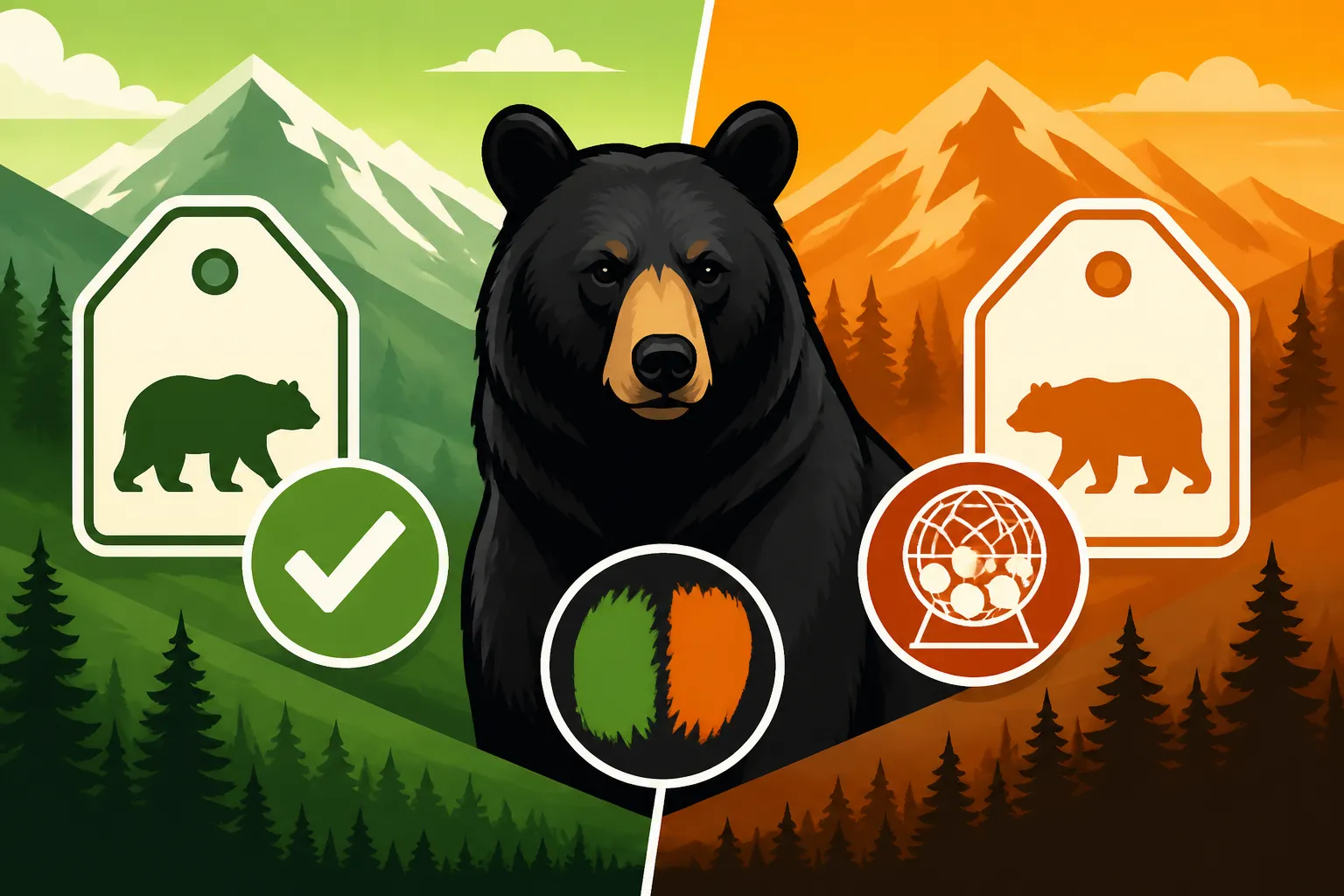
Deciding between an OTC and a draw tag for black bear in Colorado boils down to your hunting goals, available time, and tolerance for uncertainty. There's no single "best" option; rather, it's about finding the right fit for your hunting style and aspirations.
Factors to Consider When Choosing
When weighing your options, think about these key factors:
- Your Experience Level: Are you a seasoned bear hunter looking for a challenge, or is this your first bear hunt? OTC tags in general units can be a great way to gain experience without high stakes. For a beginner, understanding general bear behavior is key, and an OTC hunt might allow for more focus on fundamental skills like How to Spot-and-Stalk Colorado Bears.
- Time Commitment: Do you have the flexibility to wait years for a draw tag, or are you looking for a hunt in the upcoming season? OTC tags are perfect for spontaneous or short-notice trips.
- Budget: While tag fees are relatively similar, factor in travel, gear, and the cost of potentially multiple years of application fees for draw tags.
- Desired Quality of Hunt: Are you aiming for a trophy bear in a low-pressure setting, or is harvesting any legal bear a successful outcome? Draw tags often align with the former, while OTC tags lean towards the latter.
- Specific Season Preferences: Do you dream of a spring bear hunt, or are you hoping to combine a fall bear hunt with an elk or deer hunt? Your season preference will heavily influence which tag type is even an option. Remember that spring hunts are almost always draw-only. For fall, consider the difference between Colorado Spring vs Fall Bear Hunting in terms of bear behavior and habitat use.
- Hunter Pressure Tolerance: How do you feel about sharing the woods? If solitude is a high priority, investing in the draw for a limited-entry unit might be your best bet. If you don't mind company and are comfortable working around other hunters, OTC can work.
- Scouting Resources: Do you have the time and tools to conduct thorough E-scouting and boots-on-the-ground scouting? Draw units often benefit immensely from detailed scouting, while OTC units might require more adaptable, on-the-fly scouting strategies due to unpredictable bear movements and hunter saturation. Consider how you'll use tools to How to E-Scout Before a Colorado Hunt.
To help visualize the differences, here's a quick comparison:
| Feature | Over-the-Counter (OTC) Black Bear Tags | Draw Black Bear Tags |
|---|---|---|
| Availability | Purchased directly, no draw required. | Obtained through lottery system, preference points used. |
| Seasons | Primarily fall (archery, muzzleloader, rifle seasons). | Spring and fall, including specific early/late seasons. |
| Units | Generally available in many GMUs. | Limited to specific GMUs, often high-quality. |
| Hunter Pressure | Often high, especially during rifle seasons. | Generally lower due to limited tag numbers. |
| Success Rates | Typically lower than draw units. | Potentially higher than OTC units. |
| Planning Horizon | Short-term, spontaneous. | Long-term, multi-year planning often required. |
| Preference Points | Not required. | Essential for drawing desirable tags. |
| Season Quotas | Many fall OTC units have harvest quotas; seasons can close abruptly. | Quotas are generally pre-determined and fixed for the season. |
Planning Your Bear Hunt Strategy
Once you've considered the above, you can start to formulate a solid plan. If you're leaning towards an OTC tag, your primary focus will be on finding units with good bear populations that coincide with your other hunting plans, if any. You'll need to pay close attention to harvest quotas in the weeks leading up to and during your hunt, as CPW will close units once their quota is met. This often means diligently checking the CPW website for updates, potentially multiple times a day. You might also find yourself exploring areas like the Colorado National Forest Hunting Guide to identify public land opportunities where OTC tags are valid.
For those committed to the draw, your strategy will involve careful research into draw odds for specific units and seasons using resources like GoHunt. You'll be building preference points over time, applying annually, and refining your application choices based on changing draw odds and your accumulating points. This approach allows for a more focused scouting effort on a specific unit you intend to hunt, delving deep into its bear habitat, food sources, and travel corridors. Regardless of your choice, make sure you understand the specific Colorado Hunt Codes Explained for bears, as these are crucial for proper application and license purchase. Whether you're chasing an elk and hoping to cross paths with a bear, or specifically targeting a bruin with a hard-earned draw tag, Colorado offers incredible black bear hunting opportunities for the prepared hunter.
Disclaimer
Please remember that hunting regulations, season dates, and tag availability can change annually. Always consult the most current Colorado Parks and Wildlife (CPW) regulations brochure or website before planning and executing any hunt. This guide provides general information and should not replace official CPW documentation.