Colorado Turkey Season and Tags
Trying to figure out the ins and outs of Colorado's turkey hunting seasons and tags can feel like trying to decipher a secret code, especially with the state's unique draw system and diverse terrain. Many hunters get overwhelmed by the nuances between spring and fall seasons, or whether they need a limited draw tag or if an over-the-counter option is available. This guide is here to break down everything you need to know about pursuing wild turkeys in the Centennial State, from understanding the specific season dates to navigating the tag application process, so you can head into the field with confidence.
Understanding Colorado's Turkey Seasons
Colorado offers two distinct turkey hunting seasons: the highly anticipated spring season, known for its vocal gobblers and breeding activity, and a fall season, which often presents different challenges and opportunities. Each season has its own unique characteristics, regulations, and approaches, making it important for hunters to understand the differences before planning their adventure. Whether you're chasing the thrilling gobble of a spring tom or quietly stalking a fall flock, Colorado provides a rich and rewarding turkey hunting experience.
Spring Turkey Season Details
Ah, spring turkey hunting in Colorado—there's truly nothing quite like it. The air is crisp, the aspens are budding, and the woods come alive with the sounds of drumming and gobbling. This season typically runs from mid-April through late May, providing ample time to get out there and chase those Merriam's and Rio Grande birds. What makes spring so exciting is the breeding behavior of the toms; they're actively seeking hens, making them more responsive to calls and often more predictable in their movements as they strut and display.
The spring season is primarily focused on bearded turkeys, meaning you're aiming for a tom or a jake. While many units offer over-the-counter (OTC) licenses for the general spring season, there are also limited draw units, particularly in areas known for higher turkey populations or better access. It's crucial to check the Colorado Parks and Wildlife (CPW) regulations each year, as season dates, unit boundaries, and tag availability can shift. For instance, the southwest and southeast regions of Colorado are well-regarded for their spring turkey hunting opportunities, especially for Merriam's.
If you're planning a spring hunt, you'll want to pay close attention to the draw deadlines if you're targeting a limited unit. Even for OTC tags, knowing when they become available and purchasing them ahead of time is a smart move, especially if you're traveling from out of state. Scouting prior to the season can make a huge difference in your success, helping you locate roosting areas, strut zones, and travel corridors where those big Toms are likely to be found. Remember, patience and good calling are often the keys to filling your tag during this prime time.
Fall Turkey Season Details
While spring gets all the glory, Colorado's fall turkey season offers a completely different, yet equally rewarding, hunting experience. This season typically runs from September through October, and in some areas, there might be a late fall or winter season extending into December or January. Unlike spring, the fall season allows hunters to pursue any turkey, meaning hens, jakes, and gobblers are all fair game. This opens up different strategies, often leaning more towards flock location and ambush tactics rather than solely relying on calling in lovesick toms.
Fall turkeys are often found in larger, more organized flocks as they forage for food in preparation for winter. This means your scouting efforts might shift to identifying food sources like acorns, ponderosa pine seeds, or agricultural fields. Instead of mimicking a hen to draw in a gobbler, you might focus on breaking up a flock and then calling individual birds back in, a classic fall tactic. This can be incredibly challenging but also immensely satisfying when executed correctly.
The availability of fall turkey tags can vary significantly by unit. Many are available over-the-counter, but some desirable units might still require a limited draw. Again, checking the latest CPW regulations is paramount to understand specific unit restrictions and season dates. Hunting pressure is generally much lower in the fall compared to the spring, offering a more solitary experience for those willing to brave cooler temperatures and adapt their tactics. Areas with mixed conifer and oak forests tend to be excellent spots for fall turkeys, providing both cover and food.
Youth and Apprentice Opportunities
Colorado recognizes the importance of nurturing the next generation of hunters and offers specific opportunities for youth and apprentices. For turkey hunting, this often translates into special youth-only seasons or programs designed to provide a mentored experience in the field. These seasons typically precede the general spring turkey season, giving young hunters a unique chance to pursue birds with less competition and often with higher success rates under the guidance of an experienced adult.
To participate in youth hunts, individuals usually need to be under a certain age (e.g., 18 years old) and may need to possess a valid hunter education certification. The accompanying adult mentor, who must also be licensed, often cannot carry a weapon during the youth-only period, focusing entirely on guiding and educating the young hunter. This setup creates a fantastic learning environment, emphasizing safety, ethics, and responsible hunting practices.
Beyond dedicated youth seasons, Colorado also has an apprentice hunter certificate program. This program allows individuals (of any age, including adults) who have not yet completed hunter education to hunt under the direct supervision of a licensed mentor. It's a great way for newcomers to experience hunting firsthand before committing to the full hunter education course. This pathway is particularly useful for those interested in trying turkey hunting without the immediate pressure of full certification. Always ensure you understand the specific requirements for both the youth and apprentice programs by consulting the Colorado Parks and Wildlife website or by calling their regional offices for up-to-date information.
Navigating Colorado Turkey Tags and Licenses
Once you've got a handle on the seasons, the next hurdle is securing the right tags and licenses. This part can be a bit tricky, especially for non-residents or first-time hunters in Colorado. The state uses a combination of over-the-counter sales and a limited draw system for its turkey tags, which means you can't just show up and expect to buy a tag for every unit. Understanding the difference and knowing the deadlines is crucial to a successful hunt plan.
General License Requirements
Before you can even think about which turkey tag to buy, you've got to cover the basic licensing requirements. Every hunter in Colorado, regardless of residency or the specific game they're pursuing, needs a valid hunting license. This isn't just for big game like elk or mule deer; it applies to small game and turkey hunting too. If you're 18 years or older, you'll need to demonstrate proof of hunter education completion, either from Colorado or another state that's recognized by the International Hunter Education Association (IHEA). This is a non-negotiable step, so if you haven't taken a course, make sure to plan for it well in advance. Colorado offers both in-person and online courses, sometimes followed by a field day. If you're considering a big game hunt down the line, understanding the full scope of Colorado Hunting Seasons Explained can provide a broader context of license requirements across species.
In addition to your hunting license, anyone hunting in Colorado is required to purchase a Habitat Stamp. This stamp is an annual fee that directly funds critical wildlife habitat projects across the state, ensuring that the diverse ecosystems turkeys and other species rely on remain healthy and thriving. Think of it as your direct contribution to conservation—it's not just a fee, it's an investment in the future of Colorado's wildlife. Once purchased, the Habitat Stamp is valid for a full year, starting from its purchase date.
For those planning to hunt multiple species or partake in various outdoor activities, it's worth noting that the general hunting license is your foundational document. It verifies your eligibility to hunt and is required even if you're only planning to buy an over-the-counter turkey tag. The How to Apply for a Colorado Hunting License guide can walk you through the step-by-step process of securing your foundational license and navigating the CPW website, which can sometimes feel like a maze. Ensuring all your basic licensing is in order is the first, most critical step to a worry-free turkey hunt.
Over-the-Counter OTC vs. Limited Draw Tags
This is where planning truly comes into play for Colorado turkey hunters. Colorado utilizes both over-the-counter (OTC) and limited draw tags for turkeys, and knowing the difference is key to a successful hunting strategy. OTC tags are exactly what they sound like: you can purchase them directly, often online through the CPW website or at a licensed vendor, without going through a draw process. These tags are generally available for a wider range of Game Management Units (GMUs) during both spring and fall seasons, offering a great option for those who might not have preference points or who decide to hunt last minute. They provide flexibility and make turkey hunting accessible to many. However, OTC units can sometimes see more hunting pressure, particularly on easily accessible public lands.
Limited draw tags, on the other hand, are allocated through a lottery system. These tags are typically for specific GMUs that have stricter harvest quotas, higher demand, or offer unique hunting experiences, like those for Merriam's turkeys in highly sought-after areas. To obtain a limited draw tag, you must apply during specific application periods, usually in early spring for fall hunts and in late fall for spring hunts. This often requires research into draw odds, understanding Colorado Hunt Codes Explained, and making strategic choices about where to apply. The GoHunt platform can be an invaluable tool here, offering detailed draw odds and unit breakdowns that can help you make informed decisions about whether to apply for a limited tag or stick to OTC options.
Deciding between an OTC and a limited draw tag depends heavily on your goals. Are you looking for a casual hunt with less commitment, or are you aiming for a specific unit known for higher turkey numbers or less pressure? For many, an OTC spring turkey hunt is an excellent way to experience Colorado turkey hunting without the complexities of the draw. However, if you're a seasoned hunter looking for a particular challenge or a higher quality experience in a specific area, applying for a limited draw tag might be the way to go. Just remember to mark your calendar for application deadlines—missing them means missing out entirely on those limited opportunities!
Tag Costs and How to Purchase
Understanding the cost of your Colorado turkey tags and knowing the most efficient way to purchase them is an important part of your hunt planning. Colorado's license fees, including turkey tags, vary significantly between resident and non-resident hunters, a common practice across states. For residents, turkey tags are quite affordable, making it a very accessible hunting opportunity. Non-residents, however, can expect to pay a considerably higher fee for their turkey tags, in addition to the non-resident hunting license and Habitat Stamp. These costs are subject to change annually, so always double-check the latest fees on the CPW website before budgeting for your trip.
Purchasing your tags is relatively straightforward, but there are a few options. The most convenient method for many is to buy them online directly through the Colorado Parks and Wildlife licensing system. This allows you to purchase your basic hunting license, Habitat Stamp, and any available over-the-counter turkey tags from the comfort of your home, and then print them out or keep them digitally on your phone for proof of possession. If you're applying for a limited draw tag, the application process is also done online during the designated application periods.
Alternatively, you can purchase licenses and tags in person at any authorized CPW license agent across the state. These agents are typically found in sporting goods stores, outdoor retailers, or even some general stores in smaller towns. This can be a good option if you have last-minute questions or prefer to handle transactions face-to-face. Just remember that if you're an out-of-state hunter driving into Colorado, planning to buy your tags on arrival, it's wise to do so in a larger town or city where license agents are more readily available, rather than assuming a tiny mountain town will have one open when you need it. For a comprehensive overview of associated fees for different species, you might want to look into Colorado Hunting License Costs.
Essential Regulations and Considerations for Turkey Hunting
Beyond just understanding the seasons and tags, responsible turkey hunting in Colorado involves adhering to a specific set of regulations and making ethical considerations. These rules are in place to ensure the health of the turkey populations, promote fair chase, and ensure safety for all outdoor enthusiasts. Ignoring these regulations can lead to fines, loss of hunting privileges, and even impact future hunting opportunities, so it's vital to be well-informed.
Legal Hunting Methods and Restrictions
Colorado sets clear guidelines on what methods are permissible for turkey hunting, designed to maintain fair chase principles and ensure safety. For both spring and fall seasons, the most common and widely accepted method is using a shotgun, typically firing a load of shot. The legal gauge for shotguns is generally between 10 gauge and 20 gauge, with shot sizes no larger than No. 2 lead or No. B steel. It's crucial to check the specific regulations for the exact shot size limits, as these can sometimes be adjusted. Rifles and handguns firing single projectiles are generally not permitted for turkey hunting in Colorado, distinguishing it from big game species.
Archery equipment is another popular and legal method for turkey hunting, offering a unique challenge and requiring close-range engagement. Both traditional bows and compound bows are allowed, provided they meet minimum draw weight requirements to ensure a clean harvest. Crossbows are also legal, but specific rules might apply regarding their use, especially during certain seasons or for hunters with disabilities. When it comes to Colorado Archery Elk Hunting Guide, similar principles apply for equipment specifications, emphasizing humane and ethical harvesting.
There are also several key restrictions to be aware of. The use of electronic calls or recorded animal sounds is strictly prohibited for turkey hunting in Colorado. This means you need to rely on your own calling skills with diaphragm calls, box calls, or pot calls. Baiting turkeys is also illegal, so you cannot use food, minerals, or any attractant to lure birds. Understanding these limitations is not just about avoiding violations; it's about respecting the game and upholding the spirit of fair chase that is central to ethical hunting.
Bag Limits and Harvest Reporting
One of the most critical aspects of turkey hunting regulations in Colorado revolves around bag limits and the mandatory harvest reporting system. These measures are essential for wildlife management, allowing Colorado Parks and Wildlife to monitor turkey populations, assess hunting pressure, and make informed decisions for future seasons. Failing to adhere to these rules can have direct impacts on population sustainability and can lead to personal penalties.
For the spring turkey season, the general bag limit is usually one bearded turkey per license. This means if you purchase a single spring turkey tag, you can only harvest one gobbler or jake. Some units might have additional restrictions or opportunities for a second tag, but this is less common and would be clearly outlined in the annual regulations. In contrast, the fall turkey season typically allows for a bag limit of one either-sex turkey per license. This flexibility allows hunters to take a hen, jake, or tom, reflecting the different management objectives for the fall season.
Harvest reporting is not just a suggestion; it's a legal requirement. In Colorado, all successful turkey hunters are required to report their harvest to CPW within a specific timeframe, usually within 48 hours of taking the bird. This can typically be done online through the CPW website or via a phone reporting system. When reporting, you'll need details such as your license number, the date of harvest, the GMU where the bird was taken, and the sex of the turkey. This data is incredibly valuable for biologists, helping them track success rates, identify population trends, and manage the species effectively. It's a simple step that has a huge impact on conservation efforts.
Public vs. Private Land Access
Hunting turkeys in Colorado means understanding the critical distinction between public and private lands, and knowing how to legally access both. Colorado boasts millions of acres of public land—including National Forests, Bureau of Land Management (BLM) land, and State Wildlife Areas (SWAs)—which offer incredible opportunities for turkey hunters. These lands are generally open to public hunting as long as you have the appropriate licenses and adhere to all state and local regulations. However, not all public land is created equal; some areas might be more remote, require foot or horseback access, or be surrounded by private property that creates access challenges. For more on navigating public lands, check out the Colorado Public Land Hunting Guide.
Hunting on private land in Colorado requires explicit permission from the landowner. This is not just a courtesy; it's a legal necessity. Trespassing is taken seriously, and hunting on private land without permission can result in significant fines, loss of hunting privileges, and damage to hunter-landowner relations. Many prime turkey habitats are found on private ranches, particularly in agricultural areas or river bottoms. Gaining access often involves knocking on doors, sending letters, or knowing someone who knows someone. Building a good relationship with landowners is key, and sometimes it can take years to secure consistent access.
Beyond direct landowner permission, Colorado also has programs like the Ranching for Wildlife (RFW) program, which provides public hunting opportunities on private ranches, and the Walk-In Access (WIA) program, which leases private land for public hunting. These programs offer structured ways to access private lands, usually with specific regulations and sometimes through a limited draw. While services like GoHunt primarily focus on big game draw odds and strategy, their mapping tools often highlight land ownership boundaries, which can be invaluable for differentiating public from private parcels and identifying potential access points or landlocked public areas. Always confirm land ownership with up-to-date maps like the Colorado Hunting Atlas or a reliable app like onX Hunt before heading out.
Planning Your Colorado Turkey Hunt
A successful Colorado turkey hunt isn't just about showing up with a shotgun and a call; it requires thoughtful planning, preparation, and an understanding of the environment. From packing the right gear to knowing how to scout effectively, every detail can contribute to a more enjoyable and productive experience.
Key Gear Recommendations
Hunting turkeys in Colorado, especially if you're targeting Merriam's in the mountainous terrain, demands more than just your average eastern woods setup. The varied landscapes and often unpredictable weather require thoughtful gear choices. First and foremost, good quality camouflage is essential. Turkeys have incredible eyesight, so breaking up your silhouette is paramount. Opt for patterns that blend with the prevalent pine, oak, and sagebrush, such as a Western-specific pattern from brands like Kuiu or Sitka.
Footwear is another non-negotiable item. You'll likely be covering significant ground, often over uneven, steep, or rocky terrain. A comfortable, waterproof, and supportive pair of hunting boots is a must. Think sturdy hiking boots with good ankle support, not just lightweight casual shoes. Layering is also crucial for clothing, as Colorado weather can change dramatically from crisp mornings to warm afternoons, and vice versa. Start with a moisture-wicking base layer, add an insulating mid-layer, and finish with a waterproof/windproof outer shell. This allows you to adjust to conditions as you move.
Don't forget your optics! While not as critical as for big game, a good pair of binoculars (8×42 or 10×42) can help you spot distant turkeys or identify movement without giving away your position. A rangefinder is also extremely useful for accurately judging distances, especially when setting up for a shot with a bow or shotgun. Lastly, a comfortable vest or backpack designed for turkey hunting will keep your calls, decoys, and other essentials organized and easily accessible. For more general gear advice applicable to Colorado's rugged environment, you can check out resources like Best Colorado Elk Hunting Gear which, while focused on elk, offers excellent principles for mountain-adapted equipment.
Scouting and Strategy Tips
Effective scouting is the backbone of a successful Colorado turkey hunt, whether you're chasing spring gobblers or fall flocks. It's often said you can't kill a turkey where it isn't, and scouting helps you confirm their presence and patterns. Start your scouting long before the season opens, ideally using online tools. Websites like GoHunt offer detailed satellite imagery, topographic maps, and public/private land overlays that can help you identify potential roosting areas, water sources, feeding zones, and travel corridors from your couch. Look for south-facing slopes in spring for early green-up, or areas with abundant mast crops in the fall.
Once you have some promising areas identified, it's time for boots-on-the-ground scouting. In the spring, focus on listening for gobblers at dawn from different vantage points. Drive or hike forest service roads, stopping to listen every half-mile or so. Look for turkey sign: tracks in dusty roads or creek beds, droppings, and shed feathers. Once you hear a bird, try to pinpoint its location and observe its behavior if possible without spooking it. During the fall, your strategy might shift to locating feeding flocks. Drive roads in the evening, glassing open areas or field edges where turkeys might be roosting or feeding.
During the hunt itself, patience and adaptability are key. In spring, set up before dawn in an area where you've heard or seen birds, and be ready to call as they come off the roost. Don't be afraid to move if your calls aren't getting a response after an hour or so. Often, aggressive calling can work early in the morning, while subtle calling is better later in the day. For fall hunts, consider walking ridges and calling sparingly, listening for responses, or employing the "run and gun" tactic to cover ground. If you locate a flock, try to scatter them and then set up to call individual birds back in. Remember, Colorado's Merriam's can be notoriously quiet, especially in pressured areas, so knowing How to Call in a Silent Bull (even if it's for elk, the principle of subtlety can apply) might offer a good lesson in patience and soft calling.
Colorado Turkey Population and Habitat
Colorado is home to a robust and growing turkey population, primarily consisting of two subspecies: the Merriam's turkey and the Rio Grande turkey. Understanding their distribution, preferred habitats, and general behavior can significantly improve your chances of success and help you choose the right hunting unit.
Merriam's vs. Rio Grande Turkeys
Colorado offers hunters the unique opportunity to pursue two distinct subspecies of wild turkeys: the Merriam's and the Rio Grande. Each has its own characteristics, preferred habitats, and regional distribution within the state, making the hunting experience quite different depending on which bird you're after.
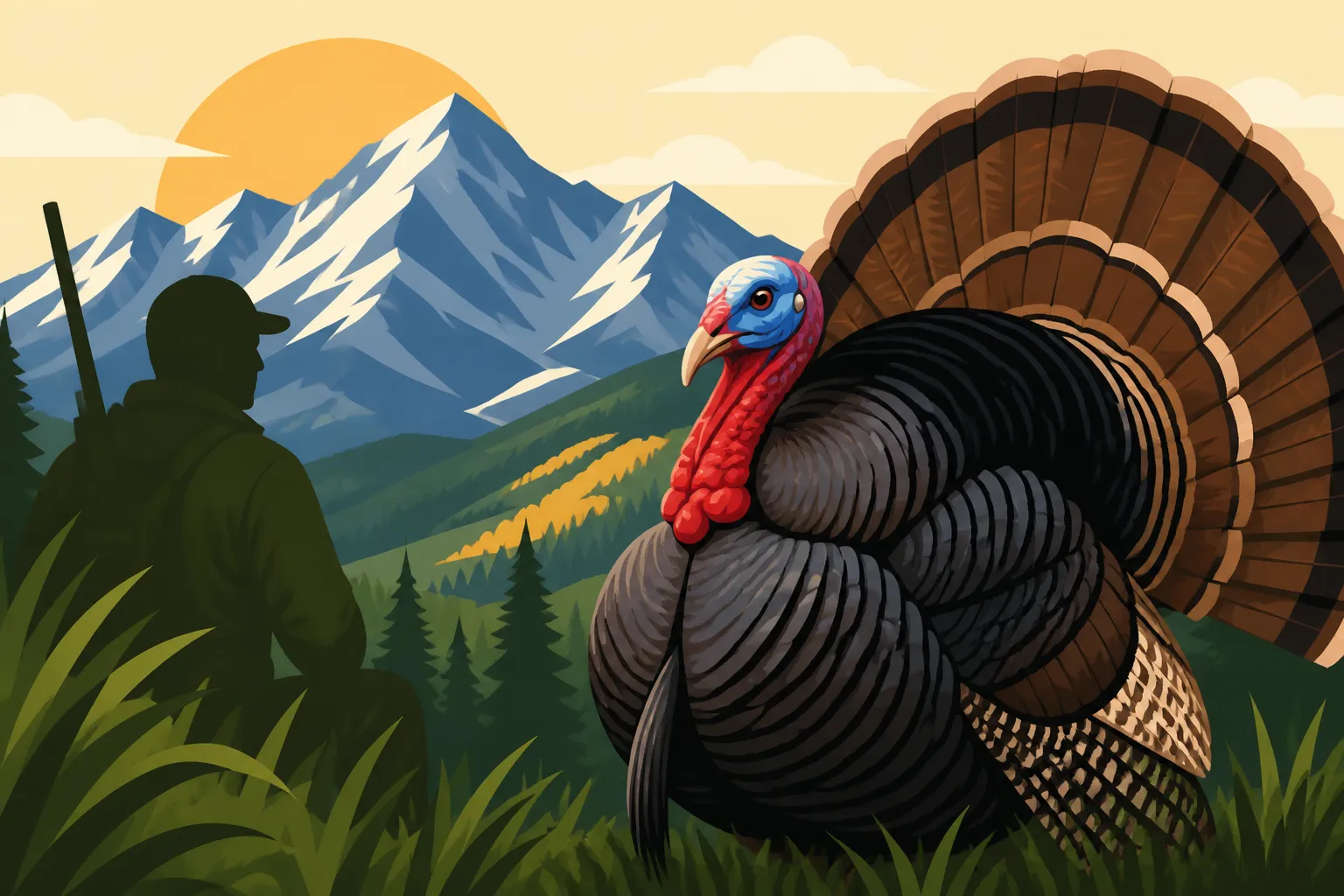
The Merriam's turkey is arguably the most iconic subspecies in Colorado and is what most people picture when they think of mountain turkeys. These magnificent birds are found predominantly in the ponderosa pine and mixed conifer forests of the western and central mountains, and in the foothills along the Front Range. They are known for their striking white-tipped tail feathers and often lighter body plumage compared to other subspecies. Merriam's are adapted to higher elevations, often ranging from 6,000 to 10,000 feet, making for physically demanding hunts in beautiful, rugged terrain. They tend to be more nomadic than their lowland cousins, often traveling significant distances throughout the day. Calling Merriam's can be challenging; they often respond well to loud, aggressive calling early in the morning, but can also be quite tight-lipped and prefer to come in silently, testing a hunter's patience and woodsmanship.
In contrast, the Rio Grande turkey inhabits the river bottomlands and agricultural areas of Colorado's Eastern Plains, particularly along riparian corridors like the South Platte, Arkansas, and Republican Rivers. These birds typically have buff-colored tail feather tips and darker body plumage. Rio Grandes prefer more open, flatter country, where they can be found foraging in crop fields, feedlots, and along cottonwood-lined riverbanks. Their habitat preference makes for a different hunting dynamic, often involving strategic setups near travel routes between roosting areas and feeding grounds. Rio Grandes are generally considered more vocal and responsive to calling than Merriam's, making them a popular choice for hunters seeking more interaction. While both offer exciting challenges, understanding these differences is key to tailoring your scouting and hunting tactics to the specific turkey subspecies you're pursuing. You can find more specific details about this on Colorado Merriam's Turkey Explained.
Key Turkey Habitat Areas
Knowing where turkeys live is as important as knowing when to hunt them. Colorado's diverse geography means turkey habitat varies significantly across the state, and successful hunters understand these distinctions.
For Merriam's turkeys, focus your efforts on the vast tracts of public land in the western and central parts of the state. Think of areas within the White River National Forest, San Juan National Forest, and Pike-San Isabel National Forest, as well as BLM lands scattered throughout the mountains. Ponderosa pine forests with open understories are prime Merriam's habitat, offering roosting trees and foraging opportunities. Look for south-facing slopes that receive early sun, which helps melt snow and reveal forage. In the spring, these birds will often be found near snow lines, following the green-up. In the fall, they might descend to lower elevations, congregating near oak thickets or other mast-producing areas. GMUs like 30, 41, 52, and 61 (among many others) are often highlighted as good Merriam's units, though specific success can vary. The Flat Tops Wilderness Hunting Guide and San Juan Mountains Hunting Guide might focus on big game, but the habitat descriptions often overlap with prime Merriam's country.
Rio Grande turkeys, as mentioned, are primarily found on the Eastern Plains of Colorado. Their habitat is distinctly tied to river systems and their associated riparian zones, as well as adjacent agricultural fields. Key areas include the South Platte River basin (especially around units like 93, 94, 95), the Arkansas River corridor (units like 111, 112), and the Republican River. These birds thrive in areas with tall cottonwoods and other deciduous trees for roosting, combined with access to water and abundant food sources from croplands such as corn, wheat, and milo. Access on the Eastern Plains is predominantly private, so securing landowner permission is often the biggest hurdle. However, some State Wildlife Areas and Walk-In Access properties can provide opportunities. When E-scouting, look for the tell-tale green lines of rivers winding through otherwise dry plains, and identify any nearby agricultural fields – these are strong indicators of Rio Grande presence.
By understanding these habitat preferences and overlaying them with public and private land maps, hunters can significantly narrow down their search and focus their efforts on areas with the highest potential for encountering either Merriam's or Rio Grande turkeys.
Disclaimer
Please remember that hunting regulations in Colorado can change annually. While this guide provides comprehensive information, it is crucial to consult the most current Colorado Parks and Wildlife (CPW) big game and turkey regulations brochure before planning and undertaking any hunt. Always verify season dates, unit boundaries, tag requirements, and legal hunting methods directly with CPW to ensure compliance and a safe, ethical hunting experience.