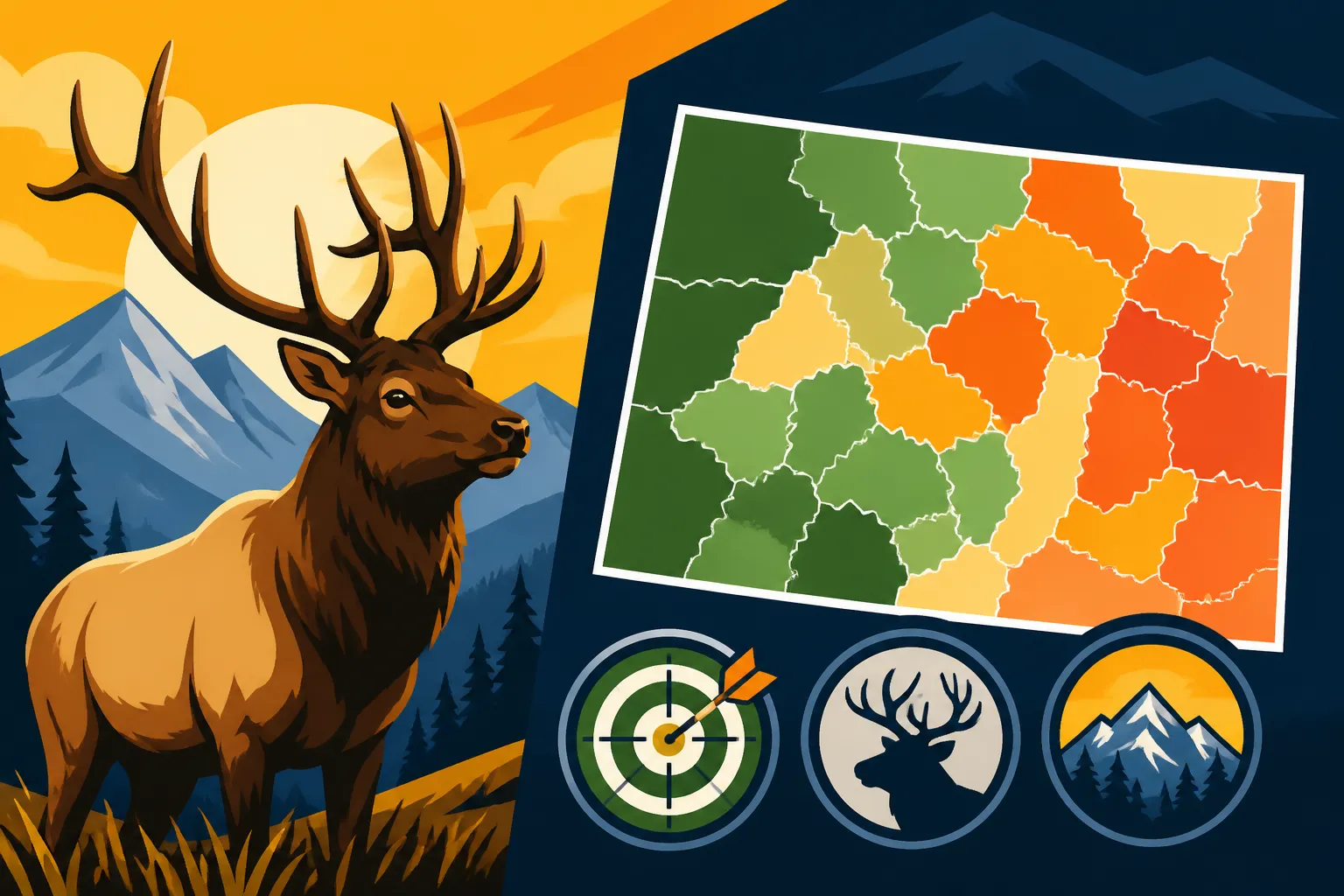
Colorado Elk Draw Odds by Unit
The annual Colorado big game draw can feel like playing the lottery, leaving countless hunters frustrated, confused, and sometimes heartbroken after pouring over hunt codes and dreaming of that perfect elk tag. Trying to decipher the complex preference point system and predict which units will be attainable is a puzzle wrapped in an enigma, making it incredibly tough to plan your elk hunt years in advance. This comprehensive guide is here to unravel the mysteries of Colorado elk draw odds by unit, helping you understand the factors at play and empowering you to make more informed decisions for your next application.
Understanding Colorado's Complex Draw System
Before we can even talk about draw odds, we first need to grasp the fundamental mechanics of how Colorado allocates its coveted hunting licenses. It’s not as simple as first-come, first-served, and for many non-residents especially, it can feel like a labyrinth designed to confuse.
Preference Points Versus Random Drawing
Colorado operates a preference point system for most limited draw tags, but it’s crucial to understand it’s not purely a "most points wins" scenario for every single tag in every unit. For limited draw tags, a certain percentage of licenses (typically 75% for residents and 75% for non-residents, though this can vary by species/unit) are allocated based on preference points, with the applicant holding the most points drawing first, and so on, down the line. This means if a unit requires 10 points to draw, you'll generally need at least that many points to be successful in the preference point portion of the draw.
However, here's where it gets interesting: the remaining percentage of licenses (often 25% for both residents and non-residents) is allocated via a random drawing, regardless of how many preference points you have accumulated. This "random" pool is where some serious magic can happen – or not. You could have zero points and get lucky, or you could have several and still strike out if your points aren't competitive enough for the preference portion and your luck runs out in the random draw. This hybrid system adds an element of unpredictability that drives hunters crazy but also offers a glimmer of hope to those just starting their point-building journey.
The Primary Draw, Secondary Draw, and Leftover Licenses
The bulk of Colorado’s big game licenses are distributed through the Primary Draw, which happens in early April each year. This is the main event where you submit your applications, specifying your hunt codes and preference point choices. All preference points are used in this primary draw.
If any licenses remain after the primary draw – and trust me, there often are, especially for less desirable units, cow tags, or less popular seasons like late-season hunts – they move to the Secondary Draw. This secondary draw does not use preference points; all applications are entered as if you have zero points, making it a purely random drawing. It's a second bite at the apple, particularly for those who didn't draw in the primary draw or those looking for an easier-to-get tag.
Finally, any licenses that are still available after both the primary and secondary draws are sold over-the-counter (OTC) as Leftover Tags. These are typically available starting in late July or early August on a first-come, first-served basis. While often not for the trophy units, leftover tags can provide fantastic opportunities, especially for archery or late-season cow elk hunts. Knowing the dates for each of these phases is critical, so be sure to check the Colorado Big Game Draw Deadlines annually.
Factors Influencing Elk Draw Odds by Unit
Understanding the system is one thing; predicting your chances in a specific unit is another. Multiple variables intertwine to shape those elusive draw odds.
Unit Popularity and Tag Quotas
This is perhaps the most significant factor. Highly sought-after units, often renowned for their trophy potential or easy access, will naturally have far lower draw odds. Everyone wants to hunt a Boone and Crockett bull, right? If a unit consistently produces monster bulls or offers prime rut hunting, applications will surge, driving up the number of preference points required to draw a tag. Conversely, units with tougher terrain, lower elk densities, or less public land access generally see fewer applicants, leading to higher draw odds.
Colorado Parks and Wildlife (CPW) sets the tag quotas for each unit annually based on herd management objectives, population surveys, and previous harvest data. A unit might suddenly have more tags available if the herd is over objective, or fewer if numbers are down. These changes directly impact draw odds. More tags usually mean better odds, fewer tags mean tougher odds. These quotas can fluctuate from year to year, so always check the most recent CPW Big Game brochure for specific Colorado Elk Season Dates Guide and quota information.
Resident Versus Non-Resident Allocation
One of the biggest eye-openers for out-of-state hunters is the non-resident tag allocation. By state regulation, non-residents are typically capped at a specific percentage of available limited licenses for each game management unit (GMU). For elk, this is generally 25% in most units, but it can be less for some specific unit/species combinations. This means if a unit has 100 limited bull tags, only 25 of those can go to non-residents, regardless of how many apply or how many points they have.
This percentage difference dramatically impacts draw odds. Even if a non-resident has the same number of points as a resident, their chances are inherently lower because they're competing for a much smaller pool of tags. This is a common frustration, but it's the reality of hunting in Colorado. Understanding this allocation is crucial when looking at Colorado Non-Resident Hunting License Guide options and planning your strategy.
Point Creep and Historical Draw Data
"Point creep" is the bane of many long-term draw strategies. It refers to the phenomenon where the number of preference points required to draw a specific tag steadily increases year after year. This happens when more hunters accumulate points than there are available tags, pushing the minimum point requirement upwards. If a unit required 7 points last year, it might require 8 points this year, and 9 the next.
Analyzing historical draw data is your best friend here. CPW publishes draw results and point summaries for every unit and hunt code. Sites like GoHunt also compile and analyze this data extensively, offering fantastic tools for hunters. By looking at the draw success rates and the number of points required over the past 3-5 years, you can get a good sense of a unit's point creep trend. If a unit's point requirement is increasing by one point per year, you can project how many points you'll likely need by the time you're ready to apply. Ignoring point creep can lead to perpetual disappointment, always being "one point shy" of your dream tag.
How to Research and Interpret Draw Odds Data
The data is out there, but knowing where to find it and how to make sense of it is the real skill. Don't just glance at a number; dig deeper.
Utilizing CPW's Draw Summaries and the Colorado Hunting Atlas
The official source for all draw data is Colorado Parks and Wildlife. Each year, after the draw, CPW publishes a comprehensive "Big Game Draw Recap" or "Preference Point and Draw Recap" document. This document details the number of applicants, the number of licenses issued, and the minimum and maximum points required for both the preference point and random draw pools for every hunt code. You can find this data going back several years on their website.
Beyond the draw summaries, the Colorado Hunting Atlas Explained is an invaluable, free resource. It allows you to overlay GMU boundaries, public and private land, wilderness areas, roads, and even historical elk harvest data. While it doesn't directly show draw odds, it helps you understand the characteristics of units that might influence those odds, like the amount of public land (often correlating with higher hunter pressure and thus tougher draws) or ruggedness.
Leveraging Third-Party Tools like GoHunt
While CPW data is essential, parsing through hundreds of pages of tables can be daunting. This is where dedicated hunting intelligence platforms really shine. GoHunt's "Insider" service, for example, is renowned for its detailed draw odds tools and unit analyses. They take the raw CPW data and present it in an easily digestible, searchable, and filterable format.
With GoHunt's platform, you can:
- Filter units by species, weapon type, season, and points required.
- See historical draw odds trends at a glance.
- Get detailed breakdowns of resident and non-resident draw success.
- Read expert unit analyses that go beyond just numbers, offering insights into terrain, elk behavior, and hunting pressure.
Using such a tool can save you countless hours of research and help you visualize the data in a way that static tables simply can't. It's an investment, but for serious Western hunters, it often pays for itself in the clarity and confidence it provides.
Interpreting the Numbers: What Do Odds Really Mean?
When you see a draw odd, let's say "20% chance with 5 points," what does that actually convey? It means that, historically, out of all applicants with 5 points, 20% of them successfully drew a tag. It's not a guarantee, but a statistical likelihood.
Here's a simplified table illustrating how draw odds might be presented and what to look for:
| Hunt Code | Unit | Weapon | Season | Resident Min. Points (Preference) | Resident % Drawn (Random) | Non-Resident Min. Points (Preference) | Non-Resident % Drawn (Random) |
|---|---|---|---|---|---|---|---|
| ELK-E-043-1R | 43 | Rifle | 1st Rifle | 8 | 15% | 12 | 5% |
| ELK-E-043-2R | 43 | Rifle | 2nd Rifle | 4 | 30% | 7 | 10% |
| ELK-F-054-AR | 54 | Archery | Either-Sex | 0 | 80% | 0 | 60% |
| ELK-F-055-3R | 55 | Rifle | 3rd Rifle | 5 | 25% | 9 | 8% |
- Minimum Points (Preference): This is the magic number. If your points are below this for your residency and the specific hunt code, your chances in the preference point draw are essentially zero. You're relying solely on the random draw.
- % Drawn (Random): This indicates your chances in the random draw pool. Even with 0 points, you might have a 5-10% chance in some tougher units, or a 60-80% chance in easier-to-draw units, especially for antlerless tags. This is the "hope" factor.
- Point Creep Analysis: Compare this table year over year. If the "Min. Points" column keeps climbing, you're experiencing point creep.
A key takeaway is that units with "0 points" required in the preference draw often have high random draw success rates, indicating they are typically Over-The-Counter (OTC) or very easy to draw. For more details on these, check out Colorado OTC Elk Tags Explained.
Strategies for Improving Your Draw Chances
Alright, so you understand the system and how to read the odds. Now, let's talk about how to play the game smart to maximize your opportunities.
Building Preference Points Strategically
For many of Colorado's premium elk units, especially for bull tags in popular rifle seasons, you simply won't draw without accumulating a significant number of preference points. The strategy here is patience and consistency. Apply every year for the unit and hunt code you desire, even if you know you won't draw. You'll build one preference point annually. To understand how many you might need, definitely read How Many Points for a Colorado Elk Tag.
The downside? Point creep means that target number keeps moving. What required 10 points today might require 12 in two years. However, for a truly coveted tag, this is often the only path. Don't waste your points on a unit you don't really want, unless it's part of a deliberate "point-burning" strategy for a solid but not top-tier tag. Remember, if you draw any limited tag, you will lose your preference points for that species.
Balancing Dream Units with Realistic Expectations
It’s easy to get caught up dreaming of that specific unit known for giant bulls, but the reality is those units often require double-digit preference points and offer abysmal random draw odds. For many hunters, especially those new to Colorado or with fewer points, a more pragmatic approach is necessary.
Consider applying for units that:
- Require fewer points: Maybe 3-5 points for a solid bull tag in a decent unit, rather than waiting 10+ years for a trophy unit.
- Have better random draw odds: Look for units where the random draw success is 15-25% or higher, even if you have 0 points. This gives you a legitimate shot without needing years of building.
- Are OTC for archery or specific seasons: Archery elk seasons, especially for either-sex tags in certain GMUs, are often OTC. While challenging, they offer an immediate opportunity to hunt without waiting on the draw. You can learn more in Colorado Archery Elk Season Explained.
- Target cow tags: Cow elk tags are significantly easier to draw, often available with 0 points or even OTC, and provide excellent meat hunting opportunities.
Using GoHunt's filtering tools, you can easily sort units by preference points required, making it simple to identify units that align with your current point total and risk tolerance. It’s all about finding that sweet spot between your aspirations and your realistic chances.
Considering Different Seasons and Weapon Choices
Your choice of season and weapon can drastically alter your draw odds for the same unit.
- Archery Season: Often has higher draw odds or is even OTC in many units for either-sex elk. While physically demanding and requiring different skills, it offers more flexibility. The Colorado Archery Elk Hunting Guide is a great resource here.
- Muzzleloader Season: Typically falls between archery and rifle seasons, offering a unique challenge and often slightly better draw odds than the most popular rifle seasons.
- 1st Rifle Season: Almost always the toughest to draw due to the timing coinciding with the tail end of the rut and often milder weather.
- 2nd and 3rd Rifle Seasons: These are the most popular and thus competitive, often requiring mid-level preference points.
- 4th Rifle Season and Late Seasons: Can offer easier draws, especially for cow tags, but present challenges like colder weather, deeper snow, and migrating elk. However, for those willing to brave the elements, they can be fantastic opportunities. Read up on Late-Season Elk Hunting Tactics for more.
By being flexible with your season and weapon choice, you open up a wider array of units and opportunities, significantly improving your chances of drawing a tag in any given year. This is particularly true if you are looking for Best Colorado Units with Low Hunter Pressure. Understanding the overall Colorado Hunting Seasons Explained will help you strategize.
Disclaimer
Please remember that hunting regulations, draw systems, and season dates can change. Always consult the official Colorado Parks and Wildlife (CPW) website and their most current Big Game Brochure for the most accurate and up-to-date information before applying for any licenses or planning your hunt.