How to Hunt Colorado Turkey in Spring
Spring turkey hunting in Colorado presents a unique challenge and a truly rewarding experience, especially when targeting the elusive Merriam's turkey. Many hunters feel overwhelmed by the vast public lands, varying regulations, and the distinct behavior of mountain turkeys compared to their Eastern counterparts. This comprehensive guide will walk you through everything you need to know to confidently plan and execute a successful spring turkey hunt in the beautiful state of Colorado, from understanding licenses to honing your calling skills.
Understanding Colorado Spring Turkey Seasons and Regulations
Before you even think about packing your calls or choosing your camouflage, it's crucial to get a firm grasp on Colorado's spring turkey seasons and the specific regulations that govern them. Ignoring these details can quickly turn a dream hunt into a costly mistake. Colorado Parks and Wildlife (CPW) sets these rules to ensure healthy turkey populations and fair chase for all hunters.
Season Dates and Tag Requirements
Colorado's spring turkey season typically runs from mid-April through late May, often extending into early June in certain units. The specific dates can vary slightly year to year, so always check the latest CPW big game brochure well in advance. Unlike big game, most spring turkey tags in Colorado are over-the-counter (OTC), meaning you don't have to navigate a complex draw system or accumulate preference points. This is a huge relief for many hunters who are used to the competitive nature of elk and deer draws. However, there are still a few limited-entry units or special seasons that require a draw, so always double-check the hunt codes for your chosen area.
When purchasing your tag, you'll generally be looking for a "Spring Turkey" license. These are usually valid for one bearded turkey. Remember that a bearded bird typically means a gobbler, but sometimes a hen can have a beard, making her legal game if she carries one. Non-residents can purchase these tags as well, making Colorado a popular destination for those seeking to complete a Merriam's Grand Slam. Ensure you also have a valid Colorado small game hunting license and a Habitat Stamp, which is required for nearly all hunting and fishing activities in the state. If you're new to hunting in the state, understanding How to Apply for a Colorado Hunting License is a good starting point for all your license needs.
Legal Hunting Methods and Restrictions
Colorado offers quite a bit of flexibility when it comes to hunting methods for spring turkeys, but there are some critical restrictions to keep in mind. You can hunt with a shotgun (lead shot is generally permitted for upland birds, but always check for specific restrictions in certain areas), a bow, or a muzzleloading shotgun. There are no restrictions on shotgun gauge, but common choices include 12-gauge or 20-gauge, often paired with specialized turkey loads. For archery hunters, minimum draw weights and broadhead requirements are outlined in the regulations, similar to those for big game. It's always a good idea to practice with your specific setup to ensure ethical shot placement.
One major restriction to be aware of is the prohibition on using electronic calls for turkeys. All calling must be done by hand or mouth calls. This adds a layer of skill and challenge that many turkey hunters appreciate. Baiting is also strictly forbidden. Hunters must tag their turkey immediately after harvest and before moving the carcass, with the tag securely attached to the bird. Proper tagging ensures compliance and helps CPW manage turkey populations effectively. Always be mindful of shooting hours, which typically run from one half-hour before sunrise to sunset. These are crucial details that, if overlooked, can lead to serious legal consequences, so always carry a copy of the current regulations or have them readily accessible on your phone. Many of these foundational hunting rules are covered more broadly in Colorado Hunting Seasons Explained.
Key Strategies for Spring Merriam's Turkey Hunting
Merriam's turkeys, often found in the pine and ponderosa forests of Colorado's mountains, behave differently than their Eastern or Rio Grande cousins. Their habitat often dictates different tactics, requiring hunters to be patient, adaptable, and willing to cover ground.
Calling Tactics for Merriam's
Calling is the heart and soul of turkey hunting, and Merriam's respond to calls, but often with their own unique flair. Unlike Easterns, which might gobble aggressively and charge in, Merriam's can be more subtle. They tend to travel more open country and often come in silently, circling to get a visual. This means your calling needs to be realistic, varied, and spaced out. Start with soft tree yelps and clucks before fly down, mimicking a hen waking up on the roost. Once on the ground, switch to a mix of yelps, clucks, purrs, and sometimes even cutting, but don't overdo it. Soft, contented calls can often be more effective than aggressive calling, especially in areas with hunting pressure.
Gobbling can be a great way to locate birds, but be cautious with too much gobbling in tight quarters or heavily hunted areas, as it can attract other hunters or make a wary tom hang up. A good strategy is to use shock calls, like an owl hoot or a crow call, at dawn to elicit a "shock gobble" from a roosted bird, pinpointing his location. Then, move in quietly and set up. When a tom starts gobbling back consistently, try to match his intensity but remain slightly aloof. If he's hot, a series of excited yelps might pull him in. If he's hesitant, soft clucks and purrs, mimicking a hen that's ready to breed but not overly eager, can often seal the deal. Remember that these birds often use their eyesight more than their hearing in open areas, so positioning yourself well is paramount.
Decoy Setups and Ambush Points
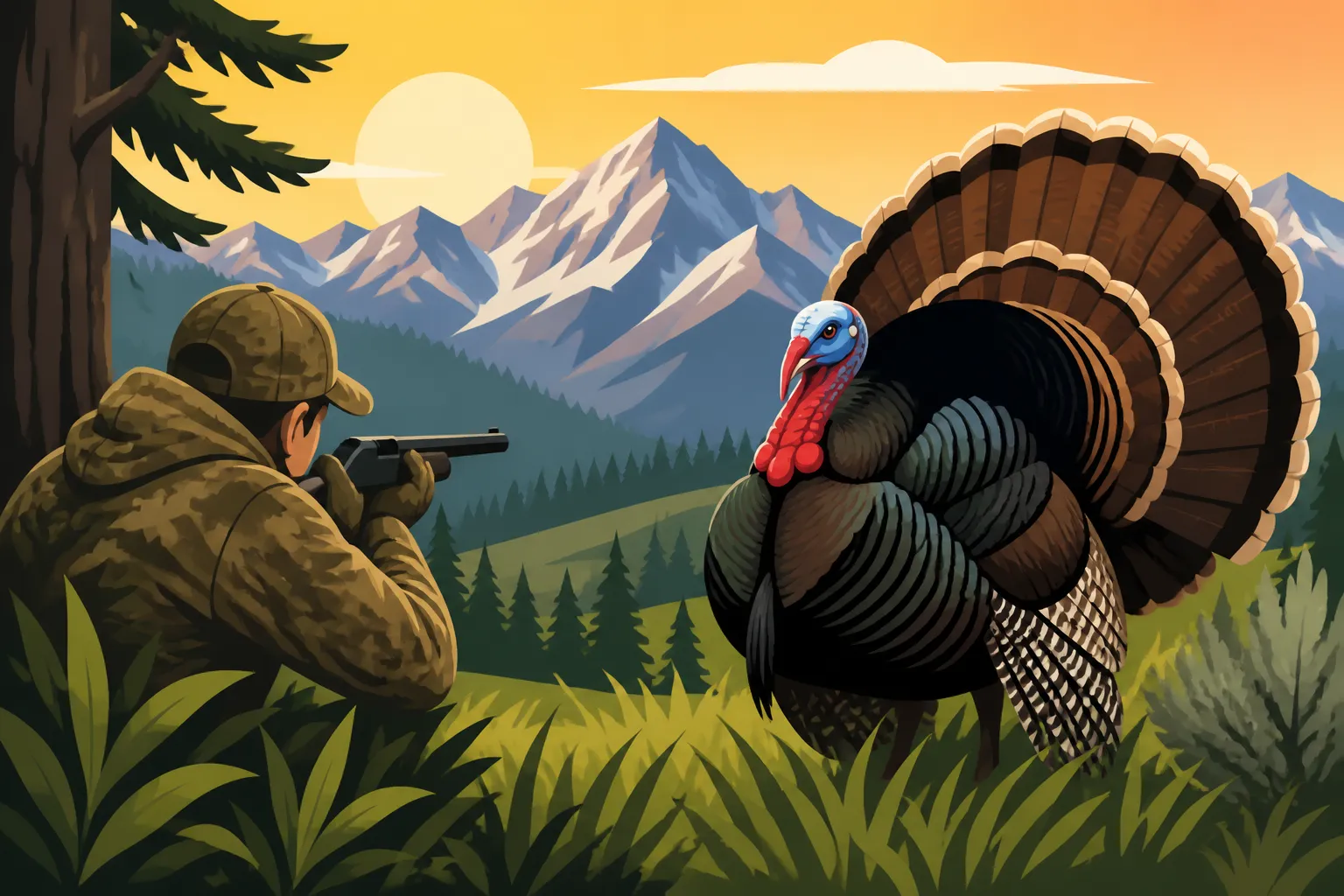
Decoys are incredibly effective for Merriam's, especially in the more open ponderosa and pine forests where turkeys have excellent visibility. The key is setting them up where the turkeys can see them from a distance, but also where you have good concealment and a clear shot. A common and highly effective setup involves a jake decoy paired with one or two hen decoys. This visual can infuriate a dominant tom, drawing him in to confront the perceived intruder. Position the jake decoy facing you, so when the real tom comes in to fight, he'll likely present his fan and broadside to your shooting lane.
Ambush points should be chosen carefully. Look for natural clearings, logging roads, or the edges of meadows where turkeys frequently travel or strut. Always set up with your back against a large tree or dense cover to break up your silhouette and provide stability for your shot. Ensure you have clear shooting lanes in the direction you expect the turkey to approach, remembering that Merriam's often circle. Positioning yourself at the top of a rise or on a bench can give you a better view, but be mindful of drawing the turkey uphill, as they often prefer to come downhill. Using a mapping tool like GoHunt to identify potential strut zones, travel corridors, and open areas within a GMU can give you a significant advantage in finding optimal ambush points before you even set foot in the woods. This helps you visualize the terrain and anticipate turkey movement.
Reading Turkey Behavior
Understanding turkey behavior is crucial for success. Merriam's turkeys, like all wild turkeys, are creatures of habit but can be incredibly wary. Pay attention to their daily patterns: where they roost, where they fly down, their preferred strutting zones, and their feeding areas. In the spring, gobblers are primarily focused on breeding. They'll gobble to announce their presence, strut to impress hens, and fight off rival toms. Hens, on the other hand, are often focused on nesting. If you call in a gobbler that's "henned up" (with real hens), it can be incredibly difficult to pull him away. In these situations, you might have to try to get ahead of the flock or be extremely patient, hoping the real hens eventually lead him past your setup or wander off to nest.
Merriam's turkeys in mountainous terrain will often use elevation to their advantage, flying down from a ridge to a flat or strutting area. They also use terrain to avoid perceived threats, often circling around a caller to approach from an unexpected direction or get a better view. Learn to recognize "hang-ups"—when a gobbler stops responding or struts just out of range, often because he can't see the hen he hears. This is when patience and subtle calling are key. Sometimes, going completely silent for a while can make him nervous enough to come looking. Being able to read subtle cues, like a tom craning his neck or a change in his gobbling intensity, can tell you whether to call more, call less, or simply hold still and wait.
Essential Gear for a Successful Colorado Spring Turkey Hunt
Having the right gear won't guarantee success, but it will certainly make your hunt more comfortable, safer, and increase your odds. For spring turkey hunting in Colorado, you need gear that can handle varying mountain weather and allows for quiet movement.
Firearms, Bows, and Ammunition
Choosing your weapon is a personal preference, but specific considerations apply to turkeys.
- Shotguns: A 12-gauge or 20-gauge is standard. Consider a shotgun with a barrel length between 20-26 inches for maneuverability. A good turkey choke, like a full or extra-full, is essential for tight patterns at typical turkey ranges (20-40 yards). As for ammunition, modern turkey loads, often featuring dense shot materials like TSS (Tungsten Super Shot), offer incredible knockdown power and extended range, though they come at a higher cost. Brands like Federal Premium, Winchester, and Hevi-Shot are popular choices. Pattern your shotgun extensively before the hunt to understand its effective range and shot spread.
- Bows: If hunting with a bow, ensure your setup is tuned and you're proficient out to your comfortable ethical range, usually 20-30 yards for turkeys. Fixed-blade or mechanical broadheads designed for maximum cutting diameter are ideal for dispatching turkeys quickly. Practice shooting from a seated position, as you'll often be on the ground. A blind can be very useful for bowhunters, providing excellent concealment.
- Muzzleloaders: Muzzleloading shotguns offer a unique challenge. Be sure to practice loading and firing to minimize reload time if a follow-up shot is needed. Use appropriate loads and chokes as you would with a modern shotgun.
Regardless of your weapon, always verify that your chosen ammunition or broadheads comply with Colorado hunting regulations.
Clothing and Camouflage
Colorado spring weather in the mountains can be highly unpredictable. One day it might be warm and sunny, the next could bring snow or a cold rain. Layering is paramount. Start with a moisture-wicking base layer, add an insulating mid-layer (fleece or synthetic puffy), and top it with a waterproof and windproof outer shell. Your outer layer should be full camouflage. Many patterns work well in Colorado's diverse terrain, but patterns with browns, greens, and darker tones that mimic pine forests and rocky areas are excellent choices. Brands like Sitka Gear, Kuiu, and First Lite offer high-quality camouflage systems designed for mountain hunting.
Don't forget accessories:
- Headnet/Face Mask: Crucial for concealing your face and neck from a turkey's keen eyesight.
- Gloves: Camo gloves keep your hands hidden and protect them from thorns and cold.
- Boots: Durable, waterproof, and comfortable hiking boots are a must, as you'll be covering a lot of ground in varying terrain. Check out our guide on Best Boots for Colorado Elk Hunting for excellent crossover recommendations.
- Rain Gear: A lightweight rain jacket and pants can save your hunt if a sudden storm rolls in.
Optics and Other Essentials
Even though turkeys are relatively close-range animals, good optics can be incredibly helpful for spotting birds at a distance, especially in open country, and for confirming beard length or sex.
- Binoculars: A pair of 8×42 or 10×42 binoculars are ideal. They'll help you glass distant ridgelines for roosted birds at dawn or spot turkeys feeding in meadows. Quality glass from brands like Vortex or Leupold can make a huge difference in low light conditions. You can read more about selecting optics in Best Optics for Colorado Big Game.
- Rangefinder: While turkey shots are typically close, a rangefinder helps confirm exact distances, especially if using a bow or trying to judge the effective range of your shotgun pattern.
- Calls: Carry a variety: slate call, box call, and a few diaphragm calls. Different calls produce different sounds, and turkeys may respond better to one over another on a given day.
- Vest/Pack: A comfortable turkey vest or a small daypack with plenty of pockets for calls, ammo, water, snacks, and a small first-aid kit is essential.
- Seat Cushion: A small, portable seat cushion will make those long waits much more bearable.
- Navigation: A reliable GPS device or a smartphone with a mapping app (like onX Hunt or Gaia GPS) is critical for navigating public lands and ensuring you stay within legal boundaries.
| Essential Gear Category | Key Items for Spring Turkey Hunting | Considerations for Colorado |
|---|---|---|
| Weapon | Shotgun (12/20 gauge), Bow, Muzzleloader | Legal limits, choke for shotguns, broadhead type for bows |
| Ammunition | Turkey-specific loads (TSS), Broadheads | Pattern shotgun, practice bow shots |
| Optics | 8x-10x Binoculars, Rangefinder | Spotting in open terrain, distance judgment |
| Calls | Slate, Box, Diaphragm (multiple types) | Variety for different responses, no electronic calls |
| Clothing | Layered Camouflage, Waterproof Shell, Gloves, Face Mask, Durable Boots | Unpredictable mountain weather, quiet movement, full concealment |
| Navigation | GPS device, Mapping App (onX Hunt, GoHunt) | Public land boundaries, pre-scouting, in-field navigation |
| Comfort/Safety | Seat Cushion, Water, Snacks, First-Aid Kit, Knife, Headlamp | Long waits, hydration, emergencies, field dressing |
Locating Spring Turkeys and Scouting Techniques
Finding turkeys is often the hardest part of the hunt, especially in Colorado's expansive and often rugged terrain. Effective scouting, both before and during the season, is the key to success.
Pre-Season Scouting and E-Scouting
The work for a successful spring turkey hunt begins long before opening day. Pre-season scouting involves hitting the woods in late winter or early spring, before the leaves fully emerge. Look for roost trees (often tall ponderosa pines or cottonwoods near water sources), strutting grounds (open meadows, ridge tops, logging roads), and feeding areas (typically south-facing slopes that melt out first, exposing greens and bugs). Search for tracks, droppings, and shed feathers, which indicate recent turkey activity. Listen for gobbling at dawn and dusk. The more time you spend observing, the better you'll understand their patterns.
E-scouting is an invaluable tool for narrowing down your search area, especially in a state with as much public land as Colorado. Platforms like GoHunt (and onX Hunt) allow you to virtually explore Game Management Units (GMUs) from your computer or phone. You can identify public land boundaries, locate potential roosting areas (north-facing slopes with mature timber, creek bottoms), open meadows for strutting, and access points. Look for areas with a mix of dense timber for roosting and more open areas for feeding and strutting. Identify water sources, which turkeys need daily. Pay attention to changes in elevation and topography, as these often dictate turkey movement. Using GoHunt to drop pins on potential hotspots means you'll hit the ground running when it's time to actually scout or hunt. Our guide on How to E-Scout Before a Colorado Hunt provides even more in-depth strategies.
In-Season Locating
Once the season starts, your locating strategy becomes even more dynamic.
- Roosting: This is the classic turkey hunting tactic. Get to your chosen area well before first light. Position yourself in an elevated spot or clearing where you can hear well. Use an owl hoot or crow call every 10-15 minutes, listening for a shock gobble. Once you pinpoint a roosted bird, move as quietly as possible to get into position before fly-down. Aim to set up within 100-200 yards, closer if the terrain allows, but far enough not to spook them.
- Fly-down Strategy: As the light breaks, listen for tree yelps and the sound of turkeys flying down. Once they're on the ground, begin your calling sequence. This is a critical time as gobblers are looking for hens.
- Mid-day Movement: Don't give up if the morning hunt is slow. Turkeys can roam significantly throughout the day. If you haven't located a bird, start moving. Cover ground slowly and quietly, stopping every 15-20 minutes to call. Use a mix of yelps and clucks. Focus on areas turkeys might use mid-day, such as shaded creek bottoms, dusting bowls, or areas with good bugging potential. Using a reliable mapping system, such as the Colorado Hunting Atlas Explained, is essential for navigating unfamiliar areas during these mid-day treks.
- Glassing: In open ponderosa parks and meadows, glassing can be highly effective. Find a high vantage point and systematically sweep the terrain with your binoculars. Look for movement, colors, and patterns that don't belong. Turkeys can be surprisingly hard to spot, especially when they're not strutting. Patience is key here.
- Road Hunting (Limited): While not everyone's preferred method, driving forest service roads slowly and stopping to listen and call can sometimes turn up a hot gobbler. Just be respectful of other hunters and private land boundaries. This method is often more about locating birds to pursue on foot later.
Remember that turkeys, particularly Merriam's, can cover a lot of ground in a day. Be prepared to hike and adapt your strategy based on their behavior and the terrain. Early season birds might be more predictable, while later season birds can be "call-shy" from hunting pressure. Understanding Colorado Merriam's Turkey Explained can give you deeper insights into their specific habits.
Disclaimer
Hunting is an inherently dangerous activity. Always prioritize safety, understand and follow all Colorado Parks and Wildlife regulations, and never take unnecessary risks. This guide is for informational purposes only and does not substitute for official regulations or professional instruction.