Best Archery Setups for Colorado Elk
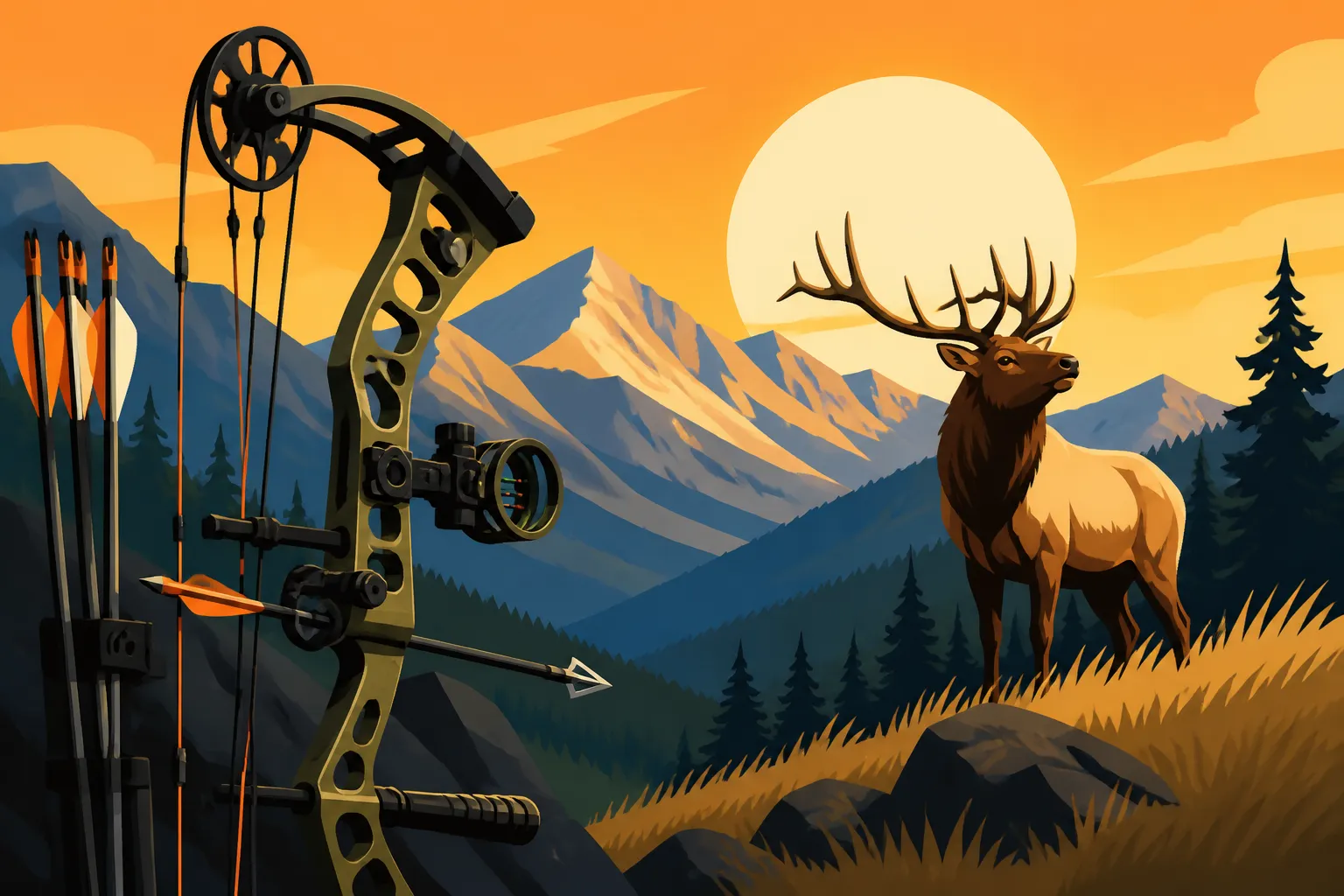
The majestic wapiti of Colorado offers one of the most exhilarating archery challenges a hunter can face. Many aspiring elk hunters, both new and seasoned, struggle with putting together an archery setup that can truly stand up to the rigors of the high country and deliver a clean, ethical kill on such a powerful animal. This guide is here to walk you through crafting the ultimate archery setup, specifically tailored for the unique demands of hunting elk in Colorado’s diverse and challenging terrain, ensuring you're ready for that once-in-a-lifetime shot.
Optimizing Your Bow for Mountain Elk Hunting
When you're chasing elk through the Colorado Rockies, your bow isn't just a piece of equipment; it's an extension of yourself. It needs to be reliable, robust, and capable of performing under duress. The mountains will test both you and your gear, so choosing the right foundation is paramount.
Draw Weight and Axle-to-Axle Considerations
The first thing many hunters focus on is draw weight, and for good reason. Elk are big, tough animals, and you need sufficient kinetic energy (KE) and momentum to achieve reliable penetration. While some archers push for the maximum draw weight they can pull, the key is consistency and accuracy, especially after a long, grueling hike uphill at elevation. It's far better to shoot a 60-pound bow accurately and smoothly than to struggle with a 70-pound bow and compromise your form. The common wisdom suggests a minimum of 60 pounds for elk, with 65-70 pounds being an excellent sweet spot for most hunters who can comfortably manage it. Remember, you'll likely be pulling this bow back with cold hands, elevated heart rate, and possibly awkward body positions. Prioritize being able to draw smoothly and hold steady when that bull steps out.
Next, consider the axle-to-axle (ATA) length of your bow. Modern bows range from ultra-compact models around 28 inches to longer, more stable bows approaching 35 inches or more. For mountain hunting, especially in dense timber or brush, a shorter ATA bow (typically 30-32 inches) offers significant advantages in maneuverability. It's easier to navigate tight cover, swing on a moving animal, or shoot from a kneeling or awkward position. However, shorter bows can sometimes be less forgiving and harder to shoot consistently, especially at longer distances. A good compromise for many Colorado elk hunters is a bow in the 31-33 inch ATA range. This provides a balance of stability for accuracy on those longer shots across an alpine basin, while still being nimble enough for close-quarters encounters in dark timber. When learning how to hunt elk in the dark timber, the ability to maneuver your bow silently and quickly can make all the difference.
Brace Height and Cam System Impact
Brace height, the distance from the pivot point of the grip to the string at rest, also plays a crucial role. A longer brace height (typically 6.5 inches or more) generally offers a more forgiving shot and can be easier for hunters to shoot accurately, especially under hunting pressure. It means the arrow leaves the string faster relative to the string's return, reducing the chance for human error in torque or release. Shorter brace heights (under 6 inches) tend to produce faster arrow speeds but are less forgiving of imperfections in form. For a Colorado elk hunt, where ethical shots are paramount and conditions can be less than ideal, prioritizing forgiveness with a brace height in the 6.5 to 7-inch range often makes more sense than chasing a few extra feet per second.
The cam system on your bow dictates its draw cycle, speed, and feel. Most modern compound bows feature either single-cam, hybrid cam, or binary cam systems. Single-cam bows are known for smooth draw cycles and ease of tuning, making them a good option for those prioritizing comfort and simplicity. Hybrid and binary cam systems often deliver more aggressive draw cycles and higher arrow speeds, with a solid back wall that many shooters prefer. These can be slightly more complex to tune, but once dialed in, they offer excellent performance. For hunting Colorado elk, you want a cam system that provides a smooth, predictable draw, a solid back wall for consistent anchoring, and enough speed to deliver that arrow with authority. Spend time at your local pro shop drawing different bows and finding what feels most comfortable and controllable to you. Don't forget, consistent practice is key, as outlined in our guide on Colorado Elk Hunting: Archery Tactics.
Critical Archery Accessories for Colorado Elk
A great bow is only as good as the accessories you put on it. For elk hunting, every component needs to be reliable, robust, and suited for mountain conditions.
Sights, Rests, and Stabilizers
Your sight is your window to the shot, and in the dynamic world of elk hunting, it needs to be versatile and tough. Many elk hunters opt for multi-pin sights, typically 3 to 7 pins, set at different yardages (e.g., 20, 30, 40, 50, 60 yards). This allows for quick target acquisition at known distances. However, a growing number of archers prefer a single-pin adjustable sight, like those from Black Gold or HHA. These sights allow you to dial in the exact yardage, eliminating the "gap shooting" between pins, which can be critical for precise shot placement on an animal as large as an elk. The downside is that they require an extra step to adjust the pin, which can be challenging if an elk suddenly appears closer or further than anticipated. Whichever you choose, ensure it's durable, has bright fiber optics for low-light conditions (dawn and dusk are prime elk activity times), and is easily adjustable in the field.
Your arrow rest is another critical component. It needs to provide consistent arrow launch for accuracy and be durable enough to withstand being bumped and jostled in the backcountry. Drop-away rests are the most popular choice for hunting due to their full containment of the arrow before the shot and their ability to drop completely out of the way, preventing fletching contact. Brands like QAD and Ripcord Code Red are mainstays in the elk hunting world. Ensure your rest is precisely tuned to your arrow and bow, as even a slight inconsistency here can throw off your shot at longer distances.
A stabilizer's primary job is to improve the balance of your bow and absorb vibration, making it more stable at full draw and quieter upon release. For mountain hunting, a shorter, lighter stabilizer (6-10 inches) is often preferred to keep the overall weight and length of the bow manageable, especially if you're carrying it for miles up and down steep terrain. Look for models made from carbon fiber for their excellent strength-to-weight ratio. A little extra stability can make a huge difference when you're breathing hard after climbing to hunt elk at high elevation.
Quivers, Releases, and Peep Sights
When it comes to quivers, you have two main options: bow-mounted or hip/backpack mounted. Bow-mounted quivers are convenient as your arrows are always with your bow, but they add weight and can affect the balance of your setup. If you choose a bow-mounted quiver, look for a lightweight, low-profile model that holds your arrows securely and doesn't rattle. Brands like TightSpot offer excellent options that minimize vibration and keep arrows tucked in close to the riser. Many backcountry hunters, however, prefer a quiver that detaches from the bow and is carried on a pack or hip belt, leaving the bow lighter and more streamlined for the shot. This can be especially useful if you're employing specific Colorado Backcountry Hunting Guide strategies.
Your release aid is the interface between you and your bowstring, and consistency is paramount. Whether you prefer a wrist-strap index finger release, a thumb button, or a back tension style, invest in a high-quality model that feels comfortable and performs consistently. Practice with it extensively to ensure a smooth, surprise release every time. A crisp, clean break from the string is essential for accuracy, particularly on longer shots where a tiny twitch can mean a missed opportunity.
Finally, don't overlook your peep sight. This small but vital component aligns your eye with your pins and target. Choose a peep sight that is appropriately sized for your hunting conditions and compatible with your sight housing. Many hunters opt for a peep sight with an interchangeable aperture system, allowing them to switch sizes based on light conditions or target distance. Ensure it's tied into your string securely to prevent rotation and maintain consistency.
Arrow and Broadhead Selection for Elk
This is where many debates ignite in the archery world, but for elk, the goal is clear: maximize penetration. An elk's hide is tough, their ribs are solid, and their vitals are deep. You need an arrow and broadhead combination that can drive through bone and tissue to deliver a quick, ethical kill.
Arrow Weight, FOC, and Construction
For elk, forget about ultra-light, high-speed arrows designed for deer. You want an arrow with good mass weight to carry momentum. Most serious elk hunters aim for a total arrow weight (including broadhead) of 450 grains or more, with many preferring 500-550 grains. While this might slightly reduce your arrow's speed, the increased momentum is far more beneficial for punching through an elk. A heavier arrow retains more kinetic energy and momentum downrange, especially after clearing obstructions like tree branches.
Front of Center (FOC) is another critical factor. This refers to how much of the arrow's weight is in the front half. A higher FOC (generally 12-15% or more) improves arrow flight stability, especially with fixed-blade broadheads, and enhances penetration by driving the force forward. You can increase FOC by using heavier broadheads, heavier inserts, or brass weights. Many hunters achieving exceptional penetration use a heavy broadhead (125-150 grains) combined with a robust carbon arrow shaft and a heavy insert system.
The construction of your arrow shaft matters too. Look for durable, straight carbon arrows. Consider the spine rating carefully; it must match your bow's draw weight and arrow length to ensure proper flight. Arrows from manufacturers like Easton, Victory Archery, and Gold Tip are popular choices known for their consistency and strength. For more specific details on what to pack, check out our comprehensive Colorado Backcountry Hunting Gear List.
Broadhead Types and Blade Configuration
The broadhead is arguably the most critical component for an ethical kill on an elk. You essentially have two categories: fixed blade and mechanical.
Fixed-blade broadheads are typically preferred by seasoned elk hunters for their reliability and superior penetration, especially when encountering bone. They have no moving parts, meaning there's nothing to fail upon impact. Look for a strong, sharp fixed-blade broadhead with a cut-on-contact or chisel tip. Two-blade designs often offer the best penetration due to less friction, but 3-blade and 4-blade designs with a compact profile can also perform exceptionally well. Brands like Iron Will, QAD Exodus, and GrizzlyStik are highly regarded for their robust fixed-blade designs. The key is razor sharpness and a strong ferrule that won't bend or break.
Mechanical broadheads (also known as expandable broadheads) offer a larger cutting diameter, theoretically leading to more tissue damage and blood loss. However, they rely on blades deploying upon impact, which introduces potential points of failure. In theory, they fly like field points, making tuning easier. For elk, if you choose a mechanical broadhead, select a robust design with a stout ferrule and strong blades that are designed to handle high impact. Ensure they have a reliable deployment mechanism and a smaller cutting diameter (1.5 inches or less) to maximize penetration on such a large animal. Some hunters use mechanicals successfully, but for many, the peace of mind and bone-splitting capability of a well-tuned fixed blade is worth any perceived flight advantages of mechanicals, especially when hunting something as formidable as a Colorado bull.
Here's a quick comparison of broadhead characteristics for elk:
| Feature | Fixed Blade Broadhead | Mechanical Broadhead (for Elk) |
|---|---|---|
| Penetration | Generally superior, especially through bone | Can be good, but energy is used for deployment and wider cut |
| Reliability | High, no moving parts to fail | Dependent on deployment mechanism; potential for failure |
| Flight | Requires meticulous tuning for perfect flight | Generally flies like a field point; easier to tune |
| Cutting Dia. | Smaller, typically 1"-1.25" | Larger, 1.5" or less recommended for elk for penetration |
| Durability | Very high, stout ferrules and thick blades | Varies, some designs are more robust than others |
| Ethical Aspect | Preferred by many for consistent, deep penetration | Can cause significant damage if deployed properly |
Regardless of your choice, ensure your broadheads are razor sharp. You can buy them pre-sharpened or sharpen them yourself, but a dull broadhead drastically reduces penetration and creates a less ethical outcome. Always broadhead-tune your arrows to ensure they fly exactly like your field points.
Tuning and Practice: The Often Overlooked Essentials
Having the "best" gear means nothing if it's not perfectly tuned and you're not proficient with it. This is where many hunts are won or lost long before opening day.
Precision Tuning Your Setup
Tuning isn't just for target archers; it's absolutely critical for hunting. A perfectly tuned bow means your arrow flies straight and true, maximizing accuracy and penetration. Start with basic paper tuning to ensure your arrow is leaving the rest without fletching contact and is flying consistently. Once paper tuning is satisfactory, move on to bare shaft tuning. This involves shooting a fletched arrow alongside a bare (unfletched) arrow at the same target. If they hit the same spot at 20-30 yards, your bow is extremely well-tuned.
The most crucial step for elk hunting is broadhead tuning. Fixed-blade broadheads, due to their aerodynamics, can react differently in flight than field points. You must ensure your broadheads hit the exact same spot as your field points at all relevant hunting distances (out to 60-70 yards). If they don't, you'll need to make micro-adjustments to your rest, nocking point, or even your cam timing (best done by a pro shop). This can be a frustrating process, but it's non-negotiable for elk hunting. If your broadheads are consistently hitting left or right of your field points, you are essentially aiming at a different spot than you think you are. GoHunt's resources often provide insights into unit-specific challenges that might influence your tuning needs.
Realistic Practice Scenarios
Once your bow is perfectly tuned, it’s time to practice, and not just from your backyard range. To prepare for a Colorado elk hunt, you need to simulate realistic hunting conditions.
- Practice at Varying Distances and Angles: The mountains are rarely flat. Practice shooting uphill and downhill at various angles. Use a rangefinder that accounts for angle compensation to get accurate yardages. A small discrepancy in angle can result in a significant miss on an elk.
- Shoot in Hunting Gear: Don't practice in a t-shirt only to find your bow string snags on your hunting jacket or backpack strap when you're actually in the field. Wear your hunting layers, your backpack (even if it's just a daypack), and practice drawing and shooting.
- Shoot Under Physical Stress: Hike up a steep hill, do some jumping jacks, or run a short sprint, and then immediately pick up your bow and take a shot. Your heart rate will be elevated when that bull steps out, and you need to practice controlling your breathing and making a calm, accurate shot. This kind of physical preparation goes hand-in-hand with physical conditioning for Colorado Elk.
- Practice from Awkward Positions: Elk rarely present a perfect, broadside shot from a flat, open field. Practice shooting from your knees, sitting, behind a tree, or through small shooting lanes. Being able to adapt to the situation is a huge advantage.
- Silence is Golden: Practice drawing your bow slowly and silently. Any squeaks or rubs can alert an elk and ruin your hunt. Check all your gear for potential noise sources, from your release to your arrows in the quiver.
- Understand Your Limitations: Knowing your maximum effective range is crucial. Don't take a shot in the field that you haven't consistently practiced and confidently made in practice. For most archers, this is typically within 40-60 yards on elk. It's far better to let an elk walk than to take a low-percentage shot and risk wounding an animal. Patience and discipline are your best tools in the field.
By meticulously tuning your setup and practicing under realistic conditions, you'll build the confidence and proficiency needed to make an ethical shot when the moment of truth arrives in the Colorado wilderness. Whether you're considering Colorado DIY Elk Hunting or going with a guide, this preparation is essential.
Disclaimer
Hunting is an inherently dangerous activity. This guide provides general information for educational purposes only and is not a substitute for professional instruction, adherence to local regulations, or personal judgment. Always consult official Colorado Parks and Wildlife regulations and hunt safely and ethically. Ensure you meet all hunter education requirements before pursuing any game.