Colorado Guided Pronghorn Hunt: What to Expect
Deciding to book a guided pronghorn hunt in Colorado can feel like stepping into a whole new world, especially if you're used to hunting whitetails back East or even chasing elk in the high country. The sheer speed of these "prairie ghosts" and the wide-open spaces of the Colorado plains present unique challenges and opportunities that can leave you scratching your head about where to start. This comprehensive guide will walk you through exactly what to expect when you embark on a guided pronghorn hunt here in Colorado, from the initial planning stages to field care and everything in between, helping you navigate the process with confidence.
Understanding What a Guided Pronghorn Hunt Entails
Pronghorn hunting is an incredible experience, offering a completely different flavor of Western big game pursuit. These animals, often mistakenly called "antelope," are the fastest land mammals in North America, and their keen eyesight makes them notoriously difficult to approach. A guided hunt is designed to leverage local expertise, access, and scouting to put you in the best possible position for success.
The Basics of Pronghorn Hunting in Colorado
Colorado's pronghorn population is robust, particularly across the eastern plains and sagebrush flats of the western slope. Unlike elk, which prefer dense timber and rugged mountains, pronghorn thrive in open grasslands and short-grass prairies. This habitat dictates the hunting methods, which primarily involve extensive glassing, strategic stalking, and often long-range shooting. It's a game of patience, optics, and precision.
One of the biggest differences you'll notice right away compared to many other big game hunts is the terrain. While there might be some rolling hills or river bottoms, you're mostly dealing with vast, flat to gently sloping landscapes. This means cover is at a premium, making successful stalks incredibly challenging. This is precisely where an experienced guide shines, knowing every subtle depression, wash, and rise that can offer precious concealment.
Understanding the animal's behavior is also crucial. Pronghorn are creatures of habit, often following similar routes to water and feed. They have phenomenal eyesight, often equated to an 8x binocular, making them incredibly difficult to sneak up on. Their curiosity can sometimes be exploited, but it's a delicate balance. Your guide will have spent countless hours observing these patterns and learning how to interpret their reactions to pressure and environment.
What 'Guided' Really Means
When you book a "guided" pronghorn hunt in Colorado, it generally means you're hiring a professional outfitter and their team to provide expertise, equipment, and access to prime hunting areas. This typically includes pre-scouted locations, transportation in the field (often 4×4 vehicles), knowledgeable guides who understand pronghorn behavior, and often lodging and meals. The guide's primary role is to lead you to game, help with the stalk, and assist with field recovery and care after a successful harvest.
A fully guided hunt is essentially an all-inclusive package where you show up, hunt, and let the outfitter handle the heavy lifting. This is a huge relief for non-resident hunters who don't have the time or resources to scout extensive areas or acquire private land access. Your guide will interpret the wind, assess the terrain for viable stalks, and help you judge the trophy quality of animals you encounter. They'll also be invaluable in teaching you how to get into a stable shooting position quickly in the field, which is paramount for pronghorn.
On the flip side, some outfitters offer "semi-guided" options. These might include access to private land, basic camp amenities, and some initial guidance, but you're largely responsible for your own hunting efforts day-to-day. For pronghorn, this is less common simply because the success rate is so tied to knowing the specific movements of herds in open country. Most hunters opt for a fully guided experience to maximize their chances and benefit from the guide's intimate knowledge of the area and the animals. Platforms like BookYourHunt can be a great resource to explore the different types of guided hunts available and read reviews from previous clients.
Typical Hunt Duration and Timing
Most guided pronghorn hunts in Colorado run for 2 to 3 days. This duration generally offers ample opportunity to locate and stalk a buck, given the open terrain and the guide's prior scouting. Archery seasons typically open in late August, overlapping with the tail end of the general rifle season for deer, while rifle seasons for pronghorn generally take place in September and October, often coinciding with specific draw periods.
The timing of your hunt profoundly influences the experience. Early archery season (late August) can be hot, and bucks are often still in bachelor groups. As September approaches and into the rut (late September to early October), buck activity picks up significantly, with males actively chasing does and challenging rivals. This can be an exciting time to hunt, as bucks are often more visible and vocal. However, they can also be more erratic, making stalks tricky.
Late season rifle hunts in October might see pronghorn grouped up more, but cold fronts can also push them to different areas. Your outfitter will have a good handle on when their specific area is most productive. When you're looking at specific seasons, always consult the Colorado Parks and Wildlife (CPW) regulations, as Colorado Pronghorn Season Dates and Tags can vary slightly year to year and by unit. Many hunters use tools like GoHunt to analyze draw odds and choose the best season dates for their desired unit and weapon.
Planning Your Colorado Pronghorn Adventure
Planning a guided pronghorn hunt isn't just about showing up with your rifle; it involves a bit of homework and preparation to ensure you make the most of your investment and experience. From understanding the draw to getting physically ready, every step counts.
Licensing, Tags, and Application Process
This is probably the most confusing part for many new Colorado hunters: obtaining a tag. Unlike some states, Colorado's pronghorn tags are almost exclusively acquired through the draw system, meaning you apply in the spring and hope you're successful. Over-the-counter (OTC) pronghorn tags are virtually non-existent for rifle seasons, and even archery OTC tags are rare and unit-specific, often for antlerless animals. This makes planning ahead absolutely critical.
You'll need to purchase a qualifying license, usually a small game or habitat stamp, before you can even apply for a big game preference point or a tag. The application period typically runs from late February through early April. Hunters usually apply for a specific hunt code which denotes the Game Management Unit (GMU), species, weapon, and season. You'll need to understand the concept of preference points; for popular pronghorn units, it might take several years to draw a coveted buck tag. Fortunately, some units are easier to draw, especially for archery or for doe tags.
Non-residents face stiffer competition and higher costs. Be sure to research the specific non-resident application process and fees, as detailed in the Colorado Non-Resident Hunting License Guide. After the draw results are announced, usually in late May or early June, you'll know if you've secured a tag. If you didn't draw, outfitters often have landowner tags or allocated tags for private land hunts that can bypass the public land draw system, though these come at a premium. This is where a conversation with your chosen outfitter early on is essential to understand their tag acquisition process. You'll also need to consider your Colorado Hunting License Costs beyond just the tag itself.
Choosing the Right Outfitter and Unit
Selecting the right outfitter is arguably the most critical decision for a guided pronghorn hunt. Start your research well in advance – a year or more out is not unreasonable, especially for top-tier operations. Look for outfitters with a strong reputation for ethical hunting, good success rates, and transparent communication. Websites like BookYourHunt allow you to filter by species, region, and read testimonials, giving you a broad overview.
When you contact potential outfitters, ask specific questions about their hunting areas (private vs. public, GMUs they operate in), typical success rates (not just opportunity rates), the number of guides per hunter, and what's included in the price. Understand their philosophy on hunting — are they focused purely on trophies, or is it more about the overall experience and harvesting an animal? For pronghorn, outfitters with access to large tracts of private land often offer the best opportunities, as it can significantly reduce pressure and improve shot opportunities.
Researching the GMUs (Game Management Units) where an outfitter operates is also vital. The Colorado Hunting Atlas Explained and tools like GoHunt can provide invaluable data on herd statistics, public/private land breakdown, and historical draw odds for specific units. This helps you verify an outfitter's claims and aligns your expectations with reality. Look for units known for good pronghorn populations, as highlighted in the Best Colorado Pronghorn Hunting Areas. A good outfitter will be happy to discuss the specifics of the units they hunt and why they choose them.
| Key Considerations When Choosing a Pronghorn Outfitter | Details & Why it Matters |
|---|---|
| Hunting Area Access | Private land access often yields higher success rates due to reduced pressure and managed herds. Ask if they have exclusive access or lease agreements. |
| Success & Opportunity Rates | Differentiate between seeing animals (opportunity) and actually harvesting one (success). Ask for recent years' data. |
| Guide-to-Hunter Ratio | A 1:1 guide-to-hunter ratio is ideal for personalized attention and better stalking opportunities. 1:2 can also work. |
| Included Services | Clarify what's included: lodging, meals, transportation, field dressing, caping, meat care. Avoid hidden fees. |
| Client Testimonials & References | Don't just read website testimonials; ask for recent client references you can call. |
| Ethical Practices & Licensing | Ensure the outfitter is licensed and adheres to fair chase principles. |
| Communication Style | A good outfitter will be responsive and transparent in their communication throughout the planning process. |
| Physical Demands of the Hunt | Discuss the expected walking, stalking, and shooting distances to ensure it matches your fitness level. |
Preparing for the Hunt Physically and Mentally
Pronghorn hunting, while not as physically demanding as a high-country elk hunt, still requires a decent level of physical fitness and mental preparedness. You'll be doing a lot of walking, often quickly, across uneven, sagebrush-covered terrain. More importantly, you'll need to be able to get into a stable prone or kneeling shooting position rapidly and hold it steady.
Imagine this scenario: your guide spots a buck at a mile, you make a plan, and then you're quickly moving several hundred yards, sometimes crawling on your belly, through cactus and rough ground to get within shooting range. Being able to do this without getting winded or developing a severe cramp is crucial. Focus on cardio, core strength, and practicing various shooting positions from uncomfortable angles. Don't underestimate the mental game either; pronghorn hunting can involve long periods of intense glassing followed by rapid, high-pressure stalks.
Your mental game for pronghorn should also include patience. There will be times when stalks fail, or a buck simply vanishes over a ridge. You'll spend hours glassing vast landscapes, which can be mentally fatiguing. The ability to stay focused and positive, even when things aren't going your way, is a huge asset. This is less about high-altitude endurance and more about being able to perform under pressure when that opportunity finally presents itself.
On the Ground: What to Expect During the Hunt
Once you arrive for your guided pronghorn hunt, the real adventure begins. Your days will be a blend of glassing, stalking, and learning to read the subtle nuances of the prairie.
Hunting Methods and Daily Routine
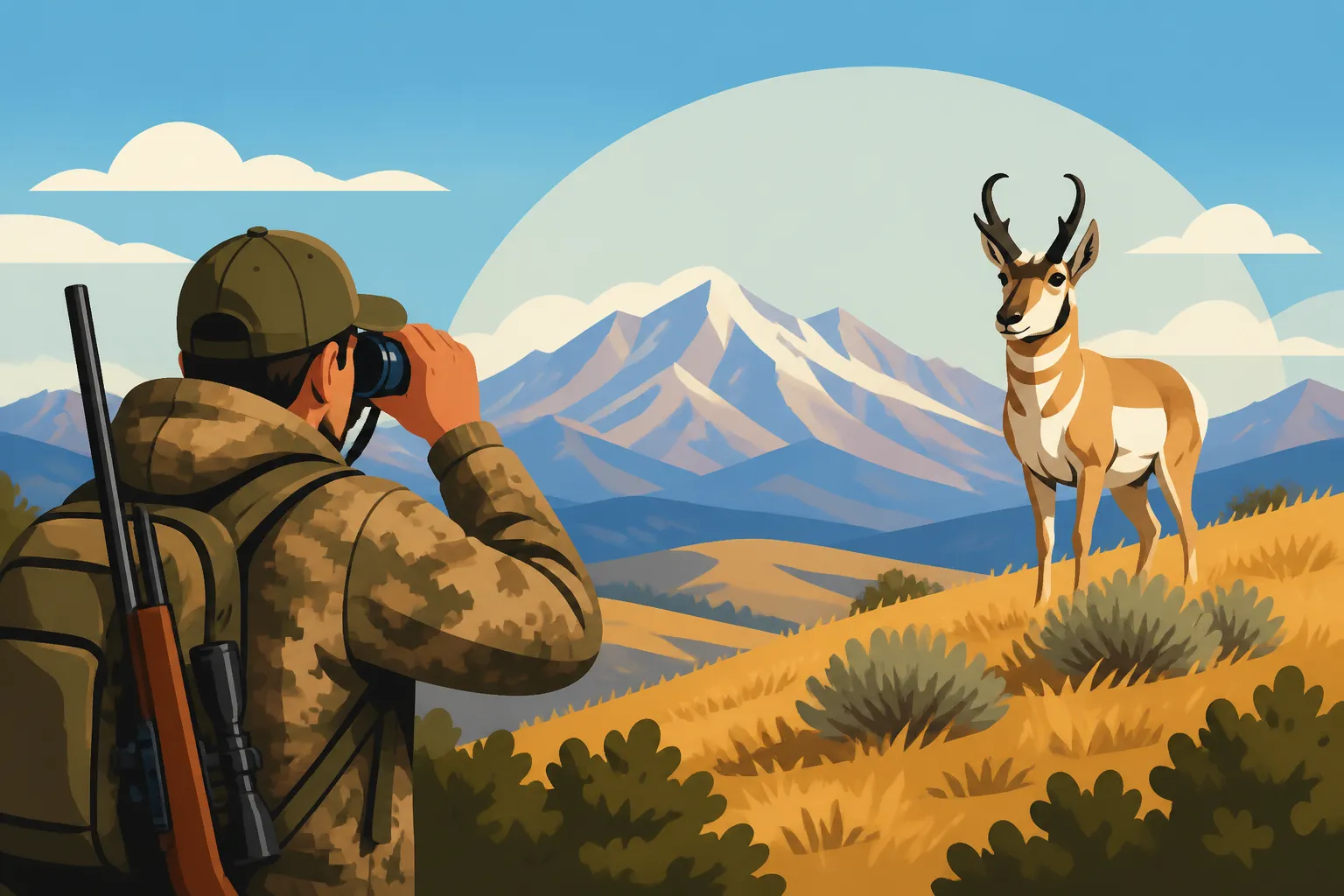
The core of pronghorn hunting is glassing. You'll spend a significant portion of your day behind binoculars or a spotting scope, meticulously scanning the vast landscape for the tell-tale white patches or dark horns of a buck. Guides are masters at this, often spotting animals you'd completely miss. Once a buck is spotted, the real work begins: evaluating its size, planning an approach, and initiating a stalk.
Stalking pronghorn is a chess match against one of nature's keenest observers. Your guide will utilize every ditch, fold in the terrain, and clump of sagebrush to get you within shooting range. This often means long crawls on your hands and knees, sometimes even on your belly, through abrasive terrain. Patience is paramount. A quick peek over a rise at the wrong time can send a whole herd scattering across the prairie at blistering speeds. You might also find yourself waiting for long periods, hoping the animals feed into a more favorable position.
A typical day often starts early, with guides having likely been out even earlier to check on herds. You'll usually drive to high vantage points, get out, and begin glassing. Once an animal is located, the process of planning and stalking can take hours. If a stalk is successful, you'll likely finish the day with field dressing and potentially celebrating around a campfire. If it's unsuccessful, you'll be back to glassing for the next opportunity, sometimes repeating the stalking process multiple times a day.
Gear, Logistics, and Field Care
Your outfitter will likely provide a detailed gear list, but some essentials are universal for a Colorado pronghorn hunt. High-quality optics are non-negotiable – a good pair of 10x binoculars and a reliable spotting scope (20-60x) will be your best friends. A flat-shooting rifle, often chambered in calibers like .25-06, .270, 6.5 Creedmoor, or .300 Win Mag, is preferred, as shots can frequently be beyond 200 yards, sometimes even up to 400 or 500 yards in open country. Practice shooting from prone and kneeling positions with shooting sticks or a bipod extensively before your hunt. For more specific advice, check out guides like Best Rifle Calibers for Colorado Elk which also touch on open country shooting.
Logistically, expect to be transported in comfortable 4×4 vehicles across often-rough private roads or two-track trails. The outfitters understand the landscape and typically have their camps well-situated. For field care, your guide will assist with field dressing, quartering, and preparing your animal for transport out of the field. This can involve caping for a shoulder mount and ensuring the meat is cooled quickly. They'll have game bags, knives, and the know-how to handle the animal efficiently, especially important on warmer early-season hunts.
Layered clothing is always recommended for Colorado, even on the plains. Mornings can be chilly, rapidly warming up to hot midday temperatures, then cooling again by evening. Durable pants are a must for crawling through brush and cactus. A good pair of comfortable, broken-in hiking boots is also essential, as you'll be covering many miles on foot during stalks. Don't forget sunscreen, a wide-brimmed hat, and plenty of water.
Success Rates and Realistic Expectations
Success rates on guided pronghorn hunts are generally quite high, often in the 80-100% opportunity range, with harvest rates typically between 70-95%, depending on the outfitter, the unit, and hunter proficiency. However, it's crucial to understand that "success" means harvesting an animal, not necessarily a Boone & Crockett giant. Colorado offers good opportunities for solid Pope & Young or Boone & Crockett caliber bucks, but drawing a tag in those top-tier units requires many preference points.
Maintaining realistic expectations is key. You'll likely see many pronghorn, but getting close to a mature buck on foot can be incredibly challenging. There will be long periods of glassing, failed stalks, and perhaps missed shots. A good outfitter focuses on giving you the best opportunities, but ultimately, pulling the trigger accurately is up to you. Don't go into the hunt expecting a trophy on day one with zero effort. The experience of the hunt, the beauty of the plains, and the camaraderie with your guide are as much a part of the reward as the animal itself.
Remember that weather plays a role too. Unexpected storms, high winds, or extreme heat can all impact pronghorn behavior and make hunting more difficult. Your guide will adapt to these conditions, but it's another reminder that hunting is never a guarantee.
After the Shot: Processing and Departure
Once you've made a successful shot and the animal is on the ground, the work isn't over. Your guide will ensure the animal is properly cared for, and then you'll wrap up your guided experience.
Meat Care and Taxidermy
After field dressing, your guide will help you prepare the pronghorn for transport. This typically involves quartering the animal and placing the meat in breathable game bags to cool. In warmer early-season hunts, getting the meat cooled quickly is paramount to prevent spoilage. Outfitters often have facilities or partnerships with local meat processors. Discuss these options with your outfitter beforehand to understand their process and any associated costs. You'll need to decide if you want to take the meat home as quarters, or have it processed and shipped.
If you plan on a shoulder mount or European mount, your guide will properly cape the animal in the field. They are skilled at making the necessary cuts to ensure the hide is prepared correctly for the taxidermist. Again, discuss your taxidermy plans with your outfitter well in advance so they can allocate the necessary time and expertise. They may even recommend local taxidermists they work with regularly, which can be a convenient option.
Proper meat and trophy care is a critical part of a successful hunt. Pronghorn meat is lean and delicious when handled correctly. The last thing you want is to rush this part and compromise the quality of your hard-earned harvest.
Tipping Your Guide
Tipping is a customary part of any guided hunt and is a way to show appreciation for your guide's hard work, expertise, and dedication. While not mandatory, it's a strongly recommended practice. The general guideline for a good guide is 15-20% of the hunt's cost, though this can vary based on the level of service and your satisfaction.
Think about all the things your guide did: scouting, driving, glassing for hours, leading difficult stalks, helping with recovery, field dressing, caping, and being your companion throughout the hunt. Even if you don't harvest an animal, a good guide still put in immense effort. Consider their attitude, their knowledge, their effort, and how well they communicated and collaborated with you. Your guide works incredibly hard to make your hunt successful and enjoyable.
It's best to bring cash for tipping, as it's the easiest and most direct way to compensate your guide. Some outfitters might accept Venmo or other digital payments, but cash is usually preferred. Present the tip discreetly at the end of the hunt, thanking them personally for their efforts.
Reflecting on the Experience
As your guided pronghorn hunt concludes and you head home, take some time to reflect on the entire experience. Whether you harvested a buck or not, a guided hunt in Colorado offers unique insights into the behavior of these incredible animals and the vast beauty of the plains. You've likely learned new glassing techniques, improved your stalking skills, and gained a deeper appreciation for the challenges of hunting in open country.
Even if a shot wasn't taken or a buck wasn't harvested, the journey itself—the early mornings glassing, the strategic planning with your guide, the heart-pounding stalks, and the serene moments watching herds across the plains—is invaluable. Many hunters find that the memories made and lessons learned far outweigh the final outcome. You’ll have a wealth of stories to share, and perhaps a new passion for pursuing these fast and wily "prairie ghosts."
Disclaimer
Please remember that hunting regulations, season dates, and tag requirements in Colorado can change. Always consult the most current Colorado Parks and Wildlife (CPW) regulations and official resources before planning any hunt. This guide is for informational purposes only and should not replace official sources.