How Much Does a Colorado Elk Outfitter Cost
Trying to figure out how much a Colorado elk outfitter costs can feel like staring into a bottomless pit of unknowns. You're dreaming of bugling bulls and crisp mountain air, but the practicalities of budgeting for a guided hunt can quickly become overwhelming, especially with so many variables. This guide is here to pull back the curtain, giving you a realistic breakdown of what you can expect to pay for an outfitted Colorado elk hunt, what drives those prices, and how to find an experience that fits your budget and expectations.
Understanding the Variables that Drive Outfitter Costs
The sticker shock that sometimes comes with looking at guided hunt prices isn't usually because outfitters are trying to gouge you. It's simply that there are so many moving parts and specialized services involved in putting together a successful, safe, and memorable backcountry experience. Understanding these core variables will help you discern why one hunt costs significantly more than another and what you're truly paying for.
Fully Guided vs. Semi-Guided vs. Drop Camps
This is arguably the biggest differentiator in outfitter costs. The level of service and direct involvement from your guide directly correlates with the price tag. It's a spectrum, and knowing where you fall on it will narrow down your options significantly.
A fully guided hunt is the most comprehensive and, consequently, the most expensive. With a fully guided hunt, you're essentially showing up with your gear, and everything else is handled. This typically includes a dedicated guide (often one-on-one or one guide for two hunters), all meals, lodging (which could be a comfortable lodge, a wall tent camp, or even a spike camp), transportation within the hunting area, and often assistance with game retrieval and field care. These hunts are perfect for first-time elk hunters, those seeking a truly immersive experience without the logistical headaches, or hunters who prefer to focus solely on the hunt itself. They take the guesswork out of scouting, navigation, and camp chores, allowing you to maximize your time in the field.
Semi-guided hunts offer a middle-ground solution, blending some outfitter support with more hunter independence. In this scenario, the outfitter might provide a pre-scouted area, a map, general advice on where to hunt, and perhaps transportation to and from a base camp. They might set up a comfortable camp for you, but you're responsible for your own cooking, daily hunting decisions, and often field care. Sometimes a guide will check in with you periodically or be available for consultation. This option appeals to hunters who have some experience but still want the logistical support of an outfitter, especially in unfamiliar terrain. It's a great way to save a bit of money while still benefiting from local expertise.
Drop camps are the most economical of the outfitted options and require the most self-sufficiency from the hunter. Here, the outfitter’s primary role is to pack you and your gear (and often your food) into a remote, pre-arranged camp location, and then pack you and any harvested game out at the end of your hunt. You are responsible for everything in between: setting up your sleeping arrangements (unless it's a pre-set wall tent), cooking, navigating, scouting, and all hunting activities. This option is ideal for experienced backcountry hunters who know how to navigate, hunt elk, and handle camp life but lack the horses or mules, or the desire, to pack in deep on their own. It gets you into prime, often less-pressured areas that would be inaccessible otherwise.
Duration of the Hunt and Group Size
The length of your hunt directly impacts the cost. Most guided elk hunts range from 5 to 7 days of actual hunting, not including travel days. The longer you stay in the field, the more resources the outfitter expends on your behalf – food, fuel, guide wages, horse feed, etc. Naturally, a 10-day hunt will cost significantly more than a 5-day hunt, even if the daily rate is the same.
Group size also plays a crucial role. A 1-on-1 guided hunt (one guide per hunter) offers the most personalized attention and flexibility but comes at the highest price. A 2-on-1 hunt (one guide for two hunters) is a popular choice, as it allows you to split the guide fee with a buddy, making the hunt more affordable for both. While 3-on-1 hunts exist, they are less common for elk due to the challenges of managing three hunters in the field effectively. The more hunters per guide, the lower the per-person cost, but you also sacrifice some individualized attention and mobility.
Species and Trophy Potential
While we're specifically talking about elk, it's worth noting that the target species and the potential for a trophy animal can influence cost. Elk hunts are generally among the more expensive big game hunts due to the logistics involved in hunting large, often remote animals. Within elk hunting, some outfitters specialize in trophy bull hunts, which might command a higher premium. These hunts are often conducted in specific units known for producing larger bulls, or they might involve more intensive scouting and resources dedicated to finding that "bull of a lifetime."
On the other hand, a cow elk hunt or a general elk hunt where any legal bull or cow is the objective might be more moderately priced. Remember, trophy potential often comes down to genetics, habitat, and the intensity of the outfitter's management and scouting, all of which require investment and expertise.
A Deep Dive into Colorado Elk Outfitter Price Ranges
Now, let's get down to the numbers. It’s hard to give an exact figure because prices fluctuate based on demand, specific services, reputation, and even the time of year (e.g., archery rut hunts can be more expensive than late-season rifle hunts). However, we can certainly outline realistic ranges for different types of experiences. When you're researching, don't be afraid to utilize resources like BookYourHunt, which allows you to filter by species, location, and price point, giving you a good snapshot of what's available.
Budget-Friendly Options and What They Entail
If you’re trying to keep costs down but still want some outfitter support, you’re generally looking at drop camps or potentially basic semi-guided options. These are often the entry point for hunters seeking outfitter services.
For a drop camp, you can typically expect to pay anywhere from $2,500 to $4,500 per hunter for a 7-day hunt. This price usually covers the pack-in and pack-out of your gear, food, and successful game. What it doesn't include is the actual hunting expertise or guidance. You're getting into prime elk country, possibly with a pre-set wall tent and wood stove, but after the outfitter waves goodbye, you're on your own until pickup day. This is a fantastic option for experienced hunters who are confident in their abilities but don't own horses or want to tackle the logistics of a deep backcountry pack-in themselves. You'll need to bring all your own hunting savvy, cooking gear, and a healthy dose of self-reliance.
A very basic semi-guided hunt might start around $3,500 to $5,500 per hunter, especially if it’s a 2-on-1 scenario in a less-pressured unit. At this price, you might get a basic base camp setup (think canvas wall tents or rustic cabins), some meals provided, and an outfitter who points you in the right direction each morning or drops you off at a trailhead. They might offer recovery assistance for harvested animals. You're still doing most of the hunting legwork, though, and shouldn't expect a dedicated guide constantly at your side. This can be a great value for hunters who understand elk behavior and feel comfortable navigating and making decisions in the field, but appreciate the convenience of a prepared camp and some local knowledge.
Mid-Range Experiences (The Sweet Spot for Many)
This is where the majority of guided elk hunts fall, offering a good balance of service and value. Many hunters find this range to provide the most bang for their buck, combining comfort, experienced guidance, and solid hunting opportunities.
A typical fully guided 2-on-1 hunt in Colorado for 5-7 days will generally run between $6,000 to $9,000 per hunter. For this price, you'll likely receive comfortable camp accommodations (could be a lodge, cabins, or well-appointed wall tents), all meals, a knowledgeable guide who is with you in the field daily, transportation within the hunting area (e.g., ATVs, horses, or trucks), and full assistance with game retrieval and initial field processing. This price point often includes excellent service, good food, and a more hands-on hunting experience. You'll get more individualized attention than a semi-guided hunt, and the outfitter's team will handle most of the camp duties, allowing you to focus on hunting and relaxing.
Many of these mid-range hunts will operate in units with good elk populations but perhaps not necessarily "trophy unit" status. The focus is often on a high-quality hunting experience and a reasonable opportunity to harvest a legal bull or cow. These are ideal for hunters who want the full guided experience without breaking the bank on a top-tier trophy hunt. When looking at these options, make sure to ask about success rates and what their definition of a "trophy" is – a raghorn bull is still a trophy for many!
Premium and Trophy Hunts (The High-Roller's Game)
At the upper end of the spectrum are the premium and dedicated trophy elk hunts. These experiences are designed for hunters who prioritize a higher chance at a large bull, unparalleled service, or access to exclusive private lands.
For a premium fully guided 1-on-1 hunt or a hunt explicitly marketed for trophy bulls, you should expect to pay anywhere from $10,000 to $15,000+ per hunter for a 5-7 day hunt. These hunts often feature private land access (either owned by the outfitter or through leases), which can significantly reduce pressure and increase the likelihood of encountering mature animals. They might also include more luxurious accommodations, gourmet meals, and highly experienced guides with extensive knowledge of specific "trophy units."
These hunts usually involve intensive pre-season scouting, higher guide-to-hunter ratios, and a focus on holding out for a specific class of animal. Some outfits even offer "guaranteed tags" through landowner voucher programs, which can bypass the public land draw system entirely, but these also add to the overall cost. Think of it as a concierge hunting experience – every detail is meticulously planned to maximize your chances and comfort. These are often the hunts where you hear about true giants being taken, but the cost reflects the investment in access, talent, and time.
| Hunt Type | Estimated Cost (7-day, per hunter) | Key Inclusions | Ideal For |
|---|---|---|---|
| Drop Camp | $2,500 – $4,500 | Pack-in/out, camp setup (basic), game retrieval | Experienced DIY hunters who need access & logistics |
| Semi-Guided | $3,500 – $5,500 | Base camp, some meals, area advice, game retrieval | Experienced hunters with some self-reliance |
| Guided (2:1) | $6,000 – $9,000 | Camp/lodging, all meals, daily guide, game care | Most hunters seeking full service & opportunity |
| Guided (1:1) / Trophy | $10,000 – $15,000+ | Premium lodging, gourmet meals, dedicated guide, private land access, trophy focus | Hunters prioritizing big bulls & luxury experiences |
What's Typically Included (and Not Included) in a Guided Hunt
Understanding the cost is one thing, but knowing what you get for that money is another. It's easy to assume everything is covered, but that's rarely the case. Being aware of inclusions and exclusions upfront is crucial for managing your budget and avoiding unpleasant surprises.
Essential Services and Accommodations
Most guided elk hunts, particularly those in the mid to high-range, generally include a core set of services aimed at making your hunting experience as smooth as possible.
Guiding Services: This is the primary offering. Your guide will lead you in the field, help you locate elk, assist with stalking and shot placement, and provide expertise on elk behavior and habitat. For a deeper dive into the guide's role, you might want to read our article on What to Expect on a Guided Colorado Elk Hunt.
Accommodations: This can vary wildly. It might be a rustic but comfortable wall tent camp with cots and wood stoves, a backcountry spike camp for strategic overnight hunts, a cozy cabin, or even a full-service lodge with modern amenities. The type of lodging will often be outlined in the outfitter's description and factored into the price.
Meals: Most outfitters provide all meals during your hunt, from hearty breakfasts to packed lunches for the field and delicious dinners at camp. Some premium hunts even boast gourmet chefs. If you have dietary restrictions, always communicate these well in advance.
Transportation in the Hunting Area: This covers getting you to and from hunting spots once you've arrived at the base camp. This could involve 4×4 vehicles, ATVs, horses, or even just hiking. However, it rarely includes transportation to the outfitter's base camp from your home or the nearest airport.
Game Retrieval and Field Care: Successfully harvesting an elk is just the beginning. Outfitters will assist with quartering, caping, and packing out your animal to a processing facility or cooler. This is an immense benefit, as packing out an elk, especially solo, is incredibly demanding. You can learn more about this process in our guide on How to Pack Out an Elk in Colorado.
Hidden Costs and Unexpected Expenses
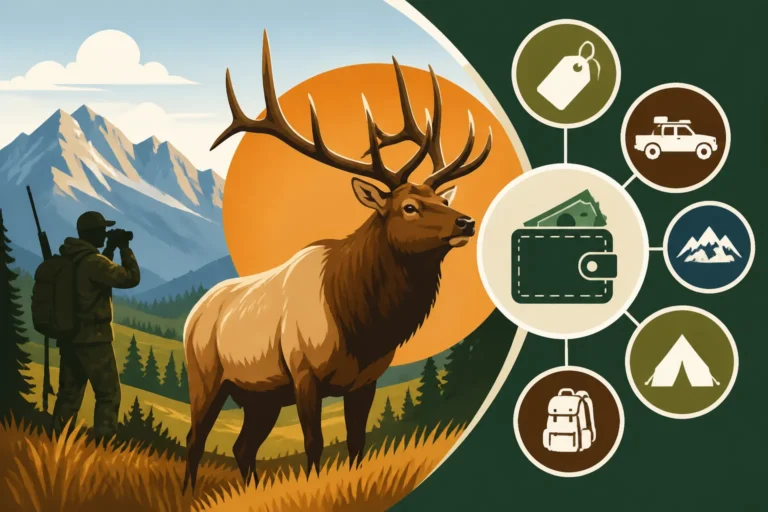
This is where many hunters get caught off guard. Beyond the upfront outfitter fee, several other expenses will inevitably add to your total trip cost. Being aware of these helps you budget more accurately.
Hunting Licenses and Tags: This is a big one. The outfitter fee never includes the cost of your Colorado hunting license and elk tag. For non-residents, a combination big game license (which includes small game and fishing) and an elk tag can easily run over $700-$800. If you're looking at specific draw tags or special landowner tags, those costs can escalate significantly. Make sure you understand the Colorado Draw System and Preference Points well in advance, as applying and securing tags is often a separate process from booking the outfitter.
Travel Expenses: Don't forget the cost of getting to Colorado! Flights, gas for driving, car rentals, and overnight stays before or after the hunt can add hundreds, if not thousands, to your bill. If you're flying, consider excess baggage fees for rifles or archery equipment.
Meat Processing and Taxidermy: After your elk is harvested and retrieved, you'll need to decide on processing. This can range from a few hundred dollars for basic cuts to significantly more for specialty processing or sausages. If you plan to have a trophy mounted, taxidermy fees are a substantial additional cost, and you'll need to arrange shipping for your cape and antlers.
Gratuities (Tips): Tipping your guide and other camp staff is customary and expected, much like in other service industries. This is a significant "hidden" cost that should be factored into your budget. We'll delve deeper into Tipping a Colorado Hunting Guide later in this guide, but generally, plan for 10-20% of the hunt cost.
Gear and Personal Supplies: While your outfitter might provide camp gear, you're responsible for your personal hunting equipment: rifle or bow, ammunition, optics, hunting clothing, boots, backpack, sleeping bag (for drop camps or spike camps), and personal toiletries. These costs can add up quickly, especially if you need to upgrade or purchase specialized gear for a Colorado elk hunt, like those discussed in our Colorado Backcountry Hunting Gear List.
Understanding Tags, Licenses, and Application Fees
Navigating the Colorado Parks and Wildlife (CPW) licensing system is a critical step that happens completely separate from booking an outfitter. Many non-residents, in particular, find this process daunting.
The Draw System: For most desirable elk tags in Colorado, you'll need to apply through the draw system. This involves purchasing a qualifying license and applying for specific hunt codes in the spring (usually by early April). Some units require several preference points to draw a tag, while others might be obtainable with zero or very few points. Outfitters can advise you on which units they operate in and what the typical draw odds are, but they cannot apply for you or guarantee a draw. You can gain more insight into this process by reading our guide on How to Apply for a Colorado Hunting License and Colorado Draw System and Preference Points.
Over-the-Counter (OTC) Tags: Colorado does offer some over-the-counter (OTC) elk tags, primarily for archery seasons and specific rifle seasons (often 2nd and 3rd rifle seasons, though this changes). These tags can be purchased without going through the draw, making them popular for non-residents and those with no preference points. However, OTC units often experience higher hunter pressure and can be more challenging. If an outfitter hunts an OTC unit, it simplifies the tag acquisition process but doesn't necessarily mean the hunting is easier. Our Colorado OTC Elk Tags Explained guide can provide more details here.
Landowner Vouchers: Some outfitters have access to landowner vouchers, which are essentially private land tags that can be purchased directly from the landowner. These tags bypass the state draw system, offering a guaranteed tag. However, they are significantly more expensive than public land tags and their cost is in addition to the outfitter's guiding fee. These are often associated with premium private land hunts. You can learn more about Colorado Landowner Vouchers Explained in a dedicated post.
Factors Beyond the Price Tag: Value and Experience
While cost is a significant consideration, it shouldn't be the only factor in choosing an outfitter. The overall value and quality of your hunting experience are paramount. A cheaper hunt that leads to a miserable experience isn't a bargain in the long run.
Reputation, Success Rates, and Ethical Practices
A reputable outfitter with a proven track record is worth its weight in gold. Don't just look at advertised success rates; dig deeper.
Success Rates: What do they mean by "success"? Is it 100% opportunity, 50% harvest, or 10% trophy harvest? Are their numbers realistic for the unit they hunt and the species they target? A 100% success rate on an OTC public land bull elk hunt might be a red flag, for instance, unless they specify a cow hunt or a very controlled private land scenario. Ask for references from past clients, especially those who hunted in the same season and style you're considering. This is where platforms like GoHunt can be invaluable, as they often compile data and reviews that give you a clearer picture.
Reputation and Reviews: Search online forums, check Google reviews, and read testimonials. Reach out to past clients directly if possible. A good outfitter will be happy to provide references. Be wary of any outfitter with consistently negative feedback or a lack of transparent information. A great resource for vetting is our guide on How to Vet a Colorado Hunting Outfitter.
Ethical Practices: Ensure the outfitter operates ethically and legally. They should be licensed by the state of Colorado and adhere to all hunting regulations. Ask about their game retrieval policy, their stance on fair chase, and how they handle wounded animals. A responsible outfitter prioritizes the welfare of the game and the integrity of the hunt.
Location, Terrain, and Physical Demands
Colorado elk hunting is rarely a "walk in the park." The terrain is rugged, the altitudes are high, and the physical demands are significant.
Unit and Terrain: Research the specific GMU (Game Management Unit) your outfitter hunts. Is it known for steep, dark timber? Open, high-alpine basins? Or more accessible foothills? Each type of terrain presents different hunting challenges and opportunities. Understanding the landscape will help you prepare physically and mentally. Our Best GMUs for Elk Hunting in Colorado article can help with your research.
Altitude: Colorado is famous for its high elevations. Many prime elk hunting areas are between 8,000 and 11,000+ feet. If you're coming from sea level, altitude sickness can severely impact your hunt. Ask your outfitter about the typical elevations you'll be hunting at. If it's high, dedicate time to physical conditioning and research altitude acclimation strategies. Consider checking out our How to Physically Prepare for Colorado Elk and Altitude Training for Colorado Hunting guides.
Physical Demands of the Hunt: Don't sugarcoat your fitness level to an outfitter. Be honest. A good outfitter will match you with a guide and a hunting style that suits your capabilities. Some hunts are more physically demanding, requiring long hikes, while others might involve more horseback riding or vehicle access. Make sure the outfitter's approach aligns with what you can realistically do.
The Importance of Communication and Vetting
Open and honest communication with potential outfitters is non-negotiable. This is an investment of time, money, and effort, and you deserve clear answers.
Ask Lots of Questions: Don't hesitate to ask a multitude of questions, even if you think they're basic. This is how you differentiate between good outfitters and great ones. Ask about:
- Their specific hunting methods (Colorado Elk Hunting Methods Explained)
- Average shot distances
- What happens if you wound an animal
- What equipment they recommend
- Their contingency plans for bad weather or unforeseen circumstances
- The experience level of their guides
Get Everything in Writing: Once you decide on an outfitter, ensure you receive a detailed contract outlining all inclusions, exclusions, payment schedules, cancellation policies, and any guarantees (or lack thereof). This protects both you and the outfitter.
Trust Your Gut: Ultimately, you're going to spend a significant amount of time, potentially in challenging conditions, with this outfitter and their team. A good rapport and a sense of trust are essential. If something feels off, it probably is.
Navigating the Booking Process and Finding the Right Fit
Booking a guided elk hunt in Colorado is a multi-step process, especially if you're aiming for a drawn tag. It requires forethought, research, and timely action.
Researching Outfitters and Comparing Quotes
The initial research phase is crucial. Don't just pick the first outfitter you find.
Online Resources: Start by looking at outfitters who operate in the units you're interested in, especially those known for specific types of hunting (e.g., archery, rifle, backcountry). Websites like BookYourHunt and GoHunt are excellent starting points. They often list multiple outfitters, provide pricing estimates, and sometimes include reviews or detailed hunt descriptions. These platforms can help you compare different operations side-by-side, filtering by location, species, and budget.
Outfitter Websites and Social Media: Once you've identified a few potential outfitters, dive deep into their individual websites and social media channels. Look for photos of successful hunts (are the animals consistent with what you're looking for?), testimonials, and details about their camps and guiding philosophy.
Call Them Directly: The absolute best way to gauge an outfitter is to talk to them on the phone. This allows you to ask specific questions, get a feel for their personality, and clarify any ambiguities. A good outfitter will be happy to spend time discussing your hunt. Use our guide on How to Book a Colorado Hunting Guide for a checklist of questions to ask. Don't be shy about getting multiple quotes from different outfitters to compare services and pricing.
The Role of Deposits, Contracts, and Insurance
Once you've chosen an outfitter, the administrative side begins.
Deposits: Almost all outfitters require a non-refundable deposit to secure your booking. This typically ranges from 25% to 50% of the total hunt cost. Understand the payment schedule for the remaining balance. Most outfitters require full payment 30-90 days before the hunt.
Contracts: As mentioned earlier, get a written contract. This legally binding document should detail everything from hunt dates, inclusions, exclusions, and payment terms to cancellation policies and liability waivers. Read it carefully before signing. Understand what happens if you need to cancel, or if the outfitter has to cancel (e.g., due to wildfires or unforeseen circumstances).
Trip Insurance: Seriously consider purchasing hunt or trip insurance. This can protect your significant financial investment in case you have to cancel due to illness, injury, or other emergencies. It can also cover lost luggage, medical emergencies during the hunt, or even non-refundable tag fees if you draw a tag and then can't go. Many insurance providers offer specialized hunting trip policies that cover specific risks associated with remote big game hunts.
Tipping Etiquette and Post-Hunt Considerations
Your relationship with the outfitter doesn't end when you shoot an elk.
Tipping: Tipping your guide is standard practice. A general guideline is 10-20% of the hunt cost, but this can be adjusted based on the level of service and the effort your guide put in. If other camp staff (cooks, wranglers) also provided excellent service, a separate tip for them is often appreciated. Always try to tip in cash directly to your guide or the outfitter to distribute. A thoughtful tip acknowledges their hard work, long hours, and dedication to your experience. For more detailed advice, refer to our article on Tipping a Colorado Hunting Guide.
Feedback: Provide honest feedback to your outfitter, both positive and constructive. This helps them improve their services for future clients. If you had an exceptional experience, consider writing a public review or becoming a reference for future hunters.
Meat and Trophy Logistics: Plan how you'll handle your meat and any trophy parts. Will you take the meat home with you? Ship it? Have it processed locally? Will you bring your cape and antlers home, or ship them to a taxidermist? Discuss these logistics with your outfitter beforehand to ensure a smooth process after a successful harvest. Outfitters can usually recommend local processors and shipping services.
Ultimately, the cost of a Colorado elk outfitter is an investment, not just in a hunt, but in an experience. By understanding the variables, budgeting realistically, and doing your due diligence, you can ensure that investment pays off with memories that last a lifetime.
Disclaimer
Please remember that hunting regulations, season dates, and license costs can change frequently in Colorado. Always consult the most current Colorado Parks and Wildlife (CPW) regulations and season brochures before planning your hunt. The information provided here is for general guidance and educational purposes only.