Hunting Colorado’s Eastern Plains for Pronghorn
Hunting pronghorn on Colorado's vast Eastern Plains can feel like an overwhelming challenge. The seemingly endless horizon, the scarcity of traditional cover, and the incredible senses of these speedsters often leave hunters feeling exposed and frustrated. This guide will walk you through everything you need to know to successfully navigate the unique environment of the Eastern Plains and increase your chances of harvesting a pronghorn.
Understanding the Eastern Plains Environment for Pronghorn
The Eastern Plains of Colorado are a world apart from the towering peaks and dense forests most people associate with hunting in the Centennial State. This distinctive landscape demands a different approach, and understanding its nuances is the first step toward a successful pronghorn hunt.
The Unique Landscape and Habitat
When you picture hunting in Colorado, you probably imagine rugged mountains, aspen groves, and dark timber. But head east from the Front Range, and the landscape dramatically changes. The Eastern Plains stretch out in a vast expanse of short-grass prairie, rolling hills, and dry creek beds, often with nary a tree in sight for miles. This open country might seem desolate, but it's a vibrant ecosystem perfectly suited for pronghorn.
The dominant vegetation here includes various grasses like buffalo grass and blue grama, interspersed with sagebrush, yucca, and sparse stands of cottonwood trees along drainages or near homesteads. These seemingly minor features are critical for pronghorn. The low-lying vegetation provides essential forage, but it also offers the only available cover for hunters trying to close the distance. Even a slight rise in terrain or a patch of taller grass can become a crucial advantage. Water sources, often scarce, become magnets for wildlife, especially during dry periods. Understanding these micro-features on the seemingly flat terrain is paramount to success. It's a landscape that teaches you to appreciate every ripple and swale.
Pronghorn Behavior and Adaptations to the Plains
Pronghorn are truly remarkable creatures, uniquely adapted to survive and thrive in this wide-open environment. Often mistakenly called "antelope," they are actually the fastest land mammal in North America, capable of bursts up to 60 miles per hour. This speed is their primary defense mechanism against predators in a landscape with nowhere to hide.
Beyond their speed, their eyesight is legendary. It’s often said a pronghorn can spot a hunter from miles away, and honestly, sometimes it feels that way. They possess binocular vision and exceptionally large eyes that give them a wide field of view, making them incredibly difficult to approach unnoticed. They also live in herds, which provides many sets of eyes and ears to detect danger. These herds vary in size, from small family groups to larger aggregations, especially outside the breeding season. During the rut, dominant bucks will gather and defend harems of does, making their movements a bit more predictable but also adding more eyes to contend with. They use the subtle undulations of the plains, even slight draws or rises, to bed down, feed, or travel, exploiting every bit of terrain for concealment. As a hunter, your challenge is to reverse-engineer their adaptations and use the same terrain features to your advantage. Their natural wariness is a testament to their survival instincts, making a successful stalk on the plains an even more rewarding achievement.
Essential E-Scouting and Pre-Hunt Preparation
Hunting the Eastern Plains for pronghorn isn't just about showing up with your rifle; it's a strategic game that starts long before you ever set foot in the field. Effective e-scouting and thorough preparation are the bedrock of success in this unique environment.
Leveraging Digital Tools for Public Land Identification
Finding huntable public land on the Eastern Plains can be daunting. Unlike national forests in the mountains, public land here often comes in smaller, disconnected parcels: Bureau of Land Management (BLM) acreage, State Trust Lands (STLs) that require a Public Access Program certificate, and Colorado Parks and Wildlife (CPW) State Wildlife Areas (SWAs). Relying solely on physical maps or general knowledge just won't cut it. This is where digital mapping tools become absolutely indispensable.
Platforms like onX Hunt are a game-changer for hunting the Eastern Plains. You can layer different maps, clearly delineating public and private land boundaries, which are often not fenced or marked on the ground. This precision is critical, as trespassing can quickly lead to legal trouble and ruin your hunt. Using onX Hunt, you can identify isolated pieces of BLM land, understand the access points for State Trust Lands, and locate Walk-In Access (WIA) properties. The WIA program, managed by CPW, leases private land for public hunting access, and these areas can be absolute goldmines for pronghorn. Make sure you understand the specific rules for each WIA property, as they can vary regarding hunting dates, species, and methods. Before you go, drop pins on potential access points, glassing knobs, and areas that look like natural travel corridors or feeding grounds. This virtual reconnaissance saves countless hours of wasted driving and hiking once you're on the ground. For more general advice, consider exploring a broader guide on How to E-Scout Before a Colorado Hunt.
Researching Units and Draw Odds
Colorado's pronghorn tags are primarily obtained through a draw system, meaning you can't just walk up and buy one over-the-counter (OTC) in most units. This makes pre-hunt research on specific Game Management Units (GMUs) incredibly important. Resources like GoHunt's Insider tool or the detailed data provided directly by Colorado Parks and Wildlife are invaluable for this stage.
You'll want to dive deep into draw odds, success rates, and population data for various Eastern Plains units. Look for units that consistently produce good numbers of pronghorn and offer a reasonable chance of drawing a tag, especially if you're a non-resident or have minimal preference points. For a deeper dive into the general system, check out Colorado Draw System and Preference Points. Units with high draw odds often mean more hunters, so balancing opportunity with potential pressure is key. Some units might require several preference points to draw a buck tag, while others might be obtainable with fewer or even zero points for doe tags. Understanding these dynamics is crucial for building a long-term strategy for hunting Colorado's speed goats. Don't forget to look at harvest statistics to get a realistic picture of what to expect in terms of trophy quality and overall success. This research phase is where your dream hunt starts to take shape based on solid data, not just guesswork. For specifics on draw chances, this guide on Colorado Pronghorn Draw Odds Explained can be very helpful.
Understanding Access and Permission
Once you've identified potential units and public land parcels, the next critical step is confirming access. On the Eastern Plains, public land is often interspersed with private property, and sometimes public parcels can be "landlocked" without a legal public right-of-way. It's a real headache for hunters, but something you must address.
Always cross-reference your digital maps with physical reconnaissance if possible, or at least with CPW's official maps and current regulations. For State Trust Lands, remember that you need a valid Public Access Program certificate. For Walk-In Access properties, review the specific signs and boundaries posted at the access points. These properties often have a limited season or specific rules that differ from standard regulations.
Then there's private land. A significant portion of the Eastern Plains is privately owned, primarily by ranchers. Gaining landowner permission can unlock incredible hunting opportunities and is often a less crowded experience. Don't be afraid to knock on doors or send letters well in advance of the season. Be polite, respectful, and clear about your intentions. Offer to share meat or help with a chore. Sometimes, simply showing up with a good attitude and a willingness to respect their land is enough. Even if they say no, thank them for their time. Building a good rapport with landowners can open doors for future hunts. Remember, responsible access management is vital for the future of hunting on both public and private lands in Colorado. If you're new to the state, also ensure you're familiar with Colorado Public Land Hunting Guide to avoid common pitfalls.
Hunting Methods for Eastern Plains Pronghorn
Pronghorn hunting on the Eastern Plains is a game of patience, stealth, and adapting to the vast, open landscape. Forget tree stands and dense cover; success here comes from different tactics.
Spot-and-Stalk Tactics
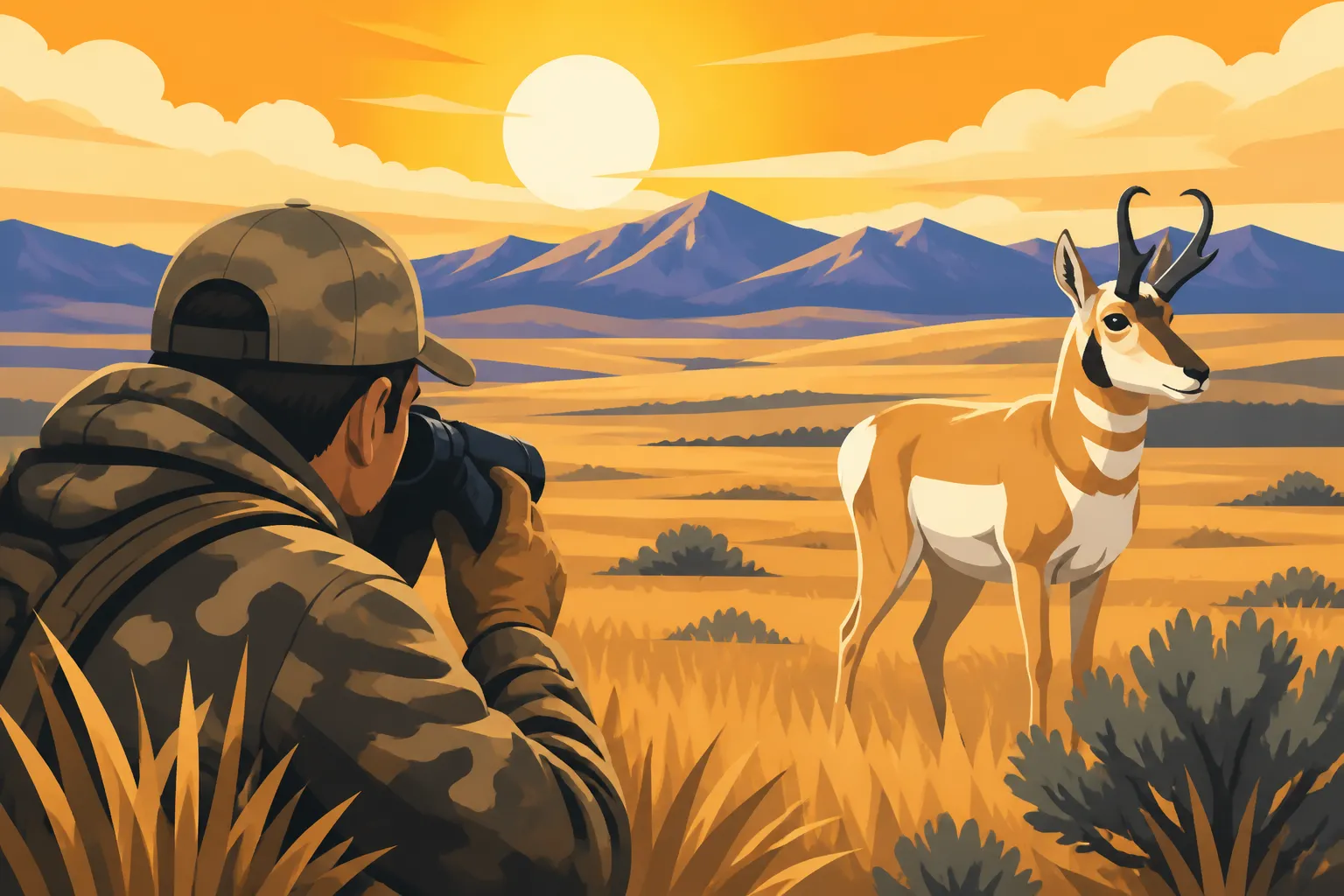
This is, without a doubt, the most common and often most effective method for hunting pronghorn on the Eastern Plains. Pronghorn have eyes like a hawk, so you need to outsmart them by using the subtle terrain to your advantage.
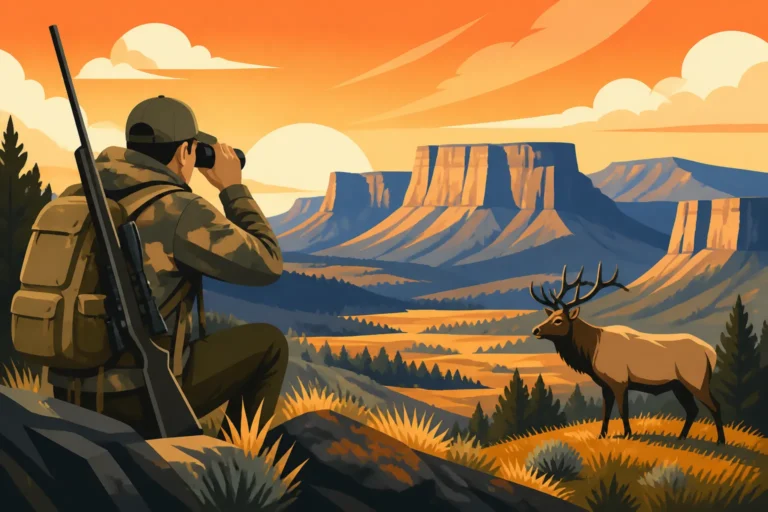
The first step is glassing, and lots of it. Find the highest point you can, even if it's just a slight rise or the roof of your truck. Use high-quality binoculars (10×42 or 12×50 are excellent choices) or a spotting scope (15-45x or 20-60x) mounted on a tripod. Systematically grid the landscape, scanning every inch for the tell-tale white patches, dark bodies, or flick of a horn. Pronghorn often stand out against the buff-colored grass. Don't just look for whole animals; look for pieces of them: a horizontal line that shouldn't be there, a flash of white, or the distinct shape of a head. Once you spot a herd, assess the size of the bucks and their location relative to any available cover. This is where your pre-scouted onX Hunt pins come in handy.
The stalk itself is the true test. Pronghorn are incredibly sensitive to movement. The key is to use every bit of available cover. A small creek bed, a patch of taller grass, a slight fold in the earth—anything that breaks up your silhouette is your friend. Crawling is often involved, sometimes for hundreds of yards. It's dusty, it's thorny, and it's exhausting, but it's often the only way to get within shooting range. Pay close attention to the wind, as scent control is still important even in open country. Move slowly, deliberately, and always stay low. When you need to peek, do so with minimal exposure, using a hat or small bush to break up your outline. Remember that pronghorn can easily judge distance, so use your rangefinder constantly. The moment of truth usually involves patiently waiting for the animal to turn its head or move behind a small dip, allowing you to raise your rifle or bow for the shot. For those wanting a more detailed breakdown, consider reading How to Spot-and-Stalk Colorado Pronghorn.
Decoying Strategies
Decoying pronghorn can be one of the most exhilarating and often humorous hunting experiences out there. It works because pronghorn are incredibly curious and territorial, especially during the rut (late August to mid-September).
The basic premise is simple: you use a life-sized pronghorn decoy to lure a buck (or even a doe) within shooting range. Most decoys are either a full-body buck or a flat silhouette. The method usually goes something like this: spot a buck with his does from a long distance, often 1-2 miles away. Position yourself so the buck sees the decoy but doesn't immediately see you. This often means having the decoy just over a rise or visible on the skyline. Then, you crawl behind the decoy, pushing it ahead of you, slowly closing the distance. The buck, seeing what he perceives as a challenger moving into his territory, will often come running to investigate or challenge. Sometimes they come in a full sprint; other times, they cautiously trot, circling to get a better look.
Decoying requires excellent communication if you're hunting with a partner (one holds the decoy, the other gets ready to shoot), or mastering the art of controlling a decoy while crawling with your weapon if you're solo. It’s also crucial to identify a clear shooting lane and be ready for a shot at any moment, as they can close the distance incredibly quickly. The main challenge is getting the buck to commit and approach head-on or broadside, rather than circling wide or spooking. Wind direction is still important, but sometimes the intense curiosity of a buck will override his caution. This method isn't always successful, and it often results in spectacular failures (read: running bucks!), but when it works, it's an unforgettable adrenaline rush.
Hunting Water Sources and Wallows
While less common than spot-and-stalk or decoying, targeting water sources can be an effective tactic for pronghorn on the Eastern Plains, especially during hot, dry periods. Pronghorn need to drink, and if natural water is scarce, they will concentrate around available sources.
This method requires significant scouting. You'll need to locate isolated water holes, stock tanks, or even shallow ponds that pronghorn frequent. Look for tracks, droppings, and worn trails leading to the water. A good pair of binoculars or a trail camera can help you pattern their movement. Once you've identified a prime spot, the key is setting up an ambush point before the pronghorn arrive.
Cover is usually the biggest challenge. On the open plains, natural cover near water might be limited to a small clump of sagebrush, a subtle depression, or an old fence line. You might need to bring a portable ground blind or construct a makeshift one from natural materials. The setup needs to be downwind and concealed, allowing for a clear shot. Patience is paramount, as you could be sitting for hours under the relentless prairie sun. The best times are usually early morning or late evening when animals are most active. However, pronghorn are adaptable and will come to water throughout the day, especially if temperatures are high. This method offers a more stationary, less physically demanding approach compared to spot-and-stalk, but it relies heavily on thorough pre-scouting and enduring long waits. For more general insights into how other game might use these features, you could look into How to Hunt Elk Water Holes, as the principles of identifying and ambushing can be similar.
Here's a quick comparison of these hunting methods:
| Method | Primary Advantages | Primary Challenges | Best Use Case |
|---|---|---|---|
| Spot-and-Stalk | High success rate; physically engaging; rewarding | Requires extreme patience and stealth; physically taxing | Most versatile; effective throughout the season |
| Decoying | Incredibly exciting; can draw bucks from far distances | Unpredictable; requires good timing; only effective on rutting bucks | During the rut (late August – mid-September) |
| Water Source | Less physically demanding; predictable animal movement in dry spells | Limited cover; requires extensive scouting; long waits | Hot, dry periods when water is scarce |
Fieldcraft and Post-Harvest Considerations
Successfully pulling off a pronghorn hunt on the Eastern Plains is only half the battle. What you do during the hunt and immediately after the shot can make all the difference, especially when dealing with the unique conditions of this landscape.
Mastering Wind and Thermals in Flat Terrain
In the mountains, thermals (rising and falling air currents) play a massive role in how animals move and how you approach them. On the Eastern Plains, while subtle thermals can exist along drainages, the prevailing wind is your constant, most critical factor. The wind on the plains can be relentless and often unpredictable, swirling at times but generally coming from a consistent direction.
Understanding wind direction and how it carries your scent is absolutely non-negotiable for pronghorn. Their primary defense is their eyes, but their nose is still highly capable. You must always plan your approach to stay downwind of the animals. This means taking indirect routes, sometimes adding significant distance to your stalk, just to maintain a favorable wind. Carry a wind checker (a small bottle of powder or thread) and use it frequently. Wind socks, flags, or even just tossing up a bit of dry grass can give you real-time information.
Thermals are less of a concern on the generally flat, open plains, but don't completely disregard them. Along deeper creek beds or ravines, you might experience slight thermal drafts, especially in the early morning and late evening. However, the sheer power of the surface wind will typically dominate. Your strategy should revolve around constant wind awareness, scent control (wearing clean clothes, showering with scent-free soap), and making sure you position yourself for a shot without your scent drifting to the animals. This takes discipline, as it often means bypassing what looks like an easy, direct approach.
Field Care and Meat Preservation on the Plains
You've made a great shot, and your pronghorn is down. Congratulations! Now the real work begins, and it's work that needs to be done quickly and efficiently, especially on the Eastern Plains where temperatures can be surprisingly warm, even in early fall. Pronghorn meat is delicious, but it can spoil rapidly if not handled properly.
The moment you reach your animal, the priority is to field dress it immediately. Remove all internal organs to allow the carcass to cool down as quickly as possible. This involves gutting the animal where it lies. Next, if you're able, skin the animal in the field. This removes a layer of insulation and helps with cooling. Pronghorn are relatively small, so skinning is usually manageable for one person. Hang the carcass if possible, even if it's just from the bumper of your truck or a sturdy fence post, to allow air circulation.
Many hunters quarter their pronghorn in the field, especially if they are far from their vehicle or if temperatures are high. Breaking the animal down into its major muscle groups allows for more rapid cooling and easier transport. Bring plenty of game bags—not just trash bags—to protect the meat from dirt, flies, and debris while still allowing it to breathe. The tightly woven material of quality game bags from brands like T.A.G. Bags or Outdoor Edge is ideal. If it's warm, consider bringing a cooler filled with ice. Once quartered and bagged, get the meat into the cooler as soon as possible. Even a short drive in warm weather can compromise the quality of the meat. Keeping the meat cool is paramount to avoiding souring, which happens surprisingly fast with smaller game in warm conditions. For more detailed advice, you can adapt many of the principles found in How to Keep Elk Meat Cool in Warm Weather to pronghorn.
Ethical Hunting and Respect for the Land
Hunting on Colorado's Eastern Plains for pronghorn isn't just about the chase; it's about being a responsible steward of the land and a respectful member of the hunting community. Our actions out in the field reflect on all hunters, so let's make sure they're positive.
Public Land Etiquette and Responsible Hunting
The vastness of the Eastern Plains often belies the fact that you're sharing the landscape with other hunters, landowners, and recreational users. Proper etiquette is crucial to ensure continued access and positive relationships. When hunting public land, always be aware of your surroundings. If you see another hunter already working an area, give them ample space. Nothing sours a hunt faster than feeling encroached upon. A general rule of thumb is to give them at least half a mile, if not more, to work their animals.
Respect all boundaries, especially when public land abuts private property. Use your GPS with up-to-date land ownership maps (like those from onX Hunt) to ensure you're always aware of where you are. Never trespass, even accidentally. If you must retrieve an animal that runs onto private property, secure your weapon and make immediate contact with the landowner to request permission. Be prepared for a "no," and respect their decision.
"Leave No Trace" principles are vital. Pack out everything you pack in, including spent shell casings, food wrappers, and any trash. Be mindful of your vehicle. Stick to established roads and trails, especially in wet conditions, to prevent creating ruts and damaging the fragile prairie ecosystem. Be courteous, and remember that our collective behavior influences the public's perception of hunting. This responsibility extends to everyone who enjoys Colorado Hunting Seasons Explained.
Conservation and Management of Pronghorn
Pronghorn are an incredible success story of wildlife conservation. Once decimated by unregulated hunting and habitat loss, their populations have rebounded thanks to sound management practices and the dedicated funding provided by hunters through license fees and excise taxes on hunting equipment (Pittman-Robertson Act). As hunters, we play a direct and crucial role in this ongoing success.
Colorado Parks and Wildlife (CPW) actively manages pronghorn populations through carefully set tag quotas and season structures. The draw system ensures that harvest levels are sustainable and help maintain healthy herds. By participating in these regulated hunts, we contribute to valuable data collection that informs future management decisions.
Ethical hunting also means taking clean, humane shots to minimize suffering and maximize meat recovery. It means understanding and adhering to all hunting regulations, not just because they're the law, but because they are designed to protect the resource. Every pronghorn hunter is a conservationist, and our actions directly support the long-term health and abundance of these iconic speedsters on the Eastern Plains. Being informed about Colorado Pronghorn Behavior and Biology can further deepen your appreciation for these magnificent animals and your role in their conservation.
Disclaimer
Please remember that hunting regulations and season dates can change. Always consult the most current Colorado Parks and Wildlife (CPW) regulations and season brochures before planning any hunting trip. This guide is for informational purposes only and does not supersede official CPW guidelines.