How to Find Wilderness Elk in Colorado
It's no secret that finding elk in Colorado can feel like searching for a needle in a haystack, especially when you're dreaming of those wild, unpressured bulls deep in the backcountry. The sheer vastness of the Colorado wilderness, combined with increasing hunter numbers, means you need a strategic approach to locate these elusive animals away from the roads and crowds. This guide is designed to help you peel back the layers of the wilderness, understand where elk truly seek refuge, and equip you with the knowledge to consistently find them in their untouched, natural habitats.
Understanding Wilderness Elk Behavior and Habitat
Hunting truly wild elk means understanding how they interact with vast, undisturbed landscapes. These aren't the elk that regularly see ATVs or hear truck doors slamming. Wilderness elk are survivors, keenly attuned to their environment, and they've learned to use the terrain to their advantage. Their behavior is often dictated by security, food, water, and thermal regulation, all magnified in unpressured areas.
Security is Paramount for Wilderness Elk
In remote wilderness areas, elk don't face the same constant human intrusion as those closer to roads. However, they still prioritize security, often opting for dense timber, steep north-facing slopes, or high-elevation benches that offer both cover and a commanding view. These spots are their sanctuaries, their safe zones where they can bed down and digest without constant threat.
Picture a mature bull, wise to the ways of the mountains. He's not going to be lingering in a wide-open meadow at midday if there's any chance of a hunter stumbling upon him. Instead, he's likely tucked into a thick patch of Engelmann spruce on a steep slope, maybe just below a rocky ridge line, using the thermals to his advantage. He might have several escape routes planned, ready to ghost into the dark timber at the first hint of danger. These areas often receive minimal hunting pressure simply because they are difficult to access, requiring significant physical exertion and navigational skill. They are often far from established trails, making them true refuge areas for elk.
Food and Water Sources in Remote Terrain
While security drives their bedding choices, food and water are equally critical, especially in the high-country wilderness. Elk need consistent access to nutritious forage and reliable water sources. In the vastness of the Colorado wilderness, these might be pristine alpine meadows, scattered aspen groves, or areas burned in previous wildfires that now boast a flush of new growth.
Look for areas where different habitat types converge. A north-facing timbered slope for bedding might be adjacent to a south-facing slope or a high-elevation park full of delicious forbs and grasses. Water can be a spring, a snowmelt creek, or even high-elevation wallows. During the early archery seasons, elk will often frequent these cool, wet areas to escape heat and flies. As the seasons progress and forage changes, so too might their preferred feeding grounds. Understanding these patterns, like where the most nutritious feed is available in specific seasons, becomes a critical piece of the puzzle. It's about thinking like an elk: where would you feel safe, full, and hydrated?
Navigating Thermal and Wind Patterns
In the Colorado mountains, thermals and wind are your constant companions, and elk are masters at using them. Understanding these air currents is not just helpful, it's absolutely essential for finding and hunting wilderness elk. Thermals typically rise as the sun heats the ground in the morning and fall as the air cools in the evening. Elk use these rising thermals to carry their scent uphill to predators below and falling thermals to detect danger coming from above.
A classic example is a bull bedding on a bench high up a north-facing slope. In the morning, as the sun hits the opposing ridge, the air warms and begins to rise. This rising thermal carries his scent, and any scent from predators below him, uphill. As the day progresses and evening approaches, the air cools, and the thermal begins to fall, carrying scent downhill. A smart bull will adjust his position, or at least his awareness, to account for these changes. When you're glassing a big basin or still-hunting through timber, remember that the wind and thermals are always at play. Approach from a direction that keeps your scent from reaching the elk, anticipating how these invisible currents will flow based on the time of day and topography.
E-Scouting Wilderness Areas from Home
Before you ever lace up your boots, modern technology provides incredible tools to scout vast wilderness areas right from your couch. This is where your phone, tablet, or computer becomes an indispensable part of your hunting kit. The goal is to identify potential elk habitat, understand access points, and pinpoint areas with minimal human disturbance.
Utilizing Satellite Imagery and Topo Maps
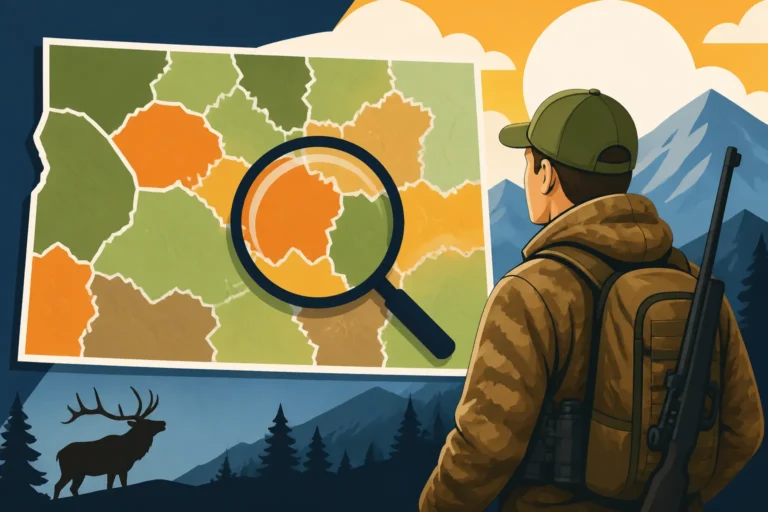
Mapping applications like onX Hunt have revolutionized how we scout. Gone are the days of poring over paper maps with limited detail. Now, you can zoom in, analyze terrain features, and mark waypoints with incredible precision. Start by identifying large blocks of public land, particularly those designated as wilderness areas or national forests with significant roadless portions. Remember, the deeper you go, generally, the less pressure you'll encounter.
Look for combinations of dense timber, open parks, benches, saddles, and drainages. Elk love transition zones. Pay close attention to north-facing slopes, which tend to hold snow longer, offer cooler bedding in warmer months, and often have thicker cover. Mark potential water sources like springs, seeps, and creeks. Use the topographic lines to understand slope angles—elk, especially bulls, don't shy away from steep terrain. Look for natural barriers that might deter other hunters, such as wide canyons, dense blowdowns, or particularly rugged mountainsides. The more obstacles you identify, the higher the chance those areas hold unpressured elk. This is also where you can look for potential travel corridors and areas that might serve as natural funnels. For more details on this process, check out our guide on How to E-Scout Before a Colorado Hunt.
Identifying Access and Pressure Points
A critical part of e-scouting wilderness elk is understanding how other hunters might access an area, and then planning to go where they won't. Identify trailheads and popular hiking trails. These are usually the entry points for most recreationalists, including hunters. Wilderness elk, particularly during hunting seasons, will quickly learn to avoid these well-traveled corridors.
Your strategy should be to find "backdoor" access points or plan a route that takes you far off the beaten path, away from established trails. This might mean identifying a lesser-used game trail, a drainage that leads deep into a basin, or even a route that requires traversing a difficult ridge line. Consider the actual effort required: elevation gain, distance from the road, and ruggedness of the terrain. Hunters are generally like water – they follow the path of least resistance. Wilderness elk thrive where that resistance is highest. Also, tools like GoHunt can provide insights into draw odds and harvest statistics for specific units, which might indirectly indicate hunter pressure or success rates in certain regions.
Interpreting Historical Data and Migration Patterns
For serious wilderness elk hunting, delving into historical data can give you an edge. Many state wildlife agencies, including Colorado Parks and Wildlife (CPW), publish migration maps and herd reports. These reports can indicate traditional summer ranges, wintering grounds, and key migration corridors. While wilderness elk might not follow strict migration paths like lower-elevation herds, they will still move in response to forage availability, snowpack, and hunting pressure.
Use this data in conjunction with your mapping tools. If you're hunting in a specific season, understand where elk are likely to be at that time of year. For instance, early archery season might find them higher in elevation, enjoying the green feed, while late-season hunts will likely see them dropping down as snow accumulates. Understanding these shifts, and how factors like a "cold-front elk push" influence movement, will guide your e-scouting efforts. Don't just look for where elk are, but where they'll be going. This forward-thinking approach is what truly separates successful wilderness hunters.
Boots-on-the-Ground Reconnaissance and Strategy
E-scouting is fantastic for narrowing down possibilities, but nothing beats getting your boots on the ground. This physical scouting, either before the season or during your actual hunt, is where you confirm your theories, discover fresh sign, and adapt your plan to the reality of the landscape.
Hiking Deep into Unpressured Sanctuaries
The cardinal rule of finding wilderness elk is simple: go where others won't. This often means embracing the grind, packing in several miles, and being willing to climb steep elevation. These are the areas that require significant physical preparation, but they also offer the greatest rewards. Once you’re several miles in, away from roads and popular trails, you’ll start to see different elk sign—more relaxed browsing, bigger tracks, and perhaps even rubs and wallows that haven’t been recently disturbed by other hunters.
Plan to establish a spike camp or a mobile camp that allows you to stay deep in the wilderness for several days. This commitment to staying remote is often the differentiator. If you're constantly hiking in and out from a trailhead each day, you're missing out on the prime low-light hours when elk are most active, and you're adding unnecessary stress to your body. Think about how to effectively Pack for a Colorado Backcountry Hunt to ensure you have everything you need for an extended stay. These deep dives are where you find elk that haven't been pushed, allowing for more natural interactions and better hunting opportunities.
Interpreting Fresh Sign and Elk Behavior
Once you're in a promising wilderness area, shift your focus to finding fresh sign. This is where your skills as a tracker and observer come into play. Look for fresh tracks, droppings (especially warm, moist piles), rubs on trees (from bulls polishing their antlers), and active wallows. Also, pay attention to the feeding sign: freshly nipped grasses, browsed shrubs, and disturbed ground where they've pawed for roots.
Fresh sign confirms that elk are in the area and, more importantly, how recently they were there. Old, dried droppings or faded tracks tell you they use the area, but fresh sign tells you they are here now. During the rut, look for more aggressive rubs and disturbed ground from sparring. If you find a series of fresh tracks, try to determine their direction of travel and what they were doing (feeding, bedding, traveling). These subtle clues are like breadcrumbs leading you to the elk, painting a picture of their daily routines in their secluded sanctuary.
Glassing Expansive Basins and Dark Timber
Glassing is arguably the most powerful tool for finding wilderness elk, especially in the vast, open country of Colorado's high mountains. Find a vantage point that offers an expansive view of a basin, a series of timbered ridges, or a large alpine meadow. Use high-quality binoculars or a spotting scope and systematically grid the area. Look for any movement, a patch of brown that seems out of place, or the gleam of an antler in the morning sun.
Elk often move in and out of the timber, especially during low light. Focus on the edges of the timber, fingers of trees extending into meadows, and saddles between drainages. Even in dense timber, you can spot pieces of an elk: an ear, a leg, or a sliver of hide through a gap in the trees. Patience is key. Spend hours glassing, returning to the same spots at different times of day to catch elk when they are most active. While you're glassing, remember that elk are masters of camouflage, and what looks like a rock or a stump could very well be an animal. For insights on this, you might find our article on How to Glass Big Colorado Basins particularly useful.
Wilderness Elk Sign & What It Tells You
| Fresh Tracks | Direction & Recent Activity: Clear hoof prints, especially if moist or soft ground. Tells you where they're going and how recently they passed. Large, splayed tracks indicate a bull. |
|---|---|
| Droppings (Scat) | Diet & Presence: Piles of pellets. Fresh, moist, dark scat means recent passage. Dried, gray scat means older activity. Variations in texture/content indicate diet (grass vs. browse). |
| Rubs (on trees) | Bull Presence & Rut Activity: Bark rubbed off trees (often small pines or aspens) by antlers. Fresh rubs (shiny, sap still wet) signal a bull is actively working the area, especially during the rut. |
| Wallows | Social & Cooling Behavior: Muddy depressions where elk roll to cool off and deposit scent. Freshly disturbed, wet mud indicates recent use. Often found near water sources or seeps. |
| Beds (in grass/snow) | Resting Areas: Oval depressions in grass or snow where elk have bedded. Look for fresh indentations or warm spots in the snow. Often found in thick cover or on benches with good views. |
| Browsing/Feeding Sign | Feeding Habits: Freshly nipped branches, stripped bark (especially aspen), or pawed-up ground where elk dug for forage. Tells you what they're eating and where. |
Tactics for Hunting Wilderness Elk
Once you've located these elusive wilderness elk, the real challenge begins: turning that discovery into an opportunity. Hunting these animals requires a blend of stealth, patience, and a deep understanding of their behavior. Forget the quick-hit road hunts; this is about becoming part of the landscape.
Still-Hunting and Calling in Deep Cover
In thick wilderness timber, where glassing is less effective, still-hunting becomes your primary tactic. This means moving incredibly slowly, taking one or two steps, then stopping to scan, listen, and smell. You're not just looking for an elk; you're looking for parts of an elk—a leg, an ear flick, a horizontal line in a vertical world. This slow, deliberate movement allows you to cover ground quietly and detect elk before they detect you. Use the wind and thermals to your advantage, always trying to keep them in your favor.
Calling can be highly effective in wilderness areas because elk often receive less pressure and might be more responsive. A soft cow call or subtle grunt can pique their curiosity without alerting them to immediate danger. During the rut, don't be afraid to bugle, but understand that a bugle is a locator call. Once you get a response, the real game begins. You might need to move in silently, set up in good cover, and then use cow calls or soft grunts to draw a bull closer. Knowing How to Call Elk in Colorado effectively, adapting your strategy to the specific season and situation, is crucial for success. These deep, timbered basins are where you often find truly unmolested bulls.
Spot-and-Stalk in Alpine Basins
When you find yourself in the expansive alpine basins of the Colorado wilderness, spot-and-stalk is often the most productive method. This involves locating elk from a distance using optics, then planning a meticulous stalk to get within shooting range. This requires incredible patience, map reading skills, and the ability to move silently across varied terrain.
Once you spot an elk, take your time. Watch its behavior, note its direction of travel, and identify any other elk in the group. Plan your approach considering wind, thermals, terrain features for cover, and escape routes. The mountains will try to hide your prey, so make sure you use every contour, every clump of trees, and every rock to your advantage. A successful spot-and-stalk often involves hours of patient maneuvering, sometimes crawling on hands and knees to close the final distance. For a deep dive into this, consult our Colorado Spot-and-Stalk Hunting Guide.
Persistence and Adaptability in the Backcountry
Hunting wilderness elk is often less about a single perfect plan and more about sheer persistence and the ability to adapt. The mountains will throw everything at you: sudden weather changes, uncooperative thermals, elk that move unexpectedly, or terrain that's far more challenging than it appeared on a map. You need to be physically prepared, mentally tough, and ready to pivot your strategy at a moment's notice.
If your chosen basin is empty, don't get discouraged. Re-evaluate your e-scouting, check for fresh sign in different areas, or consider a strategic move to an entirely new drainage. This might involve setting up a Colorado Drop Camp deeper in to explore new territory. The elk are there; you just have to outwit them. This often means putting in the miles, climbing that extra ridge, and waking up before dawn day after day. It's the challenge that makes harvesting a wilderness elk such a truly rewarding experience, one that stays with you for a lifetime.
Disclaimer
Hunting in the Colorado wilderness involves inherent risks, including but not limited to adverse weather conditions, challenging terrain, wildlife encounters, and potential for injury. Always prioritize safety, inform others of your plans, carry appropriate gear, and be prepared for emergencies. Adhere to all Colorado Parks and Wildlife regulations and obtain necessary licenses and tags. This guide is for informational purposes only and does not guarantee hunting success.