Pikes Peak Hunting Guide
Hunting near Pikes Peak presents a unique challenge for many hunters. You’re looking at an iconic Colorado landmark, surrounded by burgeoning communities, yet still holding substantial big game potential. This often leads to confusion about where exactly you can hunt, what species are available, and how to navigate the intricate mix of public and private lands without getting into trouble. This guide is dedicated to dissecting the Pikes Peak region for the avid hunter, offering realistic insights and practical advice to help you plan a successful and rewarding hunt in the shadow of America's Mountain.
The Unique Terrain and Challenges of Hunting Pikes Peak
Pikes Peak, soaring to 14,115 feet, isn't just a scenic backdrop; it’s a massive natural feature that dictates everything from animal movements to hunting access and strategies. Its sheer presence influences weather patterns, vegetation, and the general character of the hunting experience in the surrounding areas.
Mountainous Landscape and Accessibility
The terrain directly around Pikes Peak itself is incredibly steep, rugged, and often heavily timbered, particularly on its eastern and northern flanks. This isn't your open, rolling Western landscape. We're talking about deep canyons, dense conifer forests, and rocky outcrops that make travel difficult and slow. While the mountain offers breathtaking views, it also presents significant physical barriers. Access can be a real headache. Many roads are seasonal, requiring high-clearance 4×4 vehicles, and even then, you'll often find yourself hoofing it for miles to get away from the immediate pressure of recreationists.
Think about the physical toll this takes. If you’re not accustomed to hunting at high elevation, you’ll feel it quickly. The thinner air impacts both you and your vehicle. Planning your approach, understanding gate closures, and knowing where trails lead (and where they don't) is paramount. This isn't a place for the unprepared or the faint of heart. For serious hunters, understanding how to hunt elk at high elevation becomes a critical skill here. You’ll need to study maps extensively before you even leave home.
Weather Patterns and Elevation Changes
Colorado weather is notoriously fickle, and Pikes Peak amplifies this characteristic. You can experience all four seasons in a single day, especially during the fall hunting seasons. A sunny morning can quickly give way to a whiteout blizzard, or a warm afternoon can turn into a chilling rainstorm. This variability is a huge factor, and underestimating it can put you in a dangerous situation.
The massive elevation changes, from the lower foothills at around 6,000-7,000 feet up into the alpine zones, create distinct microclimates. Animals will move based on these conditions, often seeking thermal cover in dense timber during cold snaps or descending to lower elevations as snow accumulates. During early archery seasons, you might contend with warm temperatures in the lower reaches, while rifle season could bring deep snow to the high country. Always check the forecast for the specific elevation you plan to hunt, and pack layers – then pack more layers, just in case.
Big Game Species and Their Habitat Around Pikes Peak
While Pikes Peak itself might seem barren above the timberline, the vast national forests and public lands that ring its base and extend outwards host a diverse array of big game. Knowing what to expect and where to look is half the battle.
Elk Hunting Opportunities
Elk are present in the Pikes Peak region, primarily in the larger Game Management Units (GMUs) west and south of the peak. These aren't necessarily the high-density elk herds you'd find in, say, the White River National Forest, but trophy potential exists, and the sheer challenge of hunting them here adds to the reward. Look for them in the dense timber pockets, north-facing slopes, and drainages that offer both cover and forage.
Success often comes down to putting in the miles and getting away from roads. Elk in this area tend to be more wary due to human presence, even in relatively remote spots. During the rut, you might hear bugles echo through the canyons, especially in the more secluded areas. For those considering an elk hunt, consult our detailed Colorado Elk Season Dates Guide to align your trip with the best activity.
Mule Deer Prospects
Mule deer are more widely distributed than elk and can be found in varying densities across the Pikes Peak area, from the ponderosa pine forests in the lower elevations to the more open slopes and aspen groves higher up. Their adaptability means they can often be found closer to more developed areas, though getting away from pressure is still key for mature bucks.
Early archery seasons can be productive for mule deer as they feed in accessible areas before hunting pressure pushes them into thicker cover. Later rifle seasons, especially with snow, can concentrate deer at lower elevations, making them easier to pattern. For a comprehensive look at tactics, our Colorado Mule Deer Hunting Guide provides invaluable information. Pay close attention to patchy habitat where timber meets sage or open parks, as these transition zones are often favored by mule deer.
Other Game Species
Beyond elk and mule deer, the Pikes Peak region also offers opportunities for other big game. Black bears are common and often pursued as a secondary tag while elk or deer hunting. Their populations are healthy, and they can be found across much of the forested habitat. Colorado law prohibits baiting bears, so most bear hunting here is done by spot-and-stalk or still-hunting, often focusing on areas with abundant berry crops in the fall.
Additionally, while not directly on Pikes Peak, units to the east offer some limited plains hunting for pronghorn and even whitetail deer in riparian areas along creeks. However, these are typically draw tags with very few available and are a completely different hunting experience from the mountain hunting. Small game like grouse can also be found in suitable habitats, offering a fun diversion or an addition to the camp menu.
Navigating GMUs and Land Ownership for Pikes Peak Hunts
One of the most complex aspects of hunting near Pikes Peak is understanding the patchwork of GMUs and land ownership. It’s easy to cross into private property or a non-hunting zone if you’re not meticulously prepared.
Key GMUs in the Pikes Peak Shadow
The Pikes Peak region falls primarily within a few key Game Management Units (GMUs). GMU 59 and 591 cover much of the Pikes Peak Massif itself, extending into the surrounding national forest lands. GMU 58 and 581 are found to the west and south, and GMU 511 to the north. These units feature diverse habitats, from high-alpine tundra and dense spruce-fir forests to lower-elevation ponderosa and oak brush.
- GMU 59/591: These units are heavily influenced by Pikes Peak. They contain significant public land within the Pike National Forest, but also considerable private holdings, especially in lower elevations and near access points. Hunting pressure can be high close to roads. Success here often means getting deep into the backcountry, far from the crowds.
- GMU 58/581: Located southwest of Pikes Peak, these units also offer a mix of public and private land. They tend to have good elk and mule deer populations but require diligent e-scouting to find accessible public land and animal concentrations.
- GMU 511: North of Pikes Peak, this unit is also mostly national forest, but like the others, requires effort to find unpressured areas.
Understanding the specific characteristics of each of these GMUs is essential. Our general guide on Colorado Hunting Units (GMUs) Explained can provide a broader context, but always dive deep into your chosen unit’s specifics.
| GMU | Primary Species | Terrain Overview | Key Challenges |
|---|---|---|---|
| 59/591 | Elk, Mule Deer, Bear | Steep, timbered, high elevation | High pressure, private land checkerboards |
| 58/581 | Elk, Mule Deer, Bear | Varied; mountains, forests, some open country | Access, locating unpressured animals |
| 511 | Elk, Mule Deer, Bear | Mountainous, dense timber, riparian | Finding secluded areas, road closures |
Public vs. Private Land Complexities
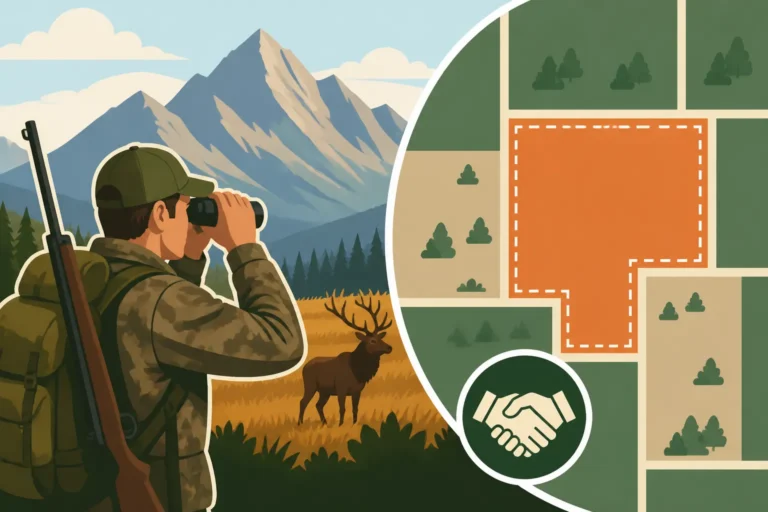
The checkerboard nature of land ownership around Pikes Peak cannot be overstated. Large sections of Pike National Forest are interspersed with private ranches, subdivisions, and even military installations (like Fort Carson to the southeast) where hunting is restricted or prohibited. This makes detailed map study an absolute necessity. Relying solely on physical landmarks can lead you into trouble.
You might be walking through public land only to find a fence and a "No Trespassing" sign just beyond. Always know exactly where you are. This is where modern mapping applications become indispensable. Tools like onX Hunt are game-changers, displaying public and private land boundaries, land ownership names, and even access roads in real-time on your phone or GPS device. Without such a tool, navigating this region is incredibly risky and potentially illegal. Always respect private property, even if it feels like you're in the middle of nowhere.
Essential Mapping and Scouting Tools
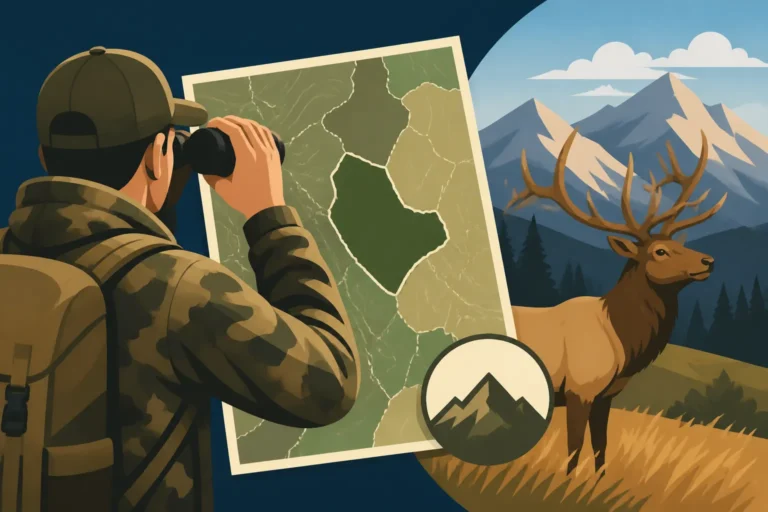
In this mixed landscape, electronic scouting (e-scouting) is not just a luxury; it’s a requirement. Before you ever set foot on the mountain, you should be spending hours poring over maps. Utilize tools like onX Hunt or GoHunt’s research tools to identify public land access, wilderness areas, roads (open vs. closed), trails, water sources, and potential bedding and feeding areas.
Start by looking for large blocks of public land away from main roads and trailheads. Pay attention to topography—north-facing slopes often hold more moisture and denser timber, providing cover and feed. Identify saddles, ridges, and benches that elk and deer might use as travel corridors. Use satellite imagery to pick out clearings, aspen groves, or old burns that could be food sources. Learn how to E-Scout Before a Colorado Hunt to maximize your pre-hunt preparation. A good strategy involves marking potential spots and then verifying them with boots on the ground, or at least with deeper map analysis.
Planning Your Hunt: Licenses, Seasons, and Preparation
A successful hunt in the Pikes Peak region isn't just about finding animals; it's about meticulously planning every detail, from how you acquire your tag to how you prepare yourself physically and mentally.
Understanding Colorado's Draw System and OTC Options
For many species and units in Colorado, including some around Pikes Peak, you'll need to participate in the limited license draw. This means applying months in advance, often in April, and hoping you have enough preference points to draw a tag. Our Colorado Draw System and Preference Points guide can help you understand the process. Some areas, particularly for rifle elk in specific seasons, might have over-the-counter (OTC) tags, but these units often see higher hunter pressure.
Always check the current Colorado Parks and Wildlife (CPW) regulations for the specific GMU and season you intend to hunt. Regulations change, and what was OTC last year might be draw-only this year. For non-residents, understanding Colorado OTC Elk Tags Explained is crucial, as some popular units may see increased competition. It’s also wise to research draw odds for your chosen unit and species using resources like GoHunt to gauge your chances and decide whether to build points or apply for a unit you can more realistically draw.
Physical and Mental Readiness for Mountain Hunting
Hunting in the Pikes Peak region is physically demanding. You'll be gaining and losing thousands of feet of elevation daily, often carrying heavy gear at altitudes where the air is noticeably thinner. Don't underestimate this challenge. Start a rigorous fitness regimen months before your hunt. Focus on cardiovascular endurance, leg strength, and core stability. Hiking with a loaded pack, simulating hunting conditions, is excellent preparation. Our guide on How to Physically Prepare for Colorado Elk offers detailed advice.
Beyond physical fitness, mental toughness is vital. The mountains can be relentless. Bad weather, steep climbs, no game sightings for days – these can wear you down. Be prepared for adversity, maintain a positive attitude, and remember that perseverance often pays off in challenging terrain like Pikes Peak. Knowing when to push and when to rest is a skill developed over time.
Gear Considerations for the Pikes Peak Region
Your gear list for a Pikes Peak hunt needs to be robust and adaptable. Layering is non-negotiable for clothing to manage the drastic temperature swings. Think high-quality base layers, insulating mid-layers, and a waterproof/windproof outer shell. Merino wool or synthetics are far superior to cotton in mountain environments.
Footwear is another critical component. Invest in high-quality, broken-in mountain hunting boots with excellent ankle support and waterproofing. Your feet will thank you after miles of side-hilling and navigating rocky terrain. Our guide on Best Boots for Colorado Elk Hunting can help you choose wisely. A reliable backpack that comfortably carries your day's essentials – water, food, extra layers, first-aid, navigation tools – is also paramount. Consider a larger pack if you plan on a multi-day backcountry trip or need to pack out meat.
Essential Gear Checklist for Pikes Peak Hunting
| Category | Key Items | Considerations |
|---|---|---|
| Clothing | Layered System (base, mid, outer) | Merino wool/synthetics, waterproof/windproof shell, extra socks |
| Footwear | Waterproof, high-ankle hunting boots, gaiters | Well-broken in, sturdy for steep, rocky terrain |
| Navigation | GPS device (e.g., onX Hunt), compass, paper map | Redundancy is key; downloaded offline maps are crucial |
| Optics | Binoculars (10×42-15×56), spotting scope | Crucial for glassing distant slopes for animals |
| Safety | First-aid kit, fire starter, headlamp, signaling mirror | Tell someone your plan, carry emergency comms |
| Hydration/Food | Water filter/purifier, hydration bladder, high-energy snacks | Access to water can be limited, staying fueled is vital |
| Weapon | Rifle/Bow, ammunition, cleaning kit | Know your effective range, practice steep angle shots |
| Shelter | Lightweight tent/tarp, sleeping bag (appropriate temp) | For backcountry trips or emergency bivvy |
Remember to pack smart and light but be prepared for anything. This region demands respect, and proper gear can make the difference between a successful, safe hunt and a miserable, potentially dangerous experience. For those venturing deeper into the wilderness, our Colorado Backcountry Hunting Guide offers more in-depth advice on gear and tactics.
Disclaimer
Hunting is an inherently dangerous activity. This guide provides general information and recommendations. Always consult the most current Colorado Parks and Wildlife regulations and hunt ethically, responsibly, and safely. Personal fitness, proper gear, and sound judgment are crucial for any hunting endeavor, especially in challenging mountain environments.