Colorado Primary Draw Timeline
Navigating the Colorado big game draw can feel like trying to decipher an ancient scroll while blindfolded, especially for those new to the system or even seasoned hunters who just want to ensure they don't miss a crucial step. It's a complex dance of dates, preference points, and hunt codes that determines your entire hunting season. This comprehensive guide will walk you through the Colorado Primary Draw timeline, ensuring you understand every critical juncture from application opening to results day.
Understanding the Colorado Primary Big Game Draw System
The Colorado big game draw isn't just a lottery; it's a strategic system designed to distribute limited hunting licenses fairly among a large pool of applicants, both residents and non-residents. Missing a deadline or misunderstanding a code can mean losing out on a hunting opportunity for an entire year, which is a frustration many of us have faced.
Why the Draw Matters So Much
For many coveted species like elk, mule deer, pronghorn, and even moose or bighorn sheep, obtaining a tag in Colorado isn't as simple as walking into a sporting goods store. The demand far outstrips the supply, particularly for prime units and trophy animals. This is where the primary draw comes in. It's the main allocation process where the vast majority of tags are distributed. If you're dreaming of a specific unit with high success rates or a chance at a Boone & Crockett contender, participating in the primary draw is your only realistic path. Without it, you're often left with less desirable leftover tags or the general over-the-counter options, which, while still providing incredible opportunities, might not align with your specific hunting goals. It’s the cornerstone of many hunters' plans, requiring forethought and precision.
The Basics of Preference Points and Hunt Codes
To truly understand the draw, you need a firm grasp of two key concepts: preference points and hunt codes. Preference points are essentially loyalty points you earn for each year you apply for a draw license and are unsuccessful. They build up over time, giving you a better chance in subsequent years. For most species, tags are awarded to applicants with the most preference points first, making them incredibly valuable for highly sought-after units. You can learn more about How Colorado Preference Points Work to really dig into the mechanics.
Hunt codes, on the other hand, are the specific identifiers for the license you're applying for. A hunt code like "ELK-E-002-O1A-R" breaks down into species (Elk), sex (Either-Sex), unit (GMU 002), season (1st Rifle), and method (Rifle). Each element is crucial, and a single digit or letter wrong can lead to applying for a completely different hunt than intended, or worse, an invalid application. This level of detail means you must double-check every entry. Utilizing tools like the Colorado Parks and Wildlife (CPW) big game brochure and online resources is non-negotiable for getting these right.
Key Dates You Absolutely Cannot Miss
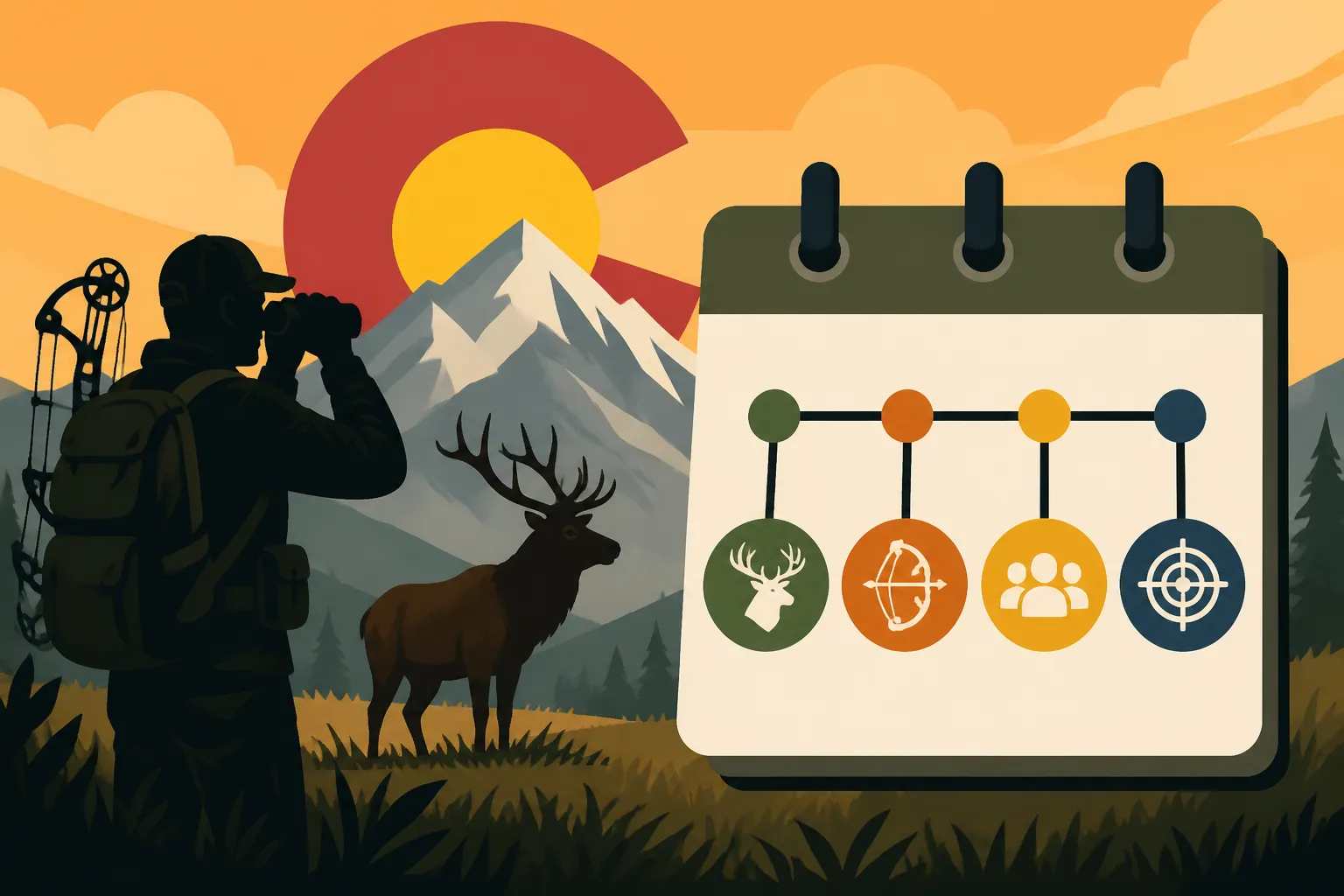
The primary draw timeline is a series of critical windows, not just a single date. Missing any of these means you could lose out entirely, or at least lose out on the chance to correct errors. Here's a quick overview, but we'll dive deeper into each phase in the following sections.
- Application Opening: This is when the gates open, usually in early March, allowing you to submit your applications.
- Application Deadline: This is the absolute cut-off. Historically, it falls in early April. No late applications are accepted, period.
- Results Release: Typically, results are posted sometime in late May or early June. This is the moment of truth.
- License Purchase Deadline: If you drew a tag, there's a specific window to pay for and confirm your license.
Being aware of these dates well in advance is paramount. Set calendar reminders, tell your hunting buddies, and use any tool at your disposal to keep them straight. Many hunters, including myself, have learned the hard way that a missed deadline can be a year-long regret.
A Deep Dive into the Application Window
The application window is where all your scouting, research, and planning culminates. It's the most active part of the draw timeline for hunters, and precision is key.
The Grand Opening: When Applications Begin
Typically, the Colorado Parks and Wildlife (CPW) application period for the primary big game draw opens in early March. For example, in recent years, it has opened around March 1st. This is the official start date when the application portal on the CPW website goes live, allowing hunters to submit their choices for elk, deer, pronghorn, moose, bighorn sheep, and mountain goat.
While the portal opens early, many hunters don't rush to apply on day one. It's an opportunity to ensure you have all your ducks in a row. This means confirming your hunt codes, especially if you're applying as a group, and making sure your CPW customer account is up to date. This early window also provides a chance to refine your How to E-Scout Before a Colorado Hunt efforts, scrutinizing topo maps and public land boundaries one last time before committing to a specific GMU and season. Don't underestimate this time; it's your last chance to iron out any uncertainties.
Navigating the Application Process
Applying online is generally straightforward, but it requires attention to detail. You'll need to log into your CPW customer account, select the "Purchase a License or Apply for a Draw" option, and then navigate to the big game draw. From there, you'll choose the species you're applying for and enter your chosen hunt codes in order of preference. You can usually list up to four choices for your primary species, along with options for various antlerless or private-land tags, depending on the species and unit.
This is where external tools can be incredibly helpful. Many hunters use platforms like GoHunt, which provides detailed draw odds, unit data, and strategy tools that integrate directly with Colorado's system. GoHunt can help you assess your chances for different units based on your preference points, analyze success rates, and even suggest alternative hunt codes if your primary choices are long shots. These resources can save you hours of digging through CPW brochures and give you a significant edge in making informed decisions.
A common pitfall is forgetting the qualifying license requirement. You must purchase a small game, fishing, or annual big game license (typically the annual "Habitat Stamp" and a small game license) before applying for any big game draw. This usually costs around $10 for residents and more for non-residents. It's an easily overlooked step that can invalidate your application, so always secure that first!
The Critical Application Deadline
This is perhaps the most crucial date on the entire timeline: the primary draw application deadline. Historically, this falls around the first Tuesday in April, usually around April 2-4. For example, in 2024, it was April 2nd. This deadline is absolutely rigid. CPW does not accept late applications, nor are there extensions for technical difficulties, forgotten passwords, or last-minute changes of heart. When that clock strikes midnight Mountain Time on the deadline day, the portal closes, and your chance to apply for the primary draw is gone for the year.
Many hunters make the mistake of waiting until the last minute. This can lead to system slowdowns on the CPW website due to high traffic, internet connectivity issues, or simply running out of time to meticulously review their choices. My advice, and something I preach constantly, is to complete your application at least a few days, if not a full week, before the deadline. This provides a buffer for any unforeseen problems and allows you to calmly verify every single hunt code and preference point selection. It’s also wise to print a confirmation of your application once submitted for your records. Don't let a simple timing error derail your Colorado Elk Hunting Guide plans.
What Happens After You Apply? The Waiting Game
Once you've submitted your application and the deadline has passed, the real waiting game begins. This period, often stretching for over a month, can be filled with anticipation, second-guessing, and a healthy dose of anxiety.
Checking Your Application Status
After the application deadline, CPW processes millions of applications. While you can't change your choices, you can often log back into your CPW account to verify that your application was successfully submitted and is "pending." This is a good peace of mind check, ensuring that no technical glitch prevented your application from being registered.
During this time, CPW also performs audits to catch any errors, such as incorrect hunt codes or missing qualifying licenses. If a significant error is found, they might contact you, but generally, it's on the applicant to ensure everything is correct. This is why that pre-deadline review is so vital. It's also during this phase that you might start to obsessively check forums, social media, and hunting news sites for any rumors about early result releases. Trust me, we've all been there!
The Anticipated Results Release Date
The day everyone lives for, or dreads, is the primary draw results release. While CPW doesn't provide an exact date in advance, the results are typically released in late May or early June. Historically, this has often been the Tuesday or Wednesday of the first full week of June. For instance, in 2024, the results were released on June 4th. When the results are out, CPW usually sends out an email notification, but you can also log directly into your CPW account to see if you drew a tag.
This day is a rollercoaster of emotions. For some, it's pure jubilation, seeing that coveted tag appear in their account. For others, it's the disappointment of seeing "unsuccessful" next to their top choices, but with the small comfort of earning another preference point. Regardless of the outcome, it's a definitive moment that shapes your hunting season.
Understanding Your Draw Results (Success vs. Unsuccessful)
When you check your results, you'll see one of two main outcomes for each of your choices: "Successful" or "Unsuccessful."
- Successful: Congratulations! This means you drew one of your chosen hunt codes. The system automatically awards you the highest preference choice you qualified for. Your preference points for that species will be reset to zero for that specific hunt type (e.g., if you drew an elk tag, your elk points reset, but your deer points remain). The good news is your tag is secure, and you can move on to planning your actual hunt. Now it's time to dive deep into planning, whether it's figuring out How to Pack Into the Colorado Backcountry or honing your Colorado Rifle Elk Hunting Guide tactics.
- Unsuccessful: This means you didn't draw any of your listed choices. While disappointing, it's not the end of the world. The upside is that you'll be awarded one preference point for the species you applied for. These points accumulate, increasing your odds for future draws. You'll also still have other opportunities to hunt, which we'll cover next.
Here's a simplified table illustrating a hypothetical draw outcome:
| Species Applied For | Hunt Code Choices (Preference Order) | Draw Result | Preference Points (P.P.) Earned/Used | Next Steps |
|---|---|---|---|---|
| Elk | 1: ELK-M-043-O1R-R, 2: ELK-M-054-O2R-R | Successful (Choice 1) | 5 P.P. used, now 0 P.P. | Purchase license, start planning hunt in GMU 43 |
| Mule Deer | 1: DEER-B-076-O3R-R, 2: DEER-B-066-O2R-R | Unsuccessful | 1 P.P. earned, now 3 P.P. | Explore leftover tags or secondary draw for deer |
| Pronghorn | 1: PRONG-B-101-O1A-R | Unsuccessful | 1 P.P. earned, now 2 P.P. | Look for OTC or late season Pronghorn options |
Remember, even if you don't draw your top choice, there are always other avenues to explore. Colorado is a vast state with many hunting opportunities.
Post-Draw Actions and Next Steps
The draw results are out. Whether you're celebrating or strategizing for next year, there are important steps to take.
If You Drew a Tag: License Purchase Deadlines
If you were successful in the primary draw, a huge congratulations! But don't celebrate too hard without completing this critical final step: purchasing your license. CPW typically sets a license purchase deadline about 10-14 days after results are released. For example, if results are out on June 4th, the purchase deadline might be around June 18th. You’ll receive an email reminder, and the deadline will be clearly stated in your CPW account.
It's absolutely imperative to purchase your license by this deadline. If you fail to do so, your hard-earned tag will be forfeited, and it will then be made available as a leftover license. Worse, you will still lose the preference points you used to draw that tag. Imagine the frustration of finally drawing your dream tag, only to have it disappear because you forgot to click "confirm purchase." Don't let that happen! Log into your account, make the payment, and ensure the license is officially yours. Once purchased, you'll generally receive a digital copy and can print it at home or pick up a physical copy at a CPW office or license agent. This is a vital part of the Colorado Hunting Seasons Explained process.
If You Didn't Draw: Exploring Leftover and Secondary Options
For those who didn't draw a tag in the primary system, it's not game over for the season. Colorado offers several other pathways to secure a hunting opportunity.
First, there's the Leftover Draw. Any tags not purchased from the primary draw, or tags that were initially undersubscribed, become available. This secondary draw usually opens up shortly after the primary draw license purchase deadline, typically in late June or early July. These are often less desirable units or cow tags, but they can still provide excellent hunting experiences. You won't use preference points for this draw; it's a pure lottery system, often weighted slightly differently. Tools like GoHunt are fantastic for identifying which units might have leftover tags and what the odds are for securing one. They often provide detailed analysis of past leftover offerings, helping you make smarter choices.
Second, many hunters turn to Over-the-Counter (OTC) tags. Colorado is famous for its OTC elk tags, particularly for archery and some rifle seasons. These licenses can be purchased without applying in a draw, usually starting in August or even over the counter the day you want to hunt. While they often involve hunting more pressured public land, they guarantee a tag in your pocket. Learning about Colorado OTC Elk Tags Explained is crucial if you plan to go this route.
Finally, there are reissued and turnback tags. If someone draws a tag but then has an emergency and needs to turn it back in, those licenses can occasionally become available throughout the summer and leading up to the season. These are harder to predict but offer another chance for the vigilant hunter.
Building Preference Points for Future Hunts
If you were unsuccessful in the draw, remember that you earned a preference point. This is a valuable asset. The strategy now shifts to how you want to build or "burn" those points in the future.
- Continue Accumulating: Many hunters, especially those chasing trophy units or species like moose or bighorn sheep, choose to apply for a preference point only each year. This means they apply for "0 points" or a dedicated point-only option if available, without attempting to draw a tag. This is a long-term strategy, building a substantial number of points over many years to increase the odds for a once-in-a-lifetime hunt.
- Targeting Lower Point Units: With a few preference points in your pocket, you might now qualify for units that require fewer points than the absolute top-tier hunts. This can be a great way to "cash in" your points for a quality hunt without waiting decades.
- Strategize with Group Applications: If you hunt with a group, understand how Colorado Group Applications Explained works. The group's preference points are averaged or often revert to the lowest point holder, so planning is essential to ensure everyone benefits.
Ultimately, the Colorado Primary Draw timeline is a cycle of anticipation, strategy, and opportunity. By understanding each phase, from the nuances of preference points and hunt codes to the critical deadlines and post-draw options, you'll be much better equipped to navigate the system and maximize your chances of punching a tag in the stunning Colorado wilderness.
Disclaimer
Please remember that hunting regulations, season dates, and draw procedures can change. Always consult the official Colorado Parks and Wildlife (CPW) website and their most current Big Game Brochure for the definitive and most up-to-date information before applying for any licenses or planning your hunt. This guide is for informational purposes only and should not be considered a substitute for official CPW resources.