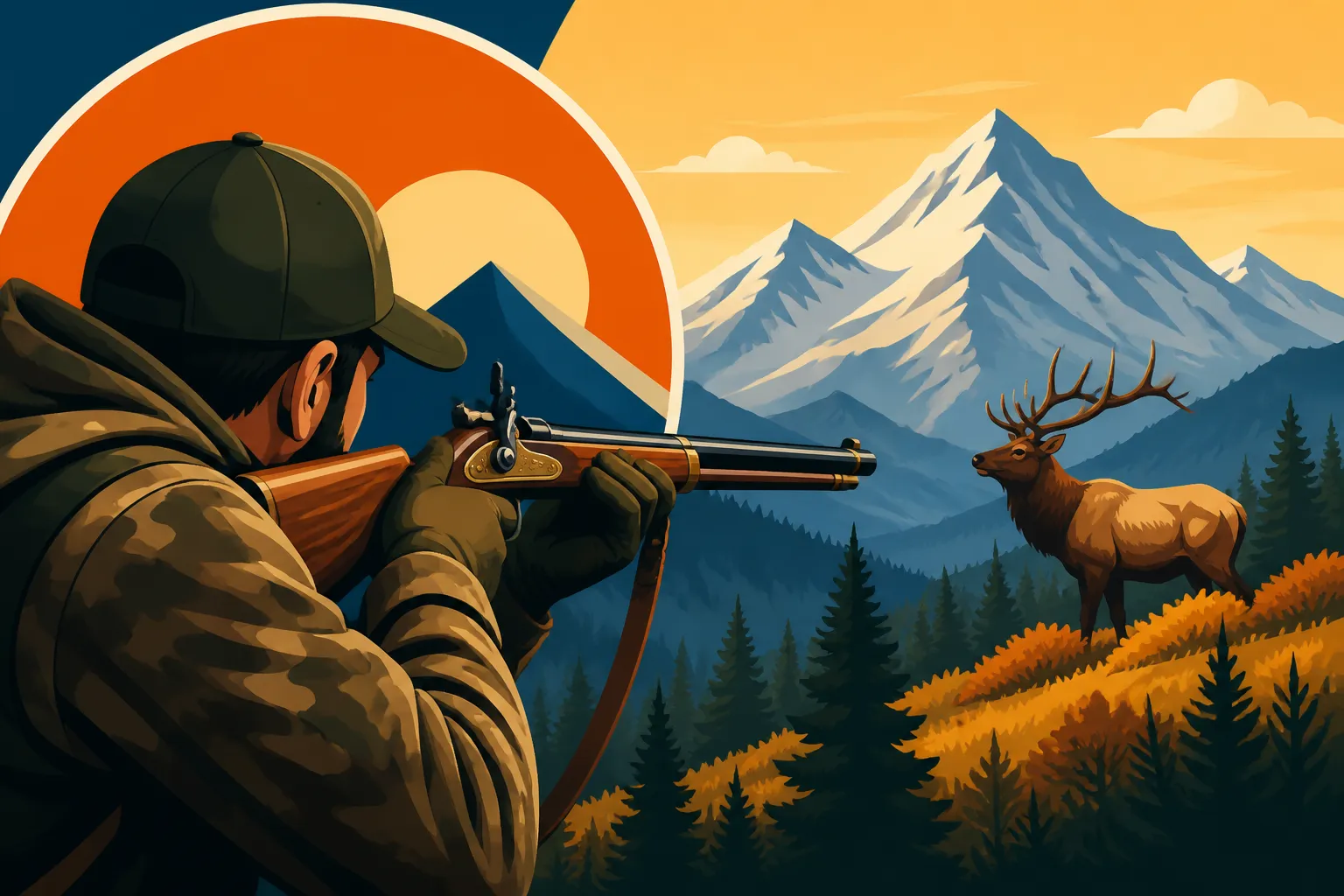
Best Muzzleloader Setup for Colorado
Trying to dial in your muzzleloader setup for a challenging Colorado hunt can feel like a daunting task, especially with all the regulations, variable weather, and rugged terrain you'll encounter. It’s not just about getting a bullet downrange; it’s about having a reliable, accurate, and ethical tool that performs flawlessly when that bull of a lifetime steps out. This guide will walk you through everything you need to know to assemble the best muzzleloader setup for success in the Colorado high country.
Choosing the Right Muzzleloader for Colorado Conditions
When it comes to hunting in Colorado, especially with a muzzleloader, your rifle is more than just a firearm—it's a critical piece of your hunting system. The choice you make here will profoundly impact your accuracy, reliability, and ultimately, your success in the demanding environments of the Rocky Mountains. Many hunters grapple with whether to go traditional or modern, and the answer often lies in understanding the specific regulations and your personal hunting style.
In-line vs. Traditional Muzzleloaders
Colorado’s regulations often favor modern in-line muzzleloaders, and for good reason when it comes to performance. While traditionalists might appreciate the classic feel of a percussion or flintlock rifle, the reality of mountain hunting often calls for something more robust and consistent. In-lines typically use a 209 primer, which is far more reliable in wet or cold conditions than percussion caps. Imagine being miles deep in the Flat Tops Wilderness, a sudden snow squall blowing in, and your single-shot opportunity hinges on a primer sparking reliably. The 209 primer significantly reduces misfires, offering greater peace of mind.
Furthermore, in-line designs usually feature a faster twist rate in the barrel, which stabilizes modern saboted bullets and conical projectiles much better than the slower twist rates found in many traditional models. This translates directly to better accuracy at extended ranges, which is a huge advantage when you might have a 150-yard shot at a bull elk across a canyon. While Colorado’s muzzleloader seasons can be incredibly rewarding, they also present unique challenges, and having a modern in-line can help bridge the gap between traditional hunting and modern shot capability. If you're looking for an in-depth dive into the season itself, check out our guide on Colorado Muzzleloader Season Dates.
Ignition Systems and Reliability
Beyond the in-line vs. traditional debate, the ignition system within your chosen muzzleloader is paramount. As mentioned, the 209 primer system is widely preferred for its reliability. These primers are essentially miniature shotgun primers, offering a hot, consistent spark that can ignite even slightly damp powder charges, making them ideal for the unpredictable weather of Colorado’s mountains. Many modern in-lines are designed around this system, offering excellent seals that protect the powder from moisture. Brands like CVA and Traditions have perfected this, offering models that are not only accurate but also incredibly durable against the elements.
However, it's not just about the primer itself. Pay attention to how the primer is sealed and protected within the breach plug. Some designs offer a more robust seal than others, which is crucial for preventing moisture ingress. A solid, easy-to-clean breach plug that consistently delivers the primer's spark to the powder charge is non-negotiable. Spend time familiarizing yourself with removing and cleaning your breach plug, as residue buildup can quickly impact reliability and accuracy. Nothing ruins a hunt faster than a "click" instead of a "bang" when you've done everything else right.
Optimizing Optics and Sighting Systems
Even with the most reliable muzzleloader, if you can't see your target clearly or your aim is off, success will remain elusive. Colorado regulations for muzzleloader season are quite specific, often prohibiting scopes with magnification, which means you'll typically be limited to open sights or a non-magnifying "peep" sight. This limitation makes your choice of sighting system and your proficiency with it incredibly important.
Understanding Colorado's Sighting Restrictions
This is where many new Colorado muzzleloader hunters get tripped up. For regulated muzzleloader seasons, you cannot use a scope that offers any magnification. This means your high-powered variable scope needs to stay home. Instead, you'll be choosing between traditional iron sights, fiber optic sights, or peep sights. Peep sights, which consist of a rear aperture and a front post, are often the preferred choice for their enhanced accuracy potential over traditional open sights. They allow your eye to naturally center the front post, reducing aiming errors.
Fiber optic sights, like those from TruGlo or HiViz, can be a great option for low-light conditions, as they gather ambient light and make your front sight post glow, offering a clearer sight picture against dark timber or during those crucial first and last minutes of legal shooting light. However, their durability can sometimes be a concern in rugged backcountry conditions, so ensure they are well-protected. Regardless of your choice, practice extensively with your chosen system, especially at varying ranges, to understand your holdovers and limitations. Our How to Sight In for a Colorado Elk Hunt guide offers excellent tips for this.
Open Sights vs. Peep Sights
Let’s talk specifics. Traditional open sights, often a notch in the rear and a blade or bead in the front, are simple and robust. However, they can be slow to acquire a target and often obscure a significant portion of your target, making precise aim difficult, especially at longer distances or on smaller game. For elk hunting in Colorado, where shots can be upwards of 100-150 yards, this can be a real disadvantage.
Peep sights, on the other hand, offer a distinct advantage. The human eye naturally centers objects within a circle, making peep sights surprisingly intuitive and fast to use once you get the hang of them. The large aperture allows for excellent light transmission, and the fine front post (often combined with a fiber optic for visibility) allows for a much more precise aiming point. Many competitive muzzleloader shooters prefer them for accuracy. Brands like Williams Gun Sight Company offer excellent peep sight systems that are durable and easy to install on most in-line muzzleloaders. Just ensure your chosen setup is legal; some peep sights come with interchangeable apertures, and you must verify that none offer magnification.
Projectile and Powder Selection for Maximum Performance
The best muzzleloader and sighting system are useless without the right combination of projectile and powder. This pairing is the heart of your muzzleloader's performance, influencing everything from accuracy and ballistic trajectory to terminal performance on game. Colorado’s elk are tough animals, and you need a bullet and powder charge that will deliver enough energy and penetration to ensure a clean, ethical harvest.
Bullet Weight and Type Considerations
For Colorado elk, you want heavy, reliable projectiles. We’re not plinking squirrels here. Typically, bullets ranging from 250 grains to 300 grains are excellent choices. Lighter bullets might offer a flatter trajectory, but they often lack the kinetic energy and penetration needed to break through heavy bone and create a sufficient wound channel on a large bull. Brands like Hornady (SST or ELD-ML), Barnes (TEZ or T-EZ Spit-Fire), and PowerBelt (Aerolite or Platinum) are popular and proven choices.
When selecting a bullet type, consider whether you prefer a saboted bullet or a full-bore conical. Saboted bullets, which use a plastic sabot to allow a smaller diameter bullet to be fired from a larger bore, generally offer better ballistic coefficients and accuracy at range due to their modern bullet designs. However, Colorado regulations sometimes have specific requirements regarding sabots or full-bore conicals, so always double-check the current rulebook. Full-bore conicals, like those from No Excuses or Buffalo Bullet Company, provide massive momentum and excellent penetration due to their weight and large frontal area, but can be less accurate at longer distances. Knowing how to hunt elk at high elevation involves understanding how these projectiles perform differently in thin air.
| Projectile Type | Characteristics | Best Use Cases | Pros | Cons |
|---|---|---|---|---|
| Saboted Bullet | Smaller diameter bullet (e.g., .45 caliber) encased in a plastic sabot for .50 cal bore. Aerodynamic, often polymer-tipped. | Longer shots (100-200 yards), open country elk hunting. | Excellent accuracy, high ballistic coefficient, good expansion. | Sabots can be finicky to load, sometimes subject to state regulations. |
| Full-Bore Conical | Solid lead or copper bullet, matches bore diameter (e.g., .50 cal for .50 cal bore). Heavy for caliber. | Shorter to medium shots (under 125 yards), timber hunting. | Deep penetration, excellent momentum, simple to load. | Less aerodynamic, accuracy may drop off at longer ranges. |
Powder Types and Load Development
Colorado hunting typically means black powder or black powder substitutes. Triple Seven (Hodgdon), Pyrodex (Hodgdon), and Blackhorn 209 (Western Powders) are the most common and reliable options. Blackhorn 209 is a fantastic modern choice due to its clean burn, consistent velocities, and resistance to moisture, making it ideal for the unpredictable mountain weather. It also requires specific cleaning solvents, unlike traditional black powder which cleans up with water. GoHunt's excellent resources often highlight the importance of meticulous gear preparation, and this certainly extends to your powder choice.
Developing your load is crucial. This isn't a "one size fits all" situation. Start with the manufacturer's recommended starting loads and work your way up in small increments, carefully monitoring accuracy at the range. Every muzzleloader is a law unto itself, and what shoots well in one rifle might be wildly inaccurate in another. Experiment with different powder charges and bullet combinations until you find a grouping you’re confident with out to your maximum ethical hunting range. Remember, consistent groups are more important than maximizing velocity if it sacrifices accuracy. Your personal maximum range should always be determined by your ability to consistently place shots into a kill zone under field conditions, not just at the bench. Consider taking your practice to an outdoor range that can simulate steep uphill and downhill shots, as this is a common scenario when hunting the Colorado mountains. For more insights on this, you can look into How to Shoot Uphill and Downhill at Elk.
Essential Accessories and Field Preparedness
A great muzzleloader and a perfected load mean little if you're not prepared for the inevitable challenges of hunting in Colorado’s backcountry. From unexpected rain to a fouled bore, having the right accessories and knowing how to use them can make or break your hunt. Think of your accessories as extensions of your rifle, ensuring its functionality and your readiness for anything.
Cleaning and Maintenance Kits
Muzzleloaders, by their nature, require more immediate and thorough cleaning than modern cartridge rifles. Even with cleaner-burning powders like Blackhorn 209, residue buildup can quickly degrade accuracy and make reloading difficult. A compact, lightweight field cleaning kit is essential. This should include:
- Bore brush and jag: Matched to your bore size.
- Cleaning patches: Plenty of them!
- Cleaning solvent: Specific to your powder type (e.g., bore cleaner for Blackhorn 209, or plain water/bore solvent for Pyrodex/Triple Seven).
- Nipple pick/breach plug tool: To clear the flash hole.
- Small bottle of oil: For light lubrication after cleaning.
- Cleaning rod extensions: If your ramrod is too short for a comfortable full clean.
After every few shots at the range, and certainly after any hunting shot, a quick field clean can be critical. A good deep clean should always happen after the hunt is over. This diligent maintenance ensures your muzzleloader remains reliable and accurate, season after season. Don't forget to protect your optics; many fiber optic sights are quite fragile, and a little extra care will ensure they perform when needed.
Reloading and Field Repair Tools
Muzzleloaders are single-shot firearms, meaning you’ll need to reload in the field for a follow-up shot. This requires careful consideration of how you carry your powder, primers, and projectiles. Speedloaders, which hold a pre-measured powder charge and a bullet/sabot combination, are invaluable. They protect your powder from moisture and allow for rapid reloading under pressure. Carry at least two or three loaded speedloaders, along with extra primers.
Beyond reloading, having basic field repair items can save a hunt. A small multi-tool, a spare breach plug, and a few extra primers can address most common issues like a fouled flash hole or a lost prime. A stuck ramrod can be a real headache, so knowing how to free it, or even carrying a collapsible ramrod as a backup, is a smart move. Remember, a muzzleloader hunt in Colorado can be a truly rewarding experience, especially when you're well-prepared. Consider packing some of these items in your Colorado Backcountry Hunting Gear List.
Safety Considerations
Safety is always paramount. Before you ever head into the field, ensure you are intimately familiar with your muzzleloader's operation, loading procedures, and safe handling. Always carry your muzzleloader with the hammer down on an empty chamber or a safety engaged. When hunting, especially during the muzzleloader season, orange or pink blaze clothing is required in specific amounts during certain seasons in Colorado, so be sure to check current regulations.
Be mindful of your backdrop and what’s beyond your target. Muzzleloader projectiles, especially heavier ones, can travel significant distances. Given the varying elevations and rugged topography of Colorado, clear sightlines can often be deceiving. Hunting responsibly means prioritizing safety for yourself, your hunting partners, and any other outdoor enthusiasts who might be sharing the wilderness. Staying informed with resources like those found on GoHunt can keep you up-to-date on safety protocols and regulation changes.
Disclaimer
Hunting in Colorado involves inherent risks and is subject to strict regulations. The information provided in this guide is for general informational purposes only and should not be considered legal advice. Always consult the most current Colorado Parks and Wildlife (CPW) regulations and local laws before planning any hunting trip. It is your responsibility to understand and comply with all applicable hunting laws and safety guidelines.