How to Hunt Elk in the Snow
The thought of chasing elk through a fresh blanket of snow in the Colorado high country can be both exhilarating and a little daunting. For many, it conjures images of freezing fingers, soaked boots, and endless, miserable slogging. But what if I told you that snow, far from being a deterrent, can actually be one of the best tools a savvy elk hunter has at their disposal? When the white stuff starts to fall, elk often become more concentrated and their movements more predictable, leaving behind a clear roadmap that dry ground rarely offers. This guide is dedicated to helping you unlock the secrets of successful elk hunting when the winter landscape sets in, transforming daunting conditions into genuine opportunities.
Understanding Elk Behavior in Snowy Conditions
Elk are creatures of habit, but those habits get a serious shake-up when snow blankets their environment. Their primary concerns shift dramatically: finding food that isn't buried too deep, conserving energy in the cold, and seeking shelter from harsh winds and heavy snowfall. If you can understand these fundamental shifts, you'll be miles ahead of the hunter who’s just hoping to stumble upon a herd.
Migration and Winter Range Movement
One of the most significant impacts of snow is its role in forcing elk to migrate. While every herd and unit is different, a heavy snowfall often acts like a natural alarm clock, signaling to elk that it's time to head to lower elevations where forage is more accessible and temperatures are less extreme. This isn't always a dramatic, miles-long migration; sometimes it’s just a move from high, exposed ridges down into south-facing slopes or thick timber a few hundred feet below.
During early season snows, elk might only drop a short distance, seeking out south-facing slopes where the sun melts the snow quickest, exposing grass and shrubs. However, as the snow accumulates and temperatures plummet, they'll often descend into traditional wintering grounds. These areas are typically at lower elevations, often below 9,000 feet, where the snowpack is shallower and the vegetation offers better caloric value or is simply easier to get to. Knowing the typical migration routes and winter ranges for the Game Management Unit (GMU) you're hunting is crucial. Tools like GoHunt can provide invaluable insights into historical animal movements and habitat use, helping you predict where elk will go when the snow flies. It's a game of chess, anticipating their next move based on the weather.
Feeding and Bedding Adjustments
When snow covers the ground, elk don't just stop eating; they adjust how and where they eat. Instead of casually grazing in open meadows, they'll concentrate on areas where food is easiest to access. This might mean pawing through shallower snow on those sunny, south-facing slopes, or browsing on woody vegetation in dense timber stands. Aspen groves, with their easily digestible bark, or areas with abundant serviceberry and bitterbrush can become hotspots. Think about what's available and how much effort it takes for an elk to get to it. They're constantly balancing energy expenditure with caloric intake.
Bedding behavior also changes significantly. In fair weather, elk might bed almost anywhere they feel secure. With snow and cold, their bedding preferences lean heavily towards thermal cover. This means they'll often seek out thick conifer stands, especially those on leeward slopes (protected from the wind), or even dense draws and canyons. South-facing slopes that catch the sun can still be prime bedding spots, particularly in the mornings, as the sun warms them up. The snow itself provides a layer of insulation, and they'll often dig out shallow depressions to bed down, further protecting themselves from the elements. Identifying these transition zones between thermal cover and readily available food sources is key. Elk won't travel far from where they eat to where they sleep, especially in deep snow.
Essential Gear and Physical Preparation for Winter Elk Hunting
Hunting elk in the snow demands a whole different level of preparation than a warm fall hunt. Neglecting critical gear or physical readiness can quickly turn an exciting adventure into a dangerous situation. This isn't just about comfort; it's about survival.
Layering for Extreme Cold and Moisture
Staying warm and dry is paramount when you're out in the snow. The biggest mistake hunters make is over-dressing or under-dressing, leading to either sweating profusely (which then makes you cold) or getting chilled from the start. The key is a well-thought-out layering system.
- Base Layer: Start with a moisture-wicking synthetic or merino wool base layer. This is your skin-to-garment layer, designed to pull sweat away from your body. Avoid cotton at all costs; it retains moisture and will chill you to the bone. Brands like Smartwool or Sitka Gear offer excellent options.
- Mid-Layer: This is your insulation layer. Fleece jackets, puffy vests, or lightweight down jackets work well. The goal here is to trap warm air. You might have one or two mid-layers depending on the expected temperature and your activity level.
- Outer Layer: Your shell needs to be completely waterproof and windproof. This protects you from snow, rain, and biting winds. Look for durable materials with good breathability, like Gore-Tex. Zippers under the arms (pit zips) are crucial for ventilation when you're moving hard.
- Puffy Layer: A highly compressible, warm puffy jacket (down or synthetic) is a non-negotiable item for breaks, glassing, or sitting for extended periods. It should live in your pack and come out the moment you stop moving. This allows you to regulate your core temperature quickly.
- Head and Hands: You lose a lot of heat through your head, so a warm beanie or balaclava is essential. For hands, a system of thin liner gloves (for dexterity), a warmer mid-weight glove, and a heavy, waterproof mitt or over-glove is ideal. This allows you to adapt to changing conditions and tasks without exposing bare skin for too long.
Check out our guide on how to Layer for a Colorado Elk Hunt for more detailed advice on building an effective system.
Footwear, Traction, and Navigation
Your feet are your foundation, and in the snow, they are incredibly vulnerable.
- Boots: Invest in high-quality, waterproof, insulated hunting boots. Look for boots with 400g to 800g of insulation, depending on how cold it will get and your activity level. Brands like Crispi, Schnee's, or Kenetrek are popular choices among serious elk hunters in Colorado. Ensure they are well broken-in before your hunt to prevent blisters. Consider waterproof gaiters to prevent snow from entering the top of your boots, a common misery-inducing event. Our article on the Best Boots for Colorado Elk Hunting goes into more detail.
- Traction: Snow and ice can make steep terrain treacherous. Microspikes or even full-on crampons might be necessary if you're venturing into icy, high-angle country. Trekking poles with snow baskets are also invaluable for stability and reducing fatigue.
- Navigation: While fresh snow might make tracking easier, it can also obscure trails and familiar landmarks. A reliable GPS device (like a Garmin inReach or a handheld unit) combined with a mapping app like onX Hunt or Gaia GPS on your phone is critical. Always carry a compass and a physical map as backup. Knowing how to use them is even more important! Ensure all your devices are fully charged and carry spare power banks, as cold temperatures drain batteries faster.
Staying Fueled and Hydrated
The cold burns calories at an alarming rate, and dehydration is a silent killer in winter.
- Food: Pack calorie-dense, easy-to-eat snacks. Think nuts, jerky, chocolate bars, energy gels, and dehydrated meals. A small, insulated container with warm soup or coffee can be a game-changer for morale and core temperature during a break.
- Water: It's tempting to think you don't need as much water in the cold, but that's a dangerous misconception. You'll still sweat, and the dry mountain air can dehydrate you quickly. Carry insulated water bottles or a hydration bladder with an insulated tube to prevent freezing. A portable water filter or purification tablets are also good to have in case you need to melt snow for water. Melting snow in the field requires fuel and time, so plan accordingly.
Physical preparation is equally important. Hunting in deep snow is incredibly taxing. If you're planning a late-season hunt, ensure you've dedicated time to your Colorado Elk Hunt Fitness Plan, focusing on endurance and leg strength. Dragging your feet through deep snow for miles, often at high altitude, will test every muscle in your body.
| Gear Category | Essential Items | Notes |
|---|---|---|
| Clothing | Moisture-wicking base layers (merino/synthetic), fleece mid-layers, insulated puffy jacket, waterproof outer shell | Avoid cotton. Bring enough layers to adapt to changing activity levels and temperatures. |
| Waterproof pants, insulated hat/balaclava, multi-layer glove system (liners, mid, mitts) | Keep extremities warm. | |
| Footwear & Traction | Insulated, waterproof hunting boots, waterproof gaiters, merino wool socks (multiple pairs) | Ensure proper fit and warmth. Change socks regularly. |
| Microspikes/crampons (if conditions warrant), trekking poles with snow baskets | Critical for icy or steep terrain. | |
| Navigation & Safety | GPS device with loaded maps (onX Hunt recommended), physical map, compass, spare batteries/power bank | Always have redundant navigation. Cold drains batteries. |
| Headlamp with fresh batteries, whistle, fire starting kit (lighter, tinder), emergency shelter | Essential for unexpected overnight stays or signaling for help. | |
| First-aid kit, communication device (satellite messenger like Garmin inReach) | Be prepared for injuries and emergencies, especially when out of cell service. | |
| Food & Hydration | High-calorie, easy-to-eat snacks, insulated water bottles/bladder, water filter/purification tablets | Stay fueled and hydrated. Consider a thermos with a hot beverage. |
| Hunting Specific | Quality binoculars and spotting scope, rangefinder, game bags, knife, tag/license | optics aid in spotting distant elk against snow; game bags for meat care. |
Tracking, Locating, and Approaching Elk in Snow
This is where the snow truly shines as an advantage. Fresh snow can transform the elk woods into an open book, revealing every step, every pause, and every meal an elk has made. Learning to read that book is the art of winter elk hunting.
Interpreting Tracks and Sign
Fresh snow is a tracker's best friend. Unlike dry ground, which can obscure subtle details, snow captures everything with remarkable clarity.
- Freshness is Key: This is the absolute golden rule. You need to differentiate between tracks made hours ago and those made minutes ago. Look for crisp edges, distinct dewclaw marks, and minimal snow accumulation within the track itself. If the track is starting to melt or has soft, rounded edges, it’s older. A quick test: kick some fresh snow. Does it have the same texture and appearance as the snow in the tracks? If so, you're on a hot trail.
- Gait and Direction: Observe the spacing and pattern of the tracks. Running elk will have longer strides and a more spread-out pattern. Walking elk will have a more deliberate, consistent rhythm. If you see tracks suddenly change direction or speed up, it might indicate they were startled.
- Associated Sign: Don't just look at the tracks. Scan for other signs. Droppings that are soft or still steaming are incredibly fresh. Beds in the snow with fresh body heat melted around the edges are also excellent indicators. Browse marks on trees or shrubs with fresh snow on them means older activity, but if the bark is freshly peeled or twigs are cleanly broken, you're close.
- Number and Size: Try to estimate the size and number of elk in the group. A wider, deeper track indicates a larger animal. Look for differences in stride length and print size to discern multiple animals. Are there cow and calf tracks? Or are you seeing the large, round prints of a mature bull?
Using these signs, you can start to piece together a story of where the elk are heading, how fast they’re moving, and whether they’re calm or spooked. For a deeper dive into finding elk, our guide on How to Find Elk When They Go Quiet can provide additional tactics, even when snow isn't present.
Using Snow for Stealth and Thermal Advantage
Snow can be your ally in both concealment and scent control.
- Noise Reduction: A fresh blanket of snow muffles sound like nothing else. Your footsteps will be quieter, and breaking twigs will be less jarring. This allows you to move through timber with greater stealth than on dry, crunchy leaves. However, crusty snow can be incredibly noisy, so choose your steps carefully, aiming for deeper, softer drifts when possible.
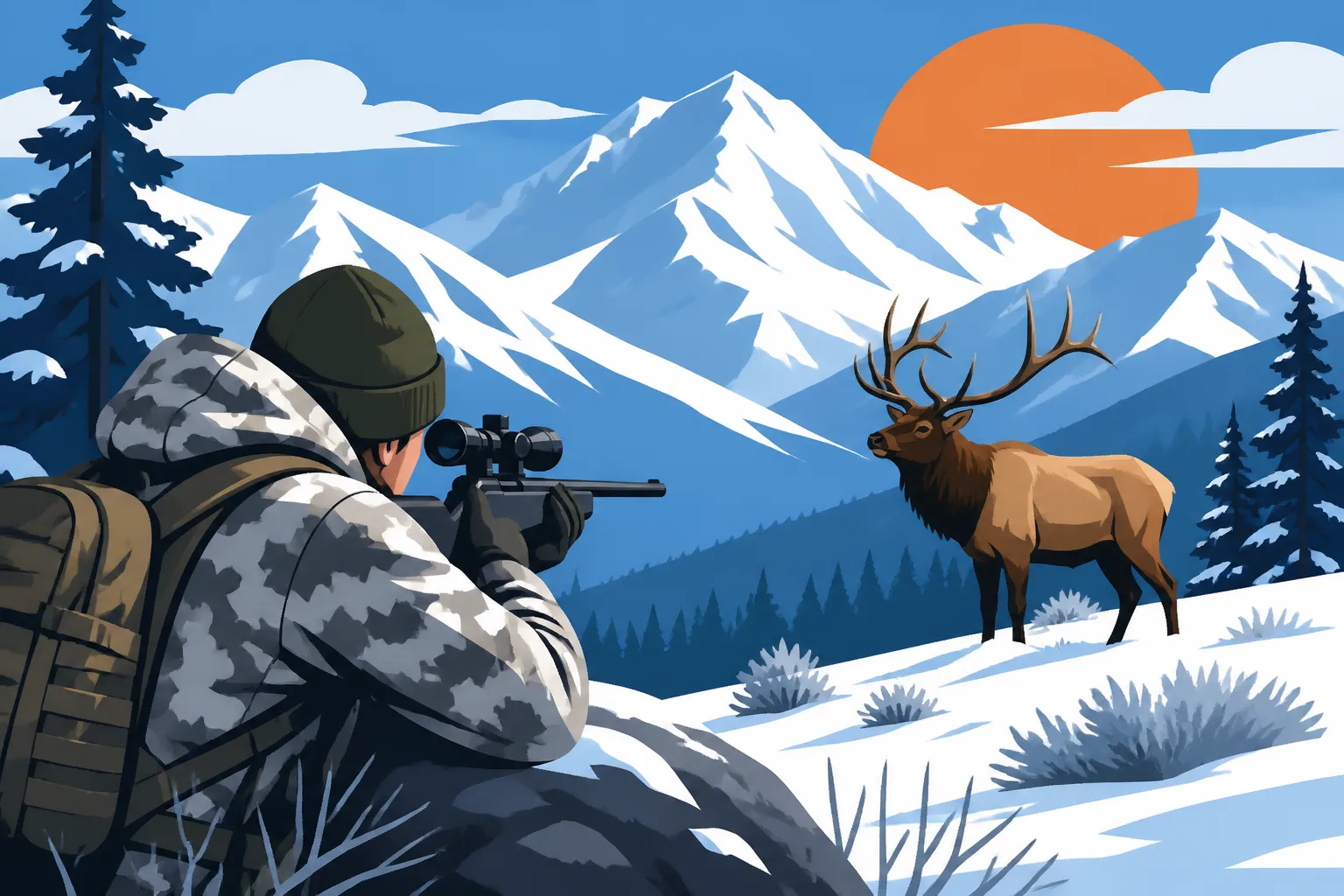
- Visibility: Against a white backdrop, elk can stand out, especially if they are moving. This makes glassing open slopes and timber edges more effective. Your challenge, however, is to blend in. White camouflage or layering with natural snow colors can help break up your outline against the winter landscape.
- Thermals: In snowy, cold conditions, thermals tend to be very predictable. In the morning, cold air sinks into valleys and draws, meaning thermals will generally pull downhill. As the sun rises and warms the slopes, thermals will begin to rise uphill. In the evening, as the sun sets, the air cools, and thermals reverse, pulling downhill again. Understanding how to Use Thermals in Colorado Elk Country is critical year-round, but it becomes even more pronounced and reliable in winter, helping you plan your approach to stay downwind of feeding or bedding elk.
Spotting and Stalking in Winter
Spotting and stalking in snow combines patience, keen observation, and disciplined movement.
- Glassing Strategy: With contrasting white snow, spotting scopes and binoculars become incredibly effective. Focus your glassing efforts on south-facing slopes, the edges of dense timber, and transition zones between bedding and feeding areas. Take your time. Pick apart every shadow, every dark patch. Elk might blend in surprisingly well, but often a flick of an ear or the shape of a back will give them away. You might even spot them from miles away across a big basin, a technique covered in How to Glass Big Colorado Basins.
- The Approach: Once you’ve located elk, the stalk is critical. Use terrain features—ridges, draws, thick timber—to break up your silhouette and stay out of sight. Remember your thermals. Always approach from downwind, or at least crosswind. In deep snow, moving quietly can be a slow, exhausting process. Take deliberate, measured steps. Lift your feet rather than dragging them to minimize noise. If the snow is crunchy, try to step in softer areas or time your movements with gusts of wind.
- Patience and Persistence: Winter elk hunting is often a grind. You might spend hours tracking before you even lay eyes on an animal. The conditions are tough, and success often comes to those who are willing to push through the discomfort. A calm, methodical approach is far more effective than a rushed, noisy one.
Strategic Considerations and Safety in the Snow
Beyond the immediate tactics, there are broader strategic decisions and critical safety measures that become even more important when hunting elk in the snow.
Picking the Right Hunting Unit and Season
Not all GMUs are created equal when it comes to snow hunting. Some units retain elk at higher elevations even with significant snow, while others see a mass exodus to lower, private lands. Researching your chosen unit’s winter range and traditional migration patterns is paramount. GoHunt’s filtering tools and historical data can be extremely useful here, allowing you to select units known for holding elk on public land during later rifle seasons or even during a late-season archery hunt.
- Late Rifle Seasons: Colorado's 3rd and 4th rifle seasons often coincide with the first significant snowfalls. These seasons can offer incredible opportunities as elk are pushed down and become more concentrated. However, they also come with more hunter pressure, especially in easily accessible areas. You might consider looking at units that offer a mix of public land and adjacent private land, as elk can often bounce back and forth. Our guide to Colorado Hunting Seasons Explained can help you understand the different opportunities.
- Late Archery and Muzzleloader: Depending on snow accumulation, late archery and muzzleloader seasons can also be productive, particularly if early snows bring elk down but don't completely bury them. These seasons often have less pressure than the rifle seasons, offering a more solitary experience.
- OTC vs. Draw Units: Over-the-counter (OTC) units in Colorado provide flexibility, but often mean more competition. If you've got preference points, targeting a draw unit known for its late-season public land elk can increase your chances of a less crowded and more productive hunt.
When researching units, pay close attention to the amount of public land in traditional winter ranges. Areas with extensive National Forest or BLM land at lower elevations are often excellent choices for snow hunting. These are the places where elk will try to hold out as long as possible before resorting to private land. Consider looking for areas with good winter forage access and thermal cover, particularly south-facing slopes.
Managing Risk and Emergency Preparedness
Hunting in the snow in Colorado's mountains is inherently risky. The weather can change in an instant, and getting caught unprepared can be deadly.
- Tell Someone Your Plan: Always, always, always let a trusted person know exactly where you are going, your planned route, when you expect to return, and what to do if they don’t hear from you.
- Hypothermia and Frostbite: These are real threats. Know the symptoms of hypothermia (shivering, confusion, clumsiness) and frostbite (numbness, white or waxy skin). Carry emergency supplies like hand warmers, an emergency blanket, and extra layers to help combat the cold.
- Avalanche Danger: If you are hunting in steep, mountainous terrain, especially after heavy snowfall, avalanche danger can be significant. Be aware of current avalanche forecasts (often available through the Colorado Avalanche Information Center – CAIC). Avoid steep slopes, especially those facing north, and areas below cornices or loaded snowfields. If you're unsure, stay on gentler terrain.
- Getting Lost: Whiteout conditions can occur rapidly, disorienting even experienced woodsmen. This is why redundant navigation is so crucial. If you become disoriented, stay calm, consult your map and GPS, and if necessary, hunker down in a sheltered spot and wait for conditions to improve.
- Packing Out an Elk: Successfully harvesting an elk in deep snow presents its own challenges. Dragging an entire animal is often impossible. You'll need to know how to Quarter an Elk in the Field and be prepared to pack out heavy loads over difficult terrain. Our guide on How to Pack Out an Elk in Colorado provides excellent advice for this physically demanding task. Consider bringing a sturdy game cart if the terrain allows, or planning a spike camp closer to where you might harvest an animal.
Ultimately, hunting elk in the snow is about embracing the challenge and adapting. It's about being prepared for the worst while hoping for the best. With the right mindset, gear, and knowledge, you can turn those daunting snowy landscapes into the backdrop for an unforgettable and successful hunt.
Disclaimer
Hunting is an inherently dangerous activity. This guide provides general information and recommendations but cannot account for all potential risks, individual skill levels, or specific hunting conditions. Always prioritize safety, adhere to all local, state, and federal hunting regulations, and ensure you have the necessary skills, gear, and physical fitness for your chosen hunting environment. It is your responsibility to be prepared and make informed decisions to ensure a safe and ethical hunt.