How to Practice for a Colorado Elk Shot
The moment an elk steps out, all the months of scouting, physical training, and financial investment boil down to a single, fleeting opportunity. The crushing disappointment of a missed shot, or worse, a poor hit, is something no hunter ever wants to experience, especially after trekking through rugged Colorado mountains. This guide is all about helping you prepare for that critical moment, making sure your practice translates into real-world success when a Colorado bull or cow steps into your shooting lane.
Understanding the Unique Challenges of a Colorado Elk Shot
Hunting in Colorado isn't like shooting targets at your local flat-land range. The elevation, the terrain, the angles, and the sheer physicality involved all conspire to make a "simple" shot anything but. It's easy to dismiss these factors until you're huffing and puffing at 10,000 feet, trying to hold steady on a bull that's 300 yards away and a steep incline below you.
High Altitude and Physical Exertion
One of the biggest differences you'll encounter in Colorado is the altitude. Even if you're in great shape at sea level, the thin air can absolutely steal your breath and muscle strength. Imagine climbing 2,000 vertical feet, heart pounding, lungs burning, only to have an elk appear unexpectedly. Your arms feel heavy, your vision might be a little hazy from exertion, and your ability to hold a steady aim diminishes significantly. This isn't just about being winded; it affects your core stability, your breath control, and ultimately, your shot execution.
Most hunters practice shooting from a bench rest or a comfortable standing position after a leisurely stroll to the range. That's a far cry from the reality of an elk hunt. When you're physically exhausted, your muscles tremor, and your mental focus can waver. Ignoring this aspect of your preparation is a recipe for frustration in the field. You need to train your body to recover quickly and shoot under duress.
Steep Angles and Uneven Terrain
Colorado's mountains are defined by steep slopes, rocky outcroppings, and dense timber. You're rarely going to get a perfectly flat, broadside shot at eye level. Elk often appear on a steep ridge above you, or perhaps feeding in a basin far below. These uphill and downhill shots introduce complex ballistic challenges. Gravity still works, but the effective horizontal distance changes, requiring adjustments to your aim or scope settings that many hunters simply aren't accustomed to.
Beyond ballistic considerations, just finding a stable shooting position can be a monumental task. You might be leaning awkwardly against a tree, kneeling on loose scree, or trying to shoot prone on a steep incline. Each position presents its own set of challenges for stability, comfort, and follow-through. Practicing these awkward, real-world positions is crucial for success. If you're serious about your preparation, you should explore methods like how to Shoot Uphill and Downhill at Elk.
Adrenaline and Mental Pressure
Let's be honest, the moment you spot a mature bull elk, or even a cow that's going to fill your freezer, your heart rate skyrockets. This surge of adrenaline is a natural physiological response, but it can wreak havoc on your shooting fundamentals. Fine motor skills can diminish, your vision might tunnel, and the urge to rush the shot can be overwhelming.
Managing this mental pressure is just as important as physical conditioning. A steady shot in the field isn't just about muscle memory; it's about mental fortitude, breath control, and the discipline to execute your shot routine flawlessly even when your body is screaming. Many hunters overlook this aspect of training, assuming they'll just "pull it together" when the time comes. But without practice, the pressure can easily overwhelm.
Simulating Realistic Hunting Scenarios in Practice
To truly prepare for a Colorado elk shot, you need to move beyond the traditional square range. Your practice needs to mimic the conditions you'll actually face. This means getting creative with your shooting sessions and pushing your boundaries.
Incorporating Physical Exertion into Your Shooting Drills
The first step is to elevate your heart rate before you shoot. Don't just walk to the shooting bench. Start by doing some brisk walking, jogging, or even some burpees or jumping jacks right before you pick up your rifle or bow. Aim for a heart rate that simulates climbing a steep hill or packing out a deer.
Once your heart is pounding, immediately get into a shooting position and take your shots. This trains your body and mind to settle quickly and perform under stress. Repeat this sequence multiple times. For rifle hunters, focus on getting into a stable shooting position quickly, controlling your breath, and executing the trigger pull. For archers, this means drawing smoothly, finding your anchor, and making a clean release despite your elevated breathing. This type of training will directly impact your ability to hunt elk at high elevation.
Here's a simple drill:
- Warm-up (5 minutes): Light stretching.
- Exertion (2-3 minutes): Run a short sprint, do 20 burpees, or climb a steep hill nearby. Get your heart rate up to 140-160 BPM.
- Shooting Position (immediate): Quickly get into a realistic field position (prone, kneeling, sitting, or off a pack) without a bench rest.
- Shoot: Take 1-3 shots, focusing on fundamental execution despite your heavy breathing.
- Rest (1-2 minutes): Allow your heart rate to drop slightly.
- Repeat: Do this 5-10 times per session.
Practicing from Unconventional and Elevated Positions
Forget the pristine flat range. Seek out shooting locations that offer varied terrain. If possible, find a spot with a natural incline or decline. Set up targets at different distances and, critically, at varying elevations.
For rifle shooters, practice shooting off your backpack, using trekking poles as a bipod, or even from an improvised rest using a rock or tree branch. Try kneeling, sitting, and prone positions on uneven ground. Get comfortable with the limitations and advantages of each. For instance, a solid prone position on a slight incline can be very stable, but it might not always be an option in thick timber.
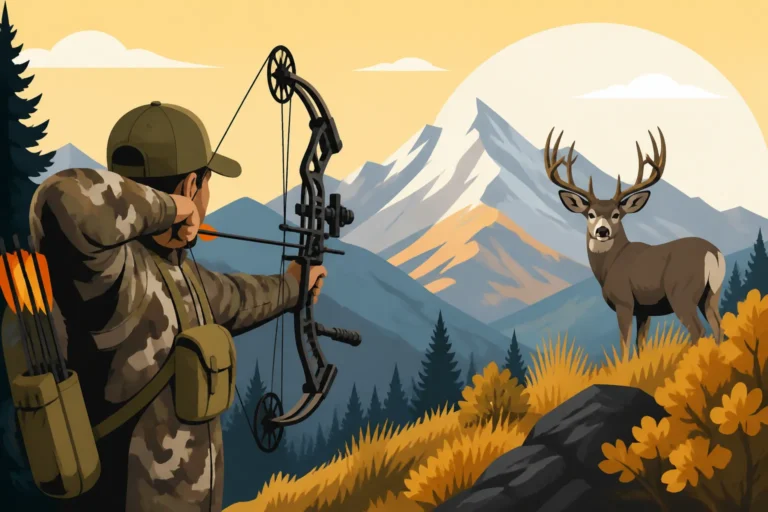
Archery practice should also simulate real-world angles. Use a 3D target or a paper target pinned to a hay bale positioned on a hillside. Practice shooting from elevated stands (if you'd use one for elk, though spot-and-stalk is more common in Colorado), or from a kneeling position with obstacles around you. Remember to bend at the waist for steep uphill or downhill shots, keeping your anchor point consistent.
Consider setting up a small "course" where you move between different shooting stations, each with a unique distance, angle, and required shooting position. This adds an element of decision-making and rapid adaptation, much like what you'd experience during an actual hunt. GoHunt's mapping tools can be invaluable here for finding public lands that offer suitable varied terrain for realistic practice setups.
Incorporating Time Constraints and Quick Decisions
Elk don't stand still for long, especially on public land with hunting pressure. You might only have a few precious seconds to make a shot. Integrate time constraints into your practice.
Have a friend signal when it's time to shoot, giving you a 5-10 second window to get ready and take your shot. This forces you to be efficient and mentally disciplined. For archers, this means quickly estimating yardage, drawing, and executing. For rifle hunters, it's about quickly acquiring the target, ranging, adjusting, and firing.
Another variation is to practice with a partner who calls out distances and angles randomly. This simulates the quick calculation and adjustment needed in the field. This also helps you get comfortable with Colorado Long-Range Shooting Considerations, as you'll often encounter longer shots in open country.
Tailoring Your Training Regimen to Your Weapon
Whether you're carrying a rifle, a muzzleloader, or a bow, your practice needs to be specific to your weapon system and the demands of elk hunting.
Rifle Hunter's Specifics
For rifle hunters, consistency is key. Your rifle should be sighted in perfectly for the ammunition you plan to hunt with. Confirm your zeroes at 100, 200, and 300 yards. Then, understand your bullet's trajectory out to ethical hunting distances, which for elk, can often extend to 400-500 yards for experienced shooters in stable conditions. Consider using a ballistic calculator and making a cheat sheet or range card to carry in the field.
- Practice with cold bore shots: Your first shot of the day or after a long period of not shooting often behaves differently. Practice taking one or two cold bore shots to understand your rifle's tendencies.
- Focus on trigger control: This is paramount. A clean, consistent trigger break prevents jerking the rifle off target. Dry fire practice (with an empty chamber or snap caps) is excellent for this.
- Recoil management: Practice absorbing recoil to stay on target and quickly cycle your action if a follow-up shot is needed.
- Dialing vs. Holdovers: Decide whether you'll be dialing your scope for longer shots or using holdovers, and practice that method religiously. Many modern scopes offer excellent capabilities for this, but only if you know how to use them under pressure.
- Ethical Range: While a rifle can shoot a long way, your ethical hunting range is determined by your ability to consistently place a shot in a kill zone. Be honest with yourself about your capabilities, especially in mountain conditions.
Archery Hunter's Specifics
Archery hunting for elk is an incredibly intimate and demanding pursuit. Shots are typically much closer, but the margin for error is smaller, and the setup can be more challenging. Mastering your bow setup is critical; consider investing in a guide to Best Archery Setups for Colorado Elk.
- Pinpoint Accuracy: Your broadheads should fly identically to your field points. Practice with your hunting broadheads before the season.
- Range Estimation: Practice estimating distances without a rangefinder, then confirm with one. This skill is vital for quick, unexpected encounters. For example, if an elk steps into a clearing at 42 yards, and you only practiced 40 and 50, that 2-yard difference can be significant.
- Drawing Smoothly Under Pressure: Practice drawing your bow quietly and smoothly, especially from a kneeling or sitting position. Mimic having an elk's eyes on you. This ties into overall Colorado Archery Elk Hunting Guide principles.
- Hold Time: Can you hold your bow at full draw for 60 seconds? An elk might stop in a shooting lane for just that long before moving on. Practice holding and then executing a shot.
- Follow Through: Maintaining your shot form until the arrow hits the target is crucial for consistent accuracy. Don't drop your bow arm prematurely.
Muzzleloader Hunter's Specifics
Muzzleloaders combine elements of both rifle and archery hunting. They demand precision, knowledge of ballistics, and the ability to load quickly under pressure. If you're hunting during the dedicated Colorado Muzzleloader Season Dates, your practice needs to reflect these unique demands.
- Load Development: Find the most accurate load for your specific muzzleloader, projectile, and powder charge. This can take time and experimentation.
- Long-Range Practice: Modern muzzleloaders are incredibly accurate at longer ranges than many people realize. Understand your projectile's trajectory and practice out to your ethical hunting distance, which might be 200 yards or more for some setups.
- Speed Reloading: Practice reloading quickly and efficiently. You might only get one shot, but knowing you can reload effectively provides a crucial mental edge, even if it's just for a follow-up shot on a wounded animal. This involves handling powder, primers, and projectiles under simulated field conditions.
- Weather Considerations: Practice in varying weather conditions if possible. Rain or snow can affect powder and primers, so understanding how your setup performs in different environments is critical.
Physical and Mental Preparation Beyond the Range
The actual act of shooting is only one piece of the puzzle. Your overall physical and mental state will heavily influence your ability to execute that critical shot when it matters most.
Building Your Endurance and Strength
Colorado elk hunting is a marathon, not a sprint. You'll be covering miles of steep, uneven terrain, often with a heavy pack. If you're exhausted before you even get a shot opportunity, your chances of success plummet.
- Cardio is King: Focus on cardiovascular endurance. Hiking with a weighted pack on steep inclines, stair climbing, and long-distance running are excellent for building the stamina you'll need. Aim for exercises that mimic the sustained effort of mountain hunting. Check out Colorado Elk Hunt Fitness Plan for detailed strategies.
- Leg and Core Strength: Strong legs and a solid core are essential for stability, especially when navigating difficult terrain or holding awkward shooting positions. Lunges, squats, planks, and deadlifts should be staples in your routine.
- Acclimation: If you're coming from lower elevations, arriving in Colorado a few days early to acclimate can make a huge difference. Even better, incorporate altitude training into your regimen if possible, or research How to Acclimate to Colorado Elevation.
- Practice with your pack: Don't just work out in the gym. Load up your hunting backpack with the gear and weight you'll carry, and go for long, steep hikes. This not only builds strength but also gets you accustomed to moving with your full kit.
Developing Mental Toughness and Focus
The mental game of hunting is often overlooked but can be the deciding factor in success. When the moment of truth arrives, the ability to remain calm, focused, and execute under pressure is invaluable.
- Visualization: Regularly visualize successful hunting scenarios. See yourself spotting the elk, calmly getting into position, controlling your breathing, making the shot, and watching the animal fall. The more you "rehearse" this in your mind, the more natural it will feel in real life.
- Breath Control: This is a powerful tool for calming your nervous system. Practice tactical breathing exercises: inhale for 4 counts, hold for 4, exhale for 4, hold for 4. Use this before and during your shooting drills.
- Routines: Develop a consistent pre-shot routine and stick to it every single time you shoot, whether it's practice or a real hunt. This routine acts as a mental anchor, helping you maintain focus even when adrenaline surges.
- Embrace Discomfort: Seek out opportunities to train when you're tired, cold, or slightly uncomfortable. This builds resilience and teaches you to perform when conditions aren't perfect, which is often the case in the mountains.
Optics and Rangefinding Practice
In Colorado, having high-quality optics is not just a luxury, it's a necessity. From spotting tiny details across vast basins to ranging an animal accurately on a steep slope, your binos and rangefinder are critical tools.
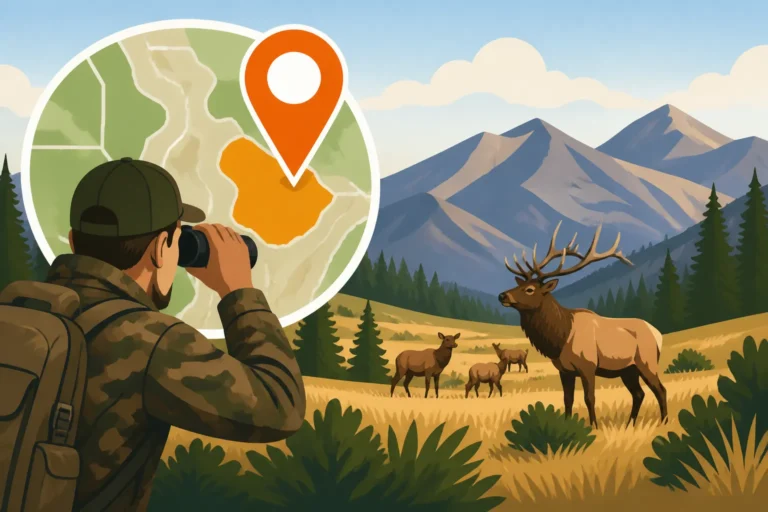
- Glassing: Spend time glassing distant objects. Practice identifying animals, judging their size, and estimating distances with your binoculars before using a rangefinder. This is especially important for strategies like How to Glass Big Colorado Basins.
- Rangefinder Practice: Use your rangefinder on various targets at different distances and angles. Pay attention to how it performs on steep terrain or through light cover. Get quick at ranging. Many rangefinders offer an "angle compensated" distance, which is often what you need for uphill/downhill shots, so understand how yours works.
- Pre-set ranges: When scouting or in a hunting situation, try to identify key landmarks and pre-range them (e.g., "that rock is 350 yards, that tree is 200"). This saves critical time if an animal appears in that vicinity.
- GoHunt's role: Before your hunt, use platforms like GoHunt to e-scout your chosen unit. Familiarize yourself with terrain features, potential shot distances, and elevations. This allows you to plan your practice to match the likely scenarios in your specific hunting area. Understanding the topography on the map can inform your physical training and shooting practice, helping you to target the specific types of shots you might encounter.
Gear Considerations and Maintenance
Your gear is an extension of your practice. Ensure it's in top condition and you're intimately familiar with its nuances.
Weapon Maintenance
A well-maintained weapon is a reliable weapon. Regular cleaning, lubrication, and inspection are non-negotiable.
| Weapon Type | Pre-Season Maintenance Checklist | In-Season Checks (Daily/Weekly) |
|---|---|---|
| Rifle | Bore clean, action lubricated, scope mounts tight, zero confirmed. | Bore clean (especially in wet weather), action clear of debris, scope zero verified (if possible). |
| Archery Bow | Strings/cables inspected, cams timed, peep sight secure, broadheads sharp, fletching intact. | Nocks, fletching, and string condition. Broadhead sharpness. Quiver secure. |
| Muzzleloader | Bore thoroughly cleaned and oiled, breach plug removed/cleaned, primer seating checked. | Bore clean (after each shot), primer pocket clean, barrel free of obstructions. |
Always verify your zero after any significant travel, before the hunt, or if your weapon takes a hard fall. A slight bump to your scope or sights can throw off your carefully practiced accuracy.
Optics and Accessories
Your rangefinder, binoculars, and rifle scope need to be treated with care. Keep lenses clean, batteries fresh, and understand all their functions. Make sure your rifle scope is properly mounted and torqued to manufacturer specifications. Loose scope rings are a common cause of poor accuracy.
For archery, ensure your sights are tight, your arrows are straight, and your broadheads are razor sharp. A dull broadhead can lead to poor penetration and a long, difficult tracking job.
Clothing and Footwear
Believe it or not, your clothing and footwear impact your shooting. Practice in the same layers you'll wear hunting. A bulky jacket can interfere with your rifle butt placement or bowstring clearance. Uncomfortable boots can distract you from your shot. Make sure your system works together.
By meticulously preparing for every aspect of the Colorado elk shot, from physical conditioning and mental toughness to realistic shooting drills and gear maintenance, you'll significantly increase your odds of success. Remember, the investment in practice pays dividends when that moment of truth arrives.
Disclaimer
Hunting is an inherently dangerous activity. This guide provides general information for practice and preparation and should not replace proper hunter education, safety courses, or professional instruction. Always prioritize safety, understand and follow all Colorado Parks and Wildlife regulations, and be aware of your surroundings. Ethical hunting practices and responsible firearm/bow handling are paramount.