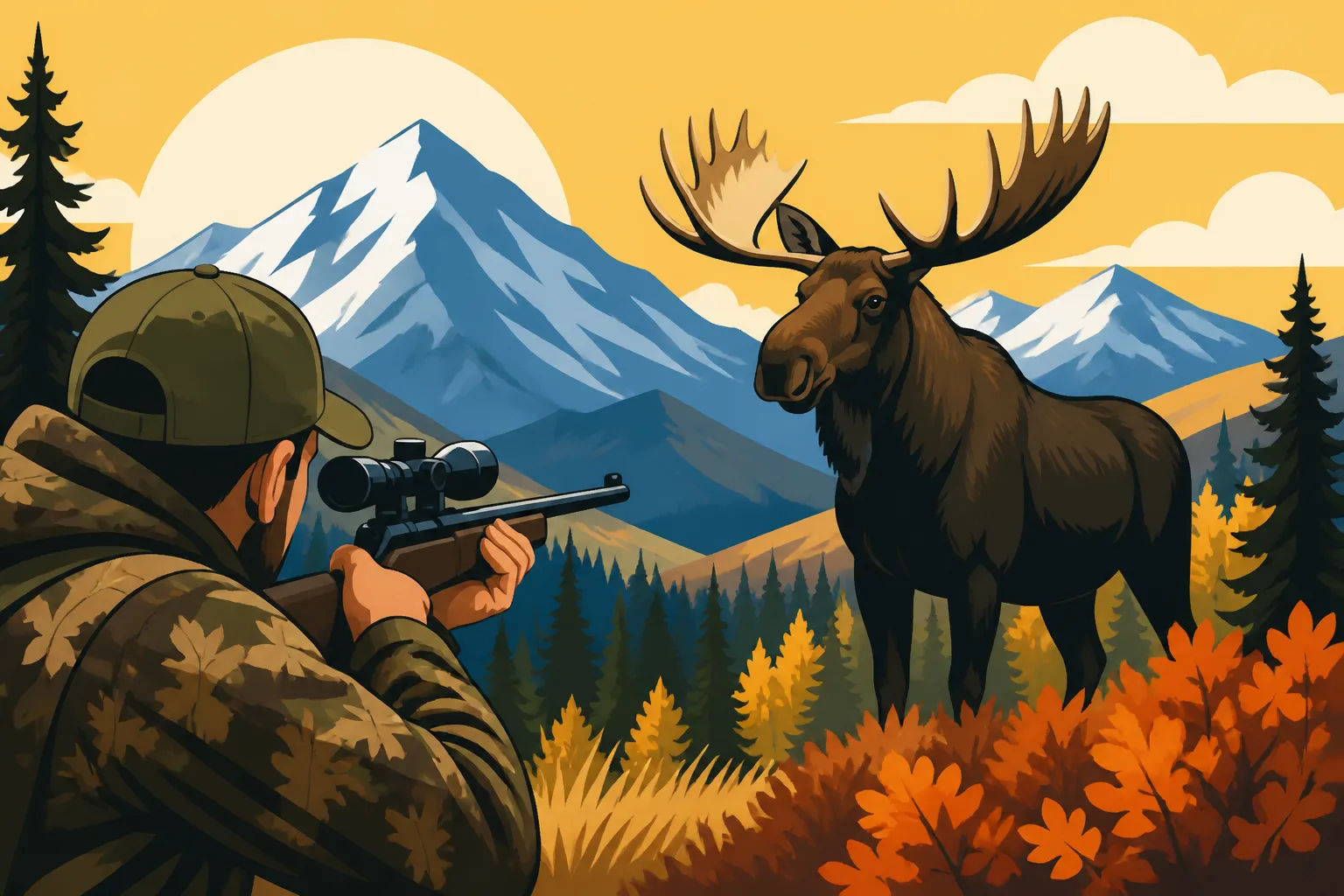
Best Method to Hunt Colorado Moose
For many hunters, drawing a Colorado moose tag feels like winning the lottery—a truly once-in-a-lifetime opportunity. But once you beat the odds, the real challenge begins: actually finding and harvesting one of these magnificent, elusive giants. Unlike the abundant elk or mule deer, Shiras moose are more concentrated in specific habitats, requiring a unique approach. This guide will walk you through the most effective methods to successfully hunt moose in Colorado, helping you make the most of that coveted tag.
Understanding Colorado Moose Behavior and Preferred Habitat
Before you even think about a specific hunting method, you've got to understand the animal itself. Colorado moose, primarily the Shiras subspecies, are creatures of habit and specific habitat. They aren't going to be in the same places as a high-country mule deer or even a typical elk herd. Their preferences are distinct, and knowing them is your first, most critical step to success.
Prime Moose Habitat in Colorado
If you're hunting moose in Colorado, you're likely going to find yourself in areas defined by water, willows, and dense cover. Think of it as a giant, soggy salad bar. The North Park area, particularly around Walden and the Laramie River Valley, is often cited as a prime example, but you'll also find concentrations in parts of the Routt National Forest, the Flat Tops Wilderness, and the San Juans. These animals thrive in riparian zones—those lush areas along rivers and streams—where willow thickets provide both abundant browse and excellent concealment.
Imagine wading through thick, chest-high willows, boots sinking into muddy ground. That's moose country. They love slow-moving water, beaver ponds, and marshy areas because they feed heavily on aquatic vegetation and the tender shoots of willows. Unlike elk who prefer open parks and dark timber, moose are more tied to water sources and the dense, vertical structure of shrubby riparian areas. This means your scouting and hunting efforts should heavily focus on these specific types of terrain. Understanding their natural environment is key to discovering their patterns, and you can learn more about their specific habits in our comprehensive guide on Colorado Moose Range and Units.
Seasonal Movements and Rutting Behavior
Moose movements throughout the year are largely dictated by food availability and the breeding season. In the early archery and muzzleloader seasons, typically late September into early October, you'll be hitting the peak of the rut. This is a game-changer for hunting tactics. During this time, bull moose become more active, moving more openly in search of cows. They'll also be more vocal, though not with the same bugling fervor as elk.
As the season progresses into the rifle hunts, particularly late rifle seasons, moose will often be focused on putting on weight before winter. They might still be found in those familiar willow bottoms, but they could also start moving to slightly higher, denser timber areas for thermal cover, especially as snow begins to accumulate. However, their primary food sources often keep them within reasonable proximity to those wetland areas. Knowing when and why they move can drastically influence your daily strategy. For more on how these magnificent animals behave during the breeding season, check out our piece on Colorado Moose Behavior and Biology.
Essential Hunting Methods for Colorado Moose
Alright, you've done your homework on moose behavior and habitat. Now, let's talk about how to actually get within range. Moose hunting isn't typically a high-speed pursuit; it's often a game of patience, stealth, and knowing when to capitalize on a slight advantage. The "best" method often combines several approaches, adapting to the specific situation and the moose's current mood.
Spot-and-Stalk in Willow Bottoms
This is arguably the quintessential method for Shiras moose in Colorado, especially if you're hunting public land or wilderness areas. Moose are often found bedded down or feeding in dense willow thickets, making spotting them incredibly difficult at times. However, their sheer size means that a part of them—an antler, a shoulder, or that distinctive bell—might be visible through the foliage.
Your strategy here needs to be methodical and slow. Start by finding a vantage point, even a small rise, that allows you to glass into these willow bottoms and riparian corridors. Take your time. Use good optics; a quality pair of 10x binoculars is a minimum, and a spotting scope can really help pick apart distant patches of willows. Pay attention to edges where willows meet timber or meadows. Once you spot a moose, the real work begins. You'll need to plan a careful approach, using the wind to your advantage (moose have an incredible sense of smell) and the terrain for cover. Moving quietly through thick, wet vegetation is a monumental task, but it's often your only option. Imagine slowly pushing through the willows, each step deliberate, making sure not to snap branches or splash loudly. For techniques on how to efficiently search large areas, you might find our guide on How to Glass Big Colorado Basins useful, even though it's geared toward basins, the principles of systematic glassing apply.
Still-Hunting Dense Timber and Clear-Cuts
While willows are king, moose will also use dense timber, particularly north-facing slopes and the edges of clear-cuts for bedding, thermal cover, and escape routes. Still-hunting, which is the art of moving incredibly slowly and deliberately through cover, stopping frequently to observe, listen, and scan, can be highly effective here. Moose are not as inherently skittish as elk, but they are incredibly alert and can disappear silently into thick cover.
The key to successful still-hunting is patience. You might take only a few steps in five minutes, constantly scanning for movement, a horizontal line in a vertical world, or a patch of hide. Pay close attention to wind direction, especially in timber where thermals can swirl. This method is physically demanding, requiring constant focus and discipline. It's about blending in, becoming part of the landscape, and moving with the stealth of a predator. You'll want to study up on strategies for moving silently through the woods, which you can read more about in How to Move Quietly Through Colorado Timber.
Calling Moose in Colorado
Unlike the aggressive bugling strategies often employed for elk, moose calling is generally more subtle and focused on drawing in a curious bull during the rut. Cow calls—a plaintive "moan"—are often the most effective. Bulls respond to the promise of a receptive female. You can also incorporate bull grunts, but be careful not to sound too challenging unless you're confident in the situation.
The best time to use calls is during the peak rut, typically late September and early October. Set up in an area with good cover, near a willow-choked creek or marsh, and give a series of cow moans. Wait patiently. Moose are slow to respond, unlike the often frenetic reactions of a bull elk. A bull might circle downwind, taking his time to investigate, so be prepared for a long wait and keep the wind in your favor. Combine calling with patient still-hunting or a strategic spot-and-stalk from a hidden position. If you're a bowhunter, calling can sometimes draw a bull into close range, but don't expect them to come charging in like a rutting elk.
Gear and Preparation for a Successful Moose Hunt
Hunting a Colorado moose demands specific gear and preparation, both physical and mental. You'll be operating in potentially challenging terrain, often off-trail, and far from easy access. Having the right tools and being in peak physical condition will not only increase your chances of success but also ensure your safety and enjoyment of this incredible experience.
Optics and Scouting Tools
When it comes to moose hunting, your eyes are your most valuable asset, and quality optics are an extension of that. As mentioned, a good pair of 10x or 12x binoculars are essential for picking apart dense willow thickets and distant timber lines. A high-quality spotting scope (20-60x or similar) will allow you to definitively identify a moose, judge its size, and confirm legal points from afar without having to put a stalk on every shadowy blob. Brands like Vortex, Swarovski, and Leica are popular for their clarity and durability in the field.
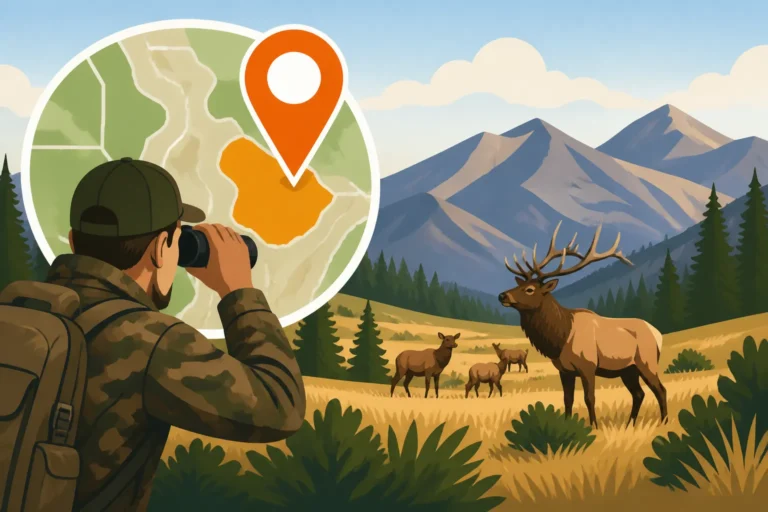
Beyond glass, embrace modern e-scouting tools. Platforms like GoHunt offer incredible aerial imagery, topographic maps, and public/private land overlays that are invaluable for pre-season planning. You can use these tools to identify prime willow bottoms, riparian corridors, access points, and potential bedding areas before you ever set foot on the ground. Spending hours digitally scouting with GoHunt can save you days of wasted effort in the field. This detailed reconnaissance can make all the difference in locating where moose prefer to congregate, helping you refine your unit choice and focus your ground efforts. If you're looking to refine your pre-hunt strategy, delve into our guide on How to E-Scout Before a Colorado Hunt.
Here's a quick look at essential optics:
| Item | Recommended Use | Key Features |
|---|---|---|
| Binoculars | Glassing willow thickets, mid-range observation | 10×42 or 12×50, waterproof, fog-proof |
| Spotting Scope | Long-range identification, confirming legal animal | 20-60x power, compact, clear resolution |
| Rangefinder | Accurate distance measurement for shooting | Angle compensation, up to 1,000+ yards range |
| GPS/OnX Maps | Navigation, boundary confirmation, marking finds | Topographic maps, public/private land layers, waypoint tracking |
Physical and Mental Conditioning
Moose hunting, while sometimes less physically grueling than high-country elk hunting, still demands a solid level of fitness. You'll often be navigating tough terrain—muddy river bottoms, tangled willows, deadfall-choked timber, and steep inclines. A harvested moose is also an enormous animal, and packing one out, even with help, is a monumental undertaking. Being physically prepared for miles of walking, often uphill with a heavy pack, and for the immense effort of field dressing and packing out meat, is non-negotiable.
Don't underestimate the mental game either. Moose hunting often involves long hours of patient searching, periods of intense focus, and the ability to stay motivated when days pass without a sighting. Training should include cardiovascular endurance, strength training for carrying heavy loads, and exercises that mimic the movements of hunting uneven terrain. Consider activities like hiking with a weighted pack, stair climbing, and general full-body conditioning. Even if your chosen unit isn't at extreme elevations, preparing for high-altitude hunting is always a good idea in Colorado, as covered in our guide on How to Physically Prepare for Colorado Elk.
Navigating the Colorado Moose Draw and Regulations
Now, let's talk about the elephant in the room—or rather, the moose in the willows. Getting a moose tag in Colorado is a significant hurdle, often taking many years and a substantial investment in preference points. It's a testament to the limited availability and high demand for these magnificent animals. Understanding the draw system and regulations is just as critical as your hunting methods.
Understanding Preference Points and Hunt Codes
Colorado's moose tags are allocated through a highly competitive draw system, almost entirely based on preference points. Unlike some other species where a random component exists, for moose, it's generally a straight preference point game for rifle and muzzleloader seasons. This means the more points you have, the better your odds. Many successful applicants have accumulated 20 or more points over decades. This makes it a true long-term commitment for most resident and non-resident hunters.
Each specific hunt area and season has a unique hunt code, and each code will have its own draw odds and point requirements. You'll need to research these meticulously using resources like the Colorado Parks and Wildlife (CPW) statistics and analytical tools like GoHunt's Insider. GoHunt is particularly helpful for dissecting draw odds, understanding unit specifics, and strategizing when to apply for a particular hunt code based on your accumulated points. This data-driven approach is essential for maximizing your chances when applying for something as rare as a Colorado moose tag. To get a deeper dive into the system, you should definitely read up on Colorado Draw System and Preference Points and How Many Preference Points for Colorado Moose.
Ethical Considerations and Shot Placement
Once you've drawn that coveted tag and finally have a moose in your sights, ethical considerations and precise shot placement become paramount. Moose are incredibly large and tough animals. A poorly placed shot can lead to a long, difficult, and potentially unsuccessful recovery.
Aim for the classic lung or heart shot, typically a third of the way up the body, directly behind the front shoulder. Their vitals are large, but their thick hide, dense bones, and muscle mass require sufficient bullet energy (for rifle hunters) or broadhead penetration (for bowhunters). Practice your shooting at various distances and angles, especially in conditions that simulate hunting—cold weather, awkward positions, or after a strenuous hike. Familiarize yourself with moose anatomy to ensure you know exactly where to aim. A responsible hunter ensures a quick, humane harvest. This deep dive into ethical hunting is an extension of discussions around How to Field Judge a Colorado Moose and reinforces the critical nature of preparation. Make sure to review the current Colorado Moose Season Dates and Tags to ensure you're compliant with all regulations.
Disclaimer
Hunting is an inherently dangerous activity. The information provided in this guide is for informational purposes only and should not replace professional guidance, official regulations, or personal judgment. Always prioritize safety, adhere to all local, state, and federal hunting laws, and consider taking a certified hunter education course. Conditions in the field can change rapidly, and your preparedness and judgment are critical to a safe and successful hunt.